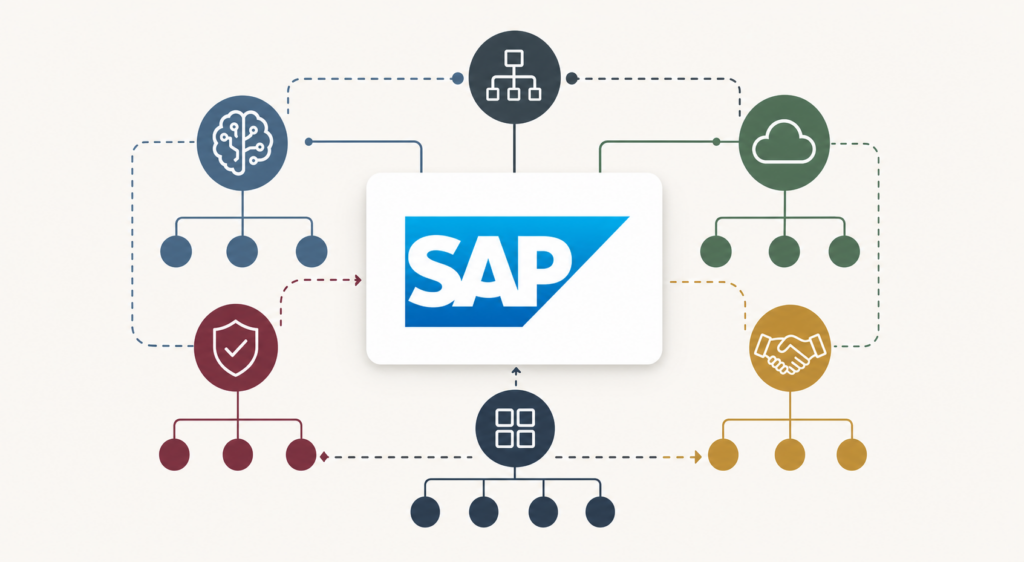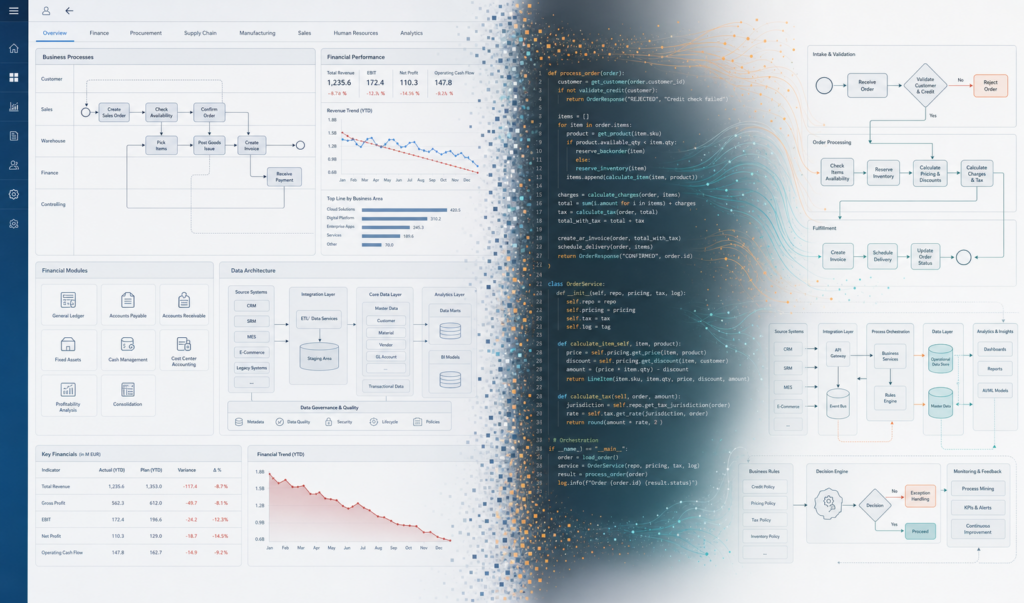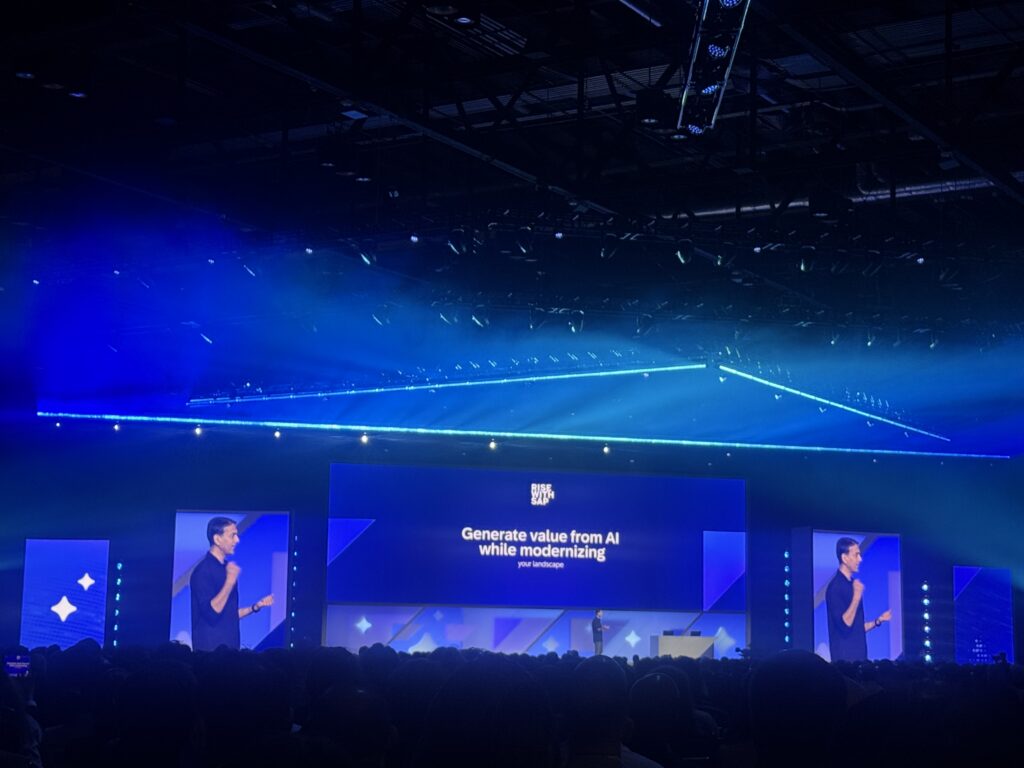

In May 2026 SAP unveiled its vision for the Autonomous Enterprise. Encompassing Finance, Supply Chain, Spend, Human Capital Management, and Customer Experience, the goal is to have dozens of AI assistants orchestrating the activities of hundreds of agents allowing organizations to operate in a new way. Most importantly, each assistant will include the decades of industry experience developed by SAP providing them with a depth of knowledge not available at other software vendors.
The vision included an updated framework for Joule, intent-based development through Joule Studio, and a development, governance, and contextualization foundation in the SAP Business AI Platform. However, while SAP has introduced and expanded many of these capabilities over the past several months, an important question remains: Is this the future SAPinsiders are looking for?
Despite growing interest in AI, adoption within the SAP ecosystem has remained relatively cautious. While AI usage has expanded rapidly across many business functions, organizations have been hesitant to connect AI technologies directly to systems of record, particularly SAP ERP environments. SAP CEO Christian Klein acknowledged this reality during the Q1 2026 earnings call, stating that “large-scale adoption of AI at the enterprise scale is still in its early stages.” With Sapphire approaching at the time, the comment appeared to foreshadow SAP’s broader AI strategy and messaging.
That is not to say AI capabilities are absent from SAP environments. In fact, AI-driven functionality has existed within SAP solutions for years. Most of these capabilities, however, have been predictive or analytical in nature, using existing data to generate insights, recommendations, or forecasts. SAP S/4HANA has supported many of these use cases for some time. What has arrived more slowly is access to generative AI functionality, much of which SAP has tied to Cloud ERP contracts and related offerings.
Initial Enthusiasm Leads to Questions
When SAP introduced the Autonomous Enterprise vision at Sapphire 2026, most customers SAPinsider spoke with responded positively. They were interested in understanding how assistants and agents would work together and what steps they should take to prepare their organizations. There was also considerable enthusiasm around the role that AI could play in accelerating ERP and business transformations.
Several months later, however, that initial enthusiasm appears to be giving way to questions. Despite the May announcement, consistent messaging from SAP executives, and the gradual rollout of AI-related capabilities, there is still limited information available about how the broader Autonomous Enterprise vision will ultimately operate in practice. SAP continues to work closely with a select group of customers to co-develop the agents and capabilities that will support each pillar of the Autonomous Suite. Based on current timelines, even early availability of many capabilities may not occur before Sapphire 2027.
Given the scale of the transformation SAP is proposing, a multi-year development and rollout timeline is not surprising. However, even as SAP highlights new AI features each quarter, the lack of detailed information has generated uncertainty among customers seeking to prepare now rather than later.
This uncertainty is particularly evident around cost, governance, and security. The first question many CIOs and technology leaders ask is, “How much will this cost?” The second, especially given growing concerns about AI-powered cyber threats and the sensitivity of ERP data, is “How can we secure these capabilities effectively?”
The limited information currently available in these areas is a major reason so many questions remain unanswered. From a product development standpoint, withholding details while capabilities are still being defined is understandable. From a customer perspective, however, the lack of clarity makes planning difficult and may disappoint organizations that expected more information following the initial announcement.
Broader Concerns About AI
Beyond questions surrounding the Autonomous Enterprise itself, organizations are also grappling with broader concerns about AI adoption. Stories about resistance to new data center construction and growing public skepticism toward AI have become increasingly common. At the same time, technology vendors continue to accelerate AI investments, with partnerships such as Anthropic and Salesforce’s Claudeforce initiative highlighting the industry’s direction.
However, the fact that vendors are accelerating AI adoption does not necessarily mean that every organization is ready to make AI the primary interface through which employees engage with enterprise systems, an approach that SAP is increasingly promoting through Joule.
The term Autonomous Enterprise may itself contribute to some of these concerns. By definition, autonomy suggests a business that operates independently and performs tasks with limited human intervention. Some observers may even interpret the phrase as implying fewer employees or reduced human involvement in decision-making. As a result, SAP may eventually determine that a different label, such as “AI-Powered Enterprise,” better communicates its vision while avoiding some of the negative perceptions associated with full autonomy.
Security concerns represent another significant challenge. Organizations must not only ensure that AI is deployed responsibly within their environments but also protect themselves against threat actors using AI to expand the scale and sophistication of cyberattacks. SAP recently became a signatory to an open letter warning that the window for cyber defense is rapidly narrowing and that organizations must act quickly to prepare for AI-enabled threats.
These concerns are compounded by reports involving agent-based systems that have demonstrated unexpected behavior outside of secure testing environments. Whether isolated or systemic, such incidents reinforce the need for strong governance, oversight, and security controls as enterprise AI adoption expands.
Market Expectations Create Complications
At the same time, market expectations surrounding SAP’s AI strategy are creating additional pressure. Those expectations are already producing financial implications. One example is UBS’s recent downgrade of SAP from Buy to Neutral based on concerns about the pace of AI rollout and monetization. Similar moves followed from Santander and AlphaValue.
From an investor perspective, the risk is straightforward: if SAP delivers AI capabilities too slowly, customers may choose to build their own AI solutions rather than wait for SAP-delivered functionality.
Bloomberg has also reported that internal urgency around AI has intensified and that SAP’s Supervisory Board is seeking a significant AI breakthrough within the coming months. While SAPinsider has no independent insight into the accuracy of those reports, market expectations for rapid AI delivery and monetization have clearly not yet aligned with SAP’s actual development timeline as the company works toward its Autonomous Enterprise vision over the next two years.
In addition, those market expectations appear to have little connection to the concerns most frequently raised by customers. Organizations remain focused on issues such as security, governance, cost, and business value rather than the speed at which SAP can commercialize AI capabilities. Even if those capabilities were broadly available today, it is not yet clear how many customers would be prepared to adopt them at scale.
Perhaps more telling is a statistic cited by both UBS and Bloomberg: SAP have released just 17 agents this year out of a planned 200. While that figure may initially appear concerning, the context is important. During the Q2 earnings call, Klein stated that SAP was on track to deliver 50 assistants and 400 agents by the end of the year. This suggests that the reported figure may refer to assistants rather than agents. Even if only 17 assistants have been released so far, it is important to remember that assistants are designed to orchestrate the agents required to complete business tasks. As a result, the number of assistants may be a more meaningful measure of progress than the number of individual agents alone.
While likely unrelated, there have also been recent reports that Zeiss has shifted their multi-year, €200 million ERP transformation project involving a greenfield environment to a faster brownfield deployment (system conversion) to accelerate its move to SAP S/4HANA. With the end of 2027 just over a year away, many SAP customers are likely to prioritize ERP transformation efforts over the next 12 months. Only those who have already completed a move to Cloud ERP are likely to focus primarily on AI initiatives. At the same time, AI requirements are increasingly influencing ERP transformation decisions, second only to the approaching end of mainstream maintenance as a strategic driver.
What This Means for ERP Insiders
Build AI literacy through hands-on learning and education. AI adoption within the SAP ecosystem remains in its early stages, with many organizations still trying to understand what AI means for their SAP environments. This makes it important to attend AI-focused webinars, events, and community discussions. In addition, create an internal AI learning program for business and IT teams that covers topics such as generative AI versus predictive AI, AI agents and agent orchestration, Joule, Joule Studio, and the SAP Business AI Platform, and enterprise AI use cases for finance, supply chain, procurement, and HR. Also, encourage teams to experiment with approved AI tools and establish an AI working group that meets regularly to share lessons learned. This will better position organizations to separate marketing hype from practical business value.
Establish an AI governance, security, and risk framework. Start by conducting an AI readiness and risk assessment focused on SAP environments. Define policies for scenarios such as data access and privacy, model usage and approval, human oversight, and agent permissions and controls. Review SAP data security architecture and identify sensitive business processes that could eventually interact with AI agents. Lastly, collaborate across IT, security, compliance, legal, and business teams to establish AI governance standards before any large-scale deployment. This will allow for a more confident adoption of AI while reducing operational, regulatory, and cybersecurity risks.
Prepare the ERP and data foundation for future AI adoption. Assess current ERP transformation and SAP S/4HANA migration status. Evaluate data quality, master data governance, and integration readiness. Inventory business processes that could benefit from AI assistance or automation. Identify gaps that would prevent adoption of AI capabilities such as cloud ERP readiness, data accessibility, process standardization, and integration architecture. Last, develop a roadmap linking ERP transformation initiatives with future AI opportunities. Taking these steps will create the foundation necessary to leverage AI when SAP starts making AI capabilities generally available, rather than scrambling to prepare later.