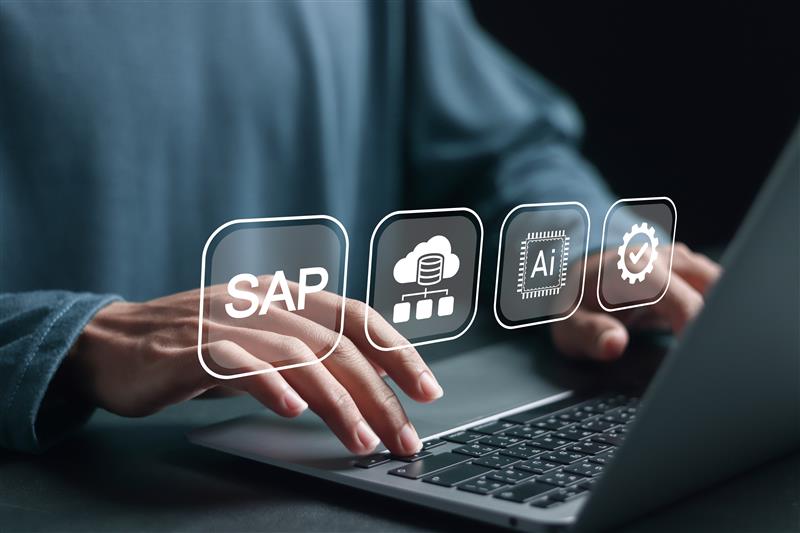
SAP has expanded its Joule AI assistant through a series of integrations designed to embed generative AI directly into enterprise applications and workflows.
The company introduced the integrations incrementally throughout 2025 and highlighted them as part of its Business AI release for the fourth quarter of 2025, presenting Joule as an operational layer that works across systems rather than as a standalone copilot.
The updates reflect SAP’s effort to move AI closer to day-to-day business execution, allowing users to interact with data, applications, and processes through natural language inside existing enterprise tools.
What Joule Integrates With
Joule is designed to operate across SAP’s application portfolio and selected partner platforms, allowing users to interact with enterprise systems through natural language.
SAP has embedded Joule across core applications, including S/4HANA, SuccessFactors, Concur, and Ariba, enabling users to query data, trigger actions, and surface insights within existing business workflows. The integrations are intended to keep AI interactions close to systems of record, rather than routing tasks through standalone tools.
Joule also integrates with SAP Business Data Cloud, giving it access to governed enterprise data while preserving existing security and access controls. Through this connection, Joule can draw on enterprise data without requiring separate data movement or duplication.
In addition, SAP has integrated Joule with Microsoft 365 Copilot, allowing bidirectional interaction between SAP applications and Microsoft productivity tools. The integration enables users to surface SAP data inside Microsoft environments such as Teams or Outlook, while also allowing actions in SAP systems to interact with Microsoft workflows.
Joule connects to SAP’s Generative AI hub, which provides access to multiple AI models under a unified governance framework. This allows SAP to support different model choices while maintaining centralized control over how AI is applied across enterprise processes.
SAP presented these integrations as foundational infrastructure, emphasizing Joule’s role as a connective layer across applications, data, and AI services.
Why Control of the Workflow Layer Matters
As enterprise AI adoption matures, integration is emerging as a more decisive factor.
Many AI initiatives stall because tools sit outside systems of record, forcing users to switch contexts or manually transfer outputs. Embedding AI directly into finance, HR, and procurement applications reduces that friction, making AI part of execution.
This is the role SAP is positioning Joule to play. By operating across SAP, as well as some non-SAP systems, Joule functions as an orchestration layer that connects data, applications, and AI services within governed enterprise environments. The emphasis is on enabling actions, automation, and decision support inside existing processes.
Increasingly, control of the workflow layer appears set to determine which platforms define how work gets done. As AI moves from assistance to execution, the systems that sit inside daily workflows gain leverage over user behavior, data access, and automation decisions.
SAP benefits from deep integration with transactional systems where core business processes are executed. At the same time, many users spend most of their day inside productivity suites and service platforms that sit outside the ERP interface. If AI interactions are initiated and consumed primarily through those external environments, ERP platforms risk becoming execution backends rather than primary control points.
However, enterprises must weigh the convenience of embedded AI against the need for visibility, control, and accountability as AI-driven actions move closer to core operations. Integration increases implementation complexity and expands governance requirements, particularly as organizations experiment with agents and cross-system automation.
The broader question is whether integration alone is enough to drive sustained AI adoption. As AI becomes embedded in workflows, the platforms that successfully combine execution, governance, and orchestration are likely to exert the greatest influence.
What This Means for ERP Insiders
Integration now defines enterprise AI advantage. As AI shifts from experimentation to execution, value increasingly comes from how tightly it is embedded into operational workflows. Tools that sit outside ERPs struggle to influence real business outcomes.
Workflow control is becoming a strategic chokepoint. Platforms that mediate where work happens gain disproportionate influence over automation, data access, and decision-making. This elevates integration layers to strategic assets in enterprise architectures.
Embedded AI increases governance pressure. Moving AI closer to execution amplifies the need for oversight, auditability, and accountability. Enterprises adopting deeply integrated AI must evolve governance models as quickly as they adopt new capabilities.