
Microsoft has published a new round of capabilities across seven Dynamics 365 ERP applications, with features available now or planned through March 2027. Sameer Verma, vice president and chief product officer of Dynamics 365 AI ERP, outlined the plans in a Sept. 23 blog post timed to the inaugural Directions for Enterprise partner event in Copenhagen.
The most consequential item for ERP buyers sits beneath the module news. Microsoft made two agent connectors generally available: the Dynamics 365 ERP plugin for Copilot Cowork and the Dynamics 365 ERP Model Context Protocol (MCP) server. Together, they give agents working in Microsoft 365 a supported route to read and act on ERP records.
The post is also the first large ERP disclosure since Microsoft ended its twice-yearly release waves. It serves some of the planning function previously handled by those release plans, although individual capabilities will now move through the continuous roadmap.
How Agents Reach the ERP Record
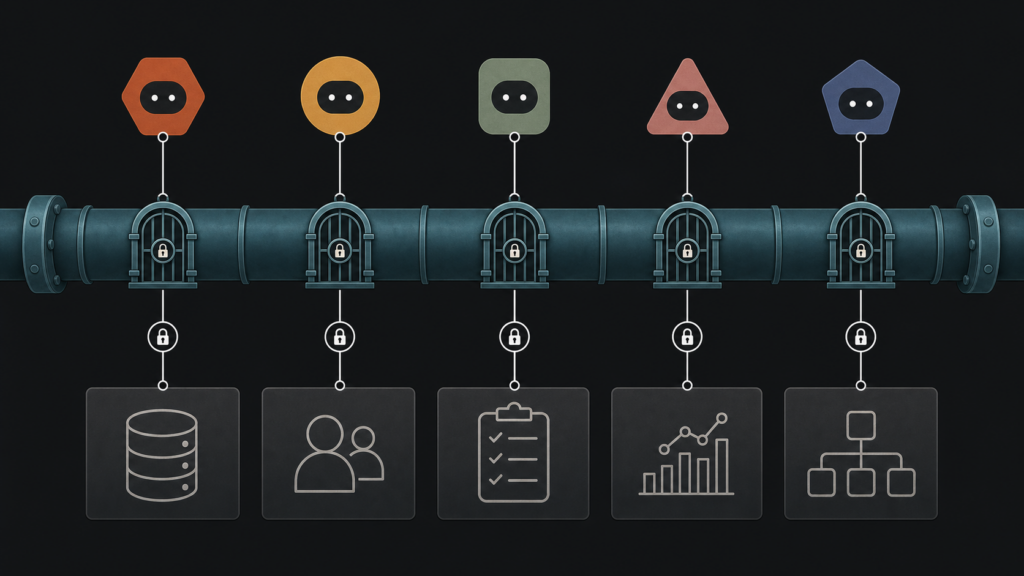
Microsoft’s model keeps Dynamics 365 as the system of record while allowing Copilot and other agents to work across ERP data and Microsoft 365 applications. Dynamics 365 supplies the underlying data, business logic, and security controls, while the plugin and MCP server provide the connection points. Copilot responses can also cite and link back to ERP records.
The next layer is what Microsoft calls business skills. Customers will be able to write reusable instructions for ERP agents, with access managed through existing Dynamics 365 security roles. Microsoft plans prebuilt skills for processes such as procure-to-pay.
A related control will let administrators add restrictions that apply only when a user works through Copilot Cowork or an agent. That separates what an employee can do directly from what an agent can do on the employee’s behalf, allowing organizations to decide whether agents can initiate sensitive ERP actions such as postings or payments.
Microsoft lists both as coming capabilities. Early adopters of the generally available connectors will set agent boundaries with the security model they already have.
Where the Agents Show Up First
Most of the process-level agents are still in public preview or on the roadmap.
In Supply Chain Management, procurement agent impact analysis, now in public preview, traces a supplier’s proposed purchase order change to the sales, production, and transfer orders and projected inventory it would affect. In Field Service, the Scheduling Operations Agent, also in preview, optimizes schedules across multiple technicians and presents the changes for dispatchers to review before they apply them.
Microsoft says its Finance Agent is adding reconciliation and collections skills in Excel, Outlook, and Teams, while the Account Reconciliation Agent will resolve exceptions in bulk with limits and notifications. Human Resources will get agent-assisted candidate assessment and onboarding.
The previews share a pattern: the agent traces impact or proposes a change, and a person decides. That keeps human review inside processes that can affect the ledger, inventory, or operational commitments.
Outside the agent roadmap, Microsoft is also shipping conventional ERP updates, including France e-invoicing and e-reporting support, generative demand-planning insights, and work orders that link directly to Project Operations tasks.
What This Means for ERP Insiders
Define agent permissions before connecting agents. The connectors are generally available now; agent-specific access controls are still coming. Mapping which roles agents may act under, and on which processes, lets teams pilot the connectors without widening who can post or pay.
Treat business skills as process documentation. Skills will turn procedures into reusable instructions for agents. Teams with current, owned process definitions for areas such as procure-to-pay will adopt skills faster and can audit what agents were told to do.
Build a recurring roadmap review. Microsoft’s post is a snapshot, and many listed items are in preview. With Release Planner retiring by Nov. 15, a monthly or quarterly check of the AI at Work roadmap shows when previews reach general availability and keeps adoption plans current.