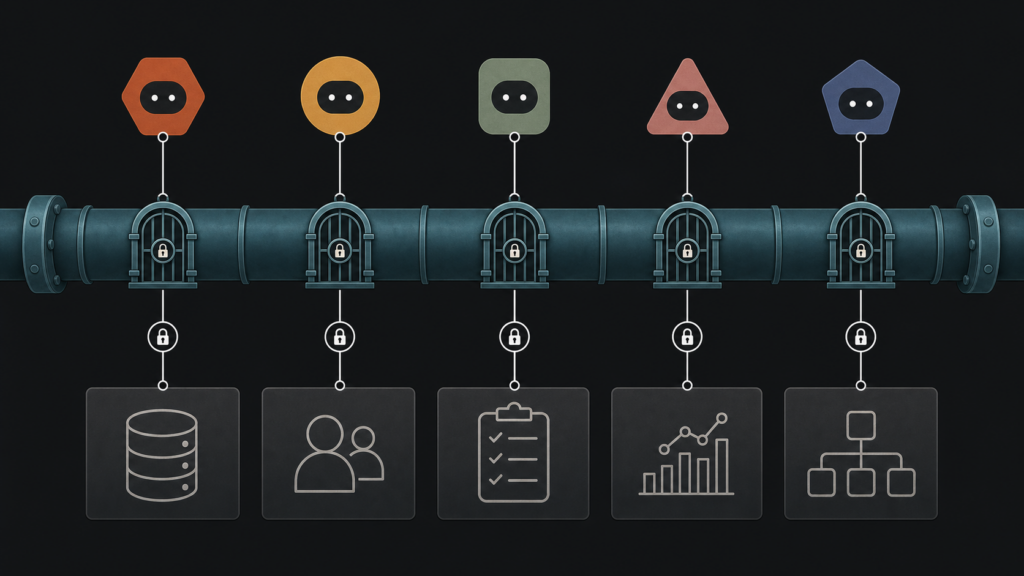
Microsoft is making a direct play for one of ERP’s most persistent problems: Work often happens outside the system, even when the system holds the data, controls, and process logic. It is positioning Copilot Cowork as a new execution surface for ERP work, with Dynamics 365 maintaining the underlying data, rules, and controls.
With the Dynamics 365 ERP apps plugin for Copilot Cowork, announced on May 5 and made generally available on June 16, Microsoft is bringing Dynamics 365 ERP data, workflows, and operational context into Microsoft 365 Copilot. The goal is to let employees investigate issues, coordinate decisions, and move operational work forward from a shared conversational workspace rather than manually stitching together ERP screens, emails, spreadsheets, meetings, and approvals.
ERP Gets a New Working Surface
Historically, ERP users have worked through modules, forms, fields, approval chains, and role-based screens. That structure remains necessary because ERP governs finance, supply chain, manufacturing, procurement, compliance, and other critical business processes. But much of the work surrounding those processes already happens elsewhere in Teams, Outlook, meetings, spreadsheets, documents, and informal decision loops.
The Dynamics 365 ERP apps plugin is designed to bridge that gap. It brings ERP business data and process context into Copilot Cowork so employees can use natural language to work across systems while keeping Dynamics 365 as the controlled operational backbone. This connection is made possible by the Dynamics 365 ERP Model Context Protocol server.
“For the first time, ERP gets a fundamentally new interface layer,” Georg Glantschnig, CVP of Dynamics 365 AI ERP at Microsoft, said. “Not organized around how software works, but around how you work.”
That does not mean ERP becomes less important. It means ERP increasingly functions as the governed system of operational truth while Copilot is the surface where people coordinate action.
From AI Output to Operational Follow-Through
Another gap to overcome is between AI productivity and enterprise execution. Bryan Goode, Corporate Vice President of Business Applications and Agents at Microsoft, described a customer that had rolled out AI broadly but still struggled to translate faster outputs into completed business processes. “The intelligence is there. But it’s still disconnected from how work actually gets done,” the customer told him and added, “We still spend most of our time stitching things together.”
That is something Microsoft is trying to solve with Copilot Cowork and Dynamics 365 plugins. Individual employees may be able to generate analysis, drafts, and recommendations faster, but ERP work still slows when context has to be re-entered, approvals have to be chased, and decisions have to be transferred manually between collaboration tools and transactional systems.
Microsoft illustrates the model through a sourcing and supplier bid evaluation workflow. Using Copilot Cowork connected to Dynamics 365, procurement teams can gather supplier responses from emails and spreadsheets, compare bids against sourcing criteria and ERP policies, generate supplier recommendations and scorecards, coordinate stakeholder reviews and approvals, and prepare downstream purchasing actions from a shared conversational workspace. Copilot Cowork reduces the manual coordination that typically sits between ERP data, collaboration tools, and operational decisions.
Goode tied this to Microsoft’s Work Trend Index findings, noting that organizational factors drive more than twice the AI impact of individual work factors. “The bottleneck isn’t your people, it’s your operating model,” he said.
Copilot Cowork Expands Through Skills, Plugins, Mobile Access
Microsoft is also expanding Copilot Cowork beyond ERP.
The company is bringing Cowork to iOS and Android, allowing users to delegate work away from the desktop and return to completed outcomes. It is also introducing Cowork Skills, reusable instruction sets that capture how a task or workflow should be completed, including structure, tone, process, and team-specific standards.
Plugins extend Cowork into Microsoft and third-party systems. Microsoft announced native integrations across its own products, including Fabric IQ with Power BI, and expanded Dynamics 365 integrations across sales, customer service, and ERP applications. It also released partner plugins with Enosix, Harvey, LSEG, Miro, monday.com, Moodys, Morningstar, S&P Global Energy, and TeamsMaestro. More reportedly are coming soon.
For ERP teams, the important signal is the combination of ERP context, collaboration, reusable workflow intelligence, and governed action. Microsoft is building Cowork as a place where operational work can move across systems without losing process control.
What This Means for ERP Insiders
ERP user experience is moving beyond the application screen. For ERP product leaders and enterprise architects, the Dynamics 365 plugin points to a future where users interact with ERP through intent, context, and collaborative workspaces rather than only through transaction screens. Roadmaps should account for how ERP processes show up in Teams, Outlook, Copilot, and other work surfaces, because user adoption will increasingly depend on reducing handoffs without weakening controls.
Agentic ERP will be judged by execution, not AI novelty. For CIOs, CFOs, procurement leaders, and transformation teams, the sourcing demo shows the practical test of whether AI can carry context from supplier data to evaluation, approval, and downstream purchasing action. The next phase of evaluation should focus on high-friction workflows where decisions already span ERP, email, spreadsheets, and meetings, then measure whether agentic orchestration reduces cycle time and rework.
Governance must travel with the workflow. For risk, compliance, and ERP operations teams, the opportunity is not letting AI bypass ERP controls but making those controls available in the places where work is being coordinated. As Copilot Cowork expands through plugins and custom integrations, organizations will need clear policies for permissions, auditability, approval authority, and exception handling across both Microsoft and partner systems.