
The latest job cuts news comes from Microsoft and shows the AI cost shift reaching another part of the enterprise software operating model: the sales engine. Business Insider reported on July 6 that Microsoft is eliminating about 4,800 roles, or 2.1% of its global workforce, with cuts mostly affecting sales and Xbox. The company’s Xbox division will account for 1,600 of the immediate cuts and plans to reduce 20% of its workforce this fiscal year.
The enterprise signal is the pressure on Microsoft’s commercial organization at the same time the company is pouring investment into AI infrastructure, Copilot, Azure, Dynamics 365, and agentic software. In a memo to employees, Microsoft Chief People Officer Amy Coleman said the eliminated roles are not being replaced by AI. But she also said AI is changing how work gets done and that Microsoft must adapt as customer needs, business models, and the work itself change.
The Sales Engine Question
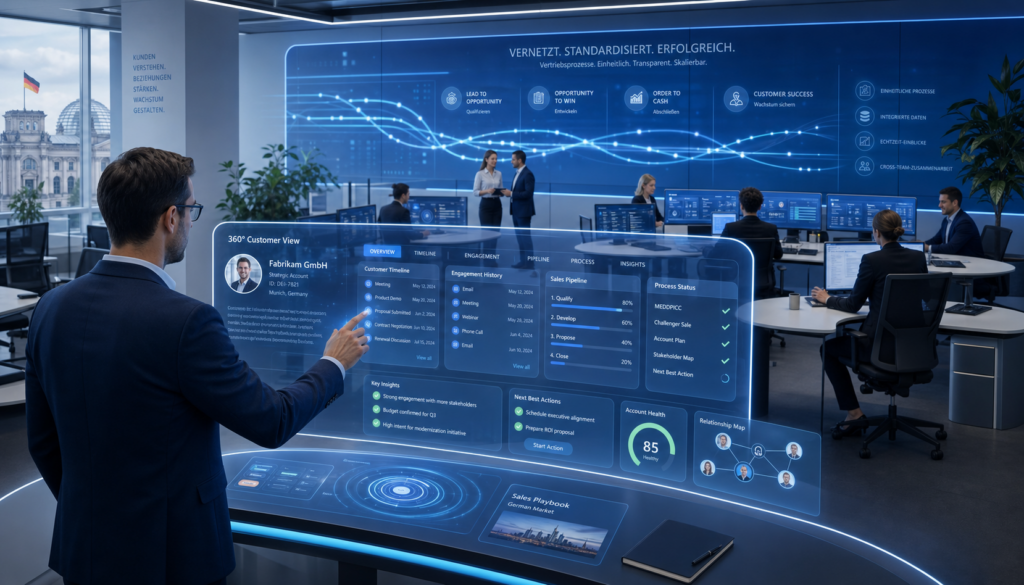
Microsoft’s commercial organization is not just another back-office function. It is the machine that helps take Azure, Microsoft 365 Copilot, Power Platform, Dynamics 365, Fabric, security products, and industry cloud offerings into enterprise accounts. That makes the sales cuts worth watching beyond the headline number.
Enterprise AI is harder to sell than a traditional software seat. Customers need help understanding licensing, consumption, governance, data readiness, implementation sequencing, workflow design, and proof of value. They are also balancing AI spending against existing SaaS commitments, cloud budgets, cybersecurity needs, and ERP modernization plans.
Microsoft’s own results show both sides of the equation. In its fiscal third quarter, Microsoft said its AI business surpassed a $37 billion annual revenue run rate, up 123% year over year. Microsoft Cloud revenue reached $54.5 billion, up 29%, while Azure and other cloud services revenue increased 40%. Dynamics 365 revenue grew 22%.
But AI is also adding cost. Microsoft said cost of revenue in Productivity and Business Processes increased partly because of AI infrastructure investment supporting Microsoft 365 Copilot seat and usage growth. Operating expenses also rose because of research and development compute capacity, AI talent, data, and Copilot advertising.
Microsoft is selling the AI transition while absorbing the economics of that transition itself.
Commercial Coverage Gets Repriced
The layoffs come as Microsoft’s enterprise business is moving toward a more complex revenue model. On the company’s April earnings call, Microsoft said Dynamics 365 bookings growth was affected as customers balanced spending between the traditional per-seat model and an emerging seats-plus-consumption model. That is the same tension now showing up across enterprise AI.
The more AI becomes tied to usage, agents, data, and cloud consumption, the less predictable the old sales motion becomes. A sales team can no longer focus only on signing licenses. It has to help customers understand adoption, metering, workload fit, cost control, implementation risk, and business outcomes.
That may require fewer generic sales layers and more specialized AI, cloud, security, data, and industry expertise. It may also push more delivery and advisory work to partners, customer success teams, and technical specialists.
Coleman’s memo said Microsoft has redeployed more than 4,000 employees into new roles over the past year, including another 500 this month. That detail is important because it frames the cuts as part of a larger workforce reshaping, not only a headcount reduction.
Get Our Free Weekly Newsletter
Does AI Growth Have a Margin Ceiling?
The Microsoft cuts fit a broader pattern across enterprise software. SAP is tightening hiring, travel, and supplier spending as it directs more resources toward Joule, Business AI Platform, and the Autonomous Suite. Companies that once pushed employees to maximize AI usage are now asking whether token consumption produces measurable value.
Per Reuters, Microsoft is joining a broader wave of technology companies cutting jobs while continuing to invest heavily in AI infrastructure. That will define the next phase of enterprise software. Vendors need to fund AI infrastructure and product development, but they also need to prove that AI can expand revenue faster than it expands cost.
Microsoft has a strong growth story in cloud and AI, but customers and investors will keep looking for evidence that Copilot, Azure AI, Dynamics 365, and agentic tools can scale profitably. For enterprise buyers, the question is whether vendor cost discipline improves product focus or reduces the human support needed to make AI adoption work.
The answer will not be the same for every customer. Large strategic accounts may receive more specialized AI support. Smaller or less complex customers may be pushed toward partner-led service, digital support, or more self-service adoption models.
Sponsor Industry‑Grade Research
Customer Support Risk
Microsoft’s enterprise customers are navigating AI adoption at the same time Microsoft is reshaping the organization that supports them. That creates new questions for CIOs, CFOs, ERP leaders, and procurement teams. Who owns the Copilot business case? Who helps connect AI adoption to Dynamics 365, Power Platform, Azure, security, and data architecture? Which work stays with Microsoft, and which work moves to partners?
The answers matter because AI adoption is not a simple activation step. It requires license decisions, governance policies, data readiness, training, process redesign, security controls, and usage monitoring. If sales and customer-facing teams become leaner or more specialized, customers may need stronger internal ownership and more deliberate partner strategy.
Microsoft is not alone. The enterprise software market is moving toward AI-first messaging while still figuring out the staffing, pricing, and support model that makes AI sustainable.
For ERP buyers, that should change the conversation with vendors. The old question was what the AI feature can do. The better question now is who will help make it work, what that support costs, and whether the vendor’s own operating model is changing underneath the customer relationship.
What This Means for ERP Insiders
The AI sales motion is becoming more technical and more economic. Customers are not only buying seats; they are buying usage, data access, agents, integrations, and cloud capacity. That shifts value toward sellers and partners who can explain outcomes, costs, controls, and adoption paths rather than simply push platform expansion.
Vendor AI strategies have a margin test. Microsoft has the growth numbers, but growth alone does not settle whether AI-heavy software models scale efficiently. Buyers should expect more pressure around Copilot pricing, consumption models, partner delivery, and the level of hands-on support vendors can provide as AI becomes a daily operating layer.
AI adoption can expose weak customer ownership models. Vendors may bring the tools, but customers still need someone accountable for usage, cost, workflow fit, security, and measurable value. If vendor coverage changes, that internal owner becomes more important, not less.