SAP’s AI strategy is now reaching the company’s operating budget.
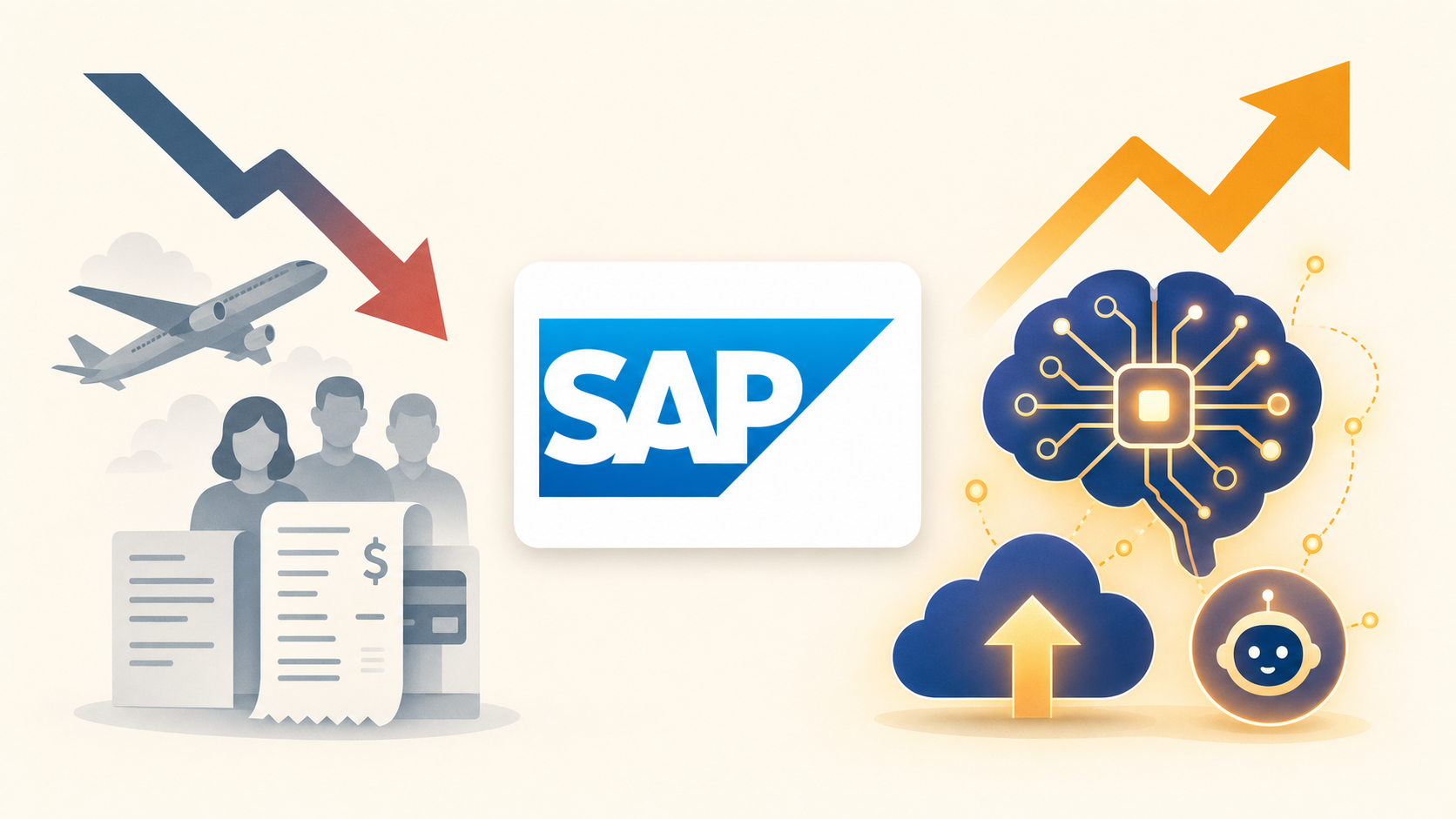
ERP Today reported on July 1 that SAP is reorganizing product and engineering leadership around SAP Business AI Platform, Joule, and the Autonomous Suite. The latest development shows SAP is tightening hiring, internal travel, and supplier spending as it reallocates resources toward AI-related capabilities, talent, and technologies.
CIO reported on July 3 that SAP is limiting hiring and travel spending to help fund its AI transformation. Staff were reportedly told that SAP will focus new hiring on selected profiles, mainly core AI roles considered critical to long-term success. Internal travel unrelated to AI development will also be suspended, and SAP is reviewing supplier spending for possible savings.
An SAP spokesperson told CIO the company continually reviews investments to ensure resources are focused on areas that drive long-term customer value and innovation, adding that SAP is prioritizing AI-related capabilities, talent, and technologies while applying greater discipline to hiring, external spending, and internal travel. Customer-facing activities and critical AI initiatives remain supported.
Analysis
What this means: AI-first strategies are creating tradeoffs customers can feel. SAP is not simply adding Joule and AI agents to the roadmap; it is redirecting hiring, travel, and supplier spending toward the work it believes will drive the next phase of cloud ERP growth. The open question for customers is whether that shift speeds up useful AI delivery or slows investment in less visible but still critical product, support, and implementation needs.
From Reorg to Resource Shift
At SAP Sapphire 2026, the company positioned the Autonomous Enterprise as the next phase of its cloud ERP strategy and introduced SAP Business AI Platform as a governed foundation for building, contextualizing, and managing enterprise AI. It also expanded Joule into a broader work interface, announced more than 50 domain-specific Joule Assistants, and said those assistants will orchestrate more than 200 specialized agents across finance, supply chain, procurement, HR, and customer experience.
Those announcements created an execution challenge. AI agents, assistant interfaces, model partnerships, governance layers, data products, secure runtimes, and migration tooling all require investment. SAP now has to decide which internal work gets funded, which roles get added, which projects get slowed, and which expenses become harder to justify.
The hiring and travel restrictions suggest SAP is treating AI as a company-wide capital allocation priority. Instead of adding AI investment on top of the existing operating model, SAP is redirecting spending toward the parts of the business it believes will determine long-term competitiveness.
Analysis
What this means: Hiring discipline shows where SAP thinks the business is headed. A company that selectively hires for AI roles while tightening non-AI spending is signaling which skills, products, and customer priorities will get the most attention. The functions closest to Joule, Business AI Platform, data, agents, and cloud ERP are likely to get more executive oxygen than areas that do not connect clearly to the AI growth story.
Cost of ‘Going All In’
The cost controls also add context to SAP’s recent leadership changes.
SAP is creating a dedicated Business AI Platform and CTO organization under Philipp Herzig, while a new Autonomous Suite organization under Manoj Swaminathan brings together finance, spend management, supply chain, HCM, customer experience, and Cloud ERP Private.
Those changes concentrated product accountability around the two major parts of SAP’s AI strategy: the platform layer and the application-suite layer. The spending restrictions now point to a matching financial discipline.
AI investment is becoming expensive and operationally complex. SAP must fund AI talent, model access, infrastructure, product development, partner enablement, governance, security, and token consumption while still supporting existing cloud ERP commitments. If AI spending scales faster than revenue impact, the company will face harder questions about profitability, pricing, and customer adoption.
SAP CFO Dominik Asam had already emphasized cost-base management in the company’s first-quarter results. The new spending measures make that discipline more visible inside the AI roadmap.
Analysis
What this means: AI economics are part of the ERP buying conversation. SAP’s reported focus on AI costs, including token usage, points to a market where vendors and customers both have to understand what agentic AI actually costs to run. The next round of customer questions will not stop at whether an AI assistant is included; it will include how usage is metered, what happens as adoption grows, and whether the business case still works after AI moves into daily operations.
Sponsor Industry‑Grade Research
Joule Gets the Budget Test
For SAP customers, the bigger question is whether these cost shifts accelerate the parts of SAP’s AI strategy that customers can actually use. Joule Work, Joule Studio, SAP AI Agent Hub, Business AI Platform, Business Data Cloud, and the Autonomous Suite will be judged by adoption, governance, reliability, integration depth, and measurable business outcomes.
SAP has already made AI central to RISE with SAP and GROW with SAP. At Sapphire, the company said RISE customers will have three Joule Assistants activated within their first year, while GROW customers will receive full portfolio access at onboarding. SAP also introduced a €100 million (approximately $114 million) partner fund to help customers deploy SAP-built AI assistants and agents or extend the platform through Joule Studio.
That gives SAP a path to push AI adoption through its cloud ERP motion. But it also raises the bar for execution. Customers will want to see whether SAP’s internal prioritization leads to faster agent delivery, clearer roadmaps, stronger governance, and lower friction in implementation.
The risk is AI spending discipline becoming an internal efficiency story rather than a customer value story. SAP will need to show that reallocating budget toward AI produces better product velocity and more useful capabilities, not just a leaner cost base.
Analysis
What this means: Joule’s value will depend on execution capacity. SAP has reorganized leadership and is now tightening spending around AI-related priorities, creating clearer accountability for Business AI Platform, Joule, and the Autonomous Suite. Customers should press SAP and partners for specific timelines, use cases, governance details, and adoption support rather than accept broad AI-first messaging.