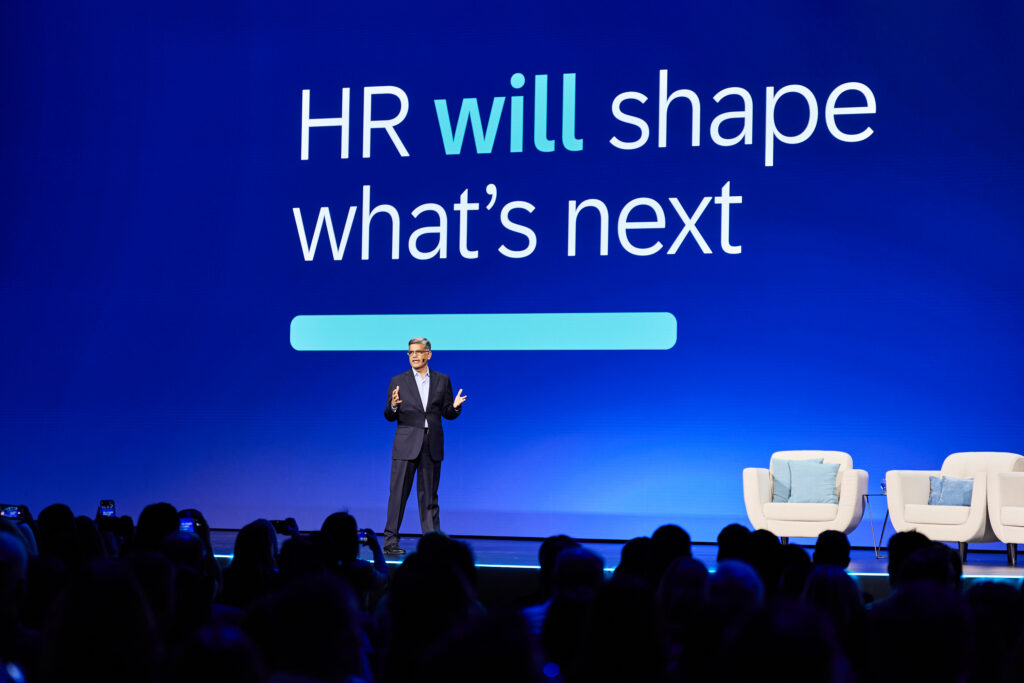


Oracle announced Claw-powered Fusion Agentic Applications for HR at the HR Technology Conference in Las Vegas in October 21, 2026. According to the announcement, the applications sit within Oracle Fusion Cloud Human Capital Management (HCM) and cover work such as adapting staffing plans, aligning workforce demand with capacity, and accelerating recruiting and payroll operations.
The applications run on Oracle Fusion Claw, which Oracle announced on September 29, 2026, as a governed agentic execution runtime for Fusion Agentic Applications. Oracle says Claw lets those applications carry out deep research, computation, simulation, modeling, and continuous re-planning. The applications are built and managed in Oracle AI Agent Studio for Fusion Applications, which gained an Agentic Applications Builder in March 2026.
Claw Applications Cover Workforce Planning, Recruiting, and Payroll
The latest release names seven applications in three groups.
Workforce planning:
- Workforce Orchestration develops plans that balance demand shifts, cost, and operational continuity, then coordinates and launches actions approved through organizational review.
- Positions Command Center connects position, employee, recruiting, cost, and approval data to surface conflicts, then routes corrective actions for review.
Talent acquisition:
- Candidate Sourcing groups candidates against workforce demand and coordinates outreach and follow-up within established recruiting processes and approvals.
- Recruiting Command Center brings together job, candidate, interview, feedback, offer, and demand data, and prepares next steps for recruiter approval.
Workforce rewards and payroll:
- Workforce Compensation evaluates options against employer-defined criteria, budgets, pay guidelines, and equity considerations, then prepares plans for human review.
- Payroll Command Center reviews employee data, imports, timecards, retroactive changes, and historical patterns to flag potential issues and improve run readiness.
- Payroll Activity Workspace compares current pay, balances, and costs with prior periods, highlights material variances, and prepares follow-up actions for review and approval.
The announcement does not give availability dates or pricing.
Approvals and Employment Decisions Stay With the Organization
Lew Thompson, senior vice president of Applications Development at Oracle, describes the applications as working across Oracle Fusion Applications data, coordinating the steps needed to reach a business objective, and carrying out “human-approved actions.”
That approval step runs through all seven applications. Workforce plans launch only after organizational review, corrective actions for position conflicts go through an approval route, and compensation plans reach people as recommendations to review.
How much each application does without a person is a setting, and it can change over time. Oracle says autonomy is configured to fit an organization’s governance requirements and the process involved. Oracle describes a typical path in which people approve every action at first, then agents handle routine tasks while people review exceptions and edge cases.
Responsibility for employment decisions stays with the employer throughout. Oracle states that organizations decide what human oversight, approval processes, and controls apply to these workflows, consistent with their own policies and applicable legal requirements. Oracle AI Agent Studio supports that oversight, and Oracle says it provides observability, ROI measurement, and safety controls for the applications built in it.
What This Means for ERP Insiders
Documented approval rules set the starting point. The applications work within the approval processes and controls an organization defines. HR and payroll teams with current, written rules for position changes, offers, and pay reviews give each application clear limits and a faster path to testing.
Review roles for pay and hiring need naming early. Compensation and payroll recommendations affect employees directly, and Oracle leaves employment decisions with the customer. Agreeing who reviews each recommendation, and on what evidence, keeps accountability clear when a result is questioned.
Results should guide how much autonomy to extend. AI Agent Studio provides observability and ROI measurement, and Oracle describes a gradual path from human approval of every action toward more autonomous execution. Tracking what each application delivers at the approval stage gives teams evidence for every step that follows.