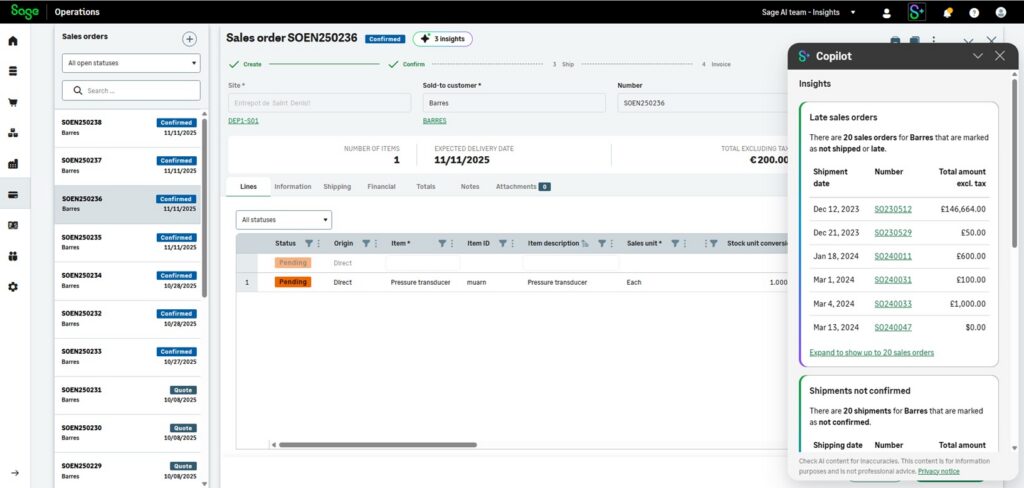
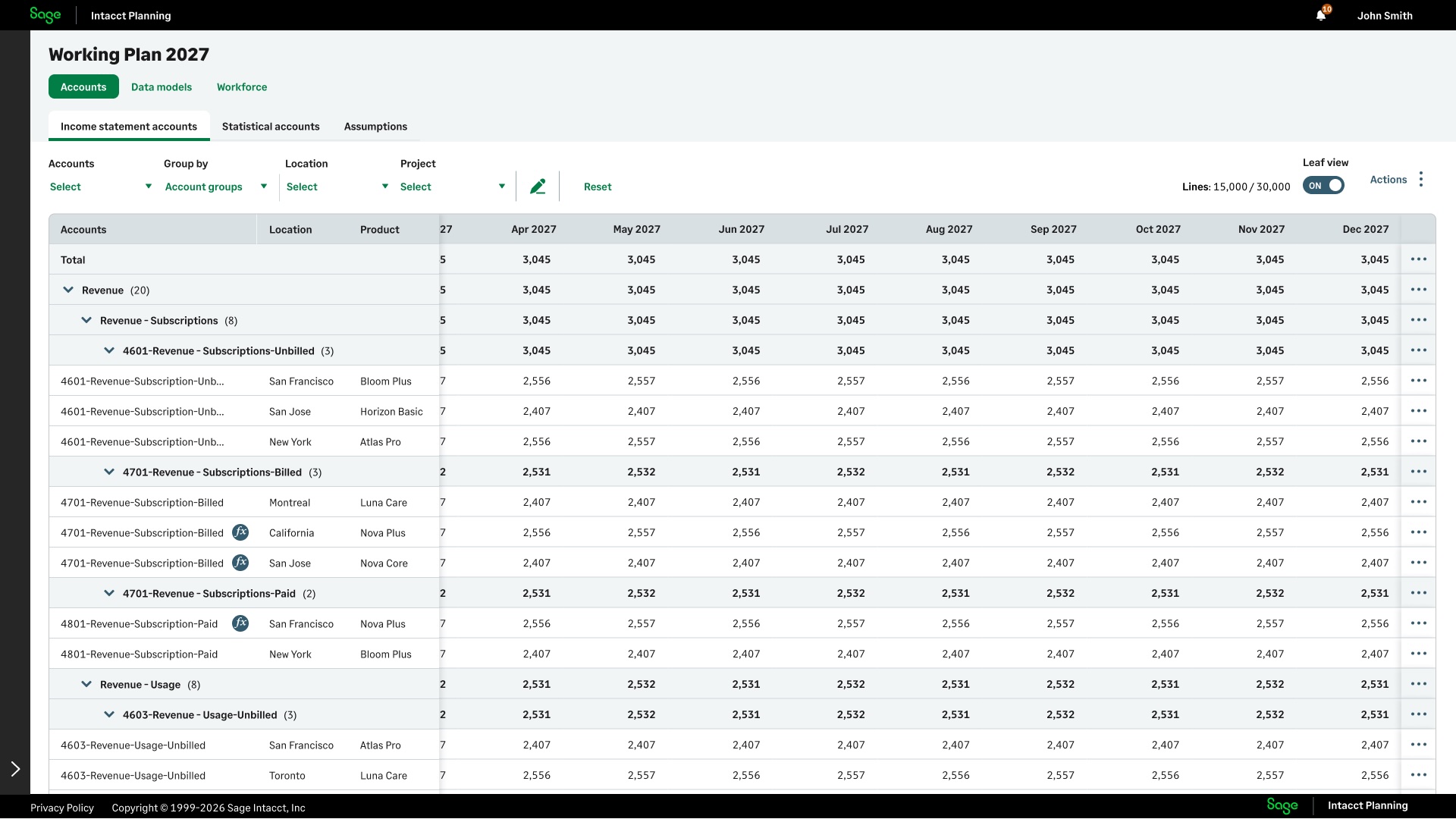
Sage is deepening its connected finance story with new Sage Intacct capabilities that tie planning, spend management, cash flow and industry specific workflows into a single mid market platform. The updates, unveiled ahead of Sage Future in San Francisco, are aimed at finance leaders who need faster guidance from their systems without losing control of core processes.
This will be highlighted during the Sage Future Conference in San Francisco from April 28-30, which ERP Today will be covering.
Analysis
What This Means for ERP Insiders
Connected Finance Platforms Will Anchor Mid-Market Strategy. Sage Intacct’s combination of planning, expense management, receivables and industry workflows in one platform illustrates how mid market ERP decisions increasingly revolve around connected finance cores rather than point solutions.
Planning, Spend And Cash Flow In One View
Many mid-sized organizations still rely on disconnected planning tools, expense systems and receivables workflows, which slows decision cycles and obscures risk. The latest Sage Intacct release targets that fragmentation by enhancing Sage Intacct Planning, expanding Sage Expense Management and adding new receivables and payment capabilities in the upcoming R2 2026 release.
“Finance leaders tell us the same thing: they need to move quickly without sacrificing control,” said Dan Miller, EVP Financials and ERP at Sage in a press release. “By connecting workflows across the business, we’re helping teams work from a clear picture of what’s happening and respond with confidence. These enhancements continue our focus on keeping people firmly in charge, with technology that improves clarity and supports the judgement that drives performance.”
Enhanced Sage Intacct Planning, or eSIP, introduces a redesigned planning engine that supports complex models and live collaboration and is natively connected to Sage Intacct Financials. Plans, actuals and dimensions live in one environment, so controllers and FP&A teams can update scenarios quickly and see impacts on P&L, balance sheet and cash without exporting data to external tools.
“Enhanced Sage Intacct Planning is already a powerhouse for budget and planning management, but I am incredibly excited about the upcoming Workforce Planning feature,” says Braam du Plooy, controller at Atlanta Convention & Visitors Bureau in a press release. “We’ve been waiting for a way to move beyond static spreadsheets, and the prospect of managing headcount modeling and budgeting directly within the portal is a total win. It’s the tool we need to stay agile, and I can’t wait to see how it transforms our next planning cycle.”
On the spend side, Sage Expense Management, now available in the United States, adds AI powered recognition, simplified capture and modern policy handling to control expenses more effectively. New receivables and payment features will streamline the path from invoice to payment and improve visibility into cash position, allowing treasury and finance teams to act sooner and reduce time spent chasing information. Integration with Sage HCM brings workforce data into these workflows, providing better insight into labor spend and compliance as part of the same financial picture.
Analysis
What This Means for ERP Insiders
Industry Workflows Will Matter As Much As Generic Features. The expansion of PolicyConnect, Lending Management, Operations and construction workflows shows that sector specific processes embedded in ERP will become key differentiators for finance leaders facing complex regulatory and operational requirements.
Industry Workflows Embedded In The Finance Core
Beyond horizontal finance, Sage is extending Intacct with deeper industry workflows that reflect how customers in specific sectors operate. PolicyConnect connects policy and financial data for insurers, helping finance teams improve forecasting, risk management and reporting alignment. For lenders, Lending Management links lending and finance workflows to reduce errors, simplify audits and increase visibility into performance and risk.
For product centric industries such as distribution and manufacturing, Operations for Sage Intacct provides better visibility across inventory, sales and operations, along with enhanced pricing, fulfillment and tax workflows. In construction and real estate, Sage is rolling out AI powered estimating and deeper project workflows to help teams reduce manual work and manage project performance more effectively.
Industry workflows are predefined process flows embedded in Intacct that guide users through sector tailored steps and data, whereas AI agents are autonomous, task oriented components that can analyse data and complete end to end tasks under human oversight. For technology executives, that distinction matters when designing governance models and deciding where to allow automation to act versus where to keep processes more prescriptive.
Sage positions these updates as a way to keep finance teams moving quickly without sacrificing control. By connecting workflows that previously spanned multiple systems, Intacct aims to reduce manual handoffs, improve real time visibility and create a stronger foundation for forecasting and performance analysis. Partners gain a richer platform for advisory services, with more touchpoints across planning, spend, cash and industry operations to help mid market customers navigate change and scale.
Analysis
What This Means for ERP Insiders
AI Agents And Workflows Require Clear Governance Models. Sage’s distinction between autonomous AI agents and guided industry workflows underscores that future ERP architectures must define when automation can act independently and when structured processes should direct users, shaping risk and compliance strategies.