
Salesforce has introduced new capabilities across its Agentforce AI platform, including a new Agentforce for Communications offering that provides AI agents for telecom customer service and sales workflows, a metric to measure AI‑driven work, and expanded AI‑powered IT service management capabilities.
The developments reflect Salesforce’s strategy to operationalize agentic AI in enterprise workflows, positioning autonomous software agents as a digital workforce embedded within customer service, IT operations, and industry‑specific applications.
Agentforce for Communications Targets Telecom Customer Experience
Salesforce launched Agentforce for Communications, a set of prebuilt AI agents designed specifically for telecommunications providers.
The solution provides out‑of‑the‑box AI agents that assist sales and customer service teams with real‑time intelligence, helping telecom operators resolve customer issues faster, reduce churn, and identify upsell opportunities during customer interactions.
Built on Salesforce Communications Cloud and the Agentforce platform, the offering enables telecom companies to deploy automated support capabilities across channels while maintaining access to customer data and operational workflows.
According to Salesforce, the goal is to transform routine customer service interactions, such as billing inquiries or service issues, into opportunities to strengthen customer relationships and generate additional revenue.
David Fan, senior vice president and general manager of communications at Salesforce, said: “With Agentforce for Communications, we’re helping telecom companies work smarter by connecting every part of their business, from sales to customer service to field operations, with AI agents that work 24/7 alongside human teams. Whether it’s resolving billing disputes, managing subscriptions, or accelerating complex B2B quotes, we’re enabling telecom companies to compete in the AI era by improving efficiency, driving growth, and freeing teams to focus on what matters most.”
Analysis
What This Means for ERP Insiders
Industry‑specific agents signal the next phase of enterprise AI. Instead of generic copilots, Salesforce is packaging AI agents tailored to vertical processes such as telecommunications customer service. This suggests that the next wave of enterprise AI adoption will likely come from domain‑specific agents embedded in industry workflows.
Defining the “Agentic Work Unit”
Salesforce also introduced a new measurement framework called the Agentic Work Unit (AWU).
According to the company, an AWU represents a single discrete task executed by an AI agent – such as updating a CRM record, triggering a workflow, resolving a support case, or making a business decision.
Salesforce says the metric is intended to complement traditional AI usage indicators such as tokens and seat licenses by quantifying the actual work completed by AI agents within enterprise applications.
By measuring the volume of work completed by AI agents, Salesforce aims to give organizations a clearer way to evaluate the operational impact of autonomous AI systems deployed across the platform.
For instance, the company said it has generated 2.4 billion Agentic Work Units to date, including 771 million in the fourth quarter alone, up 57% quarter-over-quarter.
Analysis
What This Means for ERP Insiders
AI agents are moving from pilots to measurable work. By introducing the Agentic Work Unit, Salesforce is attempting to quantify the output of autonomous AI systems rather than simply tracking usage metrics like tokens or licenses. For enterprise leaders, this reframes AI from an experimentation tool into something closer to a measurable digital workforce.
Agentforce Expands into IT Service Management
Salesforce also highlighted growing adoption of Agentforce for IT Service, which applies autonomous agents to IT service management (ITSM) workflows. The company said more than 180 organizations have already adopted the platform.
The platform can automatically create, summarize, and resolve IT incidents, helping internal support teams handle employee service requests more efficiently while shifting routine support tasks to AI‑driven agents.
These agents can operate across enterprise systems, using organizational data and workflows to triage incidents, recommend solutions, and automate follow‑up actions.
Muddu Sudhakar, senior vice president and general manager of agentic IT and HR service at Salesforce, said: “The ‘portal-to-ticket’ era is dead. With hundreds of customers already adopting Agentforce IT Service, we are seeing fierce momentum that proves the industry is ripe for disruption powered by agentic workflows and AI agents. While legacy ITSMs limit progress with complex pricing and rigid silos, Agentforce IT Service transforms your organization into an Agentic Enterprise and, proactively, securely, and autonomously resolves issues 24/7. We aren’t just adding features; we’re delivering a unified, AI-native platform that gives IT teams the freedom to innovate without boundaries.”
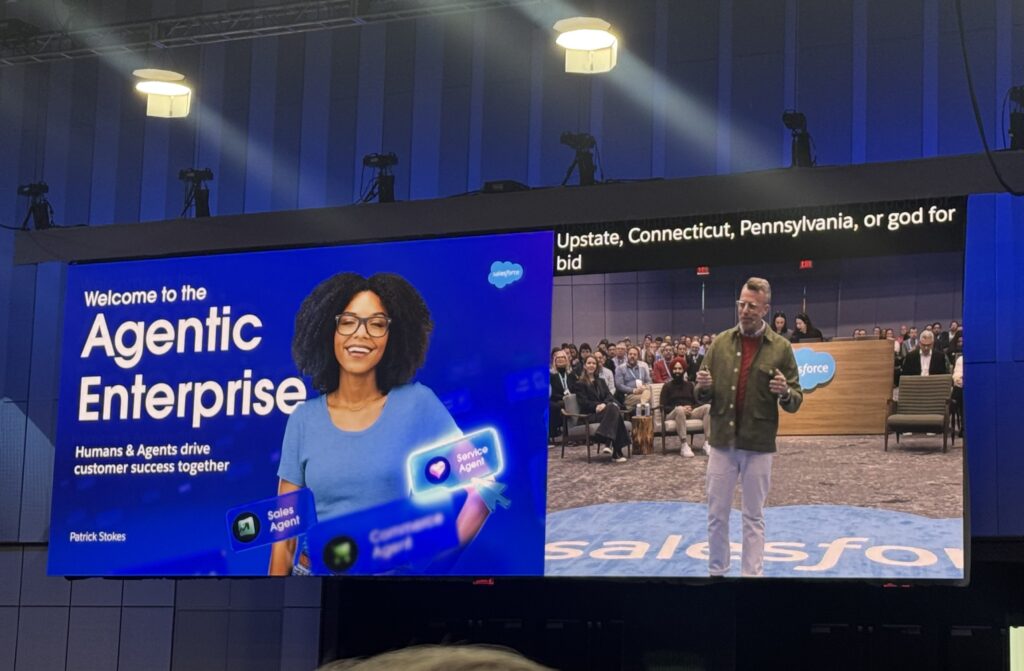
The announcements reflect Salesforce’s broader push toward what it calls the “agentic enterprise,” where AI agents operate alongside human employees to complete operational tasks across sales, service, marketing, and IT functions.
Analysis
IT operations may become an early proving ground for agentic automation. IT service management environments are structured, process‑driven, and rich in operational data, making them well suited for autonomous agents. If platforms like Agentforce can reliably automate incident handling and support workflows, IT teams could become one of the first enterprise functions to deploy AI agents at scale.