ERP modernization for mid-sized manufacturers and distributors should begin with connected, dependable data from operations, Syspro argues, with the decision about where the ERP runs made separately. The company has tied a subscription, an industrial AI platform, and a next-generation release to the data-first approach.
Syspro Torque, an AI platform now in controlled release, layers over the ERP and the other systems already in a plant. It detects a problem, recommends a response, and carries out the action once a person approves it or a trusted workflow has been cleared to run unattended.
Connected Data Comes First, Deployment Second
A cloud migration can place the biggest transformation effort ahead of any tangible payoff, in Syspro’s view. The company’s sequence starts with connected data from operations and a view across the whole business, then applies AI to interpret that information and guide decisions.
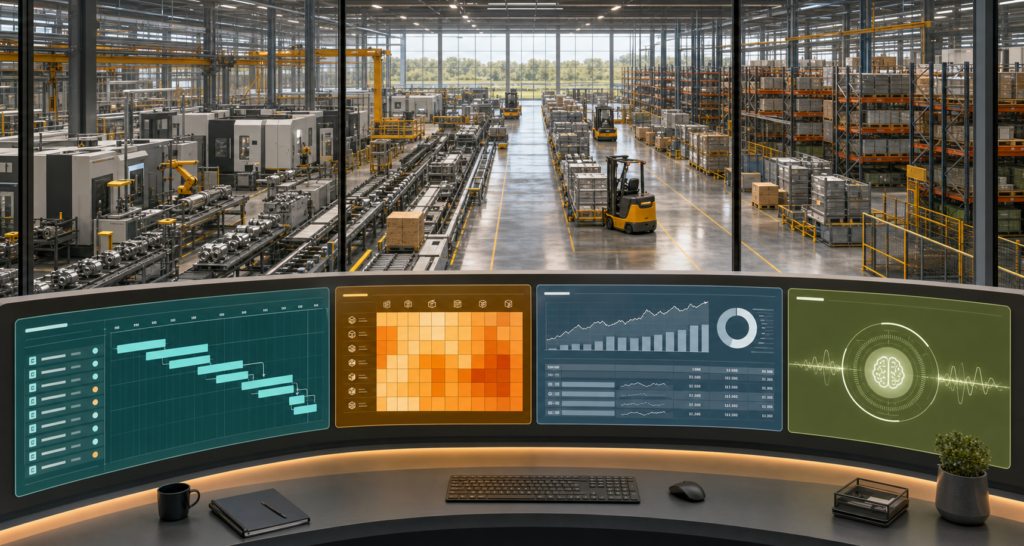
Torque supplies the AI stage while the ERP keeps running every transaction. Open standards connect it to the plant’s manufacturing execution, warehouse, and shop floor systems. In Syspro’s example, a supplier delivering two days late affects schedules, staffing, customer promises, and cost together. Torque traces the exposure and recommends a response, then the action runs in existing systems after a person approves it.
Each action Torque takes is recorded with the rule, data, and reasoning behind it. Where the software runs stays with the customer, and Syspro supports on-premises, cloud, and hybrid deployments, including Syspro Cloud ERP on Microsoft Azure for businesses ready to outsource infrastructure. Multi-site operations can match each plant to its own model.
What Is Available Now and What Is Planned
The company has moved from an initial license fee plus an annual fee to a named-user subscription covering the full set of Syspro modules. U.S. customers have until December 31, 2026 to switch. Syspro Torque Lite, available now, arrives with the subscription, and customers can register for it today.
Since August, Torque has run in a controlled release program whose participants span fabricated metals, industrial equipment, and food and beverage, and include mid-market manufacturers alongside distributors whose revenue tops $2 billion. Pricing follows usage, with a cost estimate shown before each workflow runs.
The next-generation Syspro platform is planned for general availability in the first half of 2027, after a pilot with a limited set of customers in December 2026. Syspro describes it as an upgrade for existing customers, who keep their data, business logic, and configuration along with their customizations, and on-premises deployment remains available.
What This Means for ERP Insiders
AI sits above the system of record. The ERP continues to run every transaction, with Torque layered over it and the plant’s other systems. Syspro treats the ERP as the transactional core and Torque as the layer that coordinates across everything around it.
Deployment choice extends to AI adoption. Syspro keeps hosting open across its subscription, Torque, and next-generation platform. Torque connects to a plant’s systems in the cloud, on-premises, or a mix of environments, and Syspro presents hosting and AI adoption as separate decisions.
Manufacturers set how much AI decides. Approval levels and decision logs are built into Torque, from sign-off on each action to trusted workflows running alone. The customer controls how far autonomy extends, and every decision is logged with the rule and reasoning behind it.