Syspro’s move into the Leader quadrant of the 2026 Nucleus Research SMB ERP Technology Value Matrix, announced on June 10, gives midmarket manufacturers and distributors a sharper signal in a crowded ERP market. Industry depth still matters when buyers are trying to modernize without adding operational complexity.
Nucleus Research advanced Syspro from its previous Expert position and also named Acumatica, Epicor, Infor, Oracle NetSuite, and Rootstock, as Leaders in this year’s small- and medium-sized businesses (SMB) ERP market.
The recognition reflects a broader shift in SMB ERP evaluation. Nucleus Research said the SMB ERP market is increasingly defined by the need to balance operational sophistication with simplicity, as growing companies face labor constraints, higher costs, customer expectations, and more complex inventory, procurement, manufacturing, and supply chain processes.
Why Syspro Moved Up
Nucleus Research evaluates vendors on functionality and usability, two factors it describes as key drivers of value. SMB ERP buyers are looking for systems that reduce manual work, improve visibility, and support growth without requiring proportional increases in headcount or administrative overhead.
Syspro’s promotion reflects improvement on both sides of that equation. According to Syspro’s announcement, Nucleus Research highlighted the vendor’s manufacturing-focused approach, operational flexibility, business intelligence, workflow automation, and ability to support end-to-end processes across manufacturing and distribution environments.
Nucleus Research also pointed to Syspro’s delivery-agnostic model, including cloud, privately hosted, and on-premises deployment options. That flexibility is important for industrial companies that may have plant-floor constraints, security requirements, infrastructure dependencies, or regional operating models that do not fit a single cloud migration pattern.
Analysis
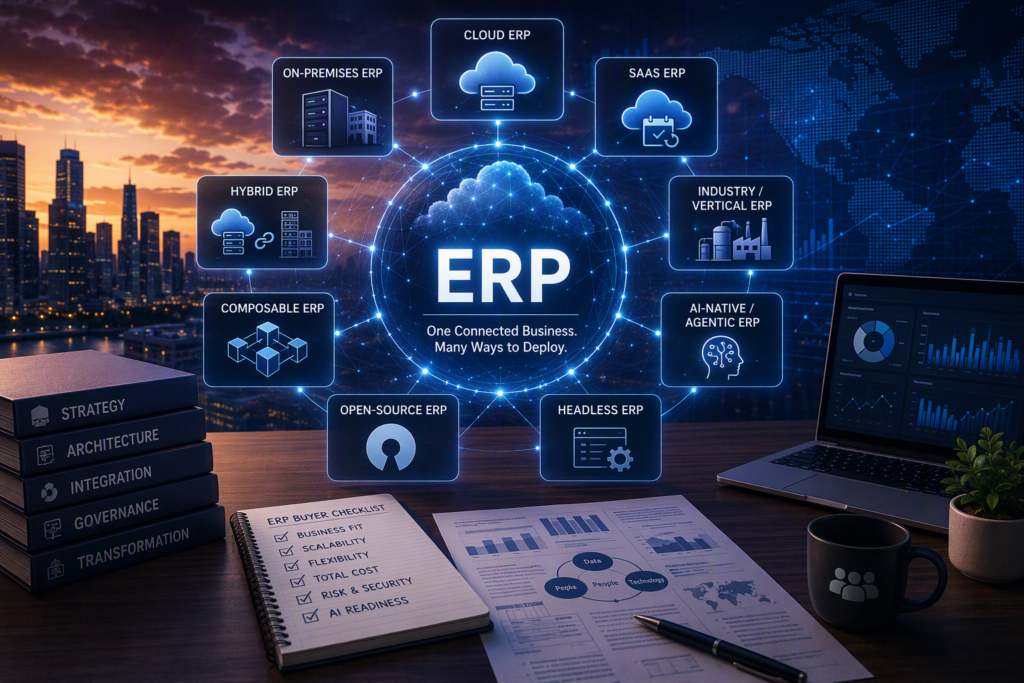
What this means: Deployment flexibility is a strategic leg up for industrial ERP. Syspro’s support for cloud, privately hosted, and on-premises models gives manufacturers and distributors more room to align modernization with plant-floor systems, security constraints, and infrastructure realities instead of forcing every buyer into the same cloud path. Manufacturers planning ERP modernization should pressure-test deployment options early, as infrastructure fit can determine whether a project accelerates operations or creates new constraints.
Sponsor Industry‑Grade Research
Manufacturing Depth Is the Differentiator
Syspro’s case is strongest where ERP requirements are shaped by production and distribution complexity rather than generic back-office needs.
The capabilities highlighted in the Nucleus Research review include Sidekick AI Knowledge Assistant, expanded document and transaction automation, AI-assisted invoice processing, document extraction, automated purchase order-to-sales order workflows, Power Tailoring, a modern web-based reporting service, and expanded digital payment capabilities.
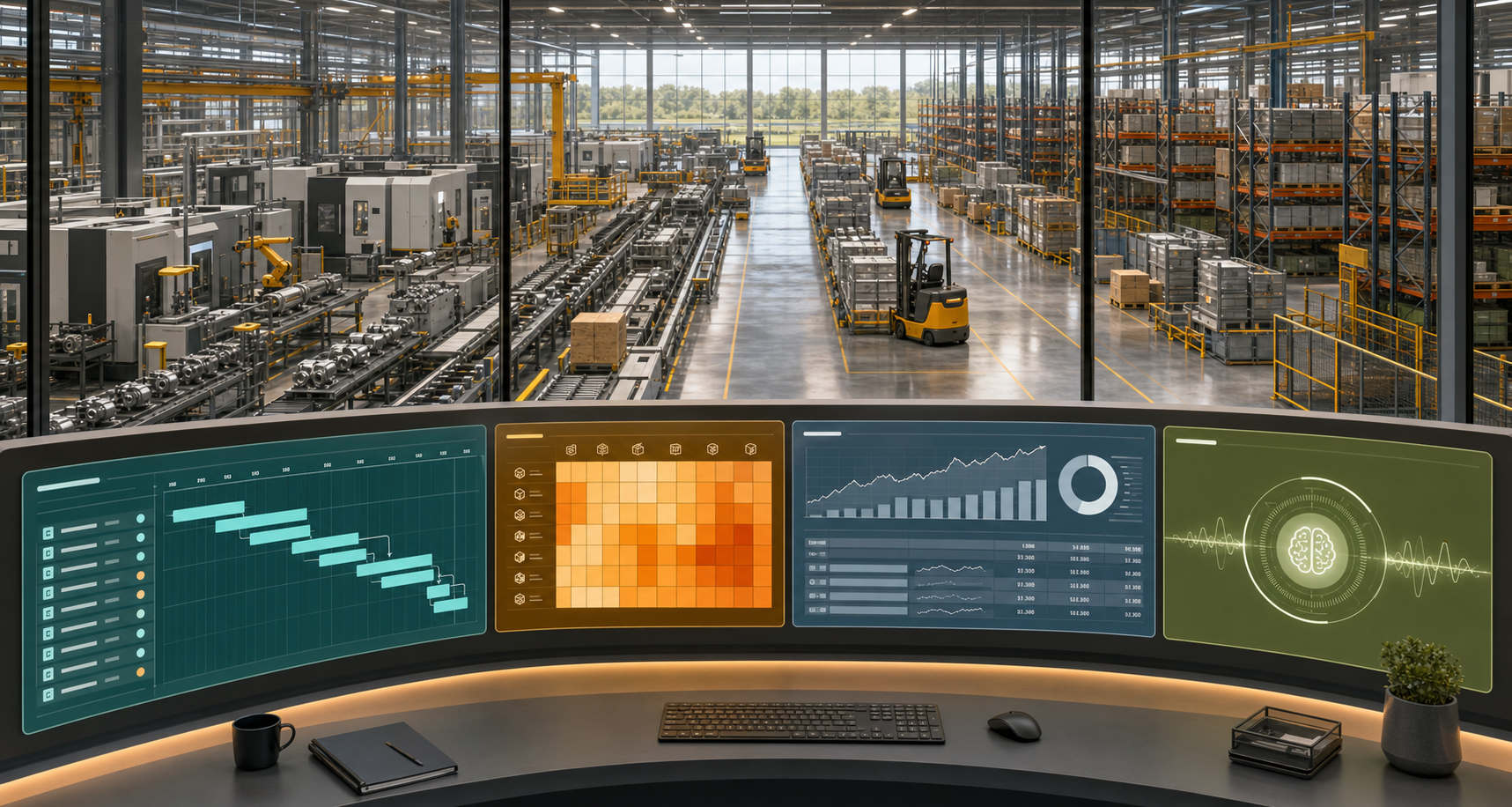
Syspro is not positioning AI as a separate innovation layer. It is placing automation and intelligence inside ERP workflows where manufacturers and distributors already manage transactions, exceptions, production visibility, reporting, and cash flow.
The company’s recent acquisitions paint the same picture. Syspro’s acquisitions of riteSOFT, NexSys, DATASCOPE, and Evocon are contributors to its expanded manufacturing execution and warehouse management capabilities. Those additions strengthen Syspro’s digital manufacturing portfolio with warehouse mobility, real-time production monitoring, shop floor automation, and traceability.
Competitively speaking, Syspro seemingly is not trying to out-broaden the largest ERP suites. It is trying to out-focus them in operational environments where ERP value depends on plant, warehouse, finance, and supply chain coordination.
Analysis
What this means: Syspro’s promotion validates industry-specific ERP as a serious midmarket growth strategy. Manufacturing and distribution buyers are rewarding vendors that understand production, warehousing, traceability, and operational execution as core ERP requirements, not adjacent modules. ERP providers competing in this segment will need to prove industry depth at the workflow level, not just package manufacturing as a vertical template.
The Buyer Question Changed
The SMB ERP market is no longer a simple choice between lightweight systems for smaller companies and enterprise suites for everyone else. Nucleus Research’s 2026 matrix suggests that SMB organizations are adopting more advanced capabilities earlier, including multi-entity consolidation, intercompany accounting, advanced inventory visibility, compliance support, embedded AI, and workflow automation.
That creates an opening for vendors that can deliver industry-specific depth without imposing enterprise-suite complexity. It also raises the bar for due diligence.
For CIOs, CFOs, and ERP program leaders, Syspro’s Leader status should narrow the evaluation questions. Buyers still need to test fit against manufacturing modes, existing warehouse and shop-floor systems, reporting needs, integration requirements, partner capacity, deployment model, and long-term AI roadmap.
Analysis
What this means: Embedded AI will win or lose on workflow relevance. Syspro’s highlighted capabilities focus on invoice processing, document extraction, reporting, transaction automation, and contextual guidance, which aligns with the practical automation use cases Nucleus Research says SMB buyers now prioritize. Vendors that want AI adoption to move beyond demos should anchor it in high-friction ERP tasks where users already trust the underlying process logic.