Analytics and AI

Artificial Intelligence (AI) and analytics are indispensable in propelling digital transformation efforts, particularly influencing Enterprise Resource Planning (ERP). With the rapid progression of technology and computing power, organizations across various sectors are generating immense amounts of data daily, impacting ERP processes. The significance of this data lies in its potential to extract actionable insights, facilitate strategic planning, and drive innovation within the ERP framework. In this context, AI and analytics emerge as pivotal tools, facilitating the extraction of value from the vast amounts of data generated and collected across the enterprise, optimizing ERP functionalities. Analytics is commonly categorized into descriptive, prescriptive, diagnostic, and predictive types, enhancing the ERP landscape. AI algorithms contribute not only to predictive and prescriptive analytics but also empower companies to develop innovative ERP capabilities, exemplified by advancements such as Industry 4.0.

IFS Is Building the Operations Layer Around Industrial AI
IFS’s Softeon acquisition is only one part of a broader push to connect warehouse execution, logistics optimization, MRO, asset management, and ERP around Industrial AI.
Why Finance AI Needs Guardrails: Sage Intacct’s Next Test Is Data Control
Sage Intacct 2026 R2 moves the connected finance story into data-control territory, with AI Gateway, intelligent 3-way matching, and construction workflows showing why finance AI needs guardrails before automation can scale.
GenAI in ERP Needs a Smaller Starting Point and a Harder Business Proposition
Enterprise leaders, while ambitious in their generative AI strategies, face a significant gap between their AI aspirations and actual production adoption, as illustrated by Mukesh Kumar's insights on targeted automation in ERP systems addressing specific, high-impact problems.
Top ERP Today stories and H1 2026 enterprise technology trends across AI, cloud, SAP, robotics, and infrastructure
10 Stories That Defined Enterprise Tech in H1 2026 and What They Say About the ERP Market
ERP Today’s most-read stories in the first half of 2026 reveal a market moving from AI enthusiasm into harder questions about pricing, governance, infrastructure, cloud costs, and operational execution.
ServiceNow and Accenture
ServiceNow and Accenture Are Going After Cyber Risk’s Legacy Platform Problem
ServiceNow and Accenture have launched a joint AI-powered offering to help enterprises migrate from legacy cybersecurity and risk platforms to integrated managed services on the ServiceNow AI Platform, combining agentic AI with risk management, GRC, third-party risk, and OT security monitoring.
SAP procurement automation
SAP Procurement Agents Are Reaching the Front Door of Spend Management
SAP's Joule AI capabilities, set for general availability across Ariba and Fieldglass in June 2026, aim to enhance procurement processes by automating intake, contract creation, and workforce operations while urging spend teams to ensure proper governance and integration before widespread adoption.
Secure enterprise corridor representing Microsoft Power Platform governance and AI agent access
Microsoft Power Platform Narrows the Access Gap for ERP Agents
Microsoft's June 2026 Power Platform updates introduce Advanced Connector Policies that govern AI agent access to SAP systems at the action and MCP server level. ERP leaders must understand what the new controls mean for low-code automation, connector visibility, and enterprise AI compliance.
Can AI Break the ERP Change-Order Cycle? Tessera Labs Just Raised $60M to Try
Tessera Labs’ $60 million funding round puts a spotlight on AI-native ERP modernization, raising a new question for CIOs: how much of the migration, data, code, and documentation work that once required large consulting teams can now be automated without weakening governance?
Why AI Ambitions Still Depend on IT Modernization: METRO’s Migration Program
International food wholesaler METRO AG has completed a multi-year data center migration program with Wipro, moving legacy IT operations into a modern multi-cloud ecosystem to enable enterprise-scale AI adoption, automation, and cloud-first digital transformation.
IHH Healthcare System Standardization Shows the Hard Part of a Multi-Country ERP Transformation
IHH Healthcare has selected Infosys for a multi-year, enterprise-wide ERP transformation using the Infosys Topaz AI-first platform to standardize business processes across Hong Kong, Malaysia, and Singapore, covering finance, procurement, supply chain, HCM, and enterprise performance management.
Oracle and AWS Cloud Database
Oracle Takes On the Federal Government’s HR Patchwork
The US Office of Personnel Management (OPM) has awarded Oracle a $395.8 million Federal HRIT Modernization contract to deliver the federal government's first government-wide HR platform using Oracle Fusion Cloud HCM, designed to replace more than 100 separate agency systems and consolidate workforce management for 2 million civilian employees.
Who Governs AI Agents When Workflows Cross Platforms?
As AI agents expand across ERP, cloud, and workflow platforms, enterprise leaders face a critical governance challenge: who owns accountability when data, models, and audit trails are fragmented across multiple systems. This analysis explores the control plane problem and what ERP teams must do to prevent agent sprawl.
ERP Migration
Can Headless ERP Change the Migration Math?
Headless ERP is emerging as a third option for organizations facing SAP ECC end-of-life deadlines: rather than migrating the core or abandoning it, enterprises can layer an AI-driven agentic interface over APIs while keeping the legacy system running. This analysis examines the architecture, risks, and real-world implications for CIOs weighing the headless ERP migration equation.
Intapp Says Professional Firms Solved the Wrong AI Problem
Intapp’s Firm AI blueprint reframes the professional-services AI debate around the business of the firm, arguing that individual productivity tools will not change firm economics unless AI reaches intake, conflicts, staffing, pricing, relationships, compliance, and institutional judgment.
SAP AI partnerships
SAP’s AI Partnership Sprint Shows What Its Autonomous Enterprise Still Has to Prove
SAP’s recent partnerships with Google Cloud, n8n, Anthropic, AWS, Cohere, Mistral, and Parloa show how the company is turning its Autonomous Enterprise strategy into a modular AI architecture built around data access, orchestration, model choice, and governed business context.
Trintech AI Agents Are Targeting the Manual Work Behind the Financial Close
Trintech has launched two new AI agents designed to eliminate manual investigative work from the financial close process. The Flux Agent identifies material account fluctuations during the close, while the Variance Analysis Agent automates post-close budget-to-actual analysis. Both tools operate within governed financial workflows, keeping outputs connected to audit trails and human review controls.
Sage X3 Hopes to Help Manufacturers See Trouble Before It Hits
Sage announced enhancements to Sage X3, aimed at helping manufacturers and distributors improve operational visibility, reduce manual tasks, and expedite decision-making through embedded AI and operational intelligence.
Manufacturing
Why Manufacturing AI Succeeds or Fails at the ERP Layer
Manufacturers' ambitions for AI are hampered by the lack of a coherent operational context within their ERP systems, as successful AI implementation requires reliable data governance and structured decision-making that connects insights to actionable outcomes.
Why ERP Leaders Need to Understand Data Lakehouses Before Scaling AI Agents
Data lakehouses are emerging as the essential infrastructure layer for enterprise AI — providing ERP leaders with a governed, cross-system data foundation where AI agents can operate safely, semantically, and at scale. This analysis explains what a data lakehouse is, why it matters for agentic AI, and what ERP leaders must address before scaling autonomous AI across critical business workflows.
Partnerships
EY’s Own ERP Migration Raises the Bar for Transformation Partners
EY's transition to SAP S/4HANA Cloud Private Edition on Microsoft Azure positions the firm as a credible transformation partner — one that has lived the operational, data, and change-management challenges it now advises on. This analysis explores what EY's internal migration means for ERP buyers evaluating systems integrators for their own RISE with SAP journeys.
Unit4 and Pragmatic AI
Zuora Pushes AI Agents Deeper into Quote-to-Cash Finance Work
Zuora is pushing AI agents deeper into the heart of quote-to-cash — expanding Zuora AI across catalog management, CPQ, revenue operations, and workflow automation. This analysis covers what the new agents do, how customers are already using them to tackle high-friction finance tasks, and why governance must scale alongside AI adoption in subscription billing environments.
Finance automation and treasury management
Perplexity Tests the Real Finance AI Question: Can the Agent Show Its Work?
Perplexity has introduced a finance-specific AI agent designed to provide trusted data integration, robust audit trails, and prebuilt workflows for corporate finance teams, emphasizing the importance of traceability for meeting audit and reporting requirements.
QAD Redzone’s Pune Hub Points to the Real AI Gap in Manufacturing
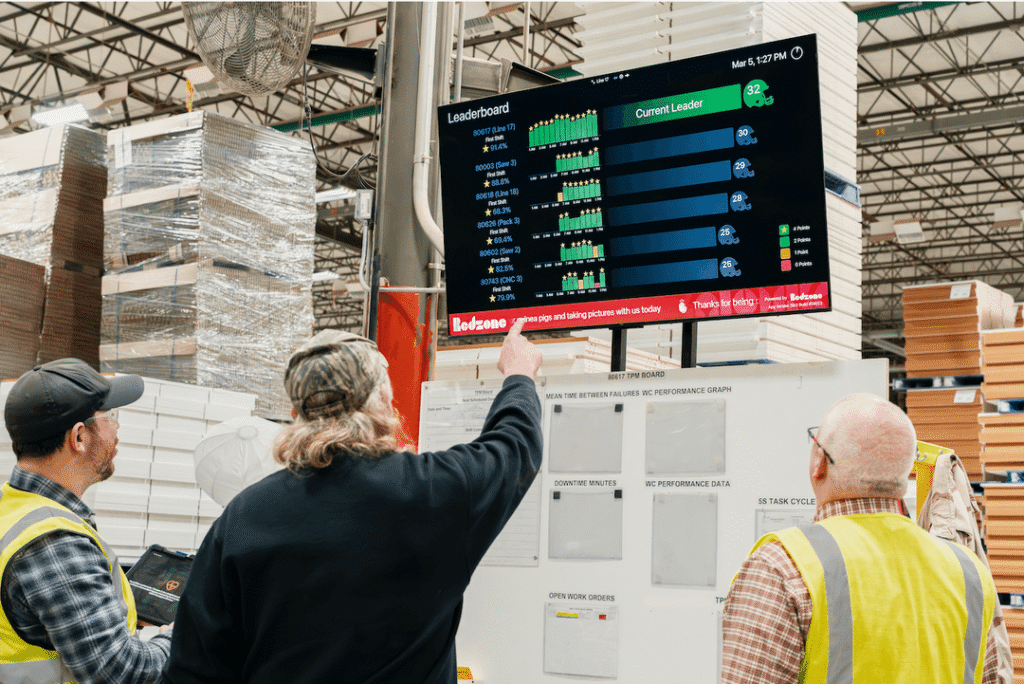
QAD Redzone’s Pune hub is more than an India engineering expansion. It reflects a larger shift toward AI-enabled manufacturing execution, where ERP, MES, connected worker tools, and frontline decision-making need to operate as one control loop.
SAP developers being replaced by AI
SAP Says AI Could Replace Its Coders—Customers Should Watch What Comes Next
Christian Klein’s claim that SAP could have no human software developers within three to four years is not just a workforce prediction. It is a signal of how SAP believes enterprise software will be built, governed, supported, and sold in the AI era.
NTT DATA Puts AI Agents at the Front End of Product Planning
NTT DATA is launching an AI agent service in July 2026 to streamline early-stage product planning for food, beverage, and consumer goods companies, enhancing the speed and structure of concept generation while ensuring alignment with brand guidelines and market analysis.
IBM Brings OpenAI Cyber Models into Enterprise AppSec Workflows
IBM has launched a new application security service using OpenAI's capabilities to help enterprises quickly identify software vulnerabilities, as part of its broader initiative to integrate frontier AI into cyber defense while ensuring controlled access and governance.
Acumatica’s Ratings Sweep: What Midmarket ERP Buyers Are Actually Rewarding
Acumatica has been recognized in seven industry reports for its exceptional usability, customer satisfaction, and product fit for small- and medium-sized businesses, notably achieving top rankings in Nucleus Research, G2, and TrustRadius, emphasizing the growing demand for ERP systems that combine modernity with user-friendliness.
Trusted AI
Tricentis California Deal Puts AI Testing Governance in the Spotlight
Tricentis has expanded its software licensing contract with California to offer its AI-driven quality engineering platform to state agencies, while emphasizing that AI-generated testing must be governed by evidence and compliance, essential for SAP teams in regulated environments.
AI hiring in Singapore and Asia
Singapore’s AI Hiring Surge Shows How Vendors Are Building for APAC Enterprise Demand
As of mid-June 2026, thirty of the world's leading AI firms, including OpenAI with 37 open positions, are ramping up hiring in Singapore, driven by government support and a focus on commercial deployment in Asia-Pacific, amidst a talent gap that sees only 1.4 qualified candidates per 10 open roles in Southeast Asia.
Workday Is Testing How Much Enterprise AI Should Be Allowed to Do
Workday’s Q1 results showed agent adoption momentum. The follow-up question is whether Sana, Microsoft 365 Copilot, the Agent System of Record, and federal HR automation can prove that enterprise agents can act inside governed workflows without eroding control.