Business Process Management and Automation

Software applications dedicated to Business Process Management (BPM) empower professionals in both business and IT to design executable workflows through standardized symbols and language.

These applications serve a diverse range of functions, enabling users to visualize, simulate, and automatically generate code for business processes. Moreover, BPM facilitates the creation of reports and documentation specific to these processes. For enterprises dealing with intricate or time-intensive processes, BPM proves to be an advantageous solution, aiding in the optimization and automation of these operations. Notably, within the realm of Enterprise Resource Planning (ERP), BPM plays a significant role in assisting businesses to conform to regulatory requirements by establishing a transparent and audit-friendly record of process execution. Consequently, BPM emerges as a valuable asset for businesses of all sizes seeking to enhance their process management within the context of ERP integration.

Connect Salesforce across your business with MuleSoft
Salesforce and MuleSoft: from any-to-any integration to any-to-any activation, even across hard to reach systems and workflows. Take action anywhere across the enterprise in real-time. Connect your Agentforce 360 Platform to any system and take action anywhere, with MuleSoft connecting...
SPS Commerce logo displayed on smartphone screen with financial and supply chain analytics background.
SPS Commerce Introduces MAX, Embedded AI for Supply Chain Workflows
SPS Commerce introduces MAX, embedded AI that guides retail trading workflows, surfaces anomalies, and supports compliance across supply chain networks.
a-smiling-woman-wearing-a-headset-at-a-computer_Arum Approved System status
TCN Secures Arum Approved Status for Operator Platform
TCN has achieved Arum Approved System status for its Operator contact center platform, validating compliance controls, automation strength and scalability in regulated credit and collections environments.
a-person-is-using-a-pos-machine-in-a-store-with receipt SAP Business AI Q4 2025
SAP Business AI Q4 2025 Update Embeds Intelligence into Enterprise Workflows
SAP’s Q4 2025 SAP Business AI release embeds AI directly into spend management, procurement, and customer experience workflows, signaling a shift toward operational AI inside enterprise systems.
Acumatica Summit 2026: Cassandra Moore
Chris Vavra and Cassandra Moore explore key themes and trends from the 2026 Acumatica Summit in Seattle, focusing on innovations in ERP technology.
Microsoft’s Agentic e-Commerce Strategy and What It Signals for Retail ERP
At NRF 2026, Microsoft unveiled its vision for agentic AI as a foundational layer for retail e-commerce, emphasizing a shift towards protocol-driven, cooperative AI architectures that integrate seamlessly with ERP and commerce systems to orchestrate holistic retail experiences.
NetSuite 2025.2 Enhances Supply Chain Agility Amid Growing Operational Pressures
NetSuite’s 2025.2 release enhances supply chain management with improved planning and fulfillment capabilities, allowing organizations to better handle production schedules, inventory allocation, and order prioritization amidst ongoing global disruptions.
Close up and distorted image of a power line | ERP solutions RamBase
Manufacturers Struggle With AI Readiness Despite Widespread Exploration
A Redwood Software study reveals that while nearly all manufacturers are exploring AI, only 20% feel prepared to implement it at scale due to fragmented automation systems and a disconnect between investments and operational readiness.
Procore’s Datagrid Acquisition Signals ERP Imperative for Construction Technology
Procore Technologies' acquisition of Datagrid enhances construction management by integrating autonomous AI for seamless data connectivity between platforms and ERP systems, leading to improved operational efficiency, immediate workflow changes and a shift towards prioritizing data integrity and collaboration.
Acumatica Leveraging Telemetry, Personalization to Reduce ERP Workflow Complexity
Acumatica executives announced plans at Summit 2026 to simplify workflows using behavioral telemetry and AI-driven personalization, enhance user experience in ERP systems, and prioritize real-time vendor and partner portal integrations.
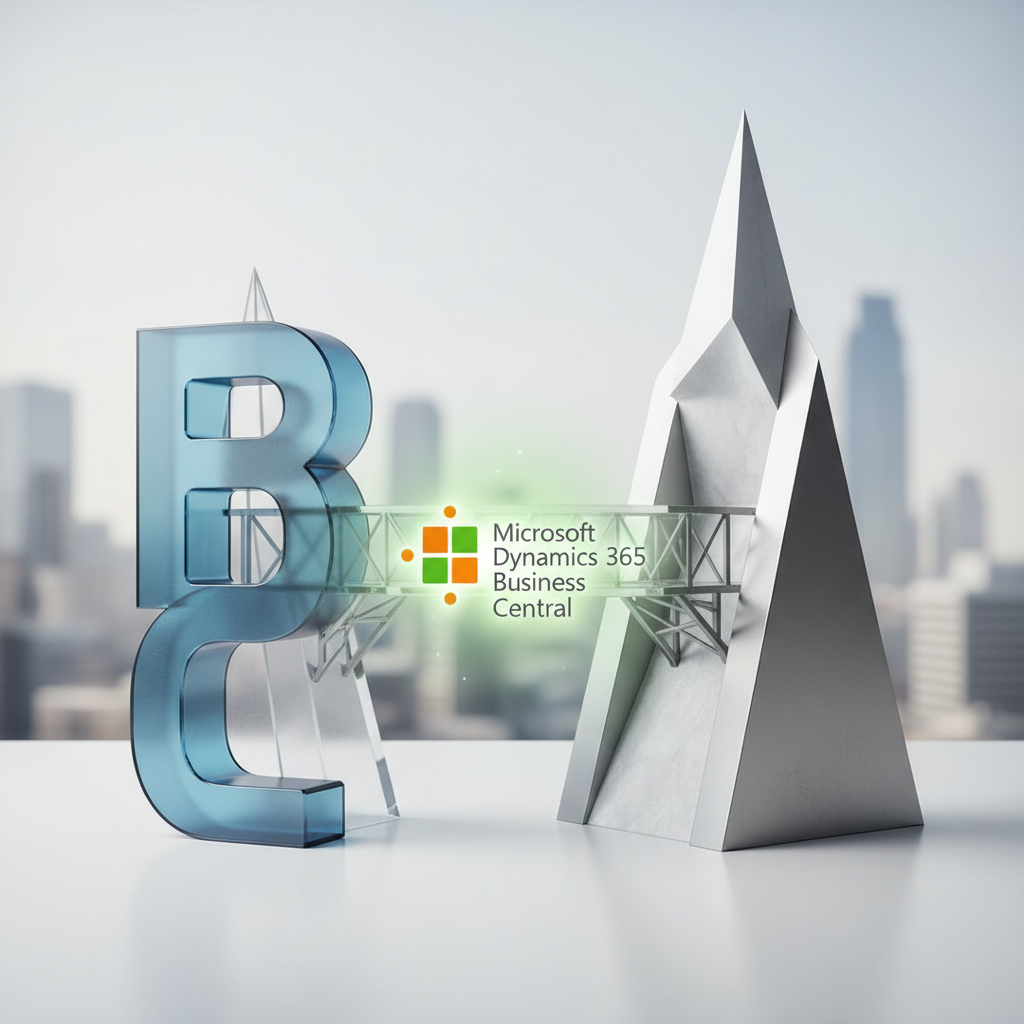
Microsoft Dynamics 365 Business Central Raises the ERP Bar for the Mid-Market
Business Central is Microsoft's cloud ERP solution for small and mid-market organizations, featuring integrated finance, sales, and AI capabilities, while leveraging a partner-first approach to enhance vertical solutions, positioning it as a competitive force against other mid-market ERPs.
Oracle NetSuite Deepens Industry Focus by Aligning AI, SuiteCloud with Vertical Workflows
Oracle NetSuite is enhancing its industry strategy by integrating embedded AI with vertical-specific workflows, allowing for intelligent capabilities tailored to sectors like services and distribution, while also empowering partners to develop specialized extensions within its platform, ultimately shifting ERP innovation towards a model that reflects industry-specific operational patterns.
Digital image of computer functions over person typing at a laptop.
Joule Integrations Move SAP’s AI Deeper Into Enterprise Workflows
SAP is expanding Joule through deeper integrations across enterprise applications and partner platforms, positioning the AI assistant as a workflow layer embedded directly into business execution.
SAP sign showing logo outside of office building.
SAP-RPT-1 Brings Tabular Foundation Models to Enterprise AI
SAP has introduced SAP-RPT-1, a tabular foundation model designed for structured enterprise data, positioning it as a complement to language models for predictive tasks inside ERP systems.
Construction ERP Market Projected to Reach $8.2 Billion by 2032
The global construction ERP software market is projected to reach $8.2 billion by 2032, with North America leading while Asia-Pacific shows rapid growth.
Employee slumped in front of several computer monitors.
Workday Research Finds AI Productivity Gains Are Lost to Rework
Workday research finds nearly 40% of AI productivity gains are lost to rework, as employees spend significant time correcting and verifying AI output, exposing gaps in how organizations measure and manage AI impact.
Construction ERP Evolution: How AI-Enhanced Integration Addresses North America’s Workforce Crisis
The construction ERP landscape is shifting towards AI-enhanced, best-of-breed integrations that address operational inefficiencies driven by labor shortages, regulatory complexities, and margin pressures, reflecting a trend where vertical specialists form core components of ERP ecosystems.
Image of a laptop running an ERP in a warehouse.
QueBIT Partners with Rillet to Deliver AI-Native ERP Solutions
QueBIT has formed a strategic partnership with Rillet to provide AI-native ERP solutions aimed at high-growth organizations, enabling faster deployments and scalable operations as alternatives to traditional ERP systems.
The front of a Tata Consultancy Services office place.
TCS Acquires Coastal to Expand Salesforce and AI Consulting Capabilities
Tata Consultancy Services has acquired Coastal for $700 million, enhancing its Salesforce and AI capabilities with Coastal’s 600 professionals, thereby positioning TCS to expand its global transformation services.
Workday signage on a building.
Workday Launches Paradox ATS for Faster Frontline Hiring
Workday's integration of the AI-driven Paradox Conversational Applicant Tracking System streamlines frontline hiring by enabling mobile-first applications, drastically reducing time-to-hire to an average of 3.5 days and automating up to 90% of hiring tasks.
Businessperson hold an image of an AI agent in hand.
What CData Connect AI Does for Microsoft Copilot Studio and Microsoft Agent 365
CData Connect AI adds MCP-based connectivity, context, and governance to AI agents built in Microsoft Copilot Studio and Agent 365, enabling secure access to live enterprise data at scale.
Businessperson hold an image of an AI agent in hand.
Microsoft Pitches Agentic ERP, CRM as Operating System for AI-First Enterprises
Microsoft's shift to AI-first autonomous enterprises involves agents across Dynamics 365 that interpret data, collaborate, and enhance operations by automating tasks within finance, supply chain, and CRM, emphasizing the integration of systems and intelligence for adaptive, measurable outcomes.
Retail AI Hits NRF 2026: SAP, Microsoft, Workday Turn Agentic Platforms into New Operating System for Stores and Commerce
Retail tech giants SAP, Microsoft, and Workday are leveraging AI to transform commerce operations into integrated, agent-driven systems at the NRF 2026 event, showcasing a shift from isolated applications to comprehensive retail infrastructure.
Syspro, SugarCRM Collaboration Offers Connected Floor Solution for Manufacturers and Distributors
Syspro and SugarCRM have partnered to introduce Sugar for Syspro, an integrated solution that enhances precision selling for manufacturers and distributors by unifying product, customer and sales data for a better connected ERP system.
Sri Lanka Plans Centralized ERP Marketplace and GovTech Authority to Unify State Systems
Sri Lanka is implementing a centralized ERP-style marketplace to standardize government IT and procurement, reduce duplication, and support local startups by reforming procurement processes under a new GovTech authority and Digital Economy Ministry.
SAP Sovereign Cloud
SAP Sets May 2026 Cutoff for S/4HANA Compatibility Packs, Offering Final Transition Window
SAP is granting a final five-month extension for on-premises S/4HANA customers to transition from Compatibility Packs to cloud solutions, pushing expiration dates to May 2026 to help manage this critical migration.
How Microsoft Is Rewiring ERP with Composable Dynamics 365
Microsoft's ERP strategy focuses on a composable approach using Dynamics 365 as a modular backbone for industry-specific solutions, emphasizing scenario-driven capabilities, AI integration, and partner specialization to create tailored solutions on a shared cloud platform.