Cloud Platform and Technology

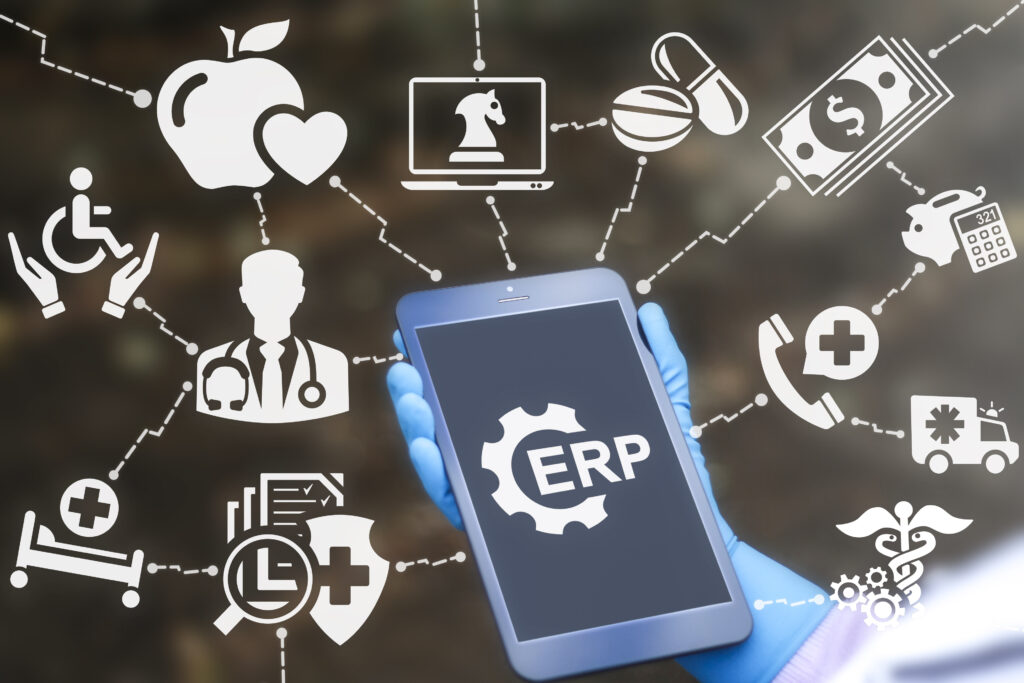
Enterprise Resource Planning (ERP) integrates smoothly with cloud platforms, representing a pragmatic evolution in technology. The collaboration between ERP and cloud technology offers practical advantages, including scalability, accessibility, and agility for businesses. This combination enables real-time collaboration, data analytics, and improved security. Embracing the cloud allows ERP systems to adapt dynamically to changing business needs. Cloud-based ERP solutions offer efficient resource utilization, cost-effectiveness, and swift deployment, contributing to operational efficiency. In the current landscape of digital transformation, the integration of ERP with cloud technology serves as a practical strategy, ensuring businesses remain adaptable, competitive, and technologically proficient.

ERP AI
Overcoming AI Adoption Challenges in Manufacturing and Supply Chain
AI is rapidly becoming essential in manufacturing and supply chain management, but uneven deployment due to barriers like data quality and user adoption persists, while vendors are focusing on domain-specific AI to integrate predictive insights directly into core processes.
Engineering the Future of Tax with OCI and Vertex
Black & Veatch modernized its tax infrastructure by migrating to Oracle Cloud ERP and Vertex solutions to enhance global compliance, reduce operational risks, and streamline processes, demonstrating the importance of integrated cloud-native tax services for supporting complex multi-jurisdictional operations.
Shedding Data Baggage for a Leaner SAP Cloud
Migrating to SAP Cloud ERP Private promises streamlined processes and agility, but organizations must first conduct a thorough assessment of their data to avoid complicating the transition with unnecessary legacy information, which can drive up costs and hinder performance.
The Cloud Velocity Trap for Testing
CIOs face significant challenges during ERP migrations due to inadequate testing strategies and a rush towards AI solutions, highlighting the necessity for continuous testing and thorough documentation to ensure successful system integration.
Oracle AI World’s IBM Sessions: What Enterprises Must Build Before AI Can Deliver
At Oracle AI World, IBM emphasized that successful AI adoption in enterprises relies not on flashy models but on robust foundational preparations, governance, and aligned business processes, showcasing that scalable AI implementations require clean data and integrated workflows.
GCC emblem with digital code background
How Gulf States Are Approaching Digital Sovereignty
Gulf states are building digital sovereignty frameworks to strengthen infrastructure and move from importing to operating cloud and AI services locally. National regulations, major investments, and regional collaboration support this transformation.
How the digital sovereignty agenda in the EU reshapes cybersecurity
The EU's push for digital sovereignty is transforming cybersecurity into a critical, integrated discipline, prompting businesses to adopt stringent regulations, lifecycle-embedded practices, and proactive risk management.
Year in Review: Testing, Transformation, and the Race to AI-Ready ERP in 2025
In 2025, the conversation around cloud migration shifted from why to how. According to SAPinsider’s 2025 research report on SAP S/4HANA deployment, for instance, 31% of the organizations who responded to the survey have transitioned to SAP S/4HANA, while another 27% are in implementation. Additionally, 54% of respondents said they plan to incorporate AI or...
How SAP Experience Centers Win Transformation
SAP's Experience Centers have transformed from showrooms to operational labs, exemplified by the fully functional S.Mart Store in Walldorf, illustrating the company's commitment to co-creating practical industry solutions with customers.
The New SAP Defense
As organizations transition to SAP S/4HANA and hybrid-cloud architectures, the necessity for a layered Zero Trust security approach, supported by Unified Risk Management and consolidated monitoring solutions, becomes critical to address the expanded attack surface.
Connected Construction: ERP Without the Bottlenecks
Cloud ERP is evolving into a critical operating system for construction and field service companies, enabling resilience, real-time decision-making, and lean operations, as evidenced by the experiences of Tester Construction, Tech Electronics, and Carlson LaVine Construction in their transitions to Acumatica.
Alphabet’s Intersect Buy Tightens Link Between AI Data Centers and Clean Energy Infrastructure
Alphabet is acquiring Intersect for $4.75 billion to enhance its data center and energy infrastructure capabilities as part of its AI strategy, while Intersect will operate independently and collaborate closely with Google on new facilities.
kyano
Why Industry-Built ERP Will Lead the Next Wave of Manufacturing Modernization
Manufacturing executives are increasingly favoring vertical ERP systems over generic platforms due to the former's ability to provide tailored, out-of-the-box solutions that align with industry-specific workflows.
Google Gemini Logo
Google Launches Gemini for Government, Supporting DOE Labs on Genesis Mission
Google launches Gemini for Government at 47 cents per year for federal agencies, partnering with DOE National Labs to enhance scientific productivity through agentic AI workflows, secure collaboration, and advanced research tools.
Coda
December’s M&A Sprint Signals AI Infrastructure Consolidation Era for Enterprises
In December 2025, a surge of over $100 billion in strategic technology acquisitions is compelling ERP executives to pivot away from fragmented solutions towards more robust, AI-native architectures amidst rising valuations and an emphasis on security.
Palo Alto, Google Cloud Expand AI Security Alliance as 99% of Organizations Report AI Attacks
Palo Alto Networks and Google Cloud have expanded their partnership with a nearly $10 billion deal to enhance AI and cloud security, integrating Palo Alto’s Prisma AIRS platform with Google Cloud’s infrastructure to provide comprehensive security across hybrid multicloud environments.
Oracle Database
Oracle Database@Azure expands to the Netherlands, launches in Brazil
Oracle has expanded its Oracle Database@Azure service into the West Europe region and Brazil Southeast, allowing customers to run Oracle databases within Microsoft Azure environments while benefiting from local compliance and reduced latency, thus reinforcing its strategy to integrate database services with major cloud platforms without the need for architectural changes.
SAP security
How SAP Customers Responded to Rising Cybersecurity Threats in 2025
In 2025, SAP customers expressed increasing concern over cyberattacks, particularly regarding data exfiltration and integration risks, while patch management remained a significant challenge, highlighting the necessity for enhanced security strategies and investments in SAP-specific protections.
Oil and Gas ERP Leaders Signal Agentic AI Push in Recent Deployments
Oil and gas operators are prioritizing digital transformation through cloud ERP modernizations with autonomous AI agents and unified data platforms, highlighting the industry's focus on operational efficiency and competitive advantage.
Cloud Security Has Hit a Speed Wall as AI, Multicloud Outpace Defenses
The December 2025 Palo Alto Networks State of Cloud Security Report reveals that cloud security is lagging behind the rapid growth and complexity of modern IT, with a critical emphasis on identity risks and the urgent need for integration of security operations to protect increasingly vulnerable cloud systems.
Oracle Database@Google Cloud
Oracle Database@Google Cloud Expands to Canada and India in Digital Sovereignty Push
Oracle has launched its Database@Google Cloud service in Canada and India, using a standardized multicloud model that integrates directly with Google Cloud data centers, highlighting a strategic approach focused on data sovereignty and operational flexibility for enterprises across diverse regulatory environments.
Tekniska verken Picks IFS Cloud to Strengthen Digital Transformation, Service Delivery
Tekniska verken has chosen IFS Cloud to digitize its operations and enhance service delivery by integrating legacy systems into a unified platform that utilizes industrial AI for improved efficiency, visibility and asset management.
Cloud-Native Logistics, Multi-Agent AI Set Pace for Next-Gen Supply Chain Resilience
Monolithic supply chain systems pose vulnerabilities for global brands amid geopolitical uncertainties, while cloud-native platforms utilizing modular services, IoT integration, and AI-driven multi-agent coordination enhance resilience, efficiency, and data security.
IFS appoints Matt Breslin as President, North America to drive Industrial AI growth
Dixstone Deploys IFS Cloud to Unify Offshore Operations Across 10 Countries
Dixstone, an offshore energy services provider, has chosen IFS Cloud to enhance its operations in 10 countries amidst the growing trend toward cloud-based ERP solutions in the construction and engineering market.
Microsoft’s Canada Investment Puts Digital Sovereignty to Work
On December 9, 2025, Microsoft announced a C$7.5 billion investment to enhance AI and cloud infrastructure in Canada, building on a broader C$19 billion program, aiming to support digital sovereignty and local AI development while contributing to sustainability.
India Digital Economy
Why Hyperscalers Are Investing $67.5B in India
Microsoft and Amazon plan to invest a total of $52.5 billion in India's AI and digital infrastructure, reflecting a broader trend of significant investments from tech giants aimed at enhancing the country's digital economy and capacity to support advanced technologies.
Rootstock Launches Managed Services Offering with Turnkey Administration
Rootstock Software has launched its Managed Services to provide manufacturers and distributors with turnkey ERP administration to streamline operations and align with evolving business needs.
The Great Cloud Recalculation Oracle+IBM
IBM in Advanced Talks to Acquire Confluent
IBM is in advanced talks to acquire Confluent for around $11 billion, aiming to enhance its real-time data and AI capabilities, while also gaining a strategic advantage in the data infrastructure market.
AWS Enters the AI Factory Race, Raising Stakes for Cloud-Data Sovereignty, Enterprise Architecture
Amazon Web Services (AWS) is launching on-premises AI factories that integrate advanced hardware and managed service offerings into customer data centers, enabling organizations to develop and deploy AI applications while addressing data sovereignty concerns and enhancing their existing ERP systems.
Lessons from a Mid-Market Manufacturer’s Move to a Cloud-Native ERP
Boca Terry's successful ERP transition from legacy systems to a cloud-native platform illustrates how aligning software capabilities with business needs, fostering strong partner relationships, and ensuring disciplined implementation are crucial for mid-market companies seeking operational efficiency and growth.