Financial Management

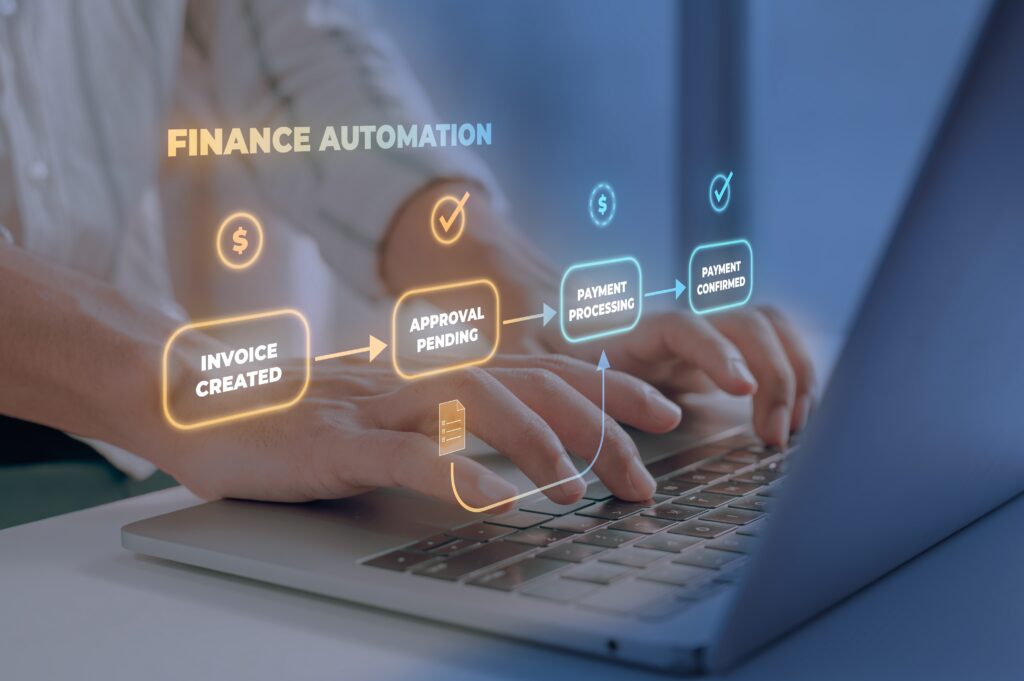
Enterprise Resource Planning (ERP) is integral to robust Financial Management within organizations. ERP systems seamlessly integrate financial modules, encompassing accounting, budgeting, and reporting. This consolidation ensures real-time visibility into financial data, streamlining processes and facilitating informed decision-making. By unifying financial information, ERP enhances accuracy, reduces errors, and improves compliance. Automation within ERP accelerates financial workflows, from invoicing to reconciliation, optimizing efficiency. Furthermore, ERP fosters collaboration between departments, aligning financial data with broader business operations. With its comprehensive financial capabilities, ERP empowers organizations to manage resources effectively, mitigate risks, and maintain financial transparency. The synergy between ERP and Financial Management contributes to strategic financial planning, cost control, and sustained fiscal health.

Future ERP systems will likely undergo a significant transformation, from static and reactive to dynamic, event-driven platforms powered by agentic AI, enabling them to execute workflows and interact autonomously across business processes. Image from Adobe.
Priority Software Bets Midmarket ERP Users Are Ready for AI That Executes
Priority Software enhances its cloud ERP with the release of V26.0, integrating embedded AI features, including an aiERP Companion and specialized agents for finance, sales, and supply chain workflows, aimed at minimizing manual tasks and improving decision-making efficiency.
SAP’s Autonomous Finance Push Turns CFO Attention to Governance
SAP’s autonomous finance push is moving CFO priorities toward governance, controls, and AI-ready financial processes. For SAP customers, the opportunity depends on how well automation, GRC, and finance transformation connect inside ERP operations.
Private Equity in ERP
Private Equity’s ERP Upgrade Push Has a Controls Problem
Private equity firms are increasingly willing to fund cloud ERP modernization for portfolio companies, recognizing that outdated systems can significantly reduce valuation, thus emphasizing the importance of incorporating internal controls early in the transformation process to mitigate risks and enhance operational efficiency.
image of Workday office surrounded by blue skies | Compa
Workday’s AI Agent Push Started Showing Up in its Q1 Earnings Numbers
Workday's Q1 fiscal 2027 results demonstrated strong revenue growth and increasing adoption of AI agents, reassuring investors that AI can enhance rather than undermine subscription software economics.
Maximize Payables Efficiency
ERP users increasingly expect payments to be integrated into the workflows and systems they rely on every day. Learn how Priority Payables helps simplify payables within the ERP. Learn more here!
5 Ways Payables Automation Improves Your Organization’s Financial Health
As organizations seek greater efficiency and financial flexibility, expectations around payables are evolving. Explore five ways automation can help modernize the payment experience.
How Manufacturers Solve Accounts Payable Challenges with CPX
Without the proper tools, manufacturers risk delayed production schedules, reduced profitability and strained supplier relationships from late payments. The Priority CPX suite provides a tailored payables solution that streamlines B2B payments for manufacturers, improves cash flow and simplifies accounts payable management.
B2B Payment Automation: A Complete Guide
Manual payment processes can introduce friction across ERP workflows. Learn how payment automation can help simplify operations and create a more connected payment experience.
How to Manage Multiple Payment Methods Without the Chaos
Supporting multiple payment methods is increasingly important for ERP platforms, but managing them across siloed workflows creates complexity for end users. Explore how a more unified approach can simplify the payment experience.
How to Bust Three Common Myths About Integrated Payables
Customer demand for more modern payment workflows continues to grow, but misconceptions about integrated payables can slow adoption. Explore three common myths and the realities behind them.
How Integrated Payables Improve Commercial Payments
Integrated payables streamline business-to-business payment processes by consolidating various payment methods into a single automated platform, thereby reducing errors, lowering costs, enhancing cash flow management, and improving supplier relationships.
invoice automation
Priority Payables
As organizations replace paper checks and manual processes with digital payments, traditional approaches to accounts payable are becoming harder to sustain. Discover how Priority Payables helps ERP providers deliver a modern, integrated payment experience.
CPX: A Commercial Payment System
Priority Payables helps ERP platforms transform accounts payable from a manual process into a strategic capability. Customers gain greater efficiency, automation, and financial flexibility. You deliver more value through the ERP experience. Learn more.
closeup-photo-of-eyeglasses_ERP finance workflows
Add Payments to Your Platform, Without Building It
Priority Payables enables ERP and accounting software platforms to embed payables directly into existing workflows, consolidating outgoing payments into a single process for fulfillment and reconciliation. Your customers get a more connected payment experience. You get a stronger, stickier platform. No payments infrastructure required on your...
How One Manufacturer Automated Its Accounts Payable and Reaped the Rewards
Discover how SYSPRO customer Pierce Pacific modernized accounts payable with Priority Payables, reducing payment processing time, improving supplier satisfaction, and driving greater operational efficiency.
abstract image | Finance
Your ERP Has a Strategy Problem, Not a Payments Problem.
Payments are becoming a strategic consideration for ERP providers, not just a back-office function. Learn how Priority Payables can help increase platform value, strengthen customer retention, and unlock new revenue opportunities
Sri Bhavyanath Chennapragada_PeopleSoft payroll compliance
How a Misconfigured PeopleSoft Earnings Code can Create FLSA Overtime Risk
A single earnings code setting in PeopleSoft HCM can affect overtime calculations across thousands of employees. This article explains how the issue appears, why it is often missed in UAT, and what payroll, HR, and compliance teams should change to reduce FLSA risk.
Syspro, Nuvei Embed Integrated Payments Directly Into Manufacturing ERP
Syspro and Nuvei have partnered to integrate payment processing within Syspro's ERP platform, streamlining cash flow management and accounts receivable updates directly in the ERP environment, enhancing operational efficiency for manufacturers and distributors.
Sage Future 2026 Recap: AI Transparency and Smarter ERP Decisions
At Sage Future 2026, the focus on AI in ERP shifted from capability to the necessity of trust and transparency, with a strong emphasis on glass box AI that is traceable and auditable, reflecting the need for accountability in financial workflows to enhance operational efficiency across various industries.
Sage Future 2026: Julie Adams
Julie Adams, SVP of Construction at Sage, highlighting challenges and opportunities for ERP systems in the construction industry in a video interview at Sage Future 2026 in San Francisco.
Sage Future 2026: Jon Fasoli
Jon Fasoli, SVP of Sage Intacct, discusses how the cloud financial technology is helping improve operations and management for their customers in many industry in a video interview at Sage Future.
Finance AI
EY and Rillet Partner to Embed Risk and Controls Into AI-Native Finance Transformation
EY US and Rillet are partnering to embed risk and controls directly into AI-native finance workflows, signaling a shift in how enterprise finance transformation programs are designed and delivered.
ERP securities investigation
Tennant ERP Fallout Extends into Ongoing Securities Scrutiny as Investors Await Recovery Signals
Tennant Company's ERP-related disruption has moved beyond operational recovery into an active ERP securities investigation, as investors and legal teams scrutinize the company's pre-failure disclosures and question management's credibility going forward.
Document Automation Trends 2026 Report
Where are finance teams heading? 54.2% of finance teams are still working with partial automation. In 2026? Finance leaders must prove AI’s worth with measurable outcomes, governed processes, and global reach. Download here
Unlocking Dynamic, AI‑Enabled Finance: IBV Insights on Building a Value‑Based Operating Model
Most organizations are still making critical business decisions on top of rigid planning cycles, fragmented data, and limited AI adoption—slowing their response to disruption and constraining innovation before it starts. Drawing on new IBM Institute for Business Value (IBV) research, this session explores how finance leaders can break through those structural barriers by modernizing their operating model and establishing a connected, AI-enabled finance backbone. You will see how integrated data platforms and AI-powered forecasting can sharpen decision speed, strengthen governance, and position finance as the function guiding capital to its highest-value opportunities across the enterprise. We will walk through a practical roadmap for shifting to a dynamic, value-based finance operating model—one that aligns finance with enterprise decision bodies and elevates finance talent into true strategic partners. Using IBV findings alongside real-world practices, we will show how embedded AI, adaptive planning cadences, and agile budgeting models work together to deliver more accurate forecasts, more effective capital allocation, and faster transformation outcomes. You will leave with concrete steps to evaluate your organization's current maturity and build an execution plan that balances speed, trust, and control. Why Watch - IBV research findings reveal why traditional planning and finance structures are holding back decision speed, innovation, and AI adoption at scale - A practical blueprint for a dynamic, value-based finance operating model built on integrated data platforms and AI-enabled planning - How leading organizations are applying AI-powered forecasting and scenario modeling to improve forecast accuracy and accelerate capital deployment - Actionable guidance to assess your finance organization's maturity and prioritize near-term moves toward an AI-enabled finance backbone
ERP Today Transformation Award
ERP Today 2025 Awards: Large Enterprise Transformation Sets New Benchmarks
Zalaris won the Large Enterprise Transformation Award for its successful payroll modernization project with Ryanair, while Onapsis was recognized as runner-up for its ERP security transformation that integrated risk management into enterprise processes.
Sage HCM Targets Cost Gaps Bleeding Product Manufacturers Dry
Manufacturers, facing tight margins, are turning to Sage HCM to unify HR, payroll, and financial data in real time, enabling better visibility and management of labor costs to prevent margin losses.
Finance professional working on a laptop reviewing data, representing AI in quote-to-cash workflows and finance processes.
AI in Finance Faces Its Real Test Inside Quote-to-Cash Workflows
Most finance teams are using AI, but measurable impact remains limited. A Zuora webinar shows how quote-to-cash workflows expose the real constraints: integration, auditability, and control.
invoice automation
Addovation and Snowfox Bring AI-Driven Invoice Automation into IFS Finance Workflows
Addovation's partnership with Snowfox enables IFS customers to automate over 90% of invoice processing within existing finance workflows using embedded AI, addressing rising invoice volumes and enhancing operational efficiency without requiring system redesigns.
ERP cost
ERP Overspending Is Being Driven by Governance Gaps, Not Just Software Pricing
ERP cost overruns stem more from post-purchase management and governance issues, like underutilized licenses and ongoing subscription growth, rather than the initial license pricing itself.