Financial Management

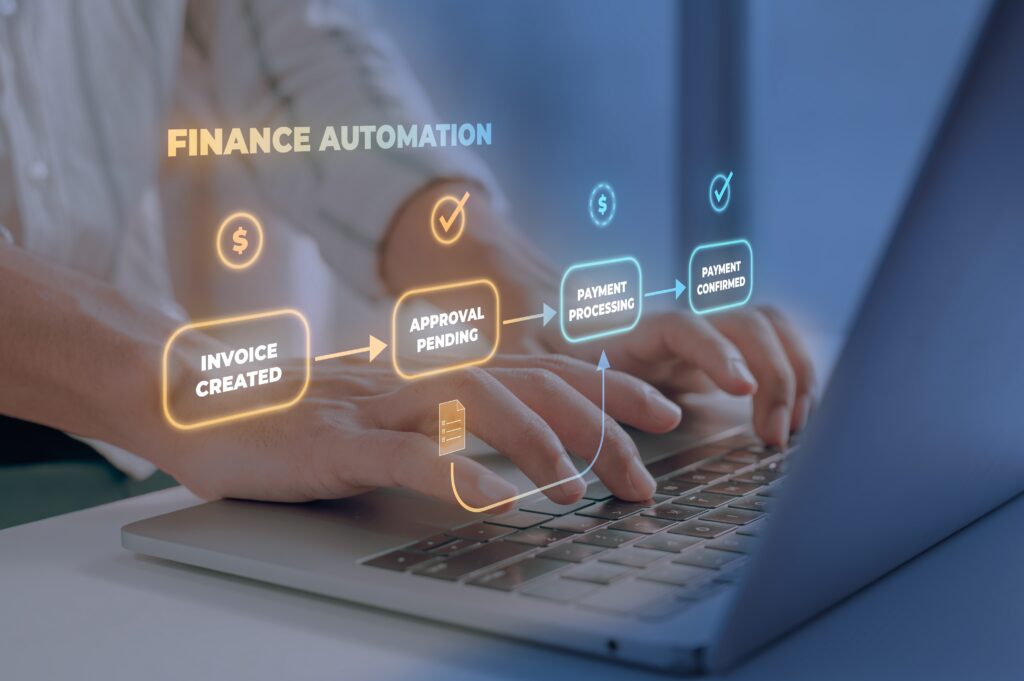
Enterprise Resource Planning (ERP) is integral to robust Financial Management within organizations. ERP systems seamlessly integrate financial modules, encompassing accounting, budgeting, and reporting. This consolidation ensures real-time visibility into financial data, streamlining processes and facilitating informed decision-making. By unifying financial information, ERP enhances accuracy, reduces errors, and improves compliance. Automation within ERP accelerates financial workflows, from invoicing to reconciliation, optimizing efficiency. Furthermore, ERP fosters collaboration between departments, aligning financial data with broader business operations. With its comprehensive financial capabilities, ERP empowers organizations to manage resources effectively, mitigate risks, and maintain financial transparency. The synergy between ERP and Financial Management contributes to strategic financial planning, cost control, and sustained fiscal health.

ERP Today Awards
ERP Today Awards: AI, Operational Execution, Real-World Impact Defined ERP Leadership in 2025
The ERP Today Awards 2025 make one thing clear: ERP leadership is no longer defined by deployment success, but by real-world impact. Across five award categories—spanning AI innovation, operational execution, customer experience, SMB transformation, and large enterprise projects—the 2025 winners set a new standard for what it means to lead with enterprise technology.
The ERP Value Gap: The Cost of Disconnected Payment Workflows
Disconnected AP workflows are quietly draining ERP value — new research on how payments and integration impact ERP performance Organizations invest in ERP systems to streamline operations, improve visibility, and connect critical business workflows. Yet when it comes to payments, 43% of organizations still manage at least some accounts payable (AP) processes outside the ERP, creating friction that limits the efficiency, scalability, and value they expect from their ERP investment. Based on new research from Priority Commerce surveying 150 AP professionals, The ERP Value Gap explores how disconnected AP workflows affect business outcomes, why payments are becoming a more important driver of platform value, and how ERP providers can better meet evolving customer expectations. For ERP providers and the enterprises that run on them, the challenge is closing the gap between the seamless AP experience users expect and what platforms actually deliver — without adding integration complexity or disrupting existing workflows. This session makes the case for treating payables as a core platform capability rather than an add-on: embedding payment capabilities directly into the ERP to improve AP efficiency, reduce workflow fragmentation, and increase value. Watch this on-demand session as Priority Commerce EVP of Operations Steve Tackett draws on 20+ years in payments technology to show finance and operations teams what to consider when connecting modern payment capabilities to their ERP environment. Why you should watch: - See the new research: What 150 AP professionals reveal about where AP workflows still live outside the ERP — and what it costs in visibility, efficiency, and scalability. - Diagnose your ERP value gap: Identify the common AP workflow challenges and integration barriers that force teams to manage payments outside the platform. - Pinpoint what to fix: Learn which payment and AP capabilities close those gaps and create a more seamless, connected ERP experience. - Understand the strategic upside: See why integrated payments strengthen platform value, customer retention, and long-term growth. - Get a CFO-ready view: Understand what role integrated payments should play in a modern ERP strategy and how they move the needle on cost, control, and ROI.

The ERP Value Gap: The Cost of Disconnected Payment Workflows
Disconnected AP workflows are quietly draining ERP value — new research on how payments and integration impact ERP performance Organizations invest in ERP systems to streamline operations, improve visibility, and connect critical business workflows. Yet when it comes to payments, 43% of organizations still manage at least some accounts payable (AP) processes outside the ERP, creating friction that limits the efficiency, scalability, and value they expect from their ERP investment. Based on new research from Priority Commerce surveying 150 AP professionals, The ERP Value Gap explores how disconnected AP workflows affect business outcomes, why payments are becoming a more important driver of platform value, and how ERP providers can better meet evolving customer expectations. For ERP providers and the enterprises that run on them, the challenge is closing the gap between the seamless AP experience users expect and what platforms actually deliver — without adding integration complexity or disrupting existing workflows. This session makes the case for treating payables as a core platform capability rather than an add-on: embedding payment capabilities directly into the ERP to improve AP efficiency, reduce workflow fragmentation, and increase value. Watch this on-demand session as Priority Commerce EVP of Operations Steve Tackett draws on 20+ years in payments technology to show finance and operations teams what to consider when connecting modern payment capabilities to their ERP environment. Why you should watch: - See the new research: What 150 AP professionals reveal about where AP workflows still live outside the ERP — and what it costs in visibility, efficiency, and scalability. - Diagnose your ERP value gap: Identify the common AP workflow challenges and integration barriers that force teams to manage payments outside the platform. - Pinpoint what to fix: Learn which payment and AP capabilities close those gaps and create a more seamless, connected ERP experience. - Understand the strategic upside: See why integrated payments strengthen platform value, customer retention, and long-term growth. - Get a CFO-ready view: Understand what role integrated payments should play in a modern ERP strategy and how they move the needle on cost, control, and ROI.

Microsoft’s Layoffs Has Put Its AI Sales Machine Under Scrutiny
Microsoft's recent layoff of 4,800 employees, mainly from its sales and Xbox divisions, reflects a broader shift in the enterprise software model due to AI investments, highlighting challenges in selling complex AI solutions while adapting workforce structures to meet changing customer needs.
Finance AI
Sage Finds Finance AI Can Be 99% Accurate and Still Fail the Trust Test
A recent Sage study revealed that 71% of finance leaders would dismiss a highly accurate AI tool if it lacked explainability, emphasizing that transparency and the ability to validate AI-generated outputs are crucial for trust and compliance in financial decision-making.
enterprise AI ROI
AI’s Token Binge Is Over—Now Enterprise Budgets Want Proof
Enterprises that once rewarded employees for maximizing AI usage are now discovering how quickly token costs can spiral. As finance leaders tighten budgets, AI pilots are being judged on workflow‑level outcomes, model routing discipline, and whether they actually improve delivery, code quality, and ERP operations—not just how many tokens they consume.
Global tax management architecture connecting ERP data, e-invoicing, tax engines, analytics, and compliance governance.
SAPinsider’s New Global Tax Report Shows Why ERP Data Is at the Center of Compliance
SAPinsider’s 2026 Global Tax Management benchmark shows that tax compliance is becoming an ERP data problem, with AI, e-invoicing, regulatory change, and fragmented systems forcing tax, finance, and IT leaders to rebuild the foundation.
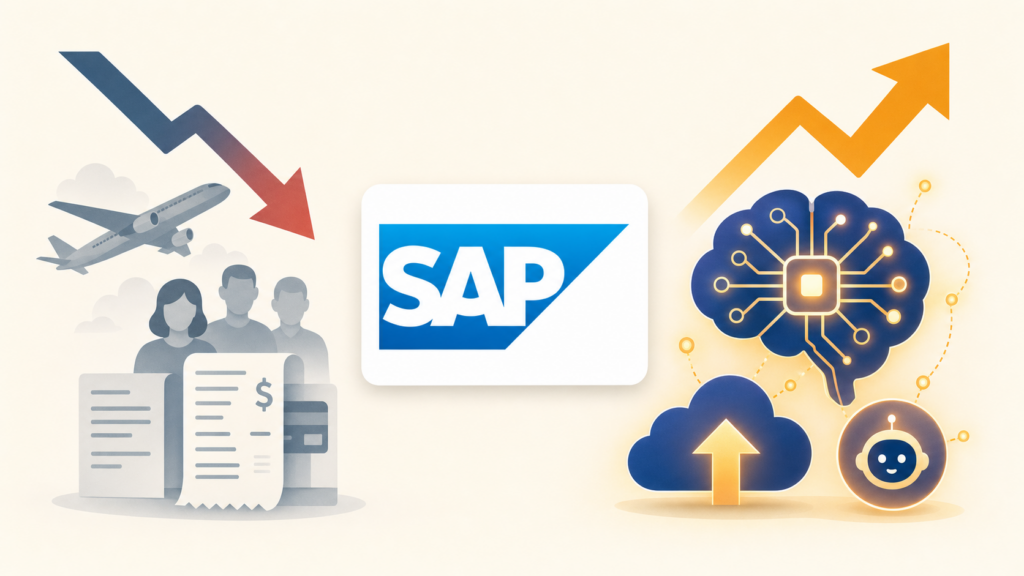
SAP AI budget discipline for hiring and travel
After SAP’s Leadership Reorg, AI Overhaul Places New Scrutiny on Hiring and Travel
SAP is reallocating its operating budget by tightening hiring, limiting travel, and reviewing supplier spending to prioritize investments in AI capabilities and technologies, signaling a strategic shift towards enhancing its AI-driven products and services while managing operational costs.
CFO command center for finance AI
BlackLine Is Giving CFOs a Control Room for Finance AI
BlackLine’s Finance Control Console preview turns its Agentic Financial Operations Platform into a control room for AI agents, giving CFOs visibility, policy enforcement, and audit‑ready evidence across record‑to‑report, invoice‑to‑cash, and other finance workflows.
Applied Materials finance transformation using SAP Taulia Dynamic Discounting for supplier payments
Applied Materials Is Finding Finance Transformation in Faster Supplier Payments
Applied Materials is using SAP Taulia Dynamic Discounting as part of its Agile Finance program to accelerate supplier payments, improve supplier liquidity, and build a scalable, AI-first finance operating model. The initiative shows how enterprise working capital programs can evolve from transactional efficiency tools into strategic platforms that deliver both supplier value and measurable financial returns for large manufacturers.
Microsoft Dynamics 365 Finance: A Complete ERP for Modern CFOs
This page presents Microsoft Dynamics 365 Finance as a complete ERP financial management solution designed to meet complex business needs, integrating processes from accounting and treasury to inventory, operations, and cash optimisation. It emphasises how Dynamics 365 Finance gives CFOs real-time visibility of company finances and project performance, supporting more informed strategic decisions and improved financial control on the Microsoft cloud.
Live Webinar: MCP and AI Agents in Dynamics 365 Finance & Supply Chain
This webinar walks through the Model Context Protocol (MCP) and shows how AI agents can securely read and act on data in Dynamics 365 Finance and Supply Chain. Attendees see live demos of MCP-driven scenarios, learn practical design tips for safe automation, and get guidance on first steps to experiment with agentic AI in ERP without compromising data quality or auditability.
AI in Finance: Professional Services Take Their First Steps
This article looks at how finance teams in professional services firms are beginning to adopt AI, moving beyond simple automation toward more autonomous, insight-driven operations. It highlights early use cases such as forecasting, reporting, billing, and productivity gains, and outlines practical steps CFOs and finance leaders can take to pilot AI safely while reshaping how their organisations work.
From Automated Finance to AI-Driven Autonomy
This piece examines the journey from traditional finance automation to AI-powered autonomous operations, outlining how technologies such as machine learning, generative AI, and intelligent agents can take on more of the end-to-end workload. It explores what “autonomous finance” means in practice, the steps needed to modernise processes and data, and how the CFO’s role evolves as finance shifts from manual control to AI-driven decision support.
Linde Engineering Sharpens Project Financials with Dynamics 365
Linde Engineering partnered with Hitachi Solutions to deploy Microsoft Dynamics 365 Finance and Project Operations, modernising how it manages project costs, billing, and revenue. By moving to a cloud-based, project-focused ERP, the engineering business gains clearer visibility into profitability across complex plant projects and a more controlled, consistent approach to financial management.
service-centric ERP
Why Unit4 Keeps Showing Up on the ERP Shortlist
Unit4’s latest ERPx moves show why the vendor keeps appearing in shortlists for service-centric organizations. Success4U, DataHub, and FIX sharpen its pitch around deployment predictability, governed analytics, and ERP built for people- and project-driven operations.
Plastic Energy’s Dynamics 365 Finance Transformation
Plastic Energy, a leader in advanced plastic recycling, partnered with Hitachi Solutions to implement Microsoft Dynamics 365 Finance as a cloud-based platform to support rapid global growth. Using Hitachi’s Essentials for Finance accelerator, the team delivered a multinational rollout across ten countries in nine months, enabling standardised processes, faster reporting, and better financial insight for its circular-economy operations.
Why Finance AI Needs Guardrails: Sage Intacct’s Next Test Is Data Control
Sage Intacct 2026 R2 moves the connected finance story into data-control territory, with AI Gateway, intelligent 3-way matching, and construction workflows showing why finance AI needs guardrails before automation can scale.
SAP procurement automation
SAP Procurement Agents Are Reaching the Front Door of Spend Management
SAP's Joule AI capabilities, set for general availability across Ariba and Fieldglass in June 2026, aim to enhance procurement processes by automating intake, contract creation, and workforce operations while urging spend teams to ensure proper governance and integration before widespread adoption.
ERP Today Live Interview
Are Your AP Workflows Holding Your ERP Back? A Conversation with Priority Commerce
Priority Commerce EVP Steve Tackett joins ERP Today Live to explain why AP workflows keep escaping the ERP, what breaks down when they do, and how supplier enablement and AI-driven transparency are reshaping how mid-market organizations think about payment modernization.
IHH Healthcare System Standardization Shows the Hard Part of a Multi-Country ERP Transformation
IHH Healthcare has selected Infosys for a multi-year, enterprise-wide ERP transformation using the Infosys Topaz AI-first platform to standardize business processes across Hong Kong, Malaysia, and Singapore, covering finance, procurement, supply chain, HCM, and enterprise performance management.
Microsoft Dynamics 365 Business Central
Ontario Health Centre Shows Why Nonprofits Are Outgrowing Legacy ERP
An Ontario Community Health Centre migrated from Sage 300 to Microsoft Dynamics 365 Business Central with Dynamics Square Canada, automating vendor invoice capture and employee expense management to free a lean two-person finance team from manual workarounds and improve financial visibility across locations.
Trintech AI Agents Are Targeting the Manual Work Behind the Financial Close
Trintech has launched two new AI agents designed to eliminate manual investigative work from the financial close process. The Flux Agent identifies material account fluctuations during the close, while the Variance Analysis Agent automates post-close budget-to-actual analysis. Both tools operate within governed financial workflows, keeping outputs connected to audit trails and human review controls.
Unit4 and Pragmatic AI
Zuora Pushes AI Agents Deeper into Quote-to-Cash Finance Work
Zuora is pushing AI agents deeper into the heart of quote-to-cash — expanding Zuora AI across catalog management, CPQ, revenue operations, and workflow automation. This analysis covers what the new agents do, how customers are already using them to tackle high-friction finance tasks, and why governance must scale alongside AI adoption in subscription billing environments.
Finance automation and treasury management
Perplexity Tests the Real Finance AI Question: Can the Agent Show Its Work?
Perplexity has introduced a finance-specific AI agent designed to provide trusted data integration, robust audit trails, and prebuilt workflows for corporate finance teams, emphasizing the importance of traceability for meeting audit and reporting requirements.
Global E-Invoicing Mandates Are Becoming an ERP Architecture Test
Sovos Compliance Network launches into a mandate wave that is pushing tax compliance directly into ERP transaction flows. For finance, tax, and architecture teams, e-invoicing is becoming a permanent operating condition rather than a series of local deadline projects.
Tax compliance and readiness
Does Your ERP Know What Tax Regime You’re In? A Compliance Readiness FAQ for Enterprise Finance Leaders
Tax compliance has evolved into a critical board-level consideration for ERP systems, emphasizing the need for real-time reporting, continuous transaction controls, and adaptable architectures while leveraging AI to address compliance challenges across jurisdictions.
How Millbrook Beds Scaled Manufacturing and Grew Orders by 300% with SYSPRO
Millbrook Beds transformed its manufacturing and order management with SYSPRO, achieving a 300% increase in orders and the ability to serve 400 more customers by enhancing production efficiency and launching a 48-hour Fast Track delivery service.
Syspro Helps Arjo Achieve Substantial Working Capital Savings
Arjo significantly improved its inventory management by implementing SYSPRO's automated stock replenishment, achieving a 95% reduction in manhours and projected savings of $100,000–$250,000 in working capital within 3–6 months.
Tax compliance and readiness
KPMG Puts Global Tax Incentives Inside Its Claude-Powered Gateway
KPMG has expanded its Digital Gateway by integrating the Incentive Credit Opportunity Navigator (ICON) in partnership with Incentify, providing clients a streamlined platform to identify and act on global tax credits and incentives efficiently, alongside a minority equity investment in the AI-driven technology firm.