

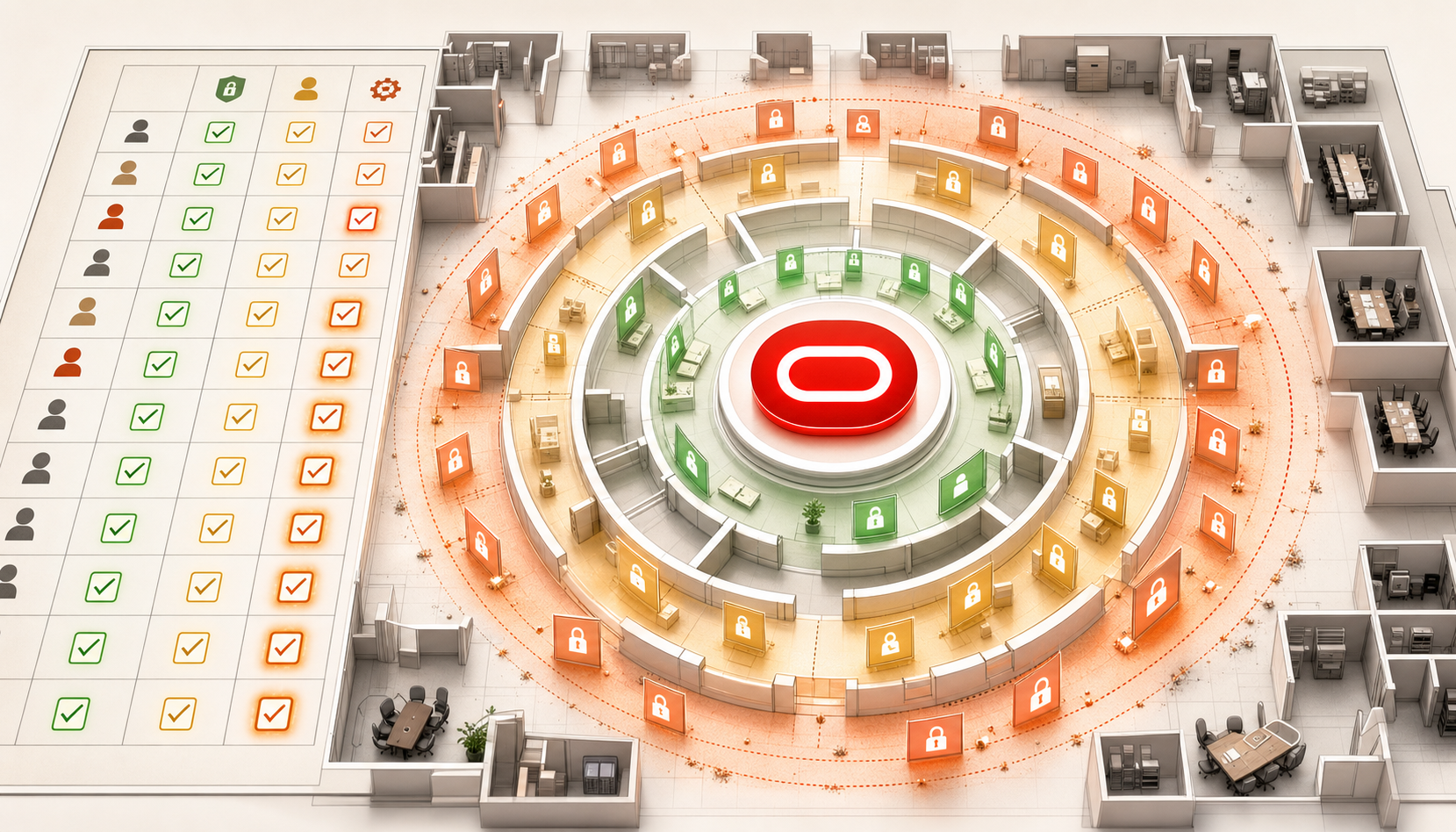
Oracle risk and controls vendor SafePaaS is urging Oracle Cloud ERP customers to treat license governance as an access-control discipline, warning that role sprawl, temporary access, cloned users, and dormant accounts can quietly turn into subscription exposure after go-live.
In a June 9 analysis, SafePaaS argued many Oracle Cloud ERP license surprises start with everyday access decisions rather than procurement errors. New roles, emergency approvals, project exceptions, user cloning, and external consultant access can all expand entitlement exposure before finance sees the cost in a usage report, true-up, or renewal discussion.
The warning lands as software budgets continue to rise. Gartner’s April 2026 forecast expects worldwide IT spending to reach $6.31 trillion in 2026, up 13.5%, with software spending projected to grow 15.1%. An older Flexera report also noted software audit costs remain a material concern, with 22% of surveyed IT leaders saying they paid more than $5 million in audit costs over three years.
Oracle’s own Security Reference supports the underlying risk. Oracle warned that assigning predefined roles and privileges can affect subscription usage, even when the related subscription has not been purchased, and that unused assigned privileges can still count toward subscription consumption.
Role Design Drives Subscription Exposure
SafePaaS frames Oracle Cloud ERP licensing as an access governance issue because subscription exposure is tied to who is active, which roles they hold, which privileges are inherited, and whether those entitlements match the work users actually perform.
That makes role design one of the main cost levers. A broad predefined role may include privileges that trigger subscription impact beyond what the user needs. A temporary project role may remain in place after go-live. A cloned account in a test or training environment may preserve production-like access that clouds the organization’s view of real demand. External users and consultants may keep access after their engagement ends.
Oracle’s guidance points customers toward a more deliberate model: evaluate business need before assigning predefined roles, determine whether users need the full role or only some privileges, and copy predefined roles to remove unneeded privileges where appropriate.
For Oracle Cloud ERP customers, that turns license control into a continuous operating task. The issue is no longer only whether the company negotiated the right commercial terms, but whether live access still reflects those assumptions months after implementation.
Analysis
What this means: Role design carries direct financial risk. Oracle’s guidance says unused assigned privileges can still count toward subscription consumption, making overbroad roles a cost issue as well as a security issue. For CIOs, finance leaders, and security teams, access approvals should show business need, risk impact, and license impact before roles are assigned.
Get Our Free Weekly Newsletter
Entitlement Drift Surfaces at Renewal or Audit
License drift usually becomes visible late.
During implementation, access tends to be closely managed. After go-live, business pressure builds. Teams add users, expand roles, approve exceptions, and keep projects moving. Over time, those small decisions can create a license position that no longer matches the deployment plan.
SafePaaS said the result can show up as unexpected retroactive charges, difficult vendor conversations, and weak audit evidence. Finance sees unplanned spend. IT sees role sprawl. Internal audit sees a control gap. Process owners see pressure to approve broad access because the business cannot wait.
The vendor also connects the issue to software audit pressure. Flexera’s reporting found 31% of respondents had been audited by Oracle in the prior three years, alongside high audit activity from Microsoft, IBM, SAP, Salesforce, Adobe, and ServiceNow.
That context makes unmanaged Oracle Cloud ERP entitlements a measurable risk. If a company cannot show who holds subscription-impacting roles, why those roles were approved, when they were last used, and whether they remain justified, it enters renewal and audit discussions from a weaker position.
Analysis
What this means: Renewal readiness depends on live entitlement evidence. Organizations that reconcile users, roles, privileges, activity, and approval history are better positioned before vendor audits and true-ups. For transformation leaders, the lesson is ERP cost control continues after implementation through lifecycle governance, not just contract negotiation.
Sponsor Industry‑Grade Research
Controls Move License Governance into ERP Operations
SafePaaS recommends bringing license governance into the same control structure used for segregation of duties, privileged access, change control, and remediation.
The starting point is a subscription-impact map that links Oracle Fusion Cloud services, roles, privileges, users, and business justification. That gives approvers a way to evaluate cost exposure before approving access, not after subscription consumption appears in a report.
The next control layer is recurring reconciliation. Organizations can review subscription-impacting roles on a 60- to 90-day cycle, identify users who have not logged in or used key functions, remove dormant access, and downgrade users where lighter access is sufficient.
High-cost or high-impact roles need stricter guardrails. SafePaaS recommends explicit business justification, time-bound access for temporary needs, and rollback plans for project or emergency privileges. Non-production environments, external users, test accounts, and training users should also be reviewed regularly rather than treated as exceptions.
License governance belongs inside ERP operations. If role changes, project go-lives, offboarding, environment cloning, and emergency access do not include license-impact checks, subscription exposure will keep growing quietly until the renewal, audit, or true-up makes it visible.
Analysis
What this means: License governance is an ERP control domain. SafePaaS’ analysis shows how Oracle Cloud ERP subscription exposure can grow through access decisions that look operationally routine after go-live. For ERP leaders, license controls need the same discipline as SoD, privileged access, and change control.