Workday is moving deeper into agentic finance with a new capability designed to continuously detect fraud, errors, and anomalies across financial transactions, shifting how controls are executed inside ERP systems.
The company’s Financial Test Suite, currently in limited release and expected to reach general availability in the second half of 2026, runs continuously in the background to test transactions in real time, CFO Dive April 21 reports. The system reportedly can identify issues such as duplicate invoices and take action before payments are processed.
The tool is part of what CEO Aneel Bhusri has described as “lights-out finance,” where AI agents perform finance tasks continuously rather than through periodic human review.
From Periodic Controls to Continuous Financial Testing
The Financial Test Suite reflects a shift in how financial controls are structured.
Instead of relying on month-end reviews or sample-based audits, the system continuously evaluates transactions as they occur. “In an agentic world, the number of times you can test is almost infinite,” Tim Wakeford, Workday’s VP of financial management product strategy, told the outlet.
The system monitors transactions in the background, scanning for anomalies, duplicate invoices, and potential fraud. When issues are detected, it can intervene before financial close or before payments leave the organization. That timing changes the role of controls from detection after the fact to prevention during execution.
Analysis
What this means: Financial controls are shifting from review cycles to system behavior. The core change is not faster testing, but where control lives. Instead of finance teams designing controls around audit cycles, controls are being embedded directly into transaction flows. That changes ownership. Control design becomes a product and architecture question, not just a policy and process question.
Agentic AI Moves into Core Finance Operations
The Financial Test Suite sits within a broader push by Workday to embed agentic AI across finance workflows.
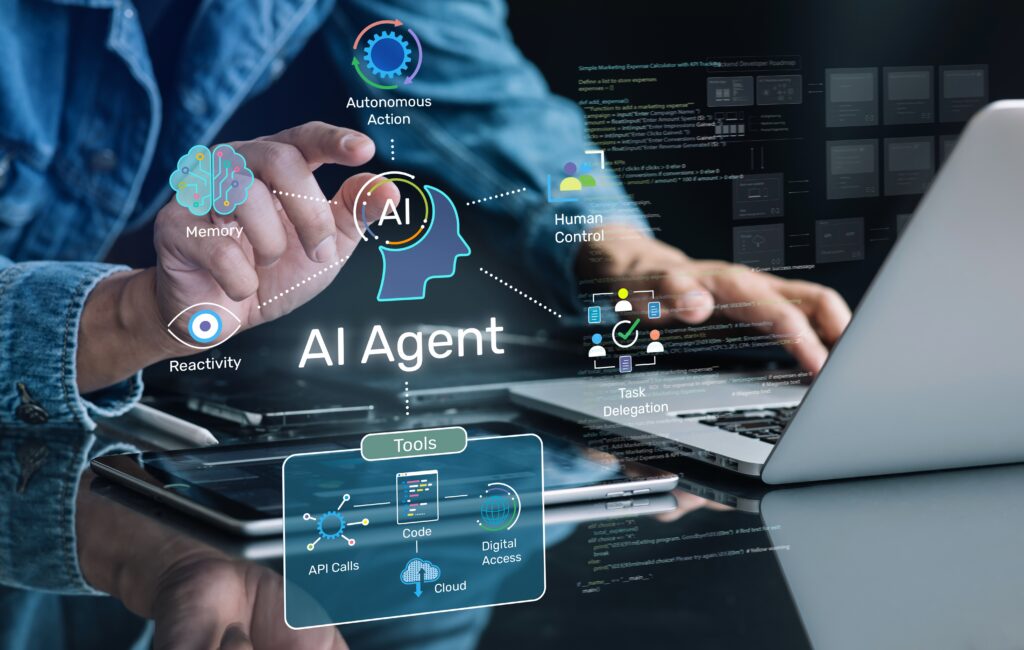
The company has positioned AI agents as continuously operating in the background across financial systems, handling tasks that would traditionally require manual review. This includes identifying anomalies, validating transactions, and supporting decision-making at scale.
The rollout comes as enterprise software vendors increase competition around AI in finance. Oracle, for example, has expanded its own portfolio of AI agents for finance users, while Workday has added agentic capabilities through its acquisition and integration of Sana Labs.
Recent talent movement like Workday’s former CTO joining Anthropic reflects a broader shift toward AI-native platforms and the growing importance of model-driven innovation. At the same time, AI vendors are moving closer to enterprise workflows, including HR and finance, blurring the line between system-of-record platforms and AI-driven execution layers. Workday’s agentic finance push reflects that shift, embedding automation directly into core financial processes.
Analysis
What this means: Pre-transaction intervention introduces a new class of financial risk. Stopping a duplicate payment before it clears is valuable, but it also means the system is making real-time decisions that affect cash flow and vendor relationships. False positives, missed edge cases, and override logic become operational risks, not just audit issues. The reliability of the model matters as much as the logic of the control.
Sponsor Industry‑Grade Research
Governance, Auditability Remain Central to Adoption
Adoption will depend on how these systems meet finance and compliance requirements.
Finance leaders are showing strong interest in agentic AI, but concerns remain around validation, governance, and auditability. “There is without any shadow of a doubt genuine interest and excitement in the CFO community […] but there is also a degree of professional skepticism,” Wakeford said.
Autonomous systems that can intervene in financial transactions introduce new requirements for audit trails, override mechanisms, and control frameworks, particularly for public companies and regulated industries.
Analysis
What this means: Auditability will shift from evidence collection to decision traceability. Traditional audit models rely on sampling and documentation after the fact. Continuous testing creates a different requirement: explaining why a system acted, not just proving that a control exists. Adoption will depend on whether Workday can provide clear traceability into agent decisions, including what triggered an action, what data was used, and how outcomes can be reviewed or reversed.