Aluminium Industries has used Syspro ERP to support 250% business growth without adding administrative staff, according to a recent customer use case story.
The Australian manufacturer produces aluminum window, door, wardrobe, operable wall, shower screen, and acoustic sliding-door products across multiple divisions. As the business expanded, Aluminium Industries needed to manage rising order volumes, more complex production requirements, multiple brands, and tighter controls across manufacturing and distribution.
Syspro said the company selected Syspro 8 after evaluating ERP systems for manufacturing fit, multi-division support, and flexibility. Aluminium Industries also needed an integration layer that could support software development around its own business requirements, including e-commerce and field-ordering capabilities built by Unbound Systems, the company’s software development division.
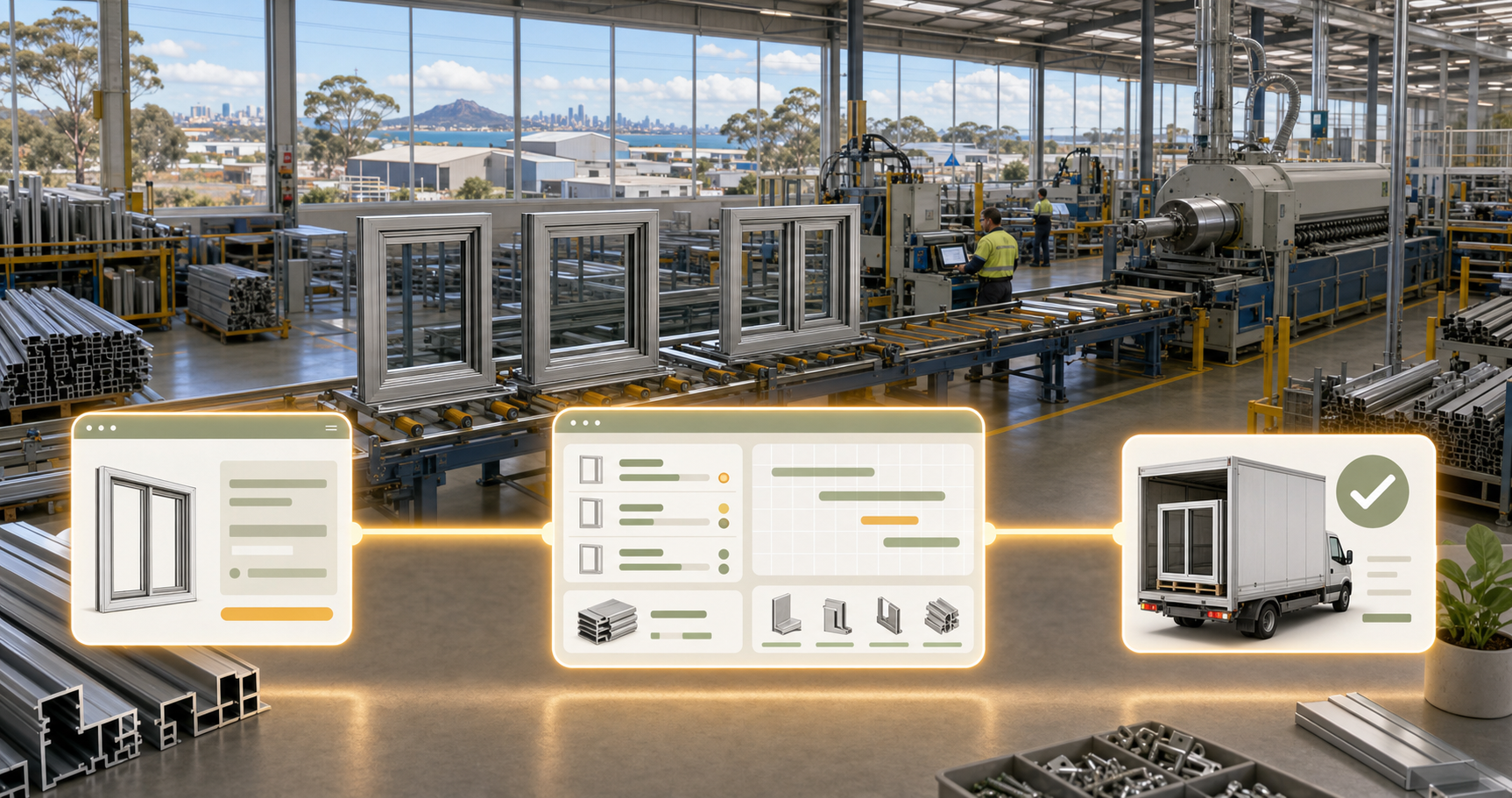
The outcome, according to Syspro, was one integrated platform for finance, sales order management, job production, inventory control, customer pricing, warehouse management, and manufacturing operations.
Growth Without Admin Bloat
The core result is operational scale without inflated administrative growth.
Syspro said Aluminium Industries tripled the size of the business and handled three times the order volume with the same administrative team. The customer story also reports zero new administrative hires during the growth period, 100% on-time delivery through the growth phase, and real-time inventory visibility across divisions.
Growth often exposes the limits of spreadsheets, disconnected applications, manual reporting, and order re-entry. Aluminium Industries’ experience shows how ERP systems can take on the transaction volume that would otherwise force a company to add headcount or accept slower service.
The system also helped the company bring multiple divisions into a single operating view. Aluminium Industries’ product lines now run on one Syspro instance, giving leadership visibility across stock, production, financials, labor, and cost data.
Analysis
What this means: ERP must absorb operational volume before growth becomes overhead. Aluminium Industries’ experience shows how a manufacturer can scale order volume, divisions, and production activity without adding administrative staff at the same rate. For ERP leaders, the lesson is to measure modernization not only by system consolidation, but by how much manual work the platform removes from growth.
E-Commerce Connected to Factory Floor
The case study also highlights the value of integrating customer-facing ordering with production operations.
Before the Syspro implementation, trade orders required manual re-entry into production, creating friction between the digital storefront and the manufacturing floor. Syspro said builders, glaziers, and fabricators can now order through a live trade portal connected to inventory and production systems.
That integration allows orders to move directly into factory workflows, while customers receive live stock availability and delivery commitments at the point of order. For Aluminium Industries, that shift reduces manual handling, improves customer service, and gives the business a cleaner line between demand, production scheduling, and dispatch.
Unbound Systems’ role was central to that architecture. The case study says the division used Syspro’s Business Objects layer to build applications around Aluminium Industries’ unique requirements, allowing the company to extend ERP functionality without losing the manufacturing logic underneath.
Analysis
What this means: Integration turns ERP into a growth platform. Connecting e-commerce, inventory, production scheduling, and dispatch allowed Aluminium Industries to move orders from customer demand into factory execution with less manual re-entry. Manufacturers should treat integration depth as a core ERP requirement when digital sales channels and production workflows need to operate as one process.
Sponsor Industry‑Grade Research
Real-Time Controls Protect Margin
Aluminium Industries also used Syspro to tighten controls across pricing, production, labor, and inventory.
Controlled pricing reduced the risk of unnecessary discounts, credit, and pricing errors. More granular product-cost data now flows through to sales, helping the company protect margins. Syspro’s Manufacturing Operations Management module also supports finite scheduling, cost control, labor management, and on-time delivery.
Inventory visibility was another major gain. Syspro said Aluminium Industries can now manage warehouse functions, bin locations, and stock transfers across warehouses with more accurate inventory data. That visibility has helped reduce inventory on hand while keeping enough stock available to fulfill customer orders.
Scaling production without stronger controls can erode margin, service levels, and cash flow. Aluminium Industries’ case shows how ERP value depends not only on growth enablement, but on the controls that keep growth from turning into operational drag.
Analysis
What this means: Real-time controls protect margin during expansion. Aluminium Industries used Syspro to tighten pricing, cost visibility, inventory management, labor planning, and manufacturing scheduling as the business scaled. Growth-ready systems must improve control at the same time that they increase throughput.