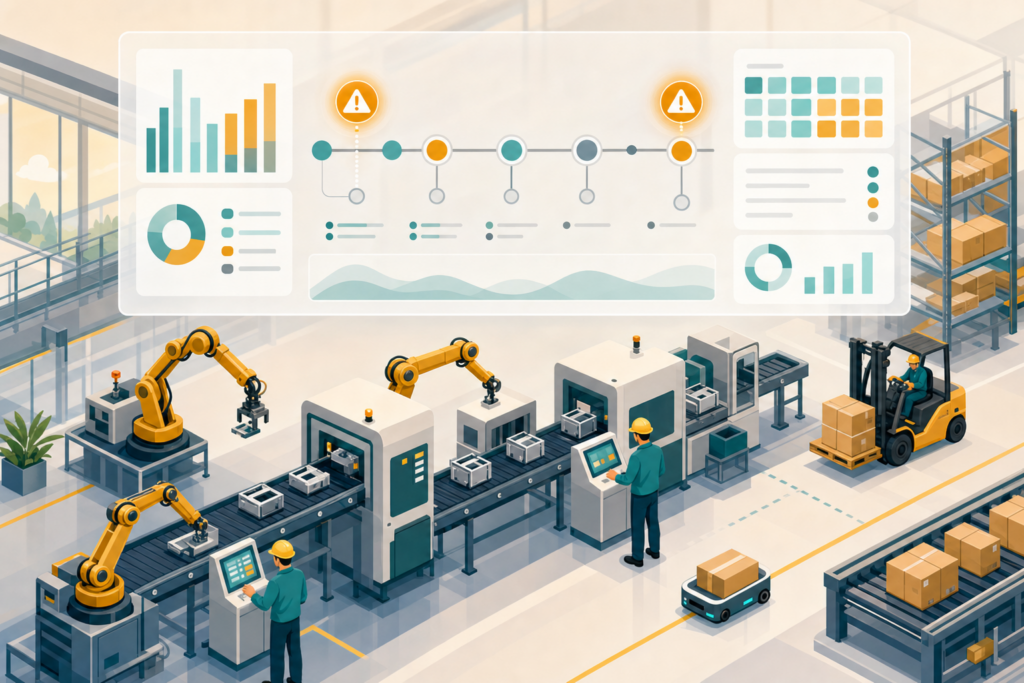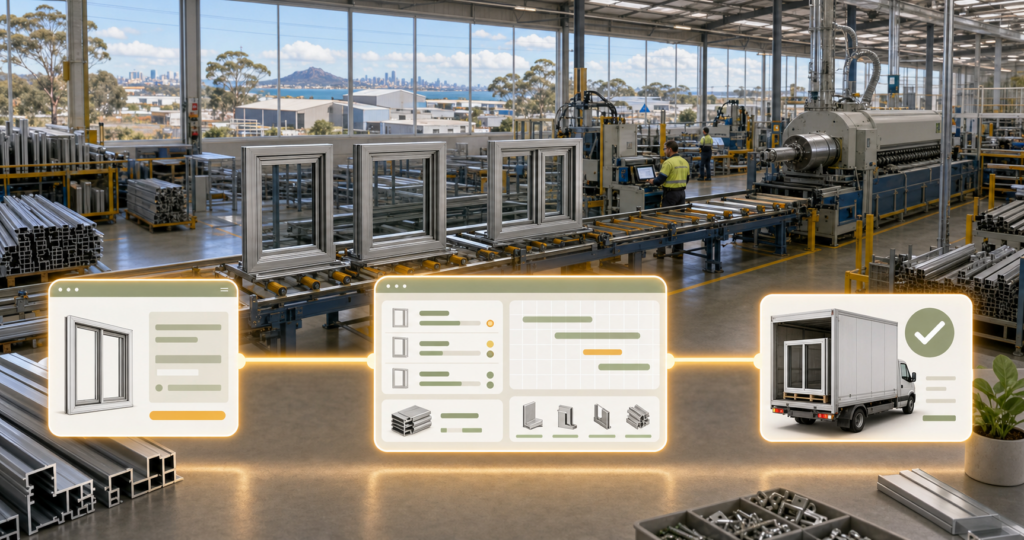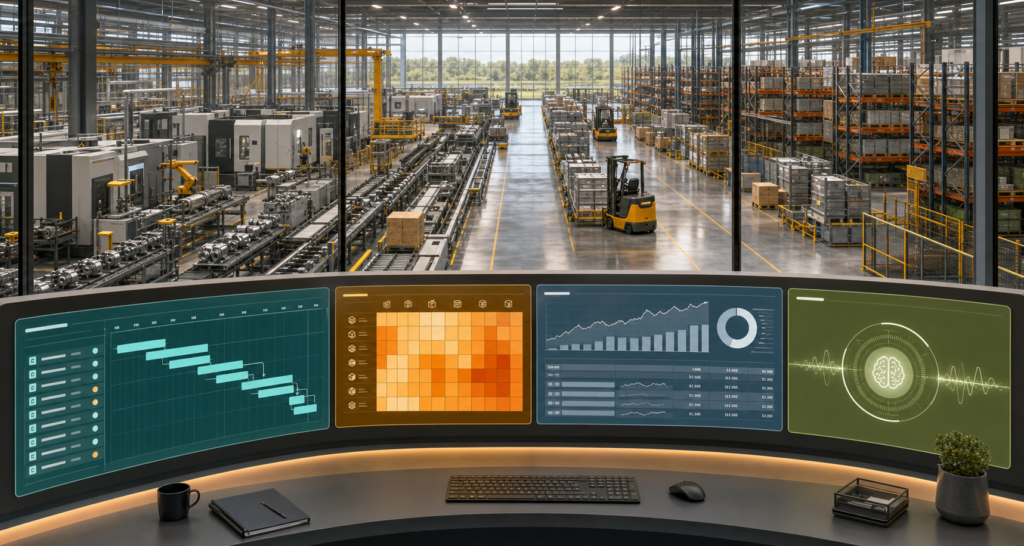
Manufacturers are not short on AI ambition. They are short on the clean operational context needed to make AI useful beyond pilots, dashboards, and isolated productivity gains.
That distinction is becoming more important as manufacturers and distributors move from experimentation into execution. AI can summarize supplier risk, flag inventory anomalies, recommend production changes, and automate routine decisions. But in manufacturing, a correct answer depends on more than model performance. It depends on whether the data underneath the recommendation reflects the business as it actually runs.
For most manufacturers, that foundation sits inside ERP. The system is not just the financial record or the transaction engine. It is where demand, materials, production, inventory, cost, quality, and customer commitments meet. If that layer is fragmented or poorly governed, AI inherits the problem.
The Pilot Problem
Many industrial AI programs begin with a contained use case. A team tests a model against a defined data set, proves that the tool can generate an output, and then tries to work out how to embed that output into the business.
That sequence is backward for manufacturers. AI does not create value when it produces an impressive response. It creates value when that response can change a decision, a workflow, or an exception-handling process without breaking operational control.
A forecast that is not tied to material availability remains a planning artifact. A supplier recommendation that ignores quality history creates risk. An inventory alert that cannot distinguish between system error, late receiving, and genuine shortage adds noise. The weakness is not the AI tool, but the distance between the tool and the operational system of record.
Manufacturers already understand this principle on the plant floor. A sophisticated machine cannot compensate for poor inputs, inconsistent maintenance, or weak process control. AI follows the same rule. Execution determines value.
ERP Gives AI Business Context
Manufacturing decisions carry dependencies that generic AI tools cannot infer from language alone.
A production recommendation needs to know capacity, routing, work-in-progress, labor availability, material constraints, and customer priority. A purchasing recommendation needs to understand supplier reliability, lead times, landed cost, quality performance, and contract terms. A margin recommendation needs to connect price, cost, inventory movement, and fulfillment reality.
ERP gives those signals structure. It links transactions to processes and processes to accountability. It also provides the controls that matter before automation touches procurement, production, finance, or customer commitments.
This is where the AI conversation often becomes too abstract. Manufacturers do not need AI that merely explains what happened. They need AI that can help decide what to do next within the constraints of the business. That requires a trusted operational layer, not another disconnected interface.
Fragmented Data Turns AI into Another Workaround
Manufacturers have spent years working around system fragmentation. Spreadsheets reconcile competing numbers; departmental tools handle local requirements; and experienced employees know which data can be trusted and which report needs manual adjustment before it reaches leadership.
AI can expose that fragmentation faster, but it will not solve it by itself.
When operational data is inconsistent, AI output becomes inconsistent. When processes differ by site or department, recommendations lose reliability. When users do not trust the source system, they will not trust the recommendation built from it.
That creates a practical risk for manufacturers pursuing AI at speed. A new AI layer may improve access to information, but it can also make weak data governance more visible. The organization may get faster answers without getting better answers.
The manufacturers most likely to scale AI will be the ones that treat data discipline as an execution requirement. That means clarifying ownership, tightening process control, and reducing the number of places where critical operational truth has to be manually reconstructed.
The Real Test Is Controlled Action
The next phase of manufacturing AI will be defined by how safely AI can influence action. That does raise the question: Who is accountable when AI affects a business process?
If an AI tool recommends expediting a supplier order, changing production priority, releasing inventory, or escalating a customer issue, the business needs more than a recommendation. It needs a governed path from insight to decision. It needs roles, approval thresholds, exception handling, auditability, and a clear understanding of where human judgment remains required.
ERP is where those controls already exist. That does not mean every AI capability must be embedded directly inside ERP. Manufacturers will continue to use specialized tools across planning, analytics, maintenance, service, and customer operations. The issue is whether those tools connect back to the operational core that gives decisions meaning.
AI should not become another layer of unmanaged execution. If it is going to influence real manufacturing work, it needs to operate inside a structure that the business already trusts.
What This Means for ERP Insiders
ERP providers have to compete on operational AI readiness. Manufacturers will judge AI roadmaps by whether they improve decisions in production, procurement, inventory, finance, and customer fulfillment without weakening control. Vendors that can connect AI to governed operational context will set the standard for the next wave of manufacturing ERP selection.
Manufacturers need to treat AI readiness as an ERP discipline. Fragmented data, inconsistent workflows, and unclear process ownership will limit AI value even when the model itself performs well. ERP program leaders should address data trust and process governance before scaling AI into high-consequence operating decisions.
Implementation partners will play a larger role in turning AI ambition into controlled execution. The work will move beyond tool deployment into operating model design, workflow ownership, permissions, exception handling, and auditability. Services teams that can bridge AI capability with ERP control will become more important to manufacturers trying to move from pilots to measurable performance.