Robert Kramer
Managing Partner, KramerERP
5 Articles Published
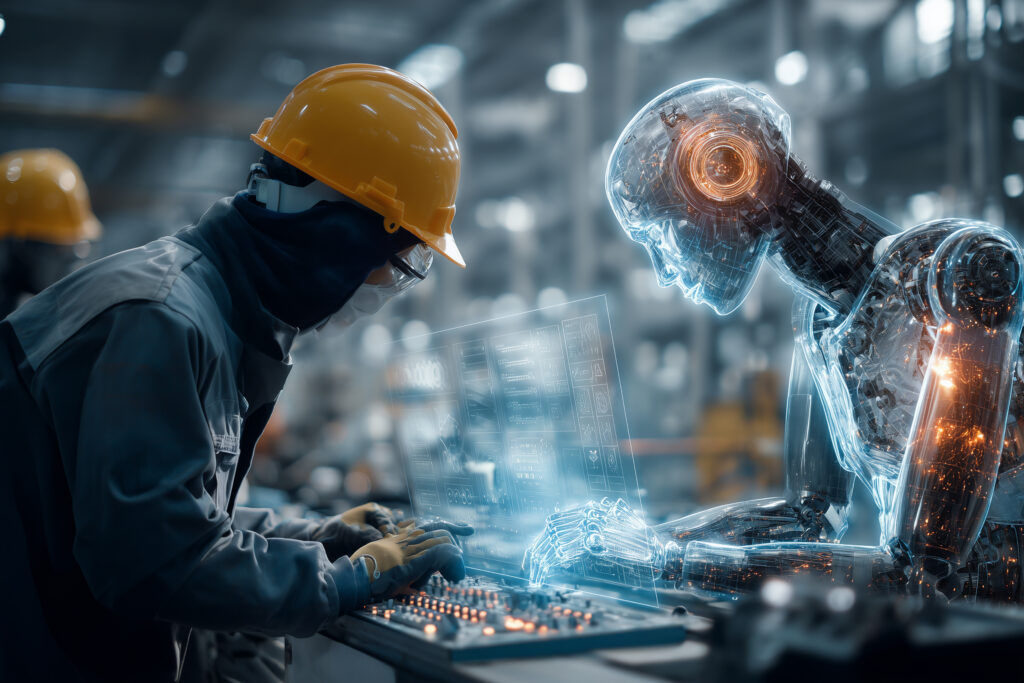
Manufacturing worker in a yellow hard hat and safety glasses operating a control panel alongside a translucent AI humanoid agent, both reviewing a holographic ERP and production dashboard on a factory floor, illustrating manufacturing AI execution and human-agent collaboration
How Midmarket Manufacturers Are Moving AI From Experimentation Into Execution
Robert Kramer of KramerERP examines how QAD, Redzone and ChampionAI are helping midmarket manufacturers move AI from experimentation into execution, with customer results ranging from a 93% changeover reduction at Sauder to a 90% cut in RFQ creation time at KION.
Neon highway sign reading "AI Adoption Speed: Unlimited" over a digital motorway, symbolizing Infor forward-deployed engineering accelerating AI into ERP execution
Infor Uses Forward-Deployed Engineering To Move AI Into ERP Execution
Infor is pairing forward-deployed engineering with its AI Adoption Hub to move AI from feature availability into ERP execution. The four-week deployment claim gets attention, but reuse, governance and measurable operating improvement will decide whether the model scales.
AI is doing more than making enterprise systems smarter. It is exposing weak data, disconnected processes and unclear ownership that were already there.
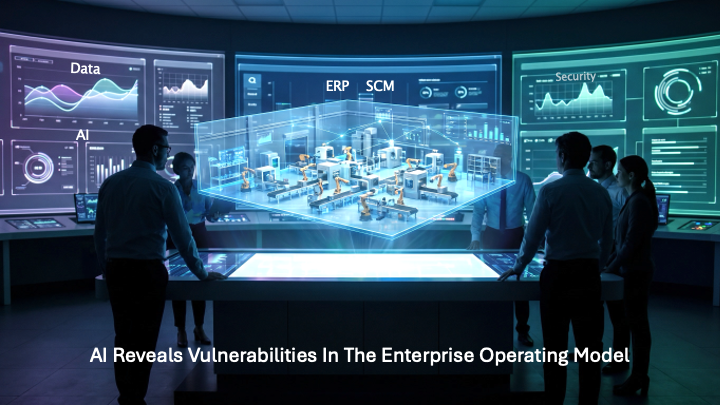
AI Reveals Vulnerabilities in the Enterprise Operating Model
Enterprise AI is not held back only by technology. ERP, supply chain, data, security, and people need to work together in a connected operating model that turns trusted context into controlled action.
Epicor Insights 2026 Makes Cloud Migration a Trust Test, and It Is Not Alone
At Epicor Insights 2026, the company faces its most consequential conference yet: with on-premises Kinetic development ending at the 2028.1 release, the pressure is on to demonstrate that cloud ERP migration is not just necessary for manufacturers and distributors — but genuinely worth it. This analysis examines how Epicor is addressing the trust gap through security governance, data architecture strategy, and change management, and what still needs to be proven on the conference floor.
Future ERP systems will likely undergo a significant transformation, from static and reactive to dynamic, event-driven platforms powered by agentic AI, enabling them to execute workflows and interact autonomously across business processes. Image from Adobe.
Event-Driven Agentic AI: What Happens When ERP Becomes the Operator
The ERP landscape is undergoing a transformative shift towards event-driven architecture and agentic AI, moving from static systems reliant on manual input to autonomous, adaptive platforms that can proactively respond to business events, enhancing operational agility and decision-making while necessitating careful governance and data quality management.