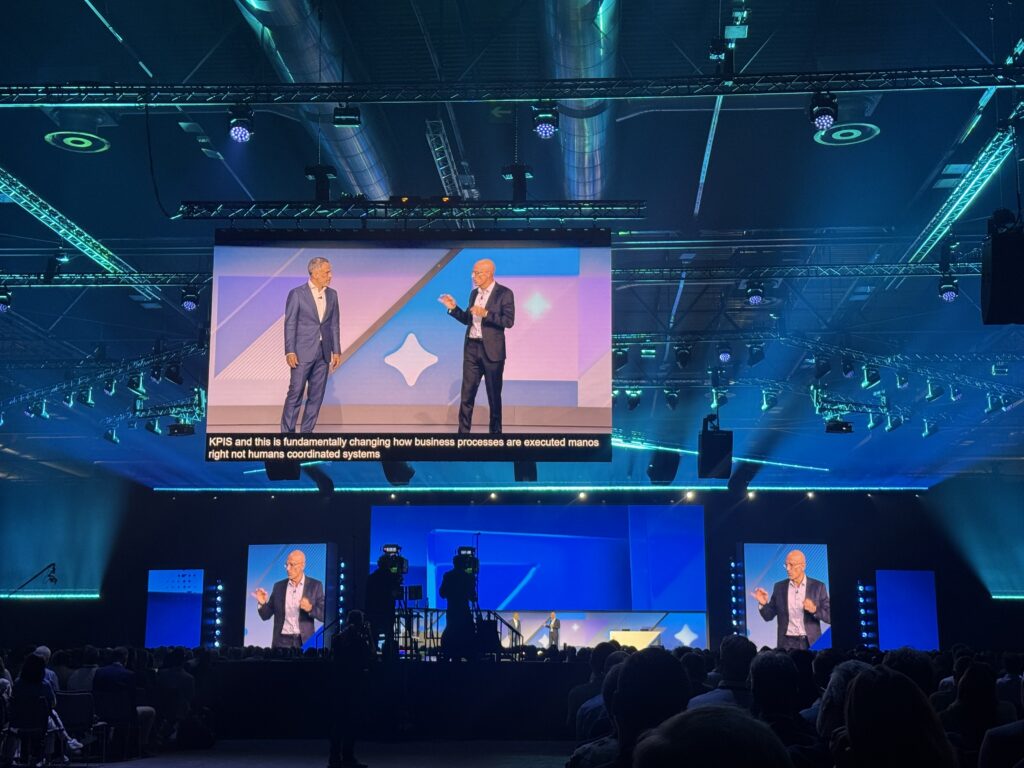

Epicor heads into Insights 2026 with a cloud migration story that makes sense, but customers still need to feel confident about the move. Ending on-premises Kinetic development with the 2028.1 release raised the stakes. Epicor is not alone. SAP, Oracle, Microsoft, Infor, IFS, QAD, Sage, and Acumatica are all pushing customers toward cloud ERP. The real question is whether Epicor can make the cloud feel worth it, not just required, by showing how it reduces risk and works in the environments manufacturers and distributors run.
2028.1 Deadline Removes the Middle Ground for Customers
Precision matters here because customer reactions have sometimes outpaced the support terms. The final on-premises Kinetic feature release will be version 2028.1, expected in January 2028. Active Support continues through December 31, 2029, covering fixes, security updates and technical assistance. Beginning in 2030, remaining on-premises customers will transition to Sustaining Support, a more limited service tier.
That is not an immediate cutoff. Customers have time. But Epicor is now stopping new feature development for on-premises, and any customer who stays beyond 2029 will be operating on a platform that is no longer moving forward. For manufacturers and distributors carrying deep customization, multi-site operations and long transactional histories, that shift affects capital planning, IT roadmap decisions and staffing assumptions, not just upgrade timelines.
The issue is not the deadline alone. It is the collision between that deadline and earlier public commitments suggesting on-premises license sales would continue indefinitely. Once that gap opened, every announcement at Insights has to do two jobs: explain the future and rebuild confidence.
Security and Governance Investment Deserves More Conversation
Epicor has a legitimate cloud security argument, and it should be part of the conversation. Manufacturing remains one of the most frequently targeted industries for cyberattacks, with mid-sized on-premises environments carrying a disproportionate share of the exposed surface area. Epicor has dedicated security teams supporting its cloud environments. Most companies in its installed base cannot staff that level of security depth internally. That gap widens every year.
Epicor has also made architectural choices in its AI layer that reflect governance thinking. The agent framework is built with role-based access controls, immutable audit logging and human-in-the-loop approvals. Agents can recommend and execute within defined approval chains. They do not operate outside them. In manufacturing and distribution, where a shipment decision, a financial commitment or a trading partner transaction carries real-world consequences, that governance architecture is not a feature. It is a prerequisite.
That aligns with the argument I made in my Forbes analysis, “AI Is Changing ERP, Not Replacing It.” AI governance, not model capability, determines whether enterprise AI can deliver operational value at scale. Epicor’s governance approach reflects that discipline, and it should be more explicit about it at Insights.
Cloud ERP Is the Direction, But Migration Is Still The Hard Part
The direction is clear across ERP. SAP has RISE and GROW. Oracle has Fusion Cloud ERP. Microsoft has Dynamics 365, Copilot, Fabric, OneLake, and Purview. Infor and Epicor lean on industry depth. IFS is strong in asset-heavy operations. QAD is focused on manufacturing discipline. Sage and Acumatica speak more to mid-market speed, cost and accessibility. The packaging differs by vendor and market, but the customer concern is the same: how do we get the benefits of cloud without creating more risk than the business can absorb?
For manufacturers and distributors, these are not clean environments. They often include years of custom workflows, plant-level workarounds, embedded reporting logic, database dependencies and integrations that nobody wants to touch unless they have to. A cloud roadmap may look clean from the outside, but the migration has to survive the operating model.
That is the test for Epicor at Insights 2026. The cloud direction is not the issue. Most customers know where the market is going. Epicor needs to show that cloud is a better operating model, with a path that respects what customers already have working today.
Change Management Is Where Cloud ERP Migrations Win or Lose
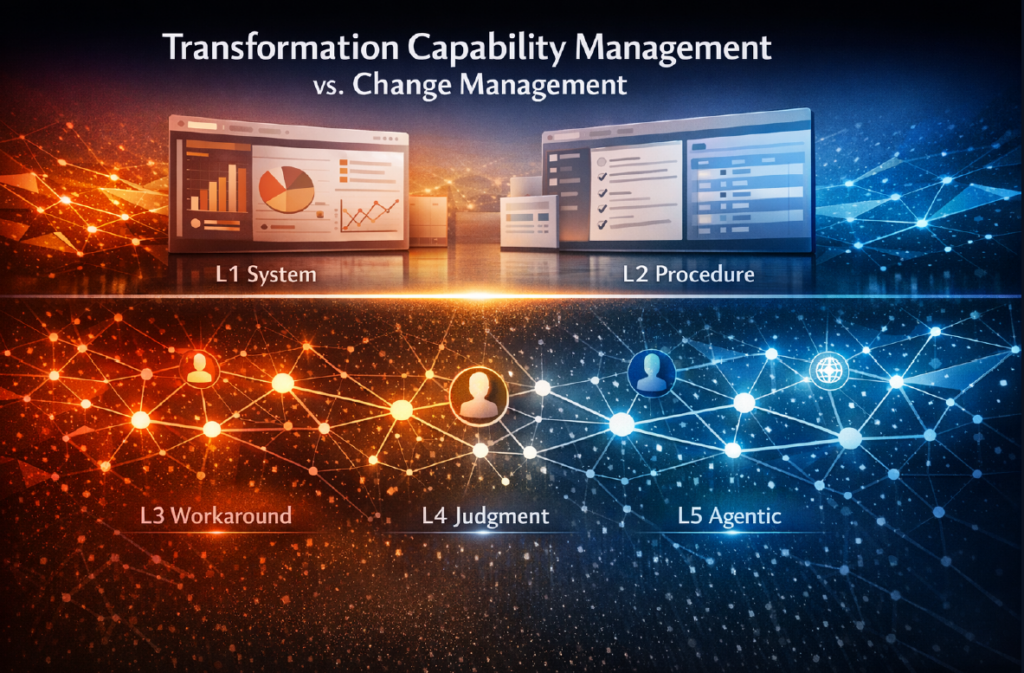
Across these migration programs, the pattern is consistent: the technical go-live is not the finish line. It is where the real test starts. In my Forbes piece, “People, Processes, Technology and the Shift Nobody Saw Coming,” I discuss how AI and automation are moving faster than many organizations can absorb. The gap between what vendors can deploy and what customers can adopt is becoming one of the biggest risks in ERP modernization.
The failure points are usually easy to see once the project gets moving. Processes were never standardized across business units. Data ownership is unclear. Field mapping exposes three different definitions of the same transaction. Users receive system training but not enough process training, so they revert to workarounds after go-live. Teams are already tired from prior transformation projects that promised improvement and delivered more complexity. None of that is really a technology problem. It is an operating model problem.
That is why every migration is not the same. A mature, multi-site manufacturer with decades of reports, custom workflows and acquisition-driven data complexity needs process and organizational work before the technical migration starts. Without that, a migration program is offering a go-live plan, not a business outcome.
The strongest ERP migration stories treat adoption, process redesign and organizational readiness as core project work. They measure those items with the same discipline as data conversion, integrations and testing. That is where trust gets built, by showing customers how the move will hold up in the way their business runs.
Data Is Not a Migration Dependency
One part of cloud ERP migration still does not get enough attention at vendor events: the condition of the data itself. In my Forbes analysis, “How ERP Data Fits Into the Enterprise Data Ecosystem,” I point out that ERP is no longer the only center of enterprise data. It is one of several critical systems feeding a broader environment that includes customer platforms, supply chain tools, financial systems and external data. The data decisions made during migration shape how much AI value the organization can use later.
That is why a cloud ERP migration is not just a platform move. It is a data architecture decision. Customers that move to cloud ERP without dealing with ownership, quality, integration and governance will hit limits quickly. The AI capabilities may be available, but the business will struggle to use them if the surrounding data environment is inconsistent or poorly connected. Vendors that address those issues before migration are doing more than moving customers to cloud. They are improving the odds that cloud delivers value.
For Epicor, this is especially relevant in the automotive aftermarket. Epicor directly manages inventory and transactions across roughly 40 percent of an estimated $54 billion U.S. wholesale market. That is not just market presence. It is a data asset. AI agents built on that foundation can reason from operational context, not generic assumptions. If Epicor can demonstrate that cloud migration strengthens the data foundation rather than disrupts it, the cloud argument becomes much stronger.
The Test Is Evidence, Not Urgency
Epicor does not need more product language at Insights. It needs to show customers that it understands the concerns raised by the January announcement and is taking clear steps to address them.
That means proving how cloud migration works in complex environments with database access concerns, custom assemblies, multi-site complexity, change management and data readiness. These are not side issues. They determine whether the move succeeds.
Epicor has real strengths in manufacturing and distribution, AI governance, security and the automotive aftermarket. At Insights, those strengths need to show up as proof that customers can act on. If Epicor gives attendees a clear next step tied to their environment, it has a credible event. If it talks around the trust issue, the deadline stays the headline.