The Clorox Company entered its SAP S/4HANA cutover expecting disruption. Ahead of go-live, the company and its retail partners built additional inventory to protect availability as order management and fulfillment shifted onto the new system.
“ERP transitions are complex, and we entered the year expecting a challenging front half, both from a volatile macro environment and the temporary impacts of our ERP implementation,” said Pascal Montilus, Chief Supply Chain Officer at Clorox. “Part of what you saw in results was transitory.”
That buffer set up a sequence across the network. Inventory built ahead of the cutover was later drawn down in the new fiscal year, while short-lived fulfillment challenges emerged as manufacturing and distribution processes stabilized under the new system.
Shipments were pulled forward as a result, with early operational friction reflecting how new workflows performed at scale. “In essence, as per plan, the slowdown in sales in Q1 was equivalent to the gain we saw in Q4 during the pre-build,” Montilus explained.
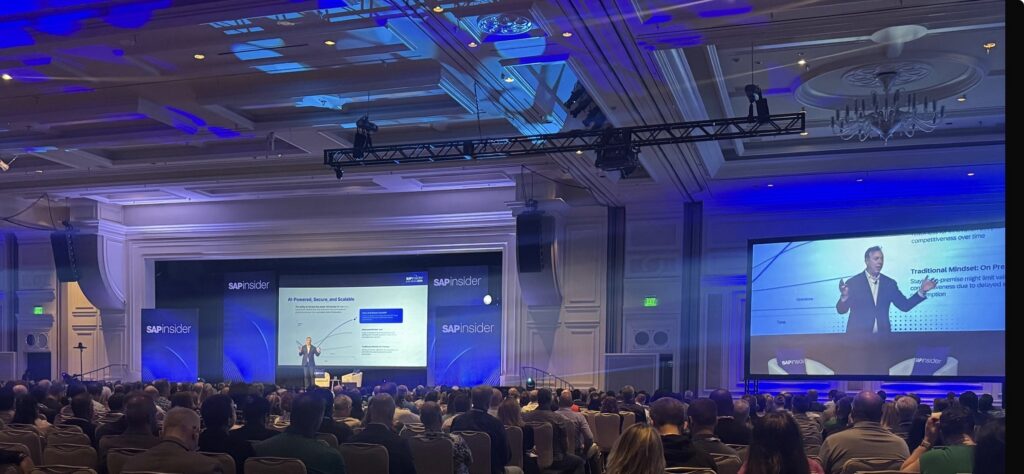
Following SAPinsider’s interview with Chau Banks, Chief Information and Data Officer at Clorox, on the strategy behind the company’s five-year SAP S/4HANA transformation, Montilus explains how the system is now shaping manufacturing and supply chain execution, with input from implementation partner Johan Opperman, Managing Director at accenture.
Manufacturing and Supply Chain Priorities Shift at Cutover
When Pascal Montilus joined Clorox, the ERP transformation was already underway. He understood it as a multi-year effort to modernize how the company runs end-to-end, with greater visibility and faster response to demand.
What changed once he was inside the program was the scope of that shift.
“I assumed that a big part of this was the technical aspect of implementing the ERP,” Montilus said, “now appreciate it is equally matched with a focus on the frontline people, the end users, who would be using the system.”
That focus showed up in how manufacturing and supply chain prepared for the transition.
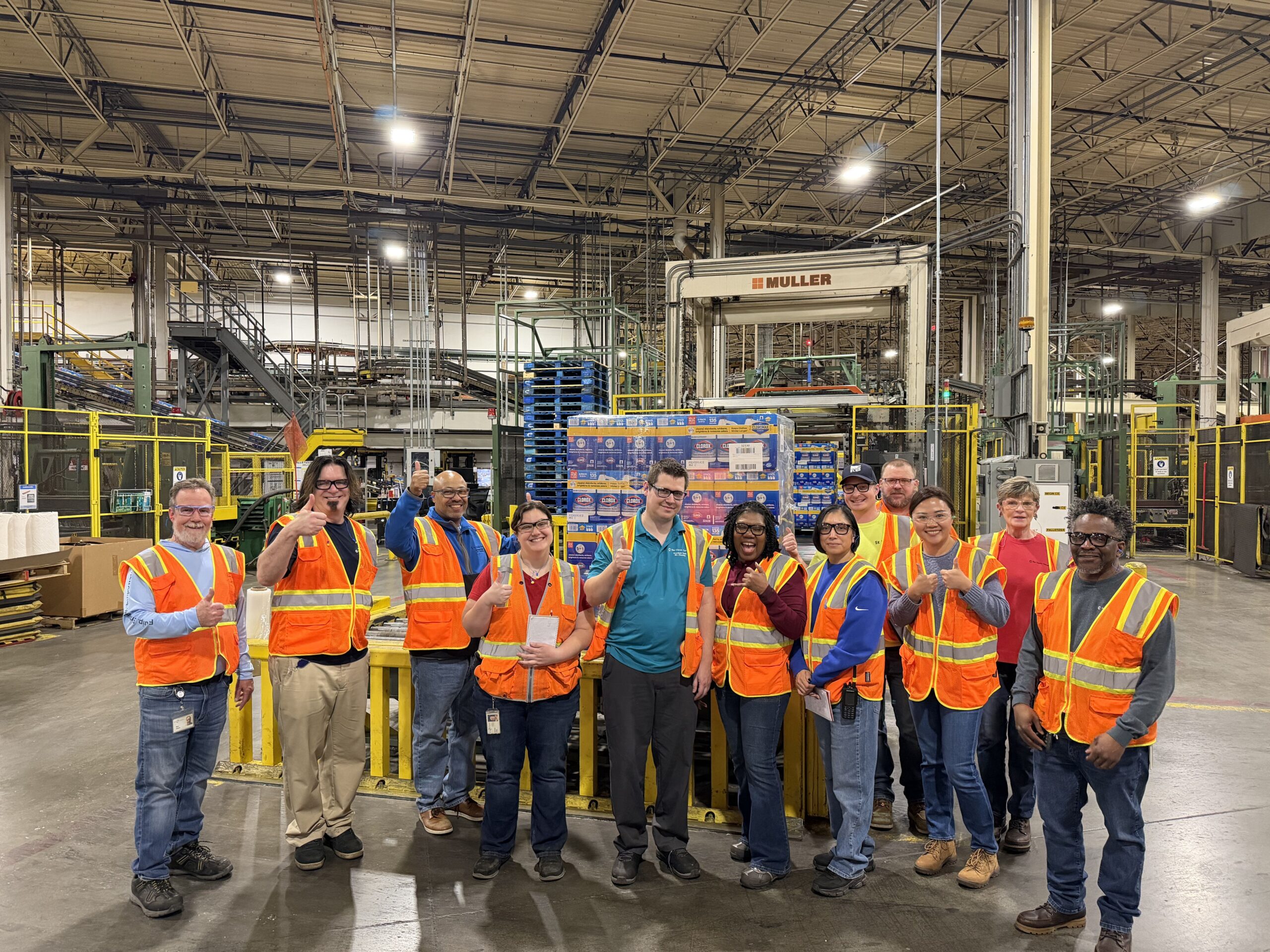
Teams were trained and aligned ahead of go-live so they could execute new processes immediately, with changes tied directly to how work would be performed across plants, distribution centers, and customer-facing operations.
As the cutover approached, priorities narrowed quickly. “Our teammates have been focused on continuity and enhanced production efficiency,” Montilus said. “Our priorities were keeping plants running, fulfilling orders on time, and ensuring data accuracy during the implementation.”
Meeting those priorities required translating system design into line-level execution. Plans focused on changes across production lines, warehouses, and order flows, with teams aligning early to test shared workflows across supply chain, sales, and finance.
Stabilizing Operations Under Real-World Conditions
As the system went live across the US, Clorox tracked operational and behavioral indicators to determine whether the transition was holding.
“Early stability showed up in steady order flow, predictable plant and warehouse execution, and a declining trend in high-severity incidents,” Opperman noted. “On the people side, we looked for users completing critical work without reverting to workarounds, faster time-to-resolution for common issues, and consistent adherence to new processes.”
Those indicators established a baseline for execution under the new system. They also revealed where pressure emerged as real transaction volumes moved through the network.
“Pressure surfaced in the long tail of defects, integration nuances, and user enhancement requests,” Opperman said. The most visible impact was in logistics and order-to-cash processes, where integration issues were harder to fully replicate before go-live and only emerged at real-world transaction volumes.
Opperman said the focus was on disciplined hypercare and fast, coordinated decision-making. That required ownership for issue triage, site-level feedback loops, and a structured cadence of stand-ups, incident reviews, and leadership checkpoints to surface and resolve issues quickly.
Over time, those indicators began to stabilize and issue volume declined. “We measured maturity by a sustained reduction in repeat issues and an intentional shift in the support model from implementation to run and improve,” Opperman said.
From there, the focus moved to continuous optimization, marking the transition from stabilization to steady-state operations.
Execution Moves from Functional Silos to Shared Workflows
As the system stabilized, the impact showed up in how work moved through the network. Decisions that had previously been made within functions were now tied to shared data and processes across supply chain, sales, and finance.
Montilus said the impact was showing up in visibility and decision speed. “Teams across finance, supply chain, and sales can now see the same real-time, consistent data.” That changed how execution was coordinated. Planning, production, and fulfillment were no longer managed in sequence across disconnected systems. Instead, they ran against a shared data model, with fewer handoffs and less need for reconciliation.
“Discipline in our ways of working and processes is providing true end-to-end alignment across cross-functional teams,” Montilus added.
The shift became most visible when issues occurred, where problems had previously been contained within functions, they now surfaced across the process, requiring faster coordination and clearer ownership across teams.
As Opperman noted, this reflected a move away from localized workarounds toward standardized execution. “Upstream and downstream impacts are immediate and shared,” he said, changing how work was executed as it became connected across the network.
“With the foundation set, we expect the ERP will help us better respond to changing consumer trends and retailer needs and improve efficiency in supply chain management,” Montilus said. “We’re using unified, real-time insights to anticipate demand, align supply, and automate routine work so teams can focus on value.”
Execution Discipline Determines ERP Value
The system now operates as a single data backbone across business units and geographies, which Montilus said supports more accurate demand planning, more reliable order fulfillment, and better investment decisions as Clorox scales innovation.
“And let us not forget that it is the development of our people talent, our workforce, to become more tech-savvy and the opportunity for new behaviors they are embracing via this new technology,” Montilus noted.
Those gains come with clear requirements for how the system is used. For supply chain leaders preparing for similar transitions, Montilus points to a set of execution disciplines that determine whether the system delivers value.
It begins with defining new ways of working across the network, ensuring employees, suppliers, and customers understand how processes and inputs will change before go-live rather than adjusting after. That requires investing as much in people as in technology, with role-based, hands-on training helping teams build confidence and execute under real conditions.
It also depends on staging execution, using early rollout phases to test, learn, and refine before scaling, while maintaining strong coordination between internal teams and implementation partners. At the same time, sequencing matters, with teams first stabilizing core processes and maintaining service levels before shifting focus to automation and value capture.
Those disciplines position the organization for what comes next.
“With a better tech stack and data governance, we are well placed to continue to embrace the challenges of an ever-expanding digital and AI world,” Montilus said. “We are ready for the challenge of being a future-fit supply chain.”
What This Means for ERP Insiders
ERP cutovers shift how activity appears across reporting periods. Pre-build and drawdown move shipments and inventory between quarters, making performance look uneven even when operations follow plan. Leaders need to interpret early results carefully to separate transition effects from underlying performance.
Integrated workflows increase operational transparency under pressure. As processes connect end-to-end, issues surface across functions rather than staying contained within silos. This creates faster feedback loops but also requires teams to operate with greater coordination and shared accountability during stabilization.
System value depends on process discipline and adoption. Modern ERP platforms enable better planning and execution, but outcomes depend on how consistently teams follow shared processes and use the system as intended. Strong discipline allows organizations to convert system capability into sustained operational gains.
About Us
ERP Today covers how ERP, cloud, and AI change the way businesses run. Our editors speak with practitioners, vendors, and analysts to surface the technology, contracts, and risks that matter for enterprise leaders.
Alongside our newsroom coverage, we run in‑person summits where ERP leaders compare notes on programs like yours, and a research practice that turns reporting like this into organization‑specific briefings and content.
This article was first published by SAPinsider on April 8, 2026.