
AI-native ERP modernization startup Tessera Labs raised $60 million to attack one of the most expensive parts of enterprise software: the ERP transformation work that still depends on large consulting teams, long timelines, and change orders that can reshape a project after it has already begun.
The funding, led by Andreessen Horowitz with participation from Foundation Capital, Myriad Venture Partners, and Osage University Partners, gives Tessera more capital to build its AI-native platform for enterprise modernization. The company is targeting the work around ERP, HCM, CRM, procurement, and other systems of record, where transformation programs often carry the highest risk and the least tolerance for disruption.
Tessera is stepping into a market long dominated by global systems integrators (GSIs) and specialist implementation partners. Those firms will not disappear. But Tessera’s rise signals that investors and CIOs are starting to ask whether AI agents can absorb more of the repetitive, expensive, and knowledge-heavy work that has made ERP modernization so hard to scale.
The Founder Story
Forbes on May 5 profiled co-founder and CEO Kabir Nagrecha, highlighting his early academic path, AI experience, and exposure to ERP transformation work through his father’s enterprise IT career. Tessera’s site says Nagrecha earned a PhD in computer science from UC San Diego at age 20 and previously worked as a Meta PhD Research Fellow and AI systems researcher. The company was co-founded by Nagrecha and Ming Chang, a former SAP executive with more than a decade supporting Fortune 500 SAP programs globally.
That mix of AI research and ERP domain experience is part of the investor pitch. Tessera’s customer base reportedly includes Fortune 500 companies undergoing major modernization work across manufacturing, technology, retail, consumer goods, and utilities. For enterprise transformation buyers, the next test is production proof. Which workloads were automated? Which systems were impacted? How much work remained with consultants, how was governance handled, and what testing and savings evidence was produced?
Funding proves investor conviction. Customer proof will determine whether Tessera becomes a serious modernization layer or a high-profile tool inside a larger consulting-led program.
ERP Modernization’s Labor Model Problem
ERP projects have always carried a labor model underneath the software decision.
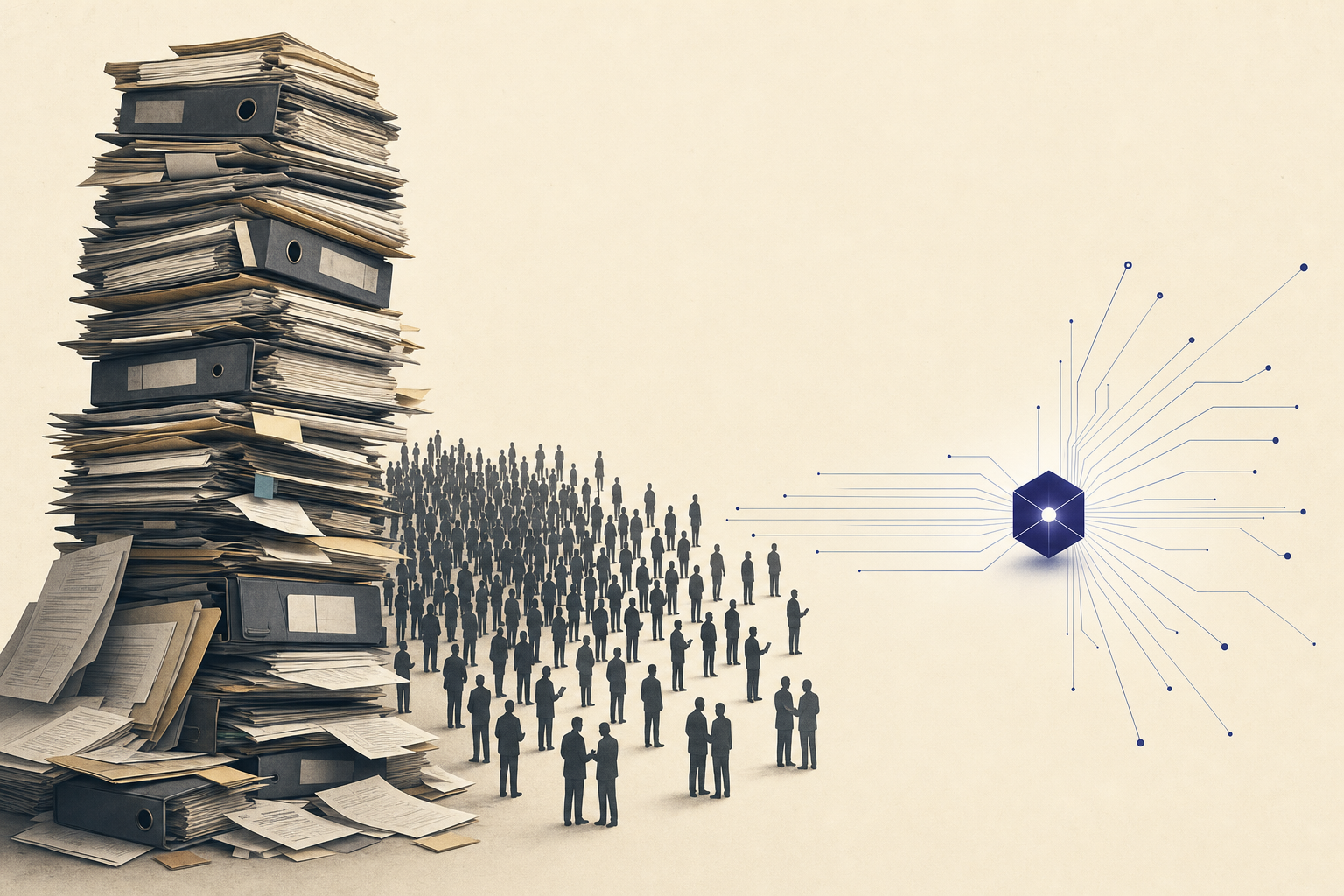
A move from SAP ECC to SAP S/4HANA, a data harmonization effort, or a cross-system modernization program rarely fails because the target platform is unknown. It slows down because requirements have to be gathered, custom code has to be analyzed, data has to be cleaned, process exceptions have to be understood, integrations have to be mapped, testing has to be executed, and the business has to stay operational while the system changes.
That work has historically required large teams because every enterprise landscape is messy in its own way. Decades of configuration, bolt-ons, reports, process workarounds, integrations, custom code, and organizational memory sit inside the system. Much of the knowledge is distributed across IT, finance, operations, partners, and long-tenured employees.
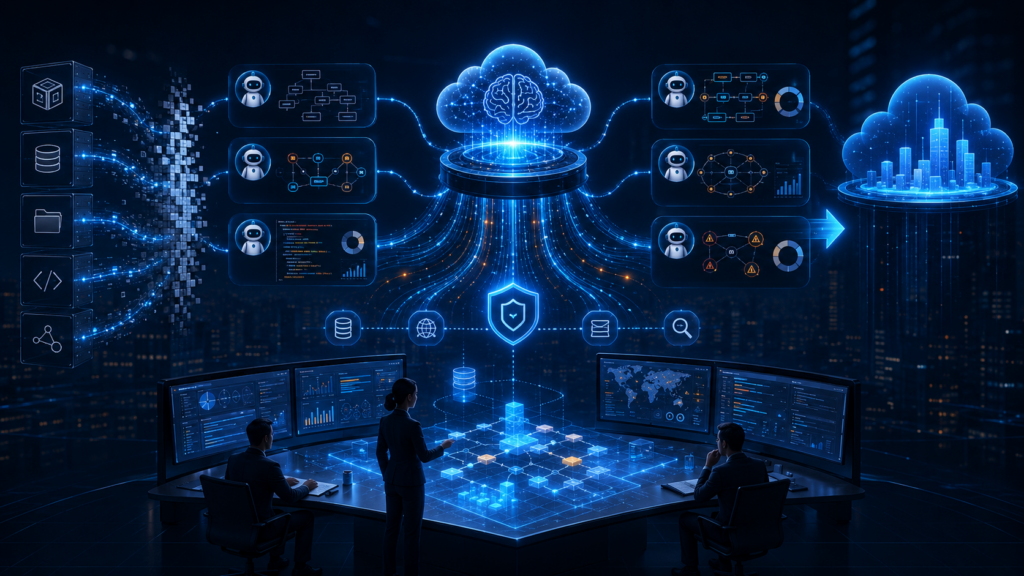
Tessera is trying to make that knowledge machine-readable and actionable. The company says its platform captures business requirements in natural language, orchestrates secure change across critical systems, harmonizes fragmented systems and data, and maintains governance and traceability. Its site positions the platform around multi-agent automation, enterprise governance, cross-system reach, vendor-agnostic integration, and continuity through modernization.
That is the right problem to target. ERP transformation is not one task. It is thousands of interdependent tasks, many of them repeatable across programs but still dependent on context. The company that can automate more of that work without breaking controls will pressure the economics of implementation.
Analysis
What this means: Systems integrators need to redefine where they add value. AI agents may compress parts of the delivery factory, but enterprises will still need process judgment, change leadership, industry expertise, and accountability for high-risk decisions. Implementation partners can shift toward architecture, governance, and business outcomes before customers start treating headcount-heavy transformation plans as legacy pricing models.
Pressure on the GSI Market
Tessera’s funding announcement places the company directly against the transformation bottleneck that has sustained the systems integrator (SI) model.
The SI services sector is projected to grow from around $550 billion in 2025 to some $760 billion by 2030, with demand reportedly driven by “cloud adoption, digital transformation, and legacy system modernization.” That expected growth does not mean Tessera will disrupt the model on its own. It does explain why investors see room for a new automation layer inside a spending pool tied to the work Tessera wants to compress: requirements capture, code analysis, data harmonization, integration mapping, test generation, documentation, and migration execution.
Tessera’s message is that ERP modernization has stayed too slow and expensive because too much of that work still depends on human-led execution at scale. The company is not trying to replace SAP, Oracle, Workday, Salesforce, or other systems of record. It is trying to change how enterprises modernize around them, offering CIOs and transformation leaders a way to challenge traditional modernization proposals.
That gives Tessera a different market position from application vendors embedding AI into their own platforms. SAP can use AI to support clean-core migration. Workday can govern agents around HR and finance data. Oracle can push AI across Fusion and industry applications. Tessera’s opening sits across the fragmented enterprise landscape, where CIOs still need to move data, code, processes, and integrations from one operating state to another.
The SI ecosystem should take the signal seriously. AI may first compress coding, documentation, test generation, migration analysis, and data-quality work. Over time, the larger pressure will hit staffing models, margins, knowledge retention, and the value customers assign to large implementation teams. The center of value may move away from sheer delivery capacity toward transformation architecture, governance, and exception judgment.
Analysis
What this means: AI-native modernization will pressure traditional ERP delivery models. Tessera’s funding shows investor appetite for platforms that automate the repetitive, knowledge-heavy work behind migrations, data harmonization, custom-code remediation, and cross-system change. CIOs will likely use that pressure to challenge implementation proposals that still depend on large teams, long timelines, and weak automation evidence.
Sponsor Industry‑Grade Research
The ERP Buyer Question
Tessera says early adopters have compressed transformation timelines from years to weeks and reduced costs by more than half. Those claims will attract attention, but ERP buyers should evaluate the governance model before the productivity claim.
Modernization programs touch core financial, operational, customer, workforce, and compliance processes. AI agents need auditability, access controls, approval gates, and traceability. A faster migration that creates opaque decisions or weak evidence will not pass the scrutiny of a CFO, CIO, auditor, or regulated-industry board. Tessera appears to understand that concern. Its funding announcement emphasizes institutional-grade governance and traceability, and its site says every action is logged and traceable for regulated industries.
Transformation RFPs should not ask only how many consultants are needed, which methodology will be used, or which accelerators the SI brings. They should ask which parts of the program can be automated, how AI-generated work will be validated, where human review remains mandatory, and who owns the evidence trail.
The same applies to commercial models. If AI reduces the time required for code analysis, data harmonization, documentation, test creation, or integration mapping, buyers should expect delivery models to change. Fixed-fee, outcome-based, and gain-sharing structures may become more attractive than time-and-materials programs built around large teams.
SIs will adapt. Many already use AI internally and will build or partner for similar capabilities. The difference is that startups like Tessera make the comparison visible. Buyers can now benchmark the old delivery model against an AI-native one and ask where the labor is still necessary.
That may be the most important impact of the Tessera funding round. The company does not have to replace the SI ecosystem to change it. It only has to make the economics of ERP transformation harder to defend without automation, governance, and measurable proof.
Analysis
What this means: Governance will separate credible ERP AI from migration theater. Faster transformation only creates value if every AI-assisted change is traceable, reviewed, tested, and tied to business continuity requirements. ERP leaders should evaluate modernization tools by their audit trails, approval gates, access controls, rollback support, and evidence of production readiness.