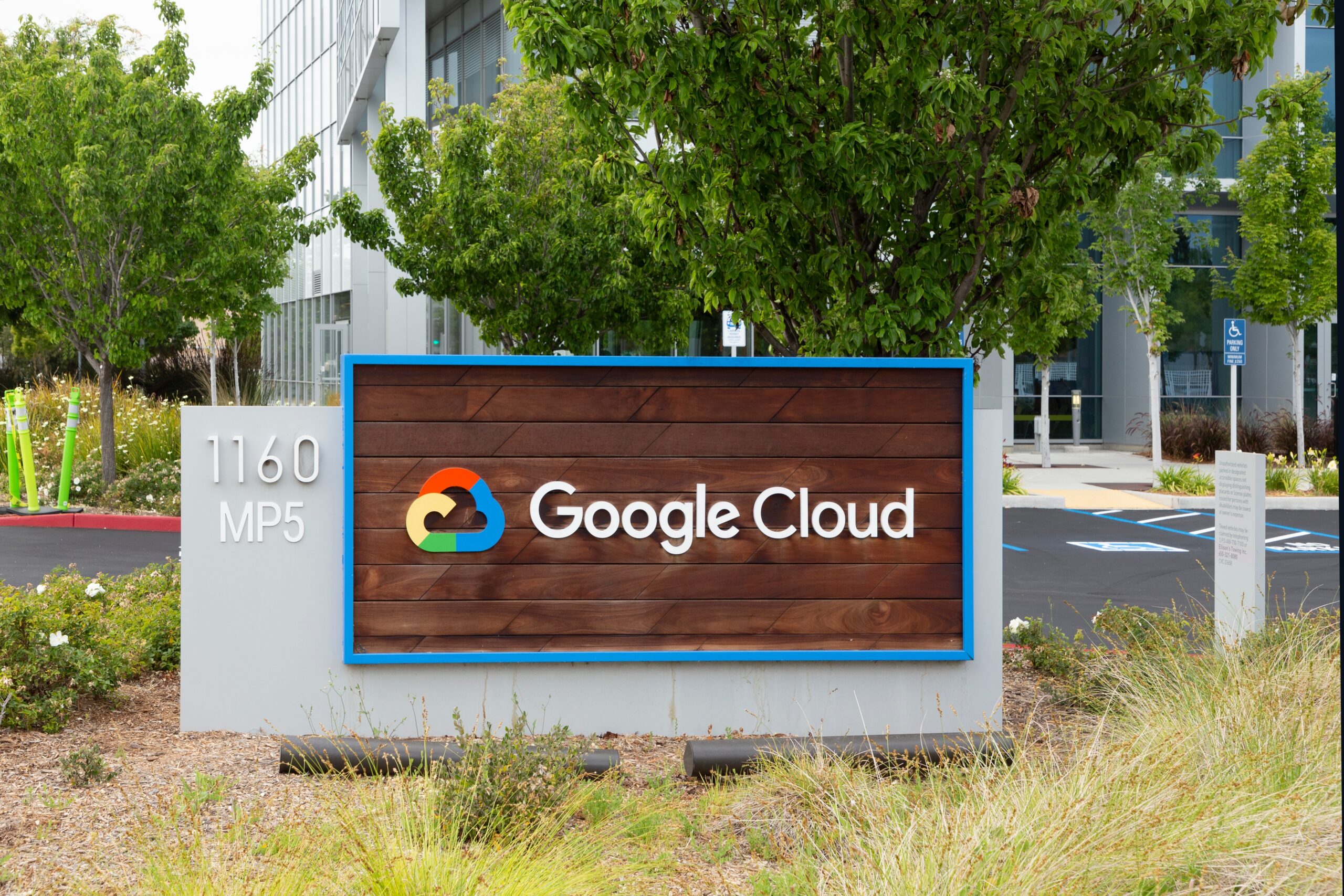
Google Cloud has made Anthropic’s Claude models available through Agent Platform’s Model Garden as a managed Google Cloud offering, giving enterprises another route to use frontier AI inside familiar cloud controls. In a July 14 blog post, Google Cloud said Claude on Google Cloud is designed for production enterprise use, with managed infrastructure, global reach, compliance posture, and serving-layer capabilities for cost and performance optimization. Claude is available through Agent Platform’s Model Garden as a Model-as-a-Service offering, accessible through standard REST/JSON endpoints.
The governance layer is the point. Google Cloud said invoking Claude through Agent Platform uses the same IAM policies, VPC controls, Cloud Logging, and Cloud Monitoring that customers already use across other Google Cloud services. Requests also inherit the customer’s project-level IAM and VPC configuration.
That makes this more than a model availability announcement. Google Cloud is positioning Agent Platform as a governed environment where enterprises can choose Claude, Gemini, open models, and other third-party models without building separate inference infrastructure or managing a separate security model.
Claude in Agent Platform Stack
Google Cloud describes Gemini Enterprise Agent Platform, formerly Vertex AI, as its platform for building, scaling, governing, and optimizing enterprise-grade agents. In April, the company said Agent Platform is the evolution of Vertex AI, combining model selection, model building, and agent building with new capabilities for integration, DevOps, orchestration, and security.
The Claude update fits that shift. Google Cloud said the same infrastructure that serves Claude inference also powers the agent layer of Agent Platform. Developers can build with Claude Opus, Sonnet, or Haiku from Model Garden, use the Agent Development Kit, and deploy agents to Agent Runtime, Cloud Run, or Google Kubernetes Engine.
Google Cloud also pointed to agent-to-agent interoperability. It said the Agent2Agent protocol is used by more than 150 organizations, allowing a Claude-powered agent to delegate tasks across a broader agent ecosystem while operating under unified IAM and auditability.
For ERP leaders, that has clear implications. Enterprise AI strategies are becoming multi-model by design. Organizations may use Claude for reasoning-heavy workflows, Gemini for Google-native experiences, OpenAI models for coding or automation, and vendor-native agents inside SAP, Oracle, Workday, Microsoft, or industry platforms.
Regional Controls Part of Model Decision
The Claude rollout also includes endpoint options that matter for regulated and global enterprises. Google Cloud said Agent Platform exposes global, regional, and multi-region endpoints for Claude.
Global endpoints route requests to regions with available AI compute capacity, supporting availability and geographic load balancing. Regional endpoints keep prompts, completions, and intermediate state inside a specific geographic boundary, which Google Cloud said makes them useful for low-latency and data-residency requirements. Multi-region endpoints provide US or EU data residency without depending on a single region.
Those choices are increasingly important as AI moves closer to business data. ERP-connected agents may handle financial results, customer records, HR data, supply chain constraints, pricing, contracts, code, or regulated documents. The question is not only which model performs best. It is where the model runs, where prompts and completions are processed, how access is controlled, and how activity is monitored.
Google Cloud said Claude on Agent Platform also inherits its broader security posture, including VPC Service Controls, IAM-native access controls, Cloud Logging, and Cloud Monitoring. Those capabilities give enterprises a path to manage model access, usage, latency, errors, quota consumption, and compliance expectations through cloud-native controls.
What This Means for ERP Insiders
Model choice is becoming an enterprise architecture decision. ERP teams will not build every AI workflow around one model, one vendor, or one cloud. For CIOs, enterprise architects, and AI platform teams, the practical priority is to decide where model selection happens, how different models are governed, and how agent workflows stay aligned with enterprise controls.
AI governance now extends to prompts, completions, and endpoints. The risk is not limited to which data a model can access; it also includes where requests are routed, which identity invokes the model, how logs are retained, and whether regional controls support compliance requirements. For regulated industries, model governance should be treated as part of the application architecture around ERP, analytics, and automation.
Hyperscalers are competing to become the control plane for enterprise agents. Google Cloud’s managed Claude support shows how cloud platforms are using IAM, networking, observability, deployment, and endpoint controls to make third-party models feel native. For ERP leaders evaluating agentic AI, the buying question shifts from model performance alone to which platform can govern a multi-model operating environment at scale.