
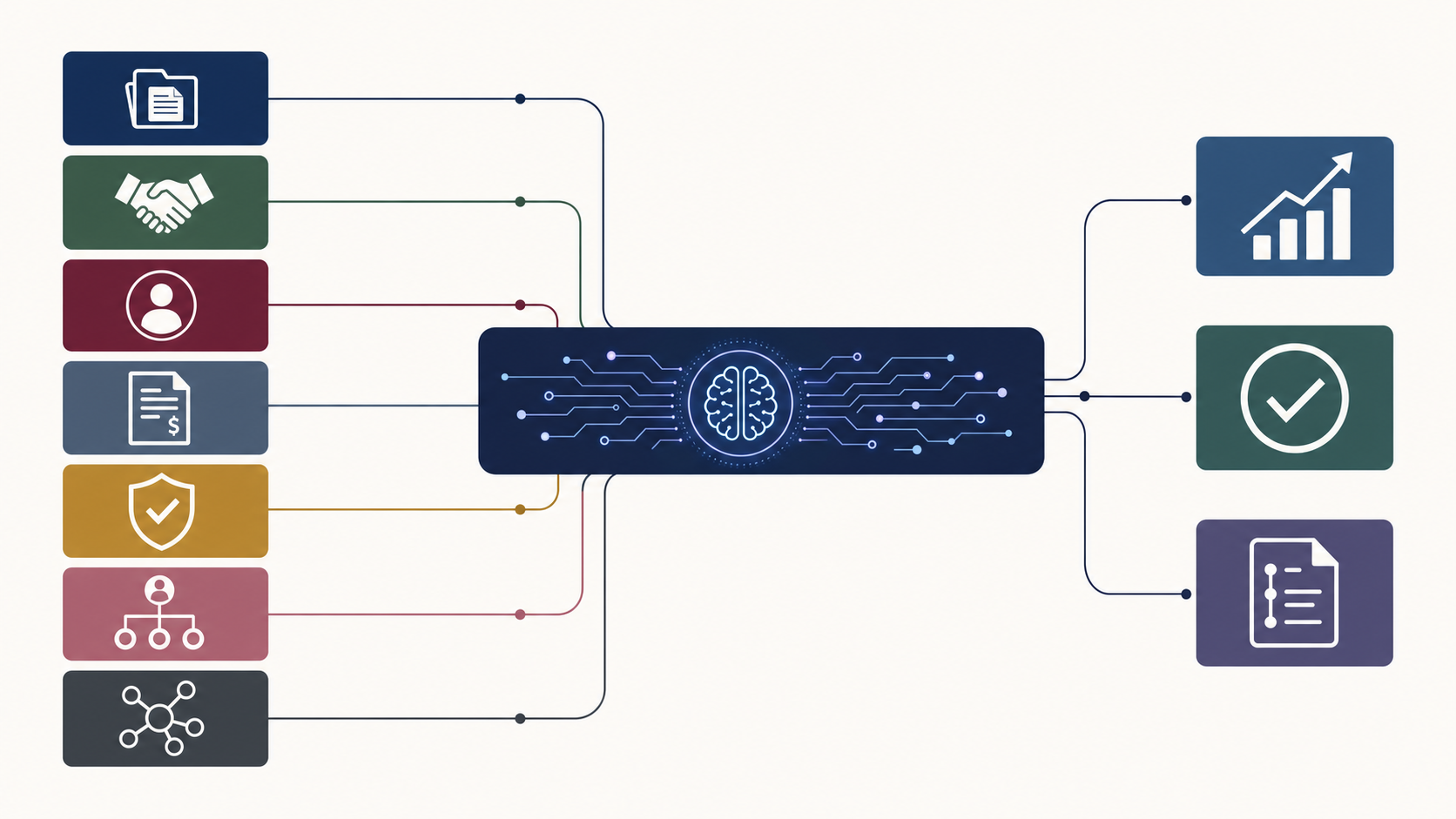
Professional firms have spent the past two years making individual work faster. A new blueprint for “Firm AI” from Intapp, a professional services software provider, argues the bigger prize sits in the operating layer around that work: the intake, conflicts, pricing, staffing, origination, relationship, billing, and compliance processes that determine whether firms actually grow.
The argument lands at a useful moment for ERP and enterprise application leaders. AI adoption has moved quickly across law, accounting, consulting, private capital, investment banking, and real assets firms. Lawyers can summarize documents faster. Analysts can draft investment memos faster. Consultants can turn transcripts into deliverables faster. Yet many firms still run with the same margin pressure, staffing constraints, partner bottlenecks, and administrative drag they had before generative AI arrived.
Intapp’s phrase for the missing layer is “Firm AI.” The company defines it as AI built for the business of the firm rather than the individual practitioner’s work product. The distinction is commercially important because professional firms do not scale like ordinary corporations. They run on relationships, matters, deals, engagements, conflicts, independence rules, institutional memory, partner judgment, and billable time. AI that ignores those operating conditions may improve desk-level productivity without changing firm-level performance.
Why Practice AI Hits a Ceiling
Most professional services AI has focused on the work product. That has made sense. Contract review, research, memo drafting, diligence synthesis, spreadsheet analysis, and proposal preparation are obvious AI use cases because they consume expensive professional time.
But the firm’s economic bottleneck often sits elsewhere. A partner cannot pursue every opportunity if conflicts clearance takes too long. A private capital team cannot screen every inbound deal if analysts remain the filter. A consulting practice cannot respond faster if staffing data, credentials, pricing history, and pipeline signals sit in disconnected systems. An accounting firm cannot improve leverage if business services teams still handle intake, independence, billing, and engagement administration manually.
That is the gap Intapp is naming. Practice AI helps professionals complete work faster. Firm AI targets the operating system that decides which work gets taken on, how it is staffed, how risk is controlled, how revenue is captured, and how institutional knowledge gets reused.
For ERP and application vendors, the lesson is broader than professional services. Individual productivity gains do not automatically change enterprise economics. AI has to reach the processes that allocate work, govern risk, price activity, and convert effort into revenue.
Get Our Free Weekly Newsletter
Architecture Starts with Firm Context
Intapp’s blueprint describes four architectural layers:
- coworker agents and firm playbooks
- proprietary data and operating context
- trust and professional compliance
- learning from the firm’s own decisions over time.
An important layer is context. A professional firm’s data is rarely cleanly contained in one system. Deal history may sit in DealCloud. Conflicts and ethical walls may sit in risk systems. Time, billing, engagement scope, email, CRM, document stores, and matter records all hold pieces of the operating picture.
Firm AI depends on turning those fragments into a usable model of how the firm works. The system needs to understand clients, deals, matters, engagements, relationships, obligations, economics, and the links between them. It also needs to understand firm-specific judgment: why a deal was rejected, which relationship carries weight, what makes a conflict real, or when a pricing exception is acceptable.
That is the hard part of agentic AI in regulated industries. A model can summarize a document. It cannot safely run intake, conflicts, or lateral-hire vetting unless it understands the firm’s data, policies, relationships, and decision history.
Compliance Becomes the Foundation
Intapp’s strongest enterprise software argument is compliance. Professional firms cannot treat AI governance as a wrapper around a general model because the rules of the firm are embedded in the work itself.
Ethical walls, material nonpublic information, privilege, independence, retention, consent, jurisdiction, and client obligations shape who can see what and who can act on it. An AI agent that ignores those boundaries creates a different class of risk from a chatbot that gives a poor answer. It can expose information, trigger action, or leave a weak audit trail inside regulated work.
Intapp positions Celeste and Walls for AI around that problem. Agents are meant to inherit the firm’s compliance posture before they act, with permissions, auditability, and confidentiality built into the environment rather than managed through user discretion.
ERP providers should watch this closely. As agents move from recommendations into operational workflows, compliance logic will need to sit inside execution. Approvals, segregation of duties, access controls, retention rules, and audit trails cannot be treated as after-the-fact governance. They become part of the agent’s operating environment.
Sponsor Industry‑Grade Research
The Firm Becomes the System of Action
Intapp’s Celeste platform brings the Firm AI argument into product form. The company describes Celeste as an agentic platform for professional firms, with expert agents designed to execute workflows across origination, business development, intake, conflicts, and work delivery.
The platform’s use of playbooks is the critical concept. A playbook turns firm method into executable workflow: how a firm screens a deal, clears a conflict, qualifies an investor, prices an engagement, or decides when to walk away. That moves AI away from general assistance and toward operational execution.
For firm leaders, the promise is growth leverage. If AI can screen more opportunities, surface relationship intelligence, reduce administrative drag, and support business services teams without increasing headcount at the same rate, the firm gets more capacity from the same professional base.
That promise still needs proof in production. Firms will need to test whether these agents can operate accurately against their own data, adapt to their own methods, and earn trust from partners who are used to autonomy. Professional firms cannot simply mandate AI adoption from the center. The technology has to fit how partners, practices, deal teams, and engagement teams already work.
What This Means for ERP Insiders
AI strategy has to move beyond individual productivity. Professional firms are already learning that faster drafting, summarization, and document review do not automatically improve growth, margin, or operating leverage. Enterprise leaders should evaluate AI investments by whether they improve the processes that allocate work, control risk, price activity, and convert effort into revenue.
Industry context will define the next AI platform battle. Intapp’s Firm AI argument shows why generic agents struggle in environments shaped by specialized workflows, proprietary data, relationships, compliance duties, and institutional judgment. ERP and application vendors will need deeper industry models if they want agents to act safely inside regulated business processes.
Agent governance must live inside execution. Professional-services workflows expose the same control problem now emerging across ERP: agents need permissions, audit trails, policy logic, escalation rules, and human review built into the workflow before they can take meaningful action. Buyers should make embedded governance a platform requirement now, because agentic AI will push compliance from oversight into the operating layer.