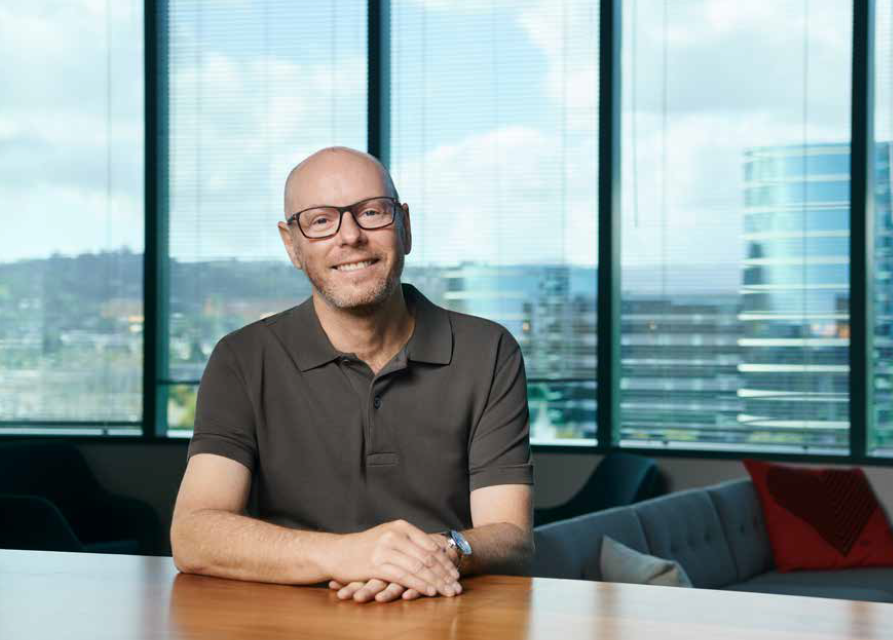

When Evan Goldberg started NetSuite, he was not trying to modernize enterprise software. He was trying to survive running a business with five disconnected systems and five conflicting answers to basic questions. Sales said one thing. Finance said another. Support had its own take on the customer, and e-commerce told a different story.
“I could never get the truth,” Goldberg recalls during an exclusive interview with ERP Today. “I had five different customer lists and five different sales reports. Board meetings would turn into arguments about whose spreadsheet was right.”
That frustration became the founding logic of NetSuite: one system, one data model, and one source of truth. It may sound obvious now, but in the late 1990s, it was hard to imagine. ERP systems were expensive, on-premises, and built for static organizations that fit neatly into a single industry box. NetSuite bet on something else entirely—that companies would become more fluid, more hybrid, and more difficult to categorize, and ERP systems would need to reflect that reality.
That conviction carried NetSuite through the dot-com boom, the cloud wars, and Oracle’s 2016 acquisition. Nearly three decades after founding NetSuite, it now defines how the company is bringing AI and autonomous finance into the mainstream, without asking customers to gamble their businesses on opaque automation. As vendors race to attach generative AI to their portfolios, the real dividing line is not model quality or interface design, but data architecture. Systems built around fragmentation struggle to operationalize AI safely at scale. Systems built around unification suddenly look prescient.
Goldberg sees this moment less as a pivot and more as a reckoning.
The Collapse of Industry Boundaries
Ask Goldberg what most enterprise software still gets wrong, and he does not start with cloud, AI, or features. He starts with the way vendors still think about industries.
“The old categories of businesses are blurring and don’t really apply anymore,” he says. “A company might manufacture a product, sell it direct-to-consumer, offer subscriptions around it, and run a digital service on top. What are they? A manufacturer? A software company? A services business?”
That line of questioning shaped NetSuite’s design philosophy from the beginning. Rather than locking customers into rigid vertical silos, NetSuite built deep best practices across many industries while insisting that every module share the same underlying data and logic. Customers could adopt what they needed, ignore what they did not, and evolve their business model without rebuilding their core systems.
Internally, NetSuite calls the payoff from this cohesion “Suiteness.” Goldberg defines it as the exponential value created when finance, people, projects, commerce, and customers all live in the same system and update each other in real time.
“When all your information about your people is coming directly from what they’re actually doing, when project costs pull labor and expenses automatically, you get the clearest possible picture of the business,” he explains. “It’s not a copy or transcription. It’s the direct information.”
This matters because hybrid business models are no longer experimental. Analysts at firms such as Gartner and IDC consistently note that manufacturers are layering subscription services onto physical products, retailers are becoming logistics providers, and software companies are moving into payments, finance, and services. ERP systems designed for a single operating model usually break under that pressure.
What Oracle Made Possible
When Oracle acquired NetSuite for $9.3 billion in 2016, critics worried that the original cloud ERP pioneer would lose its independence and velocity. Goldberg argues the opposite. Oracle removed constraints that NetSuite could not realistically overcome alone.
“We’ve been able to scale much more rapidly than we would have as an independent company,” he says. “International expansion, cloud operations, and product acceleration all changed overnight.”
Oracle’s global footprint allowed NetSuite to enter new countries faster, with local compliance and support that would have taken years to build independently. Oracle Cloud Infrastructure (OCI) gave NetSuite a chance to co-design at scale rather than operate as just another SaaS tenant. NetSuite became an early large-scale customer and close collaborator for OCI’s next generation cloud, stress-testing it with real-world ERP workloads.
“We could have gone to AWS like everyone else,” Goldberg says. “Instead, we worked directly with the OCI team early on. That was a mutual win.”
Product development accelerated as well. NetSuite Analytics Warehouse, built on Oracle Autonomous AI Lakehouse and Oracle Analytics Cloud, brought enterprise-grade analytics into the mid-market. NetSuite Enterprise Performance Management (EPM) drew on Oracle Fusion EPM and adapted for fast-growing companies that need sophisticated planning without enterprise overhead.
Crucially, NetSuite did not abandon its original roadmap. Oracle supplied infrastructure, components, and scale, while NetSuite kept its focus.
Why Unified Data Beats Composable Hype
Composable architecture and best-of-breed stacks dominate today’s ERP marketing. Integration platforms promise flexibility, and APIs promise freedom. Goldberg does not dismiss those tools, but he draws a hard line between integration and unification.
“Moving data between systems is not the same as having one system,” he says. “You still end up with incompatibilities that are very hard to bridge.”
This distinction becomes critical with AI. Large language models can smooth over gaps, but they cannot eliminate semantic mismatches between independently designed systems. Different definitions of customers, revenue, or costs create ambiguity that AI must guess its way through.
NetSuite’s customers repeatedly cite the same benefit: a single source of truth. It eliminates internal debates before they start.
“If two people are logging into NetSuite and looking at the same report, the argument disappears,” Goldberg says. “It’s hard to fight the numbers on the screen when they’re grounded in the same transactions.”
From an AI perspective, this architecture is decisive. NetSuite runs on one unified data model and one set of business rules spanning finance, CRM, e-commerce, projects, and HR. That breadth and depth of consistent data is what AI systems need to reason across functions instead of generating isolated insights.
“AI is hungry for data,” he adds. “Consistent and unified data that covers the full business. That’s the fuel.”
AI Without Blind Automation
Goldberg is candid about where customers draw the line today. Few finance leaders want a fully autonomous system closing their books without oversight. What they do want is relief from daily manual work and unpleasant surprises.
“They want a continuous close,” he says. “Not a scramble at the end of the quarter, but financials that are accurate every day.”
NetSuite’s approach to autonomous finance reflects that caution. AI-driven exception management identifies anomalous transactions, explains why they look unusual, and suggests corrections. Humans stay in control. Over time, as confidence builds, customers can allow the system to correct low-risk issues automatically and review summaries afterward.
“It’s a journey of increasing autonomy,” Goldberg explains. “AI doesn’t replace finance experts. It clears the urgent, low-value work that keeps them from doing the strategic work.”
The same philosophy applies to development. NetSuite SuiteCloud Developer Assistant uses AI to help write code and workflows, but experts still review and own the results. Productivity rises without surrendering accountability. This human-in-control model aligns with emerging regulatory expectations around AI governance and explainability, particularly in finance.
Volatility Demands Visibility
Macroeconomic shocks have not changed why companies adopt NetSuite, but they have sharpened the urgency. When tariffs shift, supply chains fracture, or demand swings, leaders need immediate visibility into costs, cash, and exposure.
“Seeing the impact in days instead of quarters is critical,” Goldberg says. “That requires real-time dashboards grounded in the same data.”
NetSuite OneWorld has become central as companies diversify suppliers and expand geographically to manage risk. What looks like global expansion often turns out to be a resilience strategy. Multiple subsidiaries, currencies, and regulatory regimes are then managed in one system.
Interestingly, NetSuite sees pressure to modernize in both boom and downturn cycles. High growth breaks starter systems as transaction volumes rise, geographies multiply, and manual workarounds collapse under scale. Downturns expose a different set of weaknesses: limited visibility into costs, slow financial close cycles, and an inability to model change quickly enough to respond. In both cases, companies risk seeing that the operating model has outgrown their systems.
That moment often coincides with a shift in how the business makes money. Manufacturers add subscriptions and services to stabilize revenue. Product companies look for recurring income and closer customer relationships. What begins as a tactical response to growth or volatility becomes a structural change in the business itself. NetSuite’s “anything-as-a-service” framing reflects that reality. The company does not treat subscriptions as a software-only concern, but as a cross-industry pattern that touches finance, revenue recognition, customer support, and long-term forecasting. The system is built to track those relationships in one place, regardless of whether the underlying product is digital, physical, or a mix of both.
“We didn’t call it SaaS metrics,” Goldberg notes. “We called it subscription metrics because this isn’t just software companies anymore.”
Compliance Without Customization Debt
Regulation continues to tighten, from GDPR to state-level privacy laws and looming AI rules. Goldberg calls compliance “non-negotiable,” but warns that poorly designed compliance can crush productivity.
NetSuite’s answer rests on two pillars. First, heavy investment in security, privacy, and regulatory engineering, which is an area where Oracle’s heritage in government and regulated industries matters. Second, the discipline of delivering compliance centrally through the service model.
“We do two major releases a year and many minor ones,” he says. “Your customizations work the morning after just like they did the night before.”
This approach directly addresses one of ERP’s oldest failure modes: customization debt that traps customers on outdated versions. By protecting extensions through upgrades, NetSuite absorbs regulatory change without forcing rebuilds.
Talking to the System, Sharpening Focus
Goldberg believes user expectations have crossed a point of no return. Ever since generative AI entered the mainstream, people now expect to converse with systems, not navigate them.
“ChatGPT created a discontinuity in expectations,” he says. “Now people expect to talk in natural language and get coherent answers.”
NetSuite’s vision, taking shape with NetSuite Next, is a conversational interface layered over traditional dashboards and spreadsheets. It is the next iteration of its platform and a new wave of AI-first ERP that will be available to customers globally this year. Conversation becomes the entry point, but the underlying mechanism does not go away. Visual tools remain essential for detail and validation, while different roles keep different interfaces: Developers will still want terse commands, and accountants will not abandon spreadsheets.
NetSuite does not see conversation as a replacement for traditional interfaces, but as a new front door. In Goldberg’s view, conversation will be the fastest path to insight for many users. They will increasingly start by asking questions about revenue, cash, or performance in plain language, then move seamlessly into dashboards, reports, and spreadsheets when precision matters. Visual tools still anchor validation and decision-making, and they are not going away. Developers will continue to favor fast, command-driven workflows. Finance teams will hold onto spreadsheets. What does changes is the starting point: less navigation, more dialogue, and faster access to answers without sacrificing rigor.
For all the technology shifts, Goldberg returns repeatedly to focus. He has watched companies fail not from lack of ideas, but from lack of discipline. “The number one determinant of success is focus,” he says. “Three bullet points, not nine.” That focus explains NetSuite’s consistency. It did not chase trends. It built depth slowly, solving the same problem from more angles over time.
Goldberg studied AI in graduate school in 1990, long before it was practical. He sees today’s AI wave as potentially more consequential than the internet. But his ambition remains grounded.
“How do computers help people achieve their dreams faster?” he asks. “How do they take drudgery off the plate and let leaders actually see and steer their business?”
If NetSuite’s next decade resembles its last, it will not be because it out-marketed competitors on AI slogans. It will be because the same architectural decision made in the very beginning—one system, one source of truth—turned out to be the safest foundation for intelligent, autonomous enterprise software.