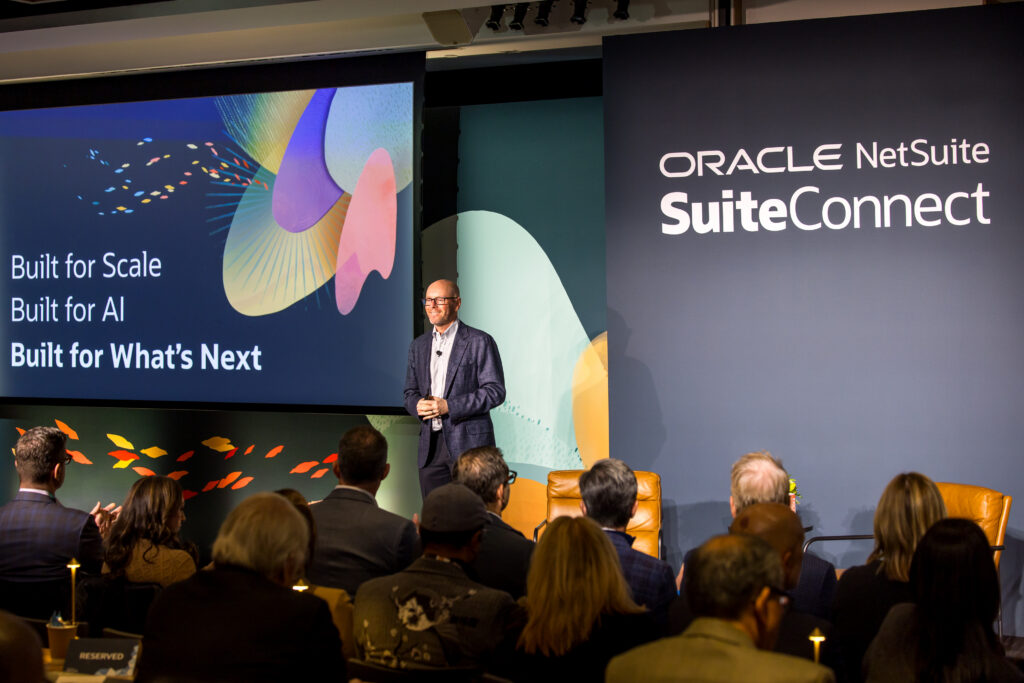
Oracle NetSuite has unveiled NetSuite Next, a sweeping update that brings conversational AI, natural-language actions, and agent-driven workflows directly into the ERP suite. The release reflects a wider shift in enterprise software design toward systems that can interpret intent, automate multi-step tasks, and surface insights without requiring traditional navigation or manual configuration.
NetSuite positions these capabilities as a major step toward reducing operational friction and expanding how employees engage with finance, operations, and planning systems.
Conversational Interfaces
NetSuite Next enables users to interact with the system through natural-language prompts, allowing them to retrieve data, execute actions, and trigger workflows without navigating menus. This approach lowers cognitive load and make ERP systems accessible to a wider range of business users. Whether retrieving customer balances, analyzing period variances, or generating fulfillment updates, tasks that once required multiple screens can now be initiated conversationally.
These capabilities also extend to embedded guidance. By interpreting user intent, the system can propose next steps, highlight anomalies, and provide contextual recommendations. NetSuite describes this as a step toward agentic behavior, in which the system can automate chains of tasks that previously required manual oversight.
AI-Driven Workflows
Beyond conversational actions, NetSuite Next integrates intelligent automation across finance and operations. The release includes new capabilities to generate narratives, initiate approvals, and streamline common workflows. These features are designed to reduce the administrative burden often associated with closing the books, reconciling transactions, managing procurement exceptions, or handling payables and receivables inquiries.
NetSuite frames these enhancements as part of a long-term vision in which ERP systems proactively manage operational complexity. Instead of users hunting for information, the software interprets signals across data streams, flags issues, and supports rapid resolution. The result is an emerging class of ERP interactions defined less by screens and clicks and more by outcomes and guided processes.
New User Experience
NetSuite Next also includes a refreshed interface emphasizing simplicity and speed. The design shifts toward cleaner navigation and adaptive layouts that highlight the most relevant information by role. For organizations facing workforce turnover or rapid onboarding needs, a more intuitive interface can shorten the time required for new users to become productive.
By combining a redesigned UX with embedded AI assistance, NetSuite positions the suite as better equipped to support distributed teams, faster decision cycles, and the rising expectations placed on financial and operational systems.
What This Means for ERP Insiders
AI-native UX gives a competitive edge. NetSuite’s move toward conversational and intent-driven workflows reflects a market shift in which ERP differentiation increasingly hinges on usability and embedded intelligence rather than feature breadth alone.
Agentic automation raises expectations for process design. As systems begin executing multi-step tasks autonomously, transformation leaders may need to rethink process standardization, exception handling, and governance to ensure AI-driven actions align with organizational policies.
ERP accessibility broadens change-management strategies. With natural-language interactions reducing barriers for new and non-technical users, program leaders may reconsider onboarding models and role design as AI begins absorbing more procedural work.