QAD Redzone announced on May 11 the inauguration of the Pune, India, regional hub, positioning the site as a product engineering and technology center across Redzone, Adaptive Applications, and ChampionAI. The company said the hub will support AI innovation, scalable systems, and global service delivery.
The new Pune hub is not the biggest AI announcement in enterprise software this month, but it points to one of the hardest manufacturing problems AI vendors have to solve—how to turn plant-floor insight into faster action without disconnecting it from ERP.
Manufacturers are not short of dashboards, reports, or isolated automation projects. They are short of execution speed at the point where plans meet reality, like in production lines, warehouses, quality checks, workforce handoffs, and exception response.
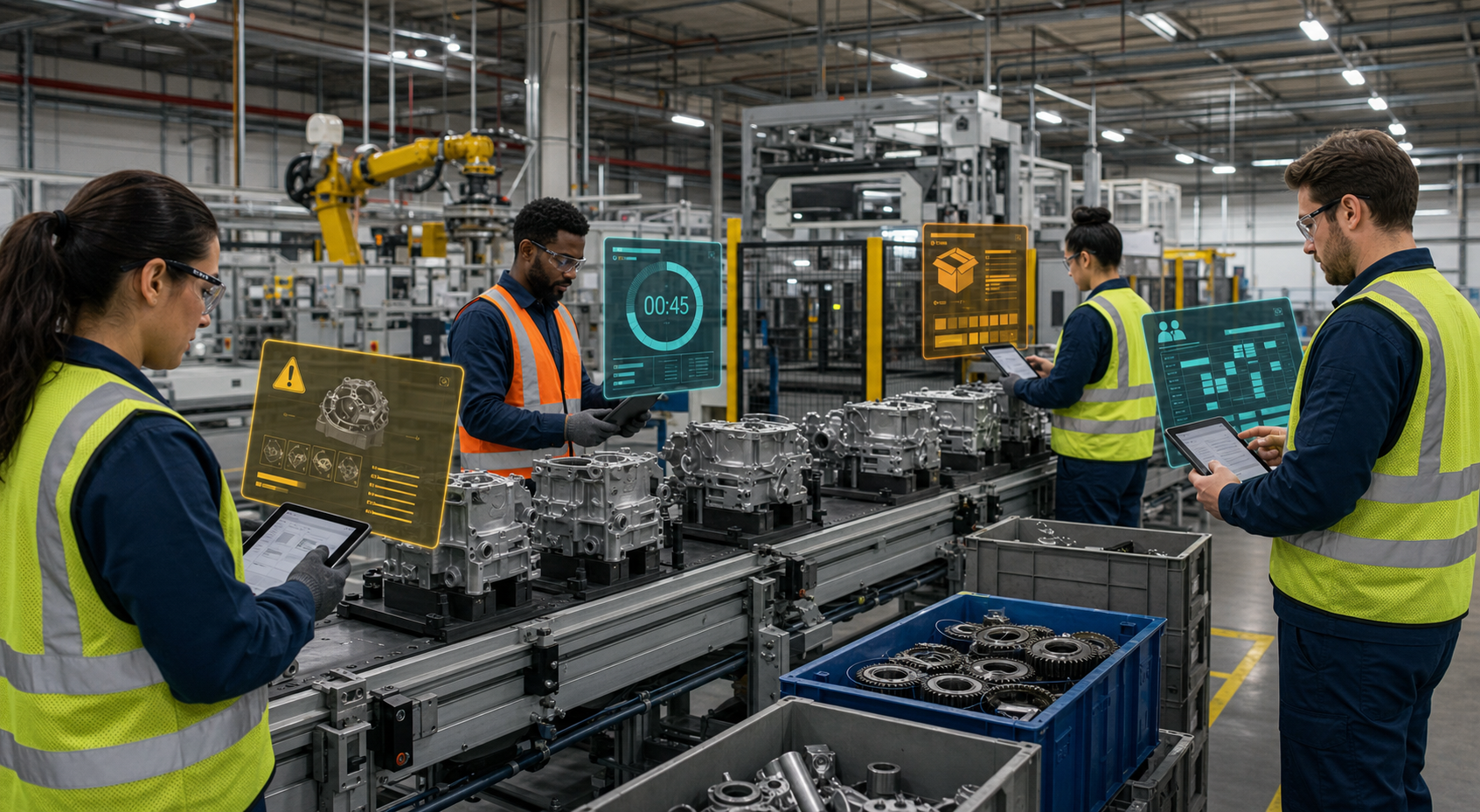
That is where QAD Redzone is trying to place its AI bet, arguing that manufacturing AI should not sit above the business as another analysis layer. It should operate closer to the work, where frontline teams can see what is changing and act before a delay, defect, or missed handoff turns into a broader planning problem.
Automotive, F&B Expose Execution Problem
Automotive and food and beverage (F&B) make the case clearly because both industries have little room for operational lag.
Automotive manufacturers are managing a more software-defined product mix, with advanced driver assistance systems, electrification, cockpit systems, and battery-related electronics adding pressure to already complex supply chains. S&P Global Mobility said in May that automotive DRAM exposure is rising as AI data center demand pulls memory capacity toward higher-margin markets. It also said cockpit and ADAS systems designed years ago but running through 2027 or 2028 are now more exposed to rising costs and shrinking supply options.
That creates a plant-level problem, not just a procurement problem. A late component, engineering change, or constrained allocation can force rescheduling, line balancing, supplier escalation, and quality rechecks. ERP can show the order, material, and cost impact. The shop floor still needs a faster way to absorb disruption without creating chaos downstream.
F&B face a different version of the same problem. Food Industry Executive coverage of Wherefour’s 2026 State of Manufacturing report said inventory management and production scheduling remain the most resource-intensive functions in F&B operations. The report also found perishability, shelf life, volatile demand, and compliance requirements create constant pressure for accurate data and real-time decision-making.
McKinsey’s 2026 State of Food and Beverage report adds the demand-side pressure. It found that volume growth remains constrained, margins remain under pressure, and incumbent F&B companies need sharper productivity gains to fund investment and restore growth.
For F&B manufacturers, execution speed affects waste, freshness, service levels, recall readiness, and margin. A weak response to a promotion spike, ingredient constraint, quality hold, or packaging shortage can quickly become a customer problem.
Analysis
What this means: Automotive and F&B show why execution AI needs industry context. Component constraints, shelf-life pressure, compliance exposure, and quality risk all demand faster action at the point of work. Program leaders should prioritize AI pilots where plant-floor decisions can be tied directly to throughput, scrap, changeover performance, service levels, and margin protection.
AI Steps onto the Shop Floor
QAD Redzone has been building around connected workforce and manufacturing execution, not generic enterprise productivity. That gives the Pune hub a more specific role than a standard offshore engineering expansion.
The company is placing engineering capacity behind frontline productivity, adaptive applications, and agentic AI for manufacturing. At Hannover Messe 2026, QAD Redzone positioned ChampionAI as part of a manufacturing platform designed to move traditional systems of record toward systems of action. It described the goal as real-time, coordinated execution across the business, with AI embedded into how work gets done rather than left in pilot mode.
That is the key distinction for ERP leaders. Manufacturing AI will not be judged by how well it explains performance after the fact. It will be judged by whether it helps supervisors, operators, planners, quality teams, and maintenance leaders act earlier with better context.
A quality anomaly needs to reach the right person before it becomes a batch issue. A changeover bottleneck needs to be visible before it pushes a shift off schedule. A labor gap needs to be tied to skills, certification, and production priority. A material constraint needs to flow back into planning and customer commitments before the promise date becomes fiction. AI that cannot close that loop becomes another reporting layer. AI that can close it starts to change manufacturing performance.
Analysis
What this means: QAD Redzone’s AI conversation is close to the production line. The Pune hub strengthens its capacity to build around frontline execution, quality, workforce productivity, and adaptive manufacturing workflows rather than broad office productivity use cases. Manufacturing ERP buyers should expect more vendors to compete on how quickly AI can improve live operational decisions, not only how elegantly it can summarize enterprise data.
Sponsor Industry‑Grade Research
ERP Owns the Economic Truth
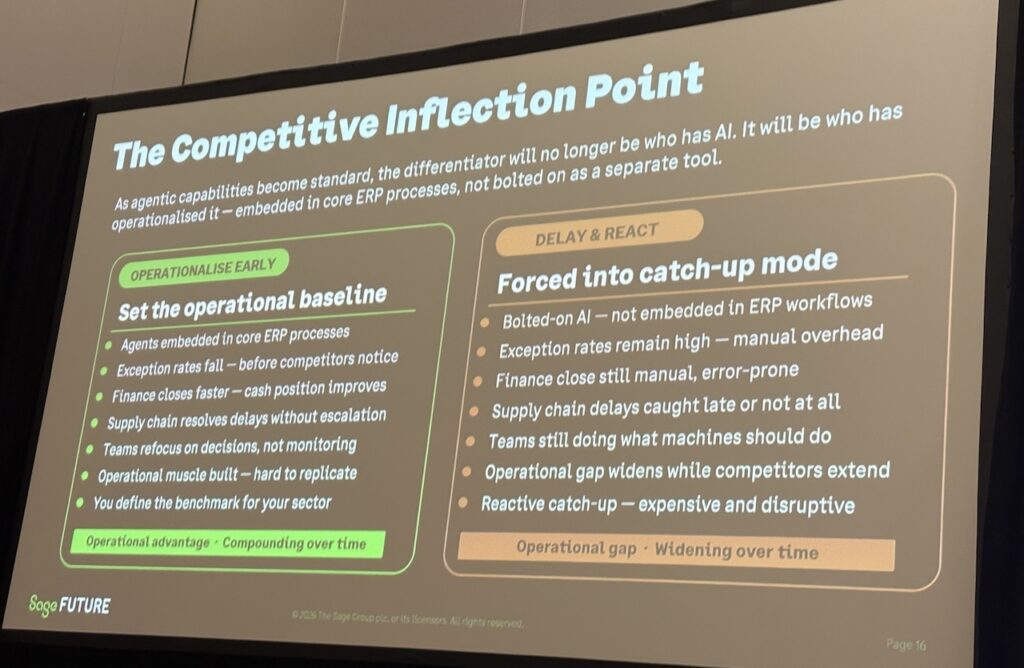
The risk in plant-floor AI is fragmentation. If execution intelligence improves locally but does not connect back to the ERP system, manufacturers get faster activity without a single view of cost, inventory, quality, and customer impact.
That is why QAD Redzone’s “System of Action” positioning deserves scrutiny from enterprise architects. The value proposition depends on a tight connection between frontline execution and the operational backbone. ERP owns the economic truth. Manufacturing execution tools own the production reality. AI needs both.
In May, QAD Redzone also expanded its collaboration with AWS and TCS to support AI-driven transformation and ERP modernization. The company described an architecture that allows manufacturers to keep existing enterprise systems for finance and corporate governance while deploying manufacturing-focused capabilities at the plant level.
That model will appeal to manufacturers that cannot tolerate a long ERP freeze before improving shop-floor performance. It also raises integration questions that buyers should ask early. Which data becomes authoritative? How quickly do plant events flow back to planning and finance? How are AI recommendations recorded? How are exceptions governed when frontline action changes cost, schedule, or quality outcomes?
The real manufacturing AI gap is not necessarily more insight, but faster action. The manufacturers that benefit most will connect execution intelligence directly to ERP, tying plant-floor decisions back to planning, cost, quality, inventory, and customer commitments.
Analysis
What this means: Enterprise architects need to define the handoff between ERP, MES, connected worker tools, and AI agents. QAD Redzone’s system-of-action message is strongest when frontline intelligence flows back into the systems that govern finance, inventory, planning, and customer commitments. Buyers should pressure-test data ownership, latency, auditability, and exception governance before scaling AI-enabled execution across plants.