Food and beverage manufacturers are navigating one of the most operationally complex periods in recent memory, and two Sage X3 customers say the ERP platform has become central to how their organizations manage inventory, compliance and the early stages of AI adoption.
At Sage Future 2026 in San Francisco, Spencer Klein, Director of Enterprise Services at Yakima Chief Hops, and Matthew Comer, IT Director at Enzymedica, joined Sage Director of Product Marketing Mike Edgett to discuss how the food and beverage industry is using technology to get ahead of tightening margins, supply chain volatility, evolving labor challenges and accelerating regulatory requirements.
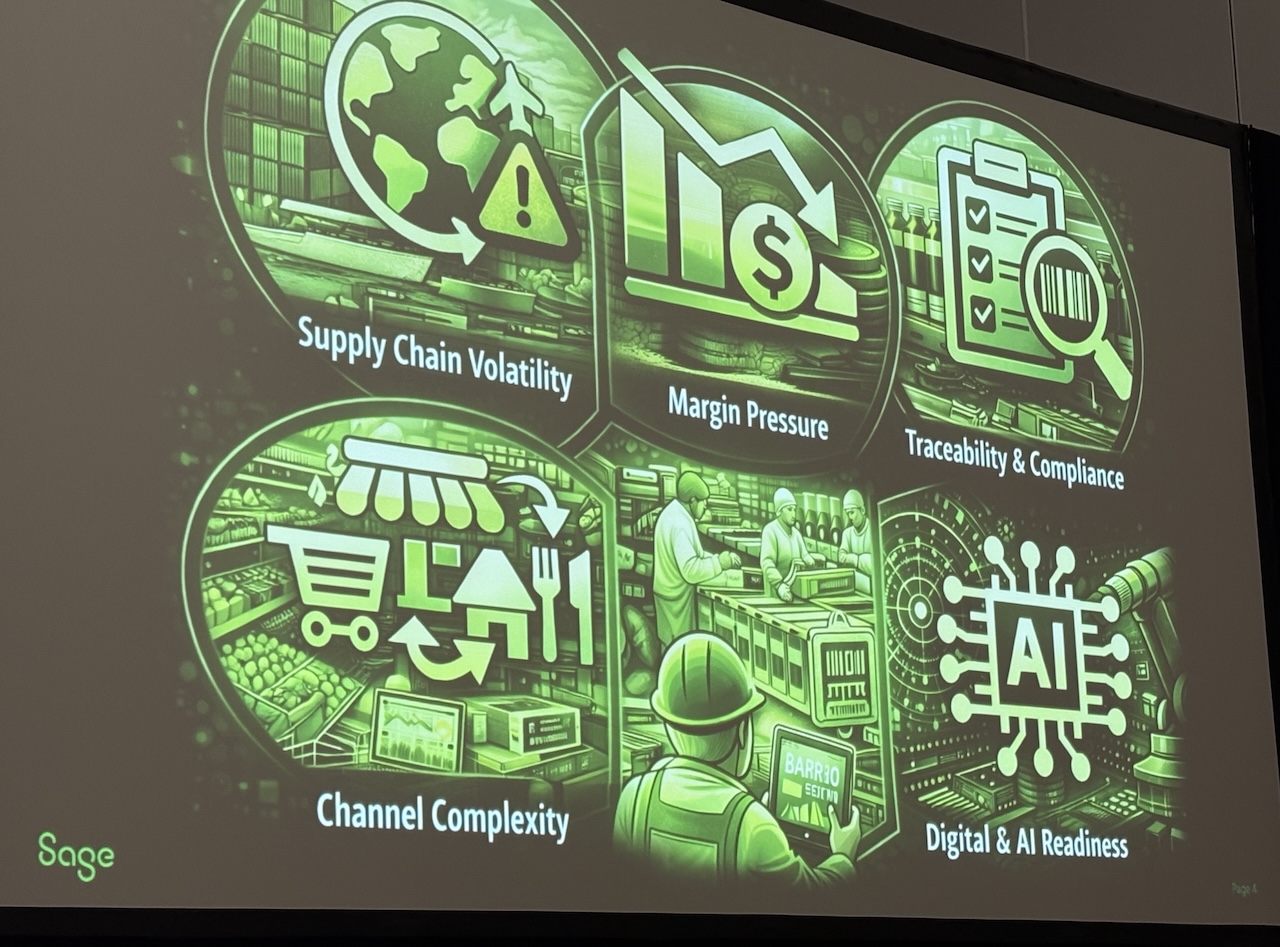
“Food and beverage is embedding AI throughout operations to better meet customers’ increasing demand,” Edgett says, “but it’s also a more difficult operating environment.”

Inventory Visibility Drives Measurable Operational Savings
For both Yakima Chief Hops and Enzymedica, inventory management remains the highest-stakes operational challenge, and the one where Sage X3 has delivered the strongest return.
Klein described the complexity inherent in hop procurement and allocation. Yakima Chief Hops serves customers with highly specific requirements, and even within a single hop variety, differences in aroma intensity and grower characteristics require granular lot-level differentiation.
“Our inventory and management feels like it changes every year,” Klein says. “Lot level allocation — analyzing historically — helps with procurement as well as ensuring payment and inventory are working properly.”
Comer said Enzymedica’s approach evolved significantly after implementing location-based inventory tracking in X3. “When I started, we didn’t have location set,” he says. “What we’ve found, the more you manage inventory, the more you save money.”
That experience aligns with broader industry data: businesses that implement food-specific inventory management solutions report an average 30% reduction in stockouts and measurable gains in cost efficiency.
The lesson for ERP practitioners is direct. Granular inventory management, including lot tracking, location visibility and historical analysis, is not an enhancement reserved for large enterprises. It is a foundational capability that pays for itself in reduced procurement errors, better payment accuracy and tighter cost control at the SKU level.
Analysis
What This Means for ERP Insiders
Compliance is now an ERP core competency, not an add-on. FSMA 204’s 24-hour traceability mandate means ERP platforms without native lot tracking and audit trail automation will face accelerating displacement in food and beverage manufacturing.
Compliance Automation Cuts Recall Response Time
Regulatory pressure is among the most disruptive forces in food and beverage manufacturing. The FDA’s FSMA 204 Food Traceability Rule, which took effect in January 2026, now requires covered companies to provide complete traceability records within 24 hours of an FDA request, a standard that exposes any operation still managing compliance through spreadsheets or disconnected systems.
Enzymedica’s experience illustrates what ERP-driven compliance looks like in practice. Under 21 CFR Part 11, the company must maintain audit-ready records for laboratory and quality processes. Since deepening its use of Sage X3, Comer said mock recall response time dropped from two hours to under 10 minutes, a 92% reduction.
“The more we work with quality, the better we get,” he says. In-house lab testing, tighter documentation workflows and greater traceability within the platform have all contributed.
Yakima Chief Hops has achieved zero major or minor non-conformances in audits over the past five years, a result Klein attributed directly to the traceability capabilities built into X3. “Traceability through X3 has helped with that,” he says.
For ERP vendors and implementation partners competing in the food and beverage segment, this is a clear product differentiation signal: lot traceability, audit trail integrity and configurable quality checkpoints are no longer optional features. They are table stakes.
Analysis
What This Means for ERP Insiders
Data readiness must precede AI deployment in process manufacturing. AI initiatives stall when underlying ERP data structures are fragmented; ERP vendors and SIs must build data architecture assessments into every food and beverage implementation engagement.
AI Adoption Requires Clean Data Architecture First
Both panelists acknowledged AI’s growing presence in food and beverage manufacturing while offering measured assessments of where their organizations stand, and what must be done before AI can deliver on its promise.
Klein said his organization was still in the early stages. “Data architecture is not quite prepared to go where we want to take it,” he says. Before Yakima Chief Hops can leverage AI-driven insights for procurement, production planning or demand forecasting, the foundational data structures within X3 must be built to support them. That priority extends to a planned e-commerce launch and CRM integration, both of which depend on clean, well-structured data flows.
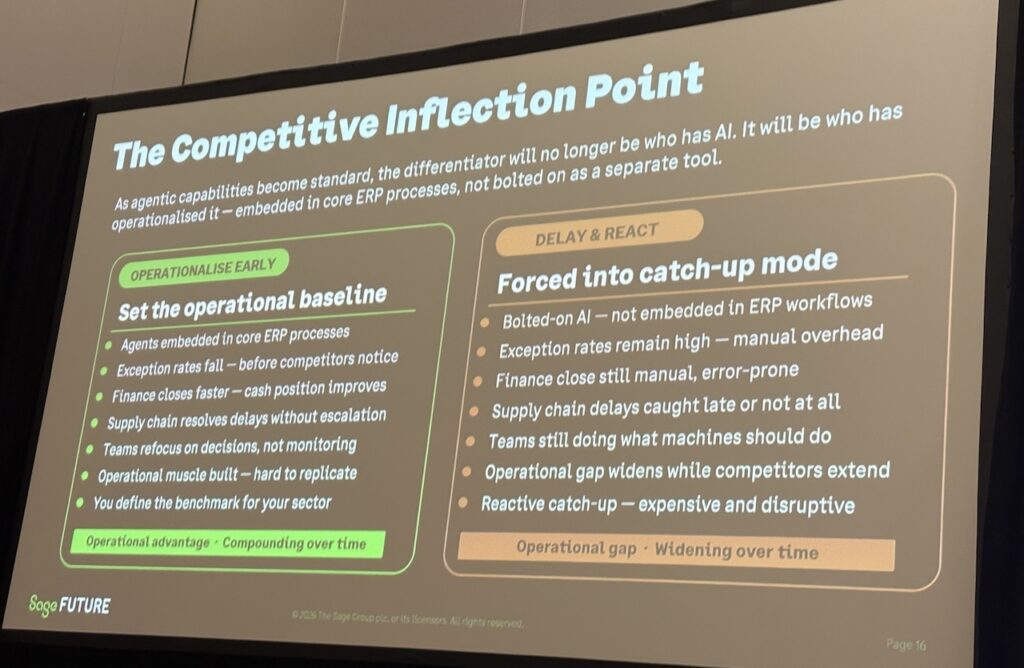
Comer expressed concerns about the conditions under which AI can be trusted. He said quick-time reporting without requiring a dedicated analyst is where AI will first deliver practical value. That framing tracks with broader ERP market research showing that AI functionality embedded natively in ERP platforms, rather than bolted on as a third-party add-on, delivers higher adoption rates and lower governance risk.
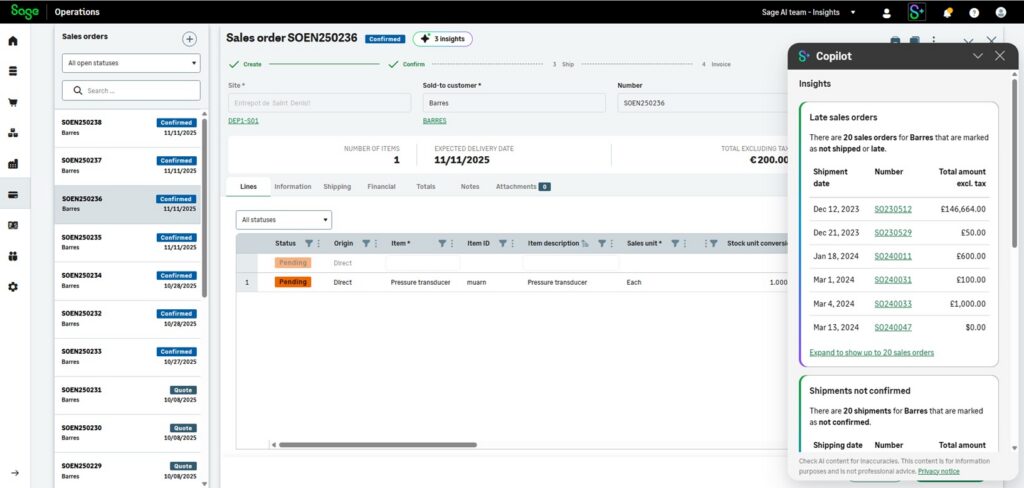
Both panelists also identified underutilized X3 capabilities with immediate operational upside. Klein singled out accounts payable automation and e-invoicing as areas where the platform’s native functionality is being underused, particularly as European invoicing standards become relevant to international operations.
Comer pointed to workflow automation as a gateway for expanding adoption across departments whose staff had little prior ERP exposure. “The more we dig into this, the more it opens the door,” he says.
Analysis
What This Means for ERP Insiders
Inventory precision is the highest-ROI ERP use case in food manufacturing. Real-world evidence from Enzymedica and Yakima Chief Hops confirms that granular lot-level inventory management drives measurable cost savings and procurement accuracy at scale.