Sage is widening the lane for partner led innovation with new AI tools and commercial models on its developer platform, aimed at speeding how solutions reach Sage Intacct, Sage X3 and Sage Active customers. The update promises a more unified build experience, AI agent tooling and usage based revenue options that reshape the daily reality for product, architecture and partner teams across the Sage ecosystem.
This was highlighted during the Sage Future Conference in San Francisco from April 28-30, which ERP Today will be covering.
Analysis
What This Means for ERP Insiders
Ecosystem platforms will drive AI adoption velocity. Sage’s unified developer experience and agent tooling show how ERP aligned vendors will compete on how quickly partners can build, certify and monetize AI agents inside core workflows.
Unified Platform And Agent Tools For Faster Delivery
The latest platform release introduces a single, more consistent developer experience across Sage products, giving partners one point of access to APIs, SDKs and agentic capabilities. For ISV CTOs and solution architects, that reduces the friction of building once and deploying across multiple Sage products and regions, rather than maintaining separate integration stacks for each application.
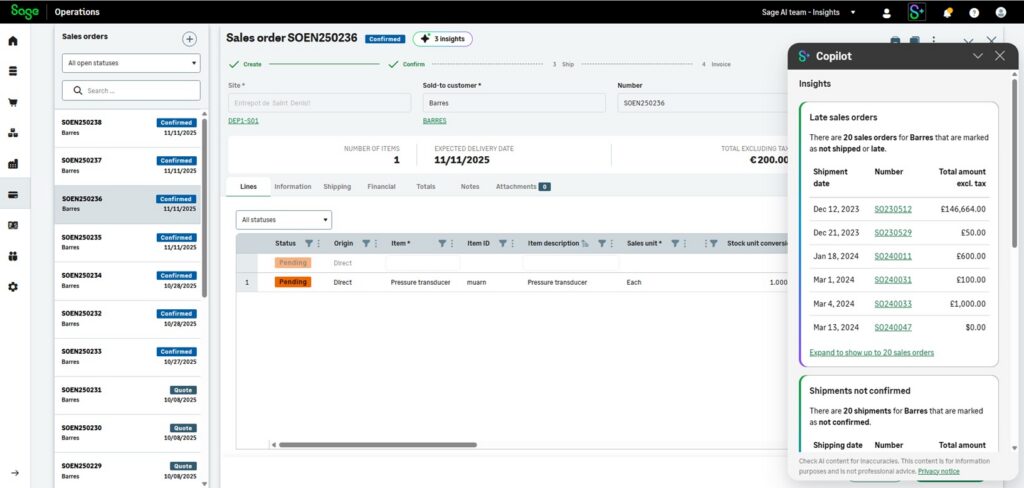
AI-oriented tools, including Sage Agent Builder and the AI Gateway, provide structured paths to design, test and deploy AI agents that operate inside Sage workflows, such as Sage Copilot and Sage Marketplace. The approach responds to IDC expectations of a tenfold increase in the number and complexity of third party and custom AI agents enterprises will run over the next five years, and positions Sage partners to participate in that growth.
Early use cases include DataBlend’s PopdockAI Agent, which connects data across finance workflows to automate tasks like reconciliation and forecasting while surfacing real time insights directly inside finance processes. DataBlend’s leadership highlights that capabilities such as the AI Gateway make it more straightforward to embed AI driven functionality into their products and bring those solutions to market faster.
On the commercial side, Sage is introducing usage based pricing and revenue sharing models so partners can align cost structures with adoption curves. For business development leaders, that means clearer monetization paths for new integrations and AI agents, and the ability to tune offerings to different customer segments without renegotiating traditional license structures.
Analysis
What This Means for ERP Insiders
Commercial flexibility becomes a partner magnet. Usage-based pricing and revenue sharing models indicate that platform economics will be central to attracting ISVs, shaping where the most innovative finance and operations extensions are delivered.
Governance, Security And Impact For Teams
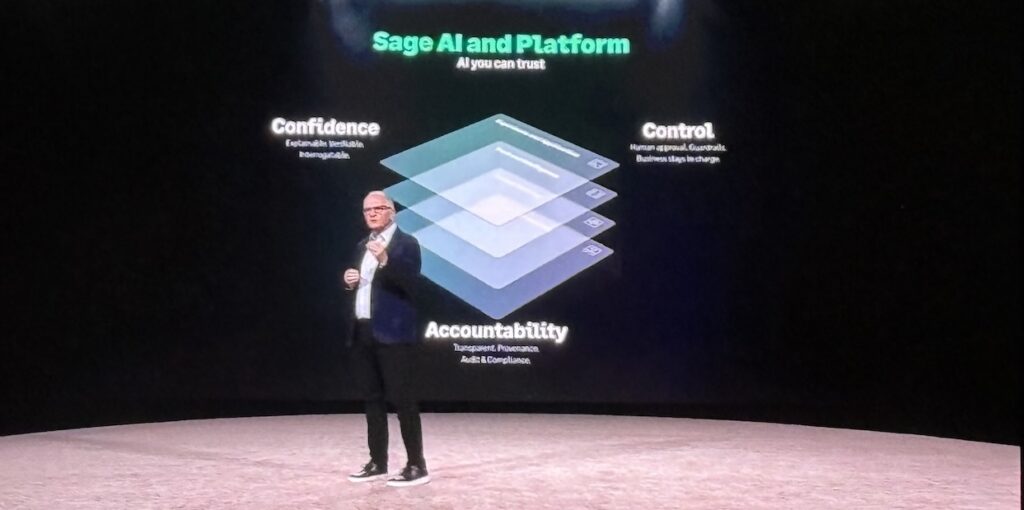
The platform expansion is anchored in trust and governance. Sage is strengthening onboarding, sandbox environments and certification pathways so partners can develop and deploy solutions securely. Enhancements to Sage Verify support stronger authentication and business identity checks, including two factor authentication, without adding unnecessary friction for end users.
For internal and partner engineering teams, this translates into more predictable development cycles. Standardized sandboxes and certification processes reduce guesswork about acceptance criteria, while shared platform services such as accounting, payroll, carbon accounting and expense management give developers building blocks to extend rather than replicate core capabilities.
From a customer perspective, the changes are meant to deliver a broader range of integrated solutions that reduce complexity and improve how finance and operations run. As partners adopt the unified platform and AI tooling, finance and operations leaders can expect more targeted agents and extensions that plug cleanly into Sage environments, automating niche workflows without introducing brittle customizations.
For technology executives evaluating ERP and application platforms, the Sage announcement underscores the rising importance of ecosystem readiness as a selection criterion. Beyond product roadmaps, decision makers need to gauge how well a vendor’s platform supports third party agent development, enforces security and identity standards, and offers commercial models that attract high quality ISVs. In practice, that will influence which ecosystems can sustain rich marketplaces of AI augmented solutions and which struggle to move beyond core functionality.
Analysis
What This Means for ERP Insiders
Security And governance differentiate serious agent platforms. Strengthened onboarding, sandboxes, Sage Verify and certification processes highlight that trusted ERP ecosystems will be defined by how safely they let partners operate on production data.