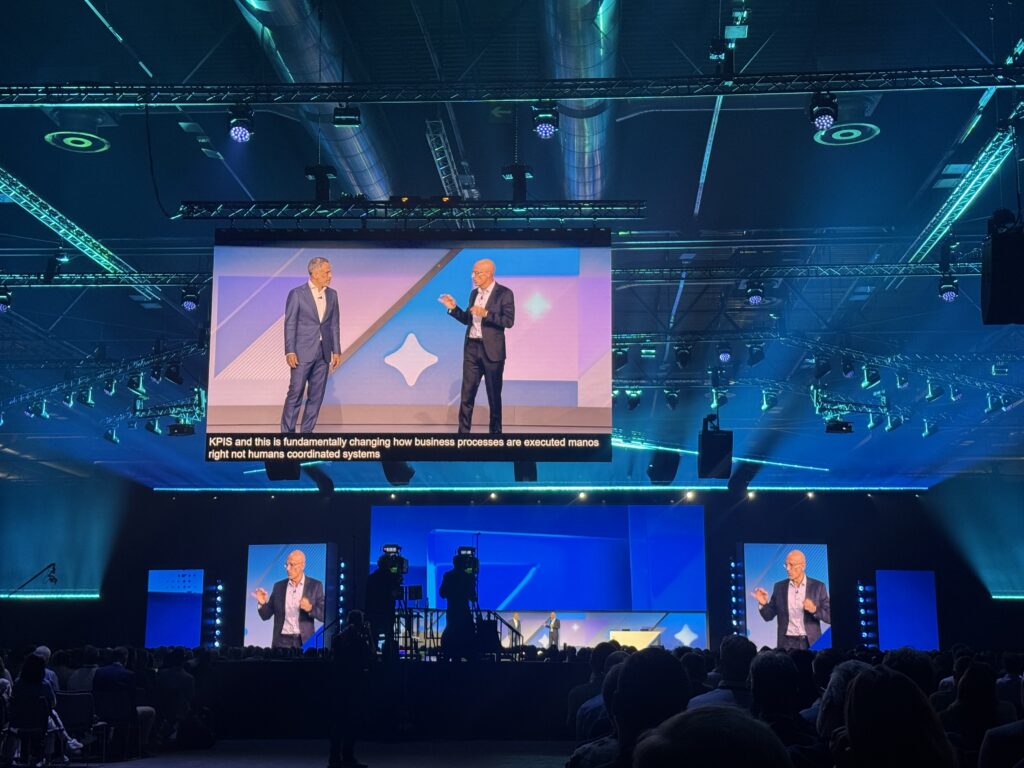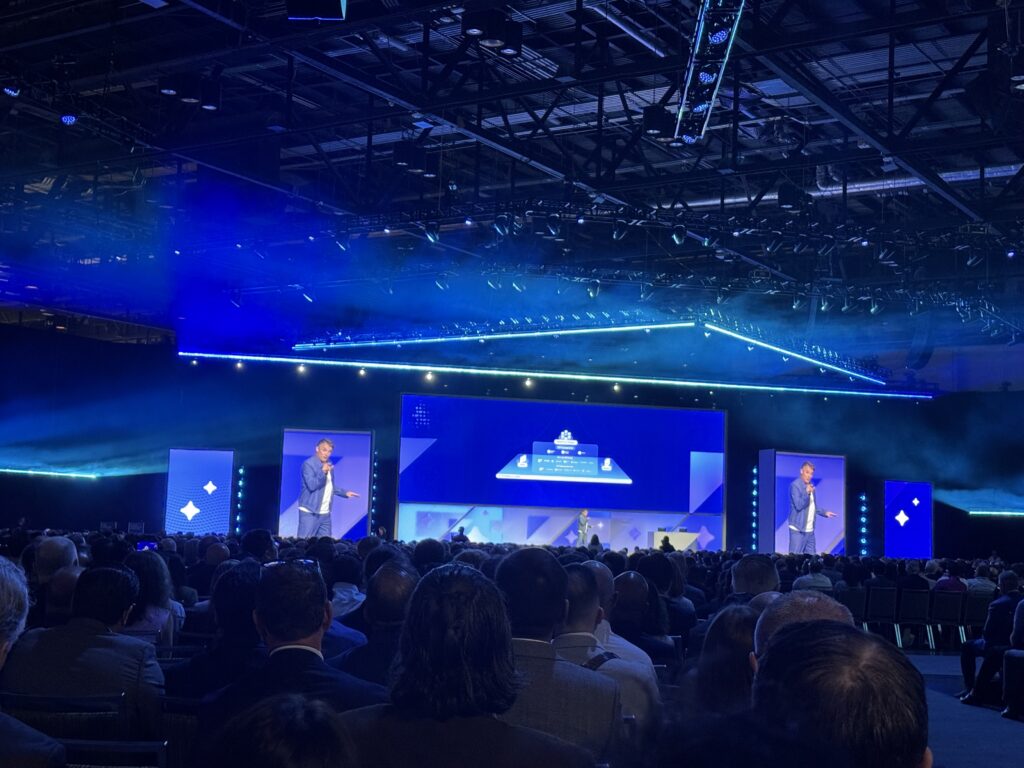

The CIO Program opened Monday at SAPinsider Copenhagen with a day built around peer discussion and hands-on work. James Bedard, president and CEO of SAPinsider, told attendees that after a short welcome the experts would take over.
“It’s highly immersive, highly hands-on. It’s not going to be lecture,” he said.
The program, held at the Tivoli Hotel & Congress Center, is a forum for CIOs and senior technology leaders from SAP customer organizations. Bedard said it is the first time SAPinsider has brought the format to its European event, and he invited attendees to join the CIO Advisory Network, a global group of CIOs that helps steer SAPinsider’s agenda.
The sessions that followed moved from building with AI to governing it, starting with how AI-written code meets company standards and ending with who owns AI governance and how regulation applies. Attendees’ questions followed the same path, from data integrity in AI-built applications to the cost and oversight of agents.
Opening Sessions Focus on Building AI and Preparing It for Production
AI maturity was the subject of the opening session, “Your Developers Already Have an AI That Writes Code. That Was the Easy Part,” led by Sam Yen, general manager of AI at Lensing. It took attendees from chat tools to vibe coding, spec-driven development, and enterprise platforms.
Vibe coding means a prompt generates a working application. Spec-driven development adds written specifications that set approved languages, libraries, and conventions before any code is generated. Demonstrations used a treasury scenario, and Yen asked attendees how they keep AI-written code within company standards.
Yaad Oren, who runs SAP Labs US and heads SAP’s global Research & Innovation group, led “The Autonomous Enterprise, Deconstructed: What SAP’s AI Vision Means for Technology Leaders Today,” which began by explaining the autonomous enterprise.
It covered how people interact with business software through Joule, how assistants and agents automate processes in the Autonomous Suite, and how SAP Business AI Platform governs those agents. Looking ahead, Oren covered tools for moving customers off older SAP systems and the research areas SAP is exploring next, such as new AI model designs, quantum computing, and robotics.
The hands-on session, “Joule Studio Agent Lab: Building and Governing AI Agents,” was led by Paulina Bujnicka of SAP. Attendees worked at workstations to build agents that connect to company data and carry out steps in a business process.
Each tutorial opened with a business challenge to solve. Attendees could follow the steps or use a quick-create option, and could test an agent in a preview before the final deployment step. Some were still working when the next session began.
The day ended with a discussion between attendees and a customer practitioner on how the EU AI Act, NIS2, and DORA rules apply. Sven Denecken, senior vice president at SAP, led the session, “Sovereign AI and Regulatory Readiness for the European Enterprise.”
In Production, AI Questions Become Questions of Control
Bedard closed the day by returning to the question of control. “What do you control? When do you control it? Who controls it, and how much is enough?” he asked, adding that each company will have to work out its own answers.
The questions sit with the CIO because AI reaches a company from several directions at once: developers already using code-writing tools, executives asking for visible progress, vendors supplying agents, and rules that vary from one country to the next.
The CIO is where those lines meet, which explains why the day’s questions centered on limits, from review and cost to ownership and regulation.
When an agent can be built in a single session, the harder questions shift to what surrounds the build: which checks the output has to pass, when those checks run, and who keeps watching once it is live. Questions from the sessions bear on that stage, from how to trust the data behind AI-built applications to what agents will cost.
Agents make those questions harder to put off, because a single agent works with company data and processes, can come from any of several vendors, and carries a running cost. Managing agents across vendors and fitting shared solutions to national rules can look like separate problems, yet each comes down to the same two questions: what an agent is allowed to do, and who answers for what it does.
Ownership is the piece still being worked out, and the arrangements differ. Where IT has taken the lead because no other function did, legal, enterprise architecture, cybersecurity, and business leaders still each hold part of the decision. Whatever the arrangement, a practical test is who settles the matter when those functions disagree.
What This Means for ERP Insiders
Controls become where companies differ. When an agent can be built in one session, the build says little about how well a company runs AI. The checks, ownership, and oversight around it are where the difference shows.
SAP is building AI into software’s interface and processes. SAP describes people interacting with business software through Joule while assistants and agents carry out processes. Research into new models, quantum computing, and robotics points to new work for software to take on.
Peers show CIOs what others are doing. Bedard described the program as peer-to-peer sharing, with CIOs trading ideas and experiences. Where practice is still being worked out, peer experience gives a CIO another source to weigh alongside what vendors present.