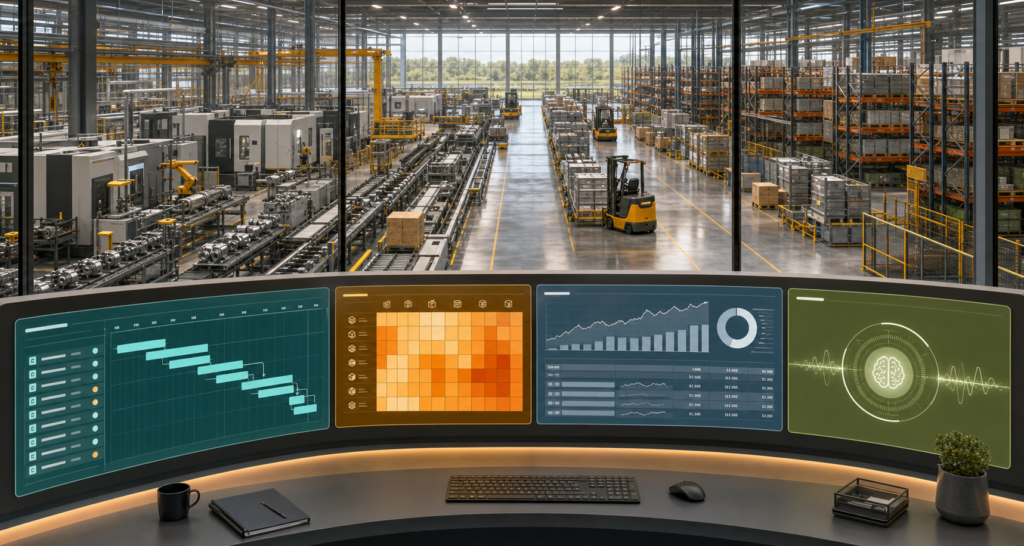

Syspro is sharpening its pitch to manufacturers and distributors by framing AI as an activation layer that turns ERP from a passive system of record into a proactive decision infrastructure embedded in daily operations. That vision centers on AI agents that run inside Syspro workflows, validate transactions in real time and help prevent disruption before it hits production, cost or delivery.
AI Becomes An Operational Control Layer
Syspro CEO Leanne Taylor said in an interview that AI only creates real value when it operates inside the system that actually runs the business, which in manufacturing and distribution is ERP. ERP is where orders are processed, inventory is committed, production is scheduled and financial impact is recorded. Taylor said Syspro is embedding AI directly into those processes rather than treating it as an external analytics layer.
See video interview with additional insights from Taylor.
Examples include validating a sales order against pricing, credit, inventory and fulfillment constraints before it creates downstream issues, and identifying supply and demand imbalances early enough to adjust production or purchasing. AI agents monitor transactions continuously, flag exceptions and guide decisions, so planners and sales operations teams spend less time reacting to surprises and more time fine tuning policies and priorities.
AI Studio is the company’s canvas for this approach. Taylor said, “With AI Studio, we’re enabling operational teams to define and deploy intelligence themselves, using the policies and rules they already work with. They can upload documents, describe what they need in plain language, and create agents that operate inside Syspro.”
Syspro’s “AI to the UI” strategy means that these insights are surfaced directly in the flow of work at the point where decisions are made, rather than in separate dashboards. Users are not expected to switch systems or interpret offline reports; instead, the system brings relevant information into the current screen with context about rules, risks and recommended actions.
Analysis
What This Means for ERP Insiders
AI activation will redefine operational ERP value. Syspro’s strategy shows how embedded agents can shift ERP from recording events to actively guiding them, making execution metrics the primary measure of AI success.
Governance, Control And Measuring The Impact
In operational environments where control is non-negotiable, Taylor said AI must operate within the same governance framework as ERP itself. Every recommendation is traceable, every action follows existing permissions and workflows and nothing executes without defined control points. This is designed to avoid black box decisions and ensure that AI operates within business rules with full auditability and visibility.
Syspro positions AI as augmenting decision making rather than replacing accountability. Agents can continuously monitor, validate and recommend actions, but execution of high value or high-risk transactions still follows established approval structures. For example, an agent might flag a pricing exception or a potential supply risk, but a human confirms the outcome, preserving accountability while gaining speed and consistency.
To prove ROI, Taylor said it’s critical to measure AI against the operational outcomes already used to manage the business. In manufacturing and distribution, that typically includes schedule adherence, inventory accuracy and volatility, order exception rates and working capital efficiency. Because AI is embedded into execution processes, improvements show up as fewer disruptions, faster decision cycles and more consistent performance on those metrics.
Taylor also highlighted where projects commonly stall: Unclear ownership, lack of trust in data and insights that sit outside workflows and are hard to act on consistently. Taylor said, “The most effective approach is to embed AI into core ERP processes, tie it to measurable outcomes and assign clear accountability for adoption.”
Analysis
What This Means for ERP Insiders
Governed agents will become standard in manufacturing ERP. The emphasis on traceability, permissions and human approvals suggests that explainable, audited AI agents will be mandatory in manufacturing and distribution environments.
Prioritizing Use Cases And Structuring The Roadmap
For executives planning activation layer initiatives, Taylor said it’s best to start with areas where delays or errors have immediate operational impact, such as order validation, inventory and demand alignment and production or maintenance risk. These processes are well understood and highly consequential, which makes them suitable for early AI embedding without destabilizing core operations.
Taylor said Syspro’s industry specialized strategy is central to how its AI is applied. Manufacturing and distribution are described as highly constrained environments, where sequencing, lead times, quality requirements and financial impact are tightly interconnected. Because the ERP is purpose built for these sectors, AI can be directed at scenarios such as demand and inventory alignment, production risk and quality validation in ways that reflect real shop floor and supply chain realities.
Looking three to five years ahead, Taylor said of the future, “We expect AI to become embedded in everyday operational processes. Systems will increasingly anticipate issues, highlight risks, and guide decisions in real time across production, supply chain, and finance. The important point is that this happens inside ERP, not outside it.”
Analysis
What This Means for ERP Insiders
Industry-specific constraints will shape AI roadmaps. Syspro’s focus on demand alignment, production risk and quality validation highlights that sector realities, not generic models, will drive the most impactful ERP activation use cases.