Supply Chain Management

ERP Technology Developments Impacting Manufacturing Jobs in 2026
Manufacturing technology executives must decide by late 2025 whether to adopt autonomous AI agents to enhance operational efficiency or risk losing competitive advantages with governance emerging as the key challenge for successful implementation.
Training Tomorrow’s Supply Chain Leaders Today
The future of supply chain depends on the next generation of leaders—and education is the key. Epicor’s partnership with Texas A&M University is bridging the gap between classroom learning and real-world ERP experience. By giving students hands-on access to Epicor Prophet 21, we’re helping them develop the skills needed to drive innovation and efficiency in distribution and supply chain management.
Building the Future of Distribution
Digital transformation in distribution isn’t just about technology—it’s about people. Epicor’s partnership with Conveyance Solutions shows how combining technical expertise with deep industry insight creates real impact. From family business roots to becoming the largest independent Prophet 21 service provider, Conveyance brings empathy and experience to help distributors thrive in a rapidly changing world.
Epicor for Distribution
Drive Growth and Manage Workflows. Simplify, streamline, and stay on top of all your moving parts with the only ERP designed by distributors for distributors.
US Department of Defense webpage open on a smartphone
CMMC 2.0 Enters Enforcement: What Contractors and Vendors Must Know
CMMC 2.0 enforcement has begun, shifting defense contractors from voluntary cybersecurity guidance to mandatory compliance under a phased rollout with defined certification levels and assessments.
Creating Supply Chain Value Through Analytics and AI
AI and analytics are transforming supply chain management by automating repetitive tasks, redefining planner roles into strategic storytellers, and providing decision intelligence to navigate disruptions.
RPA Pushes Healthcare from Manual Admin to Intelligent Automation
Hospitals are increasingly adopting robotic process automation (RPA) to alleviate administrative burdens and workforce shortages while enhancing patient experiences, evolving from basic scripts to AI-enabled intelligent automation that reshapes claims management, scheduling, and compliance.
Robot-Resilience | RPA
IFS, Boston Dynamics Bring Physical AI to Field Operations
IFS and Boston Dynamics have partnered to integrate autonomous robots into field service workflows, enhancing operational efficiency and safety by allowing robots to perform inspections in hazardous locations.
IFS Acquiring Softeon, Bringing Industrial AI to Warehouse Management
IFS's planned acquisition of cloud-native Softeon aims to enhance warehouse management capabilities, integrating AI and robotics into operations, amidst a growing $8.6 billion market driven by labor shortages and automation demands.
Cloud-Native Logistics, Multi-Agent AI Set Pace for Next-Gen Supply Chain Resilience
Monolithic supply chain systems pose vulnerabilities for global brands amid geopolitical uncertainties, while cloud-native platforms utilizing modular services, IoT integration, and AI-driven multi-agent coordination enhance resilience, efficiency, and data security.
Taming Landed Costs
Rootstock’s Praxis Acquisition Ushers New Phase of Salesforce-Native Enterprise
Rootstock's acquisition of Praxis Solutions, bringing its founder Ohad Idan as VP of product, enhances its ERP strategy by integrating on-ground manufacturing expertise, driving advancements in seamless workflows and unified operational platforms.
KAMAX Strengthening Supply Chain Operations Through Digitalization, Logistics Management
KAMAX, a German automotive parts manufacturer, is enhancing logistics efficiency and sustainability by implementing SAP's digital solutions for supply chain management while modernizing its operations across multiple plants.
AI ESG Reporting
Digital Tools Help SMEs Secure Green Financing: New Sage–ICC Report
A new Sage–ICC study reveals that while 70% of SMEs prioritize sustainability, only 3% access green financing, largely due to a lack of quality reporting tools, which impedes their ability to secure funding necessary for sustainable growth.
Clorox ERP
Clorox ERP Modernization: Lessons from a Large-Scale Transition
Clorox's recent ERP system launch, while an ambitious, faced challenges including concerns over costs and a decline in sales during the transition, illustrating the complexities and disruptions inherent in large-scale ERP migrations.
Taming Landed Costs
How Agile is Your Supply Chain in the Age of AI?
The 2025 Agility Index highlights the critical role of AI in supply chain management for manufacturers, distributors, and retailers, urging organizations to adopt real-time data-sharing and automation to enhance agility and competitiveness amid various market challenges.
Customer Success: TAL Building Centers
TAL Building Centers, a family-owned business with over a century of history, has experienced rapid growth and operational transformation through the implementation of Epicor's BisTrack ERP solution, which has streamlined processes, enhanced pricing strategies, and improved inventory management while fostering a long-term partnership aimed at maximizing efficiency and customer value.
J.P. Morgan & Oracle Deepen ERP Integration for Finance
J.P. Morgan & Oracle Deepen ERP Integration for Supply Chain Finance
J.P. Morgan Payments and Oracle have launched a seamlessly integrated Supply Chain Finance solution within Oracle Fusion Cloud ERP, enabling companies like FedEx to enhance working capital management through an API that simplifies invoice approvals and offers immediate payment options, marking a shift towards embedded finance within ERP systems.
supply chain signal chain
Signal Chains Bring Resiliency and Predictability for Manufacturers and Distributors
We examine the concept of Signal Chains and how they provide resiliency and predictability for manufacturers.
Sage Looks at the Future with Supply Chain Intelligence Solution and LPGA Collaboration
Charting a New Course in Supply Chain Management for SMBs
Research reveals that only 21% of businesses feel confident in navigating supply chain disruptions, attributed to various global challenges, highlighting the importance of enhanced visibility and integration tools like Sage Supply Chain Intelligence for small and medium-sized enterprises to mitigate risks and improve operations.
Navigating Global Trade: 3 Insights for Leaders
Almost all companies are grappling with the rapidly shifting dynamics of global trade, requiring them to rethink how they manage their supply chains, model different market scenarios, and even how they plan and develop their workforces. The following explores three main ways that operations, finance, and HR leaders, supported by the latest technologies, can help their companies navigate the increasing complexity and risks of global trade. Here is where to start.
Industry Expert eBook: Transforming the Fresh Produce Supply Chain
Discover how the right technology can transform your workflow from constant firefighting to effortless, proactive operations.
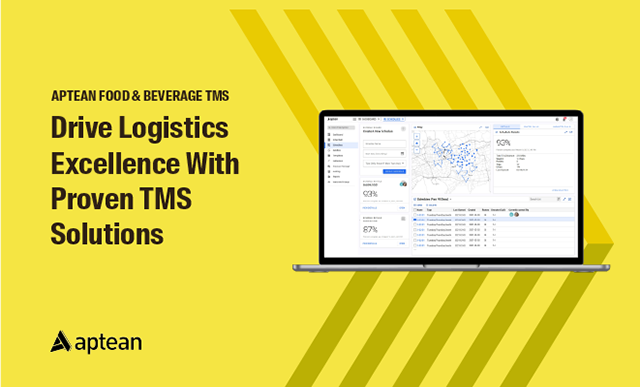
Aptean Food & Beverage TMS
Take the complexity out of managing your transportation operations and run your fleet using less time, less miles, less trucks and less drivers.
Rootstock Launches Summer ’25 Release with AI Agent, New Data Grid, and Expanded Financials
Epicor Pushes the Boundaries of Industrial Intelligence with New AI and Sustainability Tools
At the Epicor Insights 2025 conference, Epicor announced its commitment to the manufacturing and supply chain sectors with the introduction of AI-driven tools, including Epicor Prism and Grow AI for enhanced operational efficiency and data quality, alongside the Carbon Cost Rollup for managing carbon footprints in production, highlighting the increasing importance of sustainability in ERP systems.
Implications of Tariffs on the Supply Chain
Uncertainty surrounding tariffs and trade policies is making it difficult for businesses to plan and manage their supply chains effectively. Businesses can adapt by diversifying suppliers, rerouting their supply chains, and adopting technology to help them mitigate the impact of tariffs.
Four Key Lessons from the Pandemic for Today’s Supply Chain Challenges
The pandemic revealed critical vulnerabilities in global supply chains, underscoring the necessity for manufacturers and distributors to diversify suppliers, enhance visibility, strengthen relationships, and invest in technology to build resilience and adaptability for future disruptions.
Blue Diamond Growers
The Power of 4: Blue Diamond’s Transformation Journey
How Blue Diamond Growers solved supply chain issues and ESG metrics.