
Boomi announced at this year’s event orchestration, connectivity, context, runtime, and governance capabilities aimed at moving AI agents from pilots into production enterprise workflows.
At Boomi World 2026 in Chicago, the data activation company for AI set out a broader platform strategy, adding new orchestration, connectivity, context, and infrastructure capabilities alongside expanded partnerships with Red Hat and Couchbase.
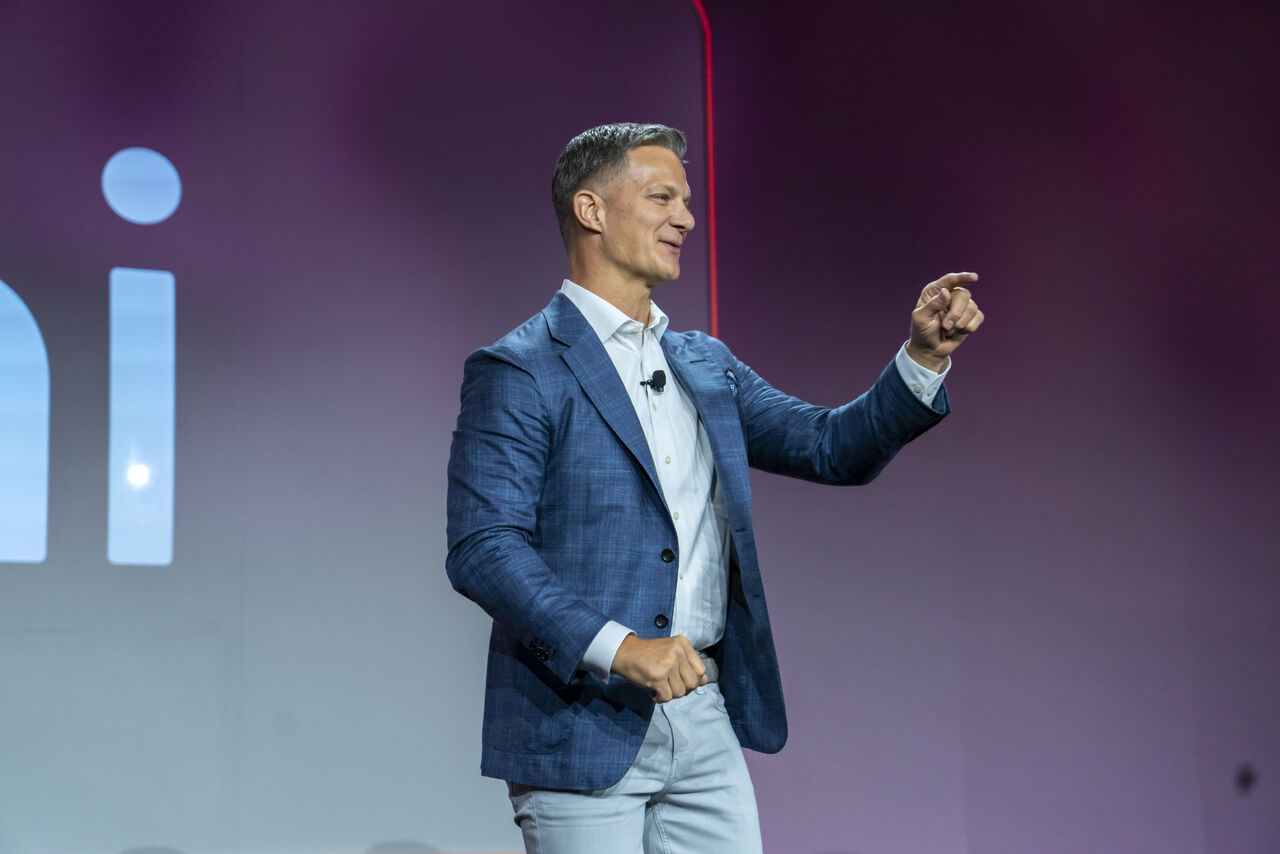
Boomi Chairman and CEO Steve Lucas used the 2026 user conference in Chicago to state where he believes enterprise AI is heading. The company may still be best known for integration platform-as-a-service, but its latest announcements position Boomi as the active data foundation for what it calls the agentic enterprise, where humans and AI agents work together to drive action and ROI.
From Integration Platform to Agentic Data Foundation
The headline was a major expansion of the Boomi Enterprise Platform, designed to help organizations move AI agents beyond experimentation and into production-scale operations. The new capabilities span five areas: orchestrated agentic workflows, agentic engineering, governed agent connectivity, grounded agent context, and localized agent infrastructure.
The AI conversation is shifting. Boomi argues AI is becoming the primary interface for work, while Model Context Protocol (MCP) is emerging as a standard for agentic interfaces. Yet many enterprises are still dealing with fragmented systems, trapped data, rising cloud costs, and governance gaps.
Lucas put the issue bluntly during his keynote. The remaining moat for many companies, he argued, is their data, and enterprises should not allow sensitive business information to leak into public models. Boomi’s pitch is that AI agents will only become useful at scale if they can operate close to trusted data, inside a governed architecture.
Ed Macosky, Boomi’s Chief Product and Technology Officer, described the moment as a platform shift. “Customers don’t need more disconnected tools,” he said. “They need an active data foundation that connects data, orchestrates workflows, and governs AI for people and agents.”
The platform expansion is designed to move customers “from fragmentation to flow.” Boomi Orchestrate is intended to help business and IT teams combine agents, APIs, integrations, event streams, and data models into one orchestration experience using natural language.
On the developer side, Boomi Companion is positioned as a natural-language assistant for designing, testing, deploying, and diagnosing integrations. The company is also extending Agentstudio so agents can be embedded into other applications, portals, and digital experiences.
Governed Connectivity Becomes the Core ERP Question
Connectivity was another major theme. Boomi Connect, announced as generally available during the keynote, provides governed connectivity between AI tools such as Claude, Copilot, and Gemini and enterprise applications through more than 1,000 managed, MCP-enabled tools.
The wider connectivity layer also includes Boomi AI Gateway for policy enforcement, cost controls, and observability, and an MCP Registry for discovering and governing MCP servers across Boomi and third-party environments.
For SAP / ERP leaders, this is where the announcement becomes more than another AI product release. A finance, procurement, or supply chain agent is only useful if it can retrieve the right policy, check the right system of record, invoke the right approval workflow, and log every step.
Boomi also strengthened the context layer around enterprise agents. Boomi Knowledge Hub is designed to provide governed search and retrieval across enterprise knowledge, while Boomi Meta Hub grounds agents in consistent, expert-endorsed business definitions. Together, those capabilities address a core AI barrier: agents can only act reliably when the data and context behind them are current, trusted, and consistently understood.
The infrastructure layer is also part of the release. Distributed Agent Runtime is designed to let organizations deploy agents on-premises, keeping sensitive data behind the firewall while reducing latency and cloud costs. Agentstudio Multi-region Instances are intended to keep agent metadata and runtime execution in specified regions to support AI boundaries and compliance.
Partnerships Extend the Agentic Infrastructure Stack
The Red Hat partnership extends the platform story into infrastructure. The companies are collaborating on production-ready agentic AI by combining Boomi’s agent orchestration and data activation capabilities with Red Hat AI and hybrid cloud infrastructure. The aim is to give customers a more unified stack for building, governing, and running agents while supporting data sovereignty, infrastructure flexibility, performance reliability, and cost control.
For customers with complex ERP landscapes, the Red Hat angle is important. Critical business data often spans cloud applications, legacy platforms, operational technology, APIs, warehouses, and industry systems. If agents are going to interact with finance, manufacturing, HR, or supply chain processes, enterprises need infrastructure that supports policy, locality, resilience, and observability.
A separate partnership with Couchbase focuses on the memory and retrieval layer needed for enterprise agents. The companies are combining Boomi’s connectivity, agent runtime, and governance with Couchbase’s operational data platform, recollection, and vector capabilities. The goal is to give agents persistent context, trusted real-time data access, and governance as they move from pilot projects into production.
That audit trail may prove as important as the agent experience itself. If an AI agent updates a customer record, recommends a supplier change, triggers a service workflow, or assists a finance process, the enterprise will need to understand what data was used, what action was taken, and whether it complied with policy. Boomi’s Agent Control Tower is central to that proposition, providing visibility and auditability across agent actions.
A Governed Production Model
The final piece of the news was Boomi’s letter of intent to acquire Lunar.dev, an AI and MCP gateway specialist. The proposed acquisition is expected to enrich the Boomi Enterprise Platform and Boomi Connect with more advanced controls for governing and scaling AI usage across enterprise systems. Lunar.dev’s technology would add policy enforcement, control over AI access to enterprise data and systems, observability into prompts and responses, high-performance routing, and flexible deployment across on-premises, private cloud, and sovereign environments.
The company also used Boomi World to highlight customer momentum, naming its 2026 Customer Innovation Award winners, including HNL Lab Medicine, IMAX, and J.D. Power. The awards reinforced the same message as the product news: Boomi wants to be seen as a platform for activating data, simplifying complexity, and supporting agentic transformation across industries.
“Our organization is about the journey, not the destination,” Lucas said. “We have no prescribed location for your data. We have no demanded data cloud that you must use. Ours is about simply and powerfully connecting to your data, delivering it to the right place at the right time, in real time, with quality. And that’s a profound difference to our 30,000 customers.”
The test, as always, will be execution. Enterprises do not need more AI demos. They need production software that can handle real data, real workflows, real permissions, and real audit requirements. Boomi World 2026 suggested that Boomi sees its opportunity not in replacing ERP systems, but in making SAP and other enterprise applications accessible to a new generation of governed AI agents.
What This Means for ERP Insiders
Agentic AI will depend on governed access to operational systems. For CIOs, ERP architects, and integration leaders, Boomi’s announcements reinforce that agents need more than model access or a conversational interface. They need controlled connections into ERP, CRM, supply chain, finance, and industry systems, with permissions, policies, and audit trails built into the workflow from the start.
Context management is an ERP architecture issue. Enterprise agents will only be reliable if they operate on trusted definitions, current data, and governed knowledge. For data leaders and business process owners, tools such as Knowledge Hub and Meta Hub point to a broader requirement: organizations must define which sources, terms, policies, and records agents can use before allowing them to act inside business processes.
Infrastructure choices will shape where agents can run. The Red Hat, Couchbase, and Lunar.dev moves show Boomi pushing beyond integration into agent runtime, memory, and control. For regulated industries and global enterprises, the next evaluation point is not just whether agents can automate a workflow, but whether they can run close to sensitive data, respect sovereignty requirements, control cost, and produce a defensible record of every action.