
Infor argues that manufacturers can finish an ERP rollout on schedule and still miss its value because employees keep working around the system after go-live.
In a blog post written with implementation partner Essential Software Solutions, Infor calls this the adoption gap: the distance between a successful go-live and the daily behaviors that produce business value. The company’s position is that more mandatory training will not close it. The ERP itself has to make working inside the system easier than working around it.
Why Workarounds Become a Data Problem
Infor gives three causes for stalled adoption.
The first is generic training that shows every role the same screens. The second is manual friction in routine tasks. Its example is releasing a credit hold, which can mean checking the sales order, the customer master, and a finance report across four screens. The third is one-time training that falls behind as the software changes.
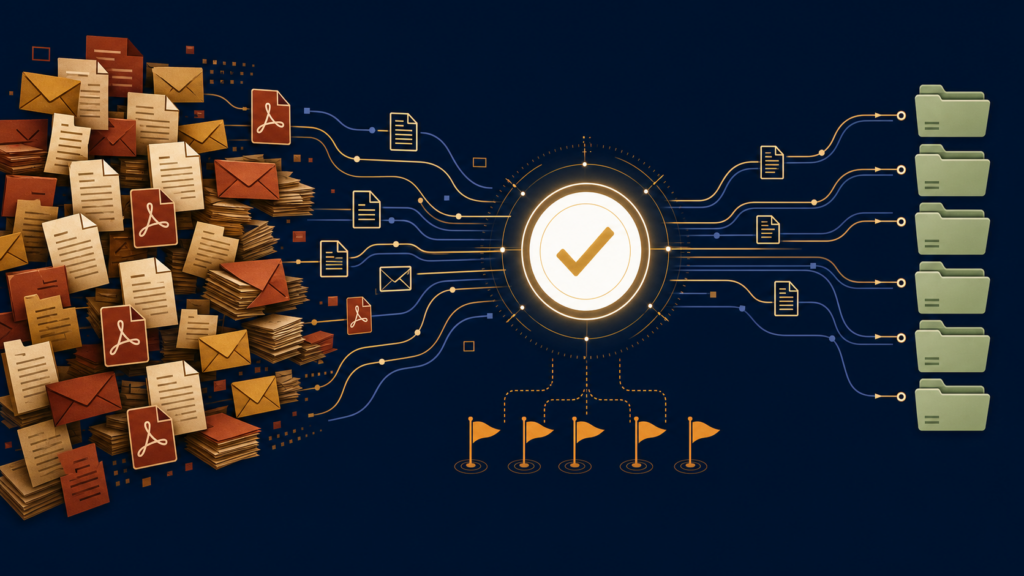
Each workaround costs more than time. Infor notes that workarounds move data out of the ERP, so reports, dashboards, and decisions gradually stop reflecting what is happening.
The third cause reflects how cloud ERP is delivered. CloudSuite Industrial adds capabilities between major releases, including Infor GenAI Assistant. Infor notes that when training stops at go-live, employees may not learn about new features and tend to fall back on familiar methods.
Three Levers Built Into CloudSuite Industrial
Infor’s response is to build adoption into the product itself.
The first lever is role-based workspaces. Each one gathers a role’s KPIs, alerts, quick actions, and shortcuts into a single view. Infor organizes them around what it calls an insight-to-action loop: spot an issue, understand its impact, act, and move the work forward. Its Industry Process Catalog maps end-to-end manufacturing processes, which gives teams a starting point for configuring those workspaces.
The second lever targets repetitive steps. Infor GenAI Assistant, which is embedded in CloudSuite, lets users query data and move workflows forward in plain language. It can also summarize records such as purchase orders and work orders. Process mining in Infor Velocity Suite shows how processes such as procure-to-pay and order-to-cash actually run. Infor positions it as a way to find adoption problems where they happen.
The third lever moves learning into the application through role-based starting points, process guidance, and training tied to each release. Infor lays out three phases: building baseline proficiency before go-live, providing in-system support in the first weeks, and reinforcing skills as updates arrive.
What the Customer Cases Show
Kattsafe is a height-safety manufacturer that runs CloudSuite Industrial. It used Velocity Suite’s process mining, AI-powered text recognition (OCR), and robotic process automation to read incoming order emails and prepare the ERP entries.
Infor reports that Kattsafe achieved 88% faster order processing, saved more than 700 hours a year, and nearly eliminated manual keying errors.
Catalyst Acoustics Group makes engineered-to-order noise control products. It connected CloudSuite Industrial with Factory Track and Infor CPQ so leads turn into quotes, and quotes into orders, with little re-entry.
Infor says the company has gained value since go-live as users work more deeply in the system, improving the depth and quality of its data.
What This Means for ERP Insiders
Adoption becomes a data quality issue. Workarounds pull activity out of the ERP and weaken the reporting and AI tools that depend on it. ERP teams have reason to track usage after go-live as closely as they tracked the project plan.
Continuous releases need continuous enablement. Cloud ERP delivers new features between major releases, so training plans should run on the same schedule as the vendor’s roadmap.
Start with the step people avoid. Infor recommends beginning with one role, one workspace, and one manual process. That gives ERP teams a measurable scope for proving value before they expand.