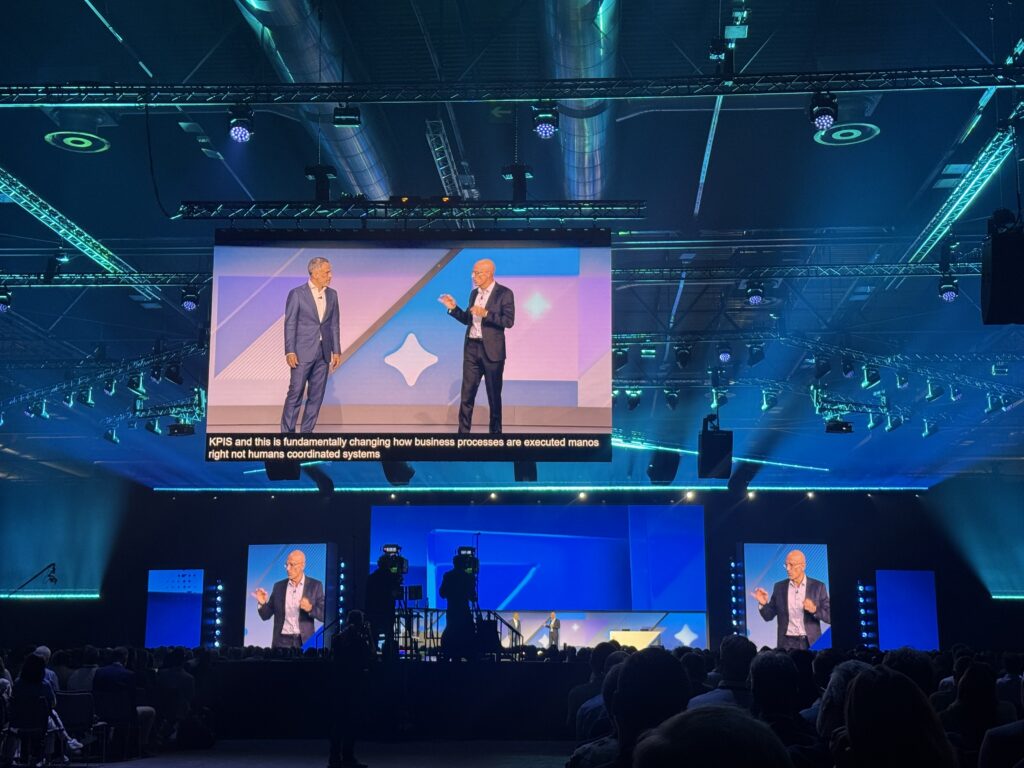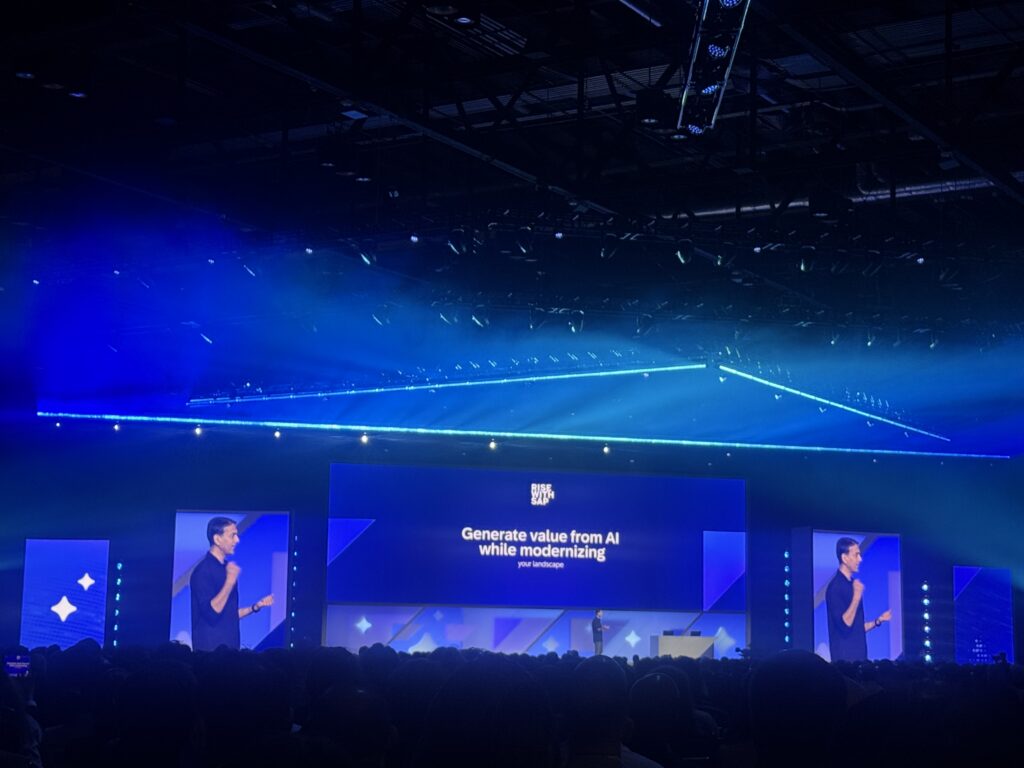

SAP is turning Joule into a broader enterprise engagement layer for agents, generated workspaces, voice, desktop activity, and cross-system execution, but the bigger question for ERP leaders is whether customer environments are ready for that shift. The company’s discussions at SAP Sapphire showed Joule’s next phase will depend on more than AI capability. It will require standardized processes, clean core discipline, governed data, integration maturity, and a services model that helps customers move from proof of concept to adoption at scale.
Jonathan von Rueden, Chief AI Officer, SAP SE, described SAP’s next step as a move beyond scripted skills and conventional conversational interfaces. Joule already has specialized agents, prebuilt skills, document-grounding capabilities, integrations with third-party tools, and an action bar that allows it to operate beyond a single SAP screen. But SAP has heard a clear message from customers: Prebuilt skills do not cover enough of the work users need to do.
“One of the things we’re hearing is that 2,500 skills are great, but that doesn’t cover everything,” von Rueden said. “They’re saying, ‘I want to be able to talk to my SAP. I just want to be able to speak with everything. I want to look at all the data […] and work with it.”
That is the strategic opening for Joule Work. SAP is making Joule the place where users interact with business context, generated workspaces, agents, voice, desktop capabilities, and eventually agent-building tools. In SAP’s framing, the interface becomes less of a fixed application screen and more of a dynamic workspace tied to underlying business systems.
Joule Moves from Assistant to Execution Surface
von Rueden described Joule Work as combining SAP Knowledge Graph, computer-use capabilities, and sandboxed execution to move beyond rigid, predrilled skills. He said SAP’s Knowledge Graph includes some “200 million facts or triples,” with a large API and entity space that Joule can reason over more dynamically.
“We don’t have to have these entirely pre-scripted and pre-drilled skills,” von Rueden said. “We give Joule Work the capability to iterate and reason over it. We’re going from software as a service to software as a result.” In that model, the user asks for an outcome, and the system produces the result, including code or an interface, with SAP connectivity behind it.
That is where SAP’s generative UI strategy enters the story. Joule Work will introduce Spaces, which von Rueden described as a way to generate applications or workspaces. “We’re starting to generate the apps on the fly,” he said, adding that the goal is not to create disposable HTML files, but “reproducible, secure, enterprise-grade UIs” that users can share and eventually collaborate.
This reframes enterprise UX. SAP is trying to make Joule a surface where users can generate task-specific environments connected to SAP data, business logic, agents, and permissions.
SAP Extends Joule Across Voice, Desktop, and Agents
SAP also outlined a broader set of Joule access points. von Rueden said SAP is adding advanced voice capabilities so users can call into Joule from a car, request information from SAP systems, submit actions such as leave requests, or check the status of a sales order. He described the model as hybrid, with users able to move between voice and manual confirmation.
Joule Desktop is another part of that expansion. von Rueden said SAP is “moving to the desktop,” with a local application that can connect to SAP backends, calendars, corporate systems, and local sandboxes. He gave examples such as building a customer briefing from CRM data, generating a PowerPoint presentation, running a spend analysis, producing a PDF, and attaching the result to an email.
“The people expect for Joule also to have the same consumer-grade qualities that you see from the other applications,” he said. “Bringing these together and having all the SAP backend connectivity, all the agents, plus this power is what makes it incredibly useful.”
SAP is also building Joule Studio into the same environment, giving certain users the ability to build agents. von Rueden acknowledged that CIOs will not immediately allow every employee to build agents with broad business connectivity. SAP’s initial approach would likely be role-based, giving IT users additional capabilities while limiting broader access. Over time, however, he said SAP expects users to build small automations and optimizations themselves.
The Adoption Test is Customer Readiness
Then there is SAP’s Customer Value work. Joule Work may create the new interaction layer, but there is a reason why AI adoption remains constrained by data, process, integration, and organizational readiness.
Jan Gilg, SAP’s Chief Revenue Officer for Americas and SAP Business Suite, said SAP created a Customer Value Group because customers often see seams between sales, post-sales, services, and support. “I’ve got a lot of feedback from customers how hard it is sometimes to do business with us,” Gilg said.
SAP is moving toward value-based selling, and AI accelerates the need for clarity over who is responsible for outcomes across the customer journey. “Customers feel they see the seams, and they see the silos inside of SAP,” Gilg said. “That’s exactly the agenda of the Customer Value Group.”
The AI context makes those seams more important. Gilg said customers want to see working proof points earlier in the cycle. Smaller companies can come in, run a one-day workshop, and leave customers with a proof of concept they can touch. SAP, he said, needs to operate with a similar engagement model.
Thomas Pfiester, who leads SAP’s customer engagement and adoption organization, described a shift in customer conversations. Two years ago, customers were still asking whether they needed to adopt AI. Today, he said, the question has changed to unlocking the value of AI.
“They tell me, ‘We’re fully aligned with technology,’” Pfiester said. “‘We know what the technology can deliver. Now it’s how we’re coming from a proof of concept into adoption and into scaling.’”
The obstacles are familiar: change management, user adoption, fear of new tools, process standardization, data quality, and integration across SAP and non-SAP systems. “If you run an agent or even orchestrated agent framework across a big process, the process has to be standardized,” Pfiester said. “Data is a big challenge, plus the integration points between all the SAP and SAP non-SAP solutions.”
Pfiester connected clean core to AI readiness. Two years ago, he said, customers questioned whether clean core was economically viable if the main benefit was faster upgrades. Now, customers that pursued clean core are better positioned for AI because they have standardized processes, harmonized data, standardized integration, and reduced technical debt.
What This Means for ERP Insiders
SAP is not treating AI adoption as a product activation alone. It is positioning customer success, services, and partner execution as part of the AI operating model. That is important because SAP still relies heavily on its partner ecosystem. Gilg said more than 90% of projects are delivered by system integration partners, and SAP’s services organization is intended to complement that ecosystem while accelerating adoption.
This creates a clearer reading of Joule Work. It is part of a broader attempt to make SAP systems more intent-driven, more agentic, and more outcome-oriented. But SAP is also acknowledging the customer journey around those capabilities has to change. More specifically:
- ERP interaction is moving beyond fixed application screens. SAP’s direction for Joule Work, Spaces, Desktop, voice, and Joule Studio shows how major ERP vendors are trying to make enterprise systems more intent-driven and outcome-oriented. For CIOs, enterprise architects, and ERP product teams, the practical question is where work should happen as AI becomes a new interface layer across data, workflows, and applications.
- Generative UI will only be as reliable as the foundation beneath it. Dynamic workspaces, agentic execution, and desktop-level automation depend on trusted data, standardized processes, governed integration, and role-based controls. ERP program leaders should evaluate Joule’s roadmap alongside clean core, data harmonization, and integration readiness, not as a standalone user experience upgrade.
- Services execution is part of the AI value proposition. SAP’s Customer Value discussion shows that AI adoption will depend on how well vendors, partners, and services teams help customers scale from demos to production. For ERP buyers and system integrators, the next phase of AI delivery will require clearer ownership of outcomes, stronger adoption support, and measurable links between AI use cases and business performance.