ERP integration

Finance Transformation Stalls Where Data Assembly Begins
Finance teams still lose hours exporting ERP data and reconciling spreadsheets before analysis can begin. Two Unit4 blogs argue that connected FP&A changes both forecast responsiveness and how skilled finance staff spend their time.
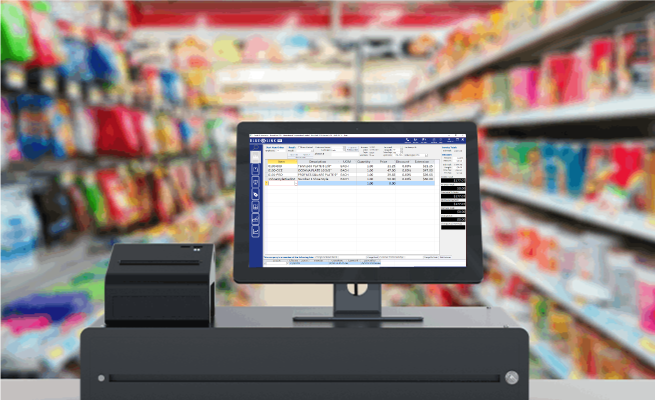
Companies Are Racing to Cut Tariff Costs, but Their Trade Software May Be Creating New Risk
As tariff volatility reshapes supply chains and financial planning, many organizations are discovering a new challenge: the software supporting Foreign-Trade Zone operations may be creating compliance, audit, and financial risks. New research highlights why FTZ modernization is becoming an ERP and business architecture priority.
accounts payable workflow automation
Why AP Workflow Automation Still Leaves Finance Teams Doing Manual Work
Accounts payable automation has come a long way—yet most finance teams are still doing significant manual work. This article examines why AP workflows break down even with automation tools in place, where the ERP gaps lie, and what CFOs and finance leaders need to do to build truly touchless invoice and payment processing.
The ERP Value Gap: The Cost of Disconnected Payment Workflows
Disconnected AP workflows are quietly draining ERP value — new research on how payments and integration impact ERP performance Organizations invest in ERP systems to streamline operations, improve visibility, and connect critical business workflows. Yet when it comes to payments, 43% of organizations still manage at least some accounts payable (AP) processes outside the ERP, creating friction that limits the efficiency, scalability, and value they expect from their ERP investment. Based on new research from Priority Commerce surveying 150 AP professionals, The ERP Value Gap explores how disconnected AP workflows affect business outcomes, why payments are becoming a more important driver of platform value, and how ERP providers can better meet evolving customer expectations. For ERP providers and the enterprises that run on them, the challenge is closing the gap between the seamless AP experience users expect and what platforms actually deliver — without adding integration complexity or disrupting existing workflows. This session makes the case for treating payables as a core platform capability rather than an add-on: embedding payment capabilities directly into the ERP to improve AP efficiency, reduce workflow fragmentation, and increase value. Watch this on-demand session as Priority Commerce EVP of Operations Steve Tackett draws on 20+ years in payments technology to show finance and operations teams what to consider when connecting modern payment capabilities to their ERP environment. Why you should watch: - See the new research: What 150 AP professionals reveal about where AP workflows still live outside the ERP — and what it costs in visibility, efficiency, and scalability. - Diagnose your ERP value gap: Identify the common AP workflow challenges and integration barriers that force teams to manage payments outside the platform. - Pinpoint what to fix: Learn which payment and AP capabilities close those gaps and create a more seamless, connected ERP experience. - Understand the strategic upside: See why integrated payments strengthen platform value, customer retention, and long-term growth. - Get a CFO-ready view: Understand what role integrated payments should play in a modern ERP strategy and how they move the needle on cost, control, and ROI.

The ERP Value Gap: The Cost of Disconnected Payment Workflows
Disconnected AP workflows are quietly draining ERP value — new research on how payments and integration impact ERP performance Organizations invest in ERP systems to streamline operations, improve visibility, and connect critical business workflows. Yet when it comes to payments, 43% of organizations still manage at least some accounts payable (AP) processes outside the ERP, creating friction that limits the efficiency, scalability, and value they expect from their ERP investment. Based on new research from Priority Commerce surveying 150 AP professionals, The ERP Value Gap explores how disconnected AP workflows affect business outcomes, why payments are becoming a more important driver of platform value, and how ERP providers can better meet evolving customer expectations. For ERP providers and the enterprises that run on them, the challenge is closing the gap between the seamless AP experience users expect and what platforms actually deliver — without adding integration complexity or disrupting existing workflows. This session makes the case for treating payables as a core platform capability rather than an add-on: embedding payment capabilities directly into the ERP to improve AP efficiency, reduce workflow fragmentation, and increase value. Watch this on-demand session as Priority Commerce EVP of Operations Steve Tackett draws on 20+ years in payments technology to show finance and operations teams what to consider when connecting modern payment capabilities to their ERP environment. Why you should watch: - See the new research: What 150 AP professionals reveal about where AP workflows still live outside the ERP — and what it costs in visibility, efficiency, and scalability. - Diagnose your ERP value gap: Identify the common AP workflow challenges and integration barriers that force teams to manage payments outside the platform. - Pinpoint what to fix: Learn which payment and AP capabilities close those gaps and create a more seamless, connected ERP experience. - Understand the strategic upside: See why integrated payments strengthen platform value, customer retention, and long-term growth. - Get a CFO-ready view: Understand what role integrated payments should play in a modern ERP strategy and how they move the needle on cost, control, and ROI.

AWS agentic AI SAP ERP exceptions - MCP agentic ERP infrastructure with AgentCore
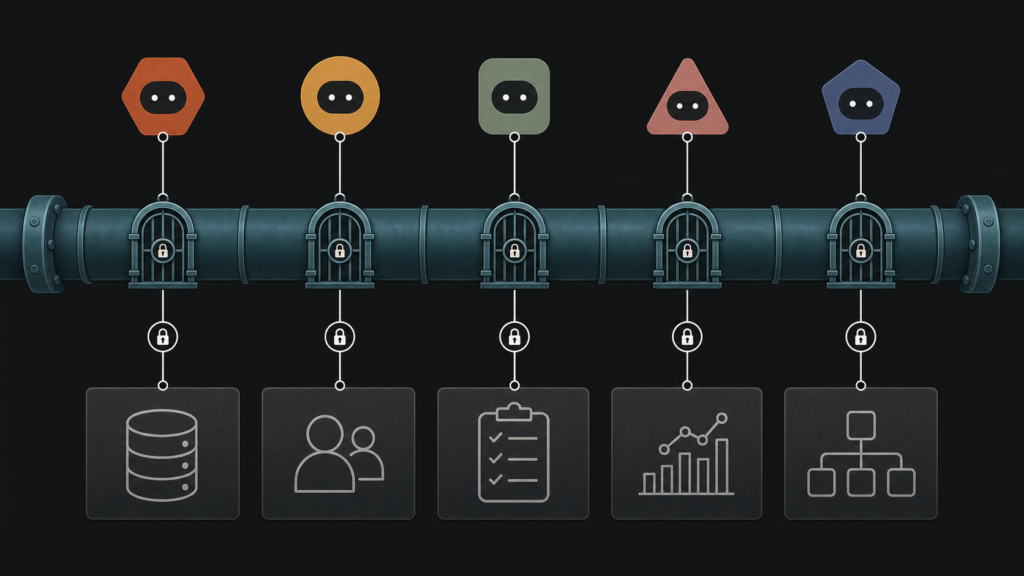
MCP Is Becoming the Plumbing of Agentic ERP—ERP Leaders Need to Understand It
MCP is emerging as the protocol layer that lets AI agents discover and call enterprise tools, data sources, and workflows. For ERP leaders, the opportunity is lower integration friction. The risk is that access control, auditability, and cost discipline move closer to the agent boundary.
IFS Is Building the Operations Layer Around Industrial AI
IFS’s Softeon acquisition is only one part of a broader push to connect warehouse execution, logistics optimization, MRO, asset management, and ERP around Industrial AI.
Top ERP Today stories and H1 2026 enterprise technology trends across AI, cloud, SAP, robotics, and infrastructure
10 Stories That Defined Enterprise Tech in H1 2026 and What They Say About the ERP Market
ERP Today’s most-read stories in the first half of 2026 reveal a market moving from AI enthusiasm into harder questions about pricing, governance, infrastructure, cloud costs, and operational execution.
ERP Today Live Interview
Are Your AP Workflows Holding Your ERP Back? A Conversation with Priority Commerce
Priority Commerce EVP Steve Tackett joins ERP Today Live to explain why AP workflows keep escaping the ERP, what breaks down when they do, and how supplier enablement and AI-driven transparency are reshaping how mid-market organizations think about payment modernization.
Who Governs AI Agents When Workflows Cross Platforms?
As AI agents expand across ERP, cloud, and workflow platforms, enterprise leaders face a critical governance challenge: who owns accountability when data, models, and audit trails are fragmented across multiple systems. This analysis explores the control plane problem and what ERP teams must do to prevent agent sprawl.
Microsoft Dynamics 365 Brings Agentic ERP Workflows into Copilot Cowork
Microsoft introduces Copilot Cowork as an innovative interface for Dynamics 365 ERP, aiming to streamline workflow by integrating ERP data and processes into a collaborative environment, allowing employees to coordinate actions without the need for cumbersome manual processes.
Harbour Energy’s SAP Tool Chain: The Architecture Behind Acquisition-Speed Integration
Harbour Energy is leveraging a connected SAP tool chain to manage its acquisition-led growth across multiple ERP systems, prioritizing visibility, process alignment, and integration speed to maintain agility while expanding globally.
Microsoft building | SSE
Microsoft Connects Field Service Execution to Project Financials in Dynamics 365
Microsoft has made interoperability between Dynamics 365 Field Service and Project Operations generally available, enabling service organizations to link work orders with project financials for improved visibility and management of costs and revenue during service execution.
ERP Today Live Interview
Interview: Nominal CMO on Why Finance AI Agents Need to Execute, Not Just Explain
At Sage Future, Nominal CMO Stephanie Montelius discussed why finance teams are moving beyond chatbots toward agentic AI that can execute ERP-adjacent accounting work with human oversight. The interview explores trust, deterministic agents, multi-entity complexity, intercompany transactions, manufacturing use cases, and the role of ERP-agnostic AI platforms in finance operations.
Cybersecurity
Sage-IDC Research Reveals SMB Cybersecurity Gaps in the AI Era
A Sage-IDC study reveals that while small and medium-sized businesses (SMBs) are significantly increasing their cybersecurity investments, a disconnect exists between spending intentions and actual implementation, exposing many to cyber threats due to a lack of governance and preparedness, particularly in the face of accelerating AI adoption.
Office infrastructure representing SAP API policy, ERP integration, AI access, and controlled enterprise data pathways.
SAP API Policy Raises New Questions About ERP Integration and AI Access
SAP’s updated API policy is raising questions about ERP integration, AI access, and partner products. The policy puts new scrutiny on undocumented APIs, large-scale extraction, and the supported pathways customers and partners use to access SAP data.
Amazon and Perplexity AI legal dispute highlights governance risks for AI agents in enterprise systems
Court Ruling in Amazon-Perplexity Case Raises New Questions for Agentic AI in Enterprise Systems
A preliminary court ruling in the Amazon-Perplexity case suggests platform owners may control how AI agents access password-protected systems, with significant implications for enterprise AI architecture and governance.
Automation, Cloud Redrawing ERP Market Boundaries
Enterprise resource planning is evolving into an intelligent, automated framework driven by cloud technology and AI, with projected software revenue reaching $157 billion by 2033, emphasizing the critical role of ERP in automating workflows and enhancing organizational responsiveness to disruptions.
SAP CX enterprise growth strategy
Q&A: SAP’s Balaji Balasubramanian on Turning Customer Experience into an Enterprise Growth Engine
SAP Customer Experience (SAP CX) is evolving from a front-office focus to an enterprise growth strategy that emphasizes connected data, efficient execution, and the integration of AI to create seamless customer experiences.
Cargo ship at port in Chattogram, Bangladesh representing global apparel exports and supply chain logistics.
Bangladesh’s Digital Tax Push Reshapes Compliance for RMG Supply Chains
Bangladesh’s move to digital tax systems is reshaping compliance across RMG supply chains, increasing reliance on supplier data accuracy, ERP execution, and integrated financial processes.
Modern office building representing AI-native finance ERP integration and enterprise system architecture
Zapier and Rillet Connect AI-Native ERP to Broader Finance Stack
Zapier and Rillet have partnered to deliver AI-native finance ERP integration across more than 8,000 applications. The integration connects Rillet’s AI-driven general ledger with Zapier’s orchestration layer, enabling finance teams to automate workflows, coordinate processes across systems, and support continuous close operations.
SAP Transformation and SNP
DaVinci Commerce, Accenture Announce Global AI Transformation Partnership
DaVinci Commerce has secured a strategic investment from Accenture, establishing a global partnership to integrate its AI Commerce Experience Platform within Accenture Song's transformation practice.
SPS Commerce logo displayed on smartphone screen with financial and supply chain analytics background.
SPS Commerce Introduces MAX, Embedded AI for Supply Chain Workflows
SPS Commerce introduces MAX, embedded AI that guides retail trading workflows, surfaces anomalies, and supports compliance across supply chain networks.
SPS Commerce logo in front of stock market data, representing investor focus on the company’s agentic AI and supply chain platform strategy.
SPS Commerce Embeds Agentic AI Into Supply Chain Execution
SPS Commerce has introduced MAX, embedding agentic AI directly into supply chain workflows. The move extends automation beyond visibility and into execution, as customers and investors look for proof that network scale can deliver measurable operational impact.
Global Enterprises Using SAP BTP to Cut Customization Debt and Prepare ERP for AI
SAP BTP enables enterprises like McDonald’s and a global consulting firm to adopt clean-core ERP strategies by reducing custom code and fostering agility through extensibility, allowing for scalable operations and AI readiness in their digital transformation journeys.
How ERP Vendors Can Turn AI From Weakness into Strength
ERP vendors are pressured to demonstrate the tangible operational benefits of their AI capabilities, with industry-specific implementations like those at Golden State Foods and Polaris showcasing measurable gains as the market continues to expand.
Understanding AI’s Growing Role in ERP, Enterprise Software
Rootstock's acquisition of Praxis Solutions highlights the need for manufacturers to prioritize business processes and outcomes in AI integration for ERP systems, as many companies struggle with digital transformation challenges.
Australian Government Weighs ERP Vendor Consolidation Ahead of TechnologyOne Renewal
The Australian Department of Industry, Science and Resources is initiating a strategic review of its multi-vendor ERP systems, led by TechnologyOne, to promote vendor consolidation and tighter integration in preparation for a mid-2026 contract renewal.
ServiceNow’s Armis Acquisition Signals Strategic Enterprise IT Push
ServiceNow's $7.75 billion acquisition of Armis aims to enhance its cybersecurity offerings by merging its configuration management database with Armis' real-time asset discovery tools, thereby tripling its security revenue and addressing the integrated vulnerability management needs of enterprises.
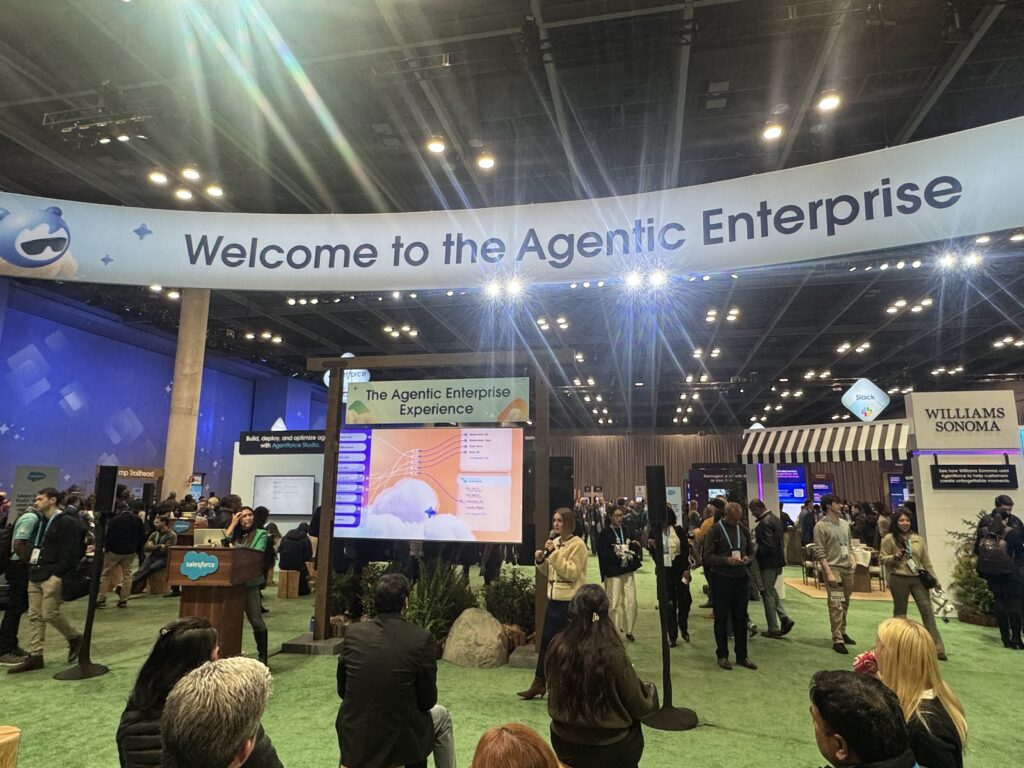
Inside Salesforce’s Agentforce Roundtable: How Did Leaders Really Use AI Agents in 2025?
Executives are shifting their focus from the hype of AI to practical implementation, emphasizing the importance of data activation, hybrid reasoning models, and effective change management to ensure AI agents deliver value in real-world applications.