
EMEA

European Union flag in front of modern glass office buildings symbolizing cloud sovereignty and digital regulation in Europe.
Europe’s Tech Sovereignty Package Puts Cloud, AI, Chips and Open Source Under One Policy Roof
The EU's new European Technological Sovereignty Package aims to reduce reliance on non-EU digital infrastructure by promoting domestic capabilities in semiconductors, cloud, and AI through the Chips Act 2.0, Cloud and AI Development Act, and an emphasis on open source strategies, while also addressing energy constraints and competitiveness in the technology sector.
Microsoft building | SSE
Microsoft Connects Field Service Execution to Project Financials in Dynamics 365
Microsoft has made interoperability between Dynamics 365 Field Service and Project Operations generally available, enabling service organizations to link work orders with project financials for improved visibility and management of costs and revenue during service execution.
Orbital data centers
AI’s Data Center Crunch Sends Compute Ambitions into Orbit
As demand for infrastructure grows due to AI, cloud and space companies are investigating orbital data centers as a solution to terrestrial constraints like land and energy shortages, with initiatives from companies like SpaceX and Google, although challenges remain regarding optimal workloads and economic viability.
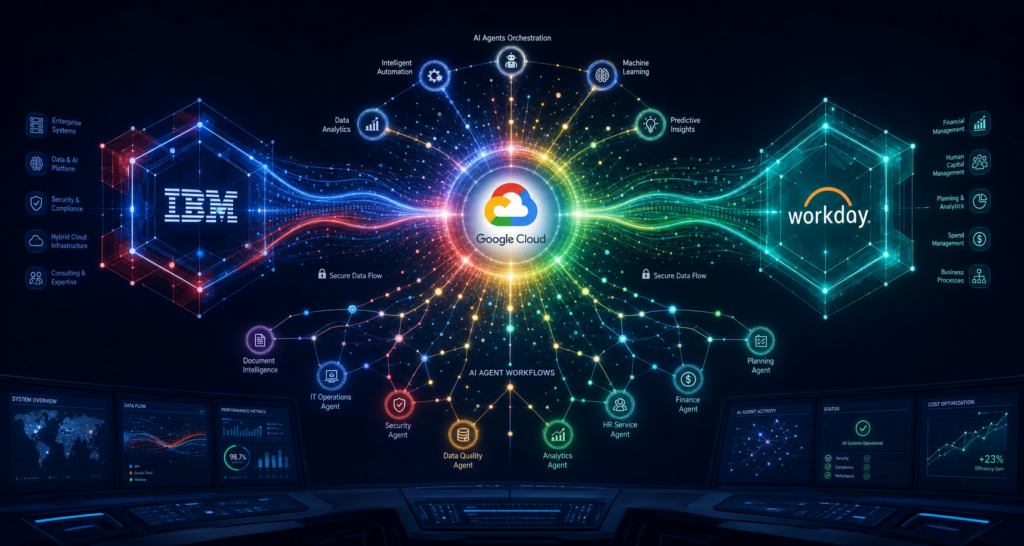
Google Cloud Partnerships: Gemini Enterprise Pushed Deeper into Workday and IBM Delivery
Google Cloud is advancing Gemini Enterprise into enterprise AI through expanded partnerships with Workday and IBM, focusing on integrating HR and finance agents into workflows and enhancing delivery capacities with industry-specific solutions.
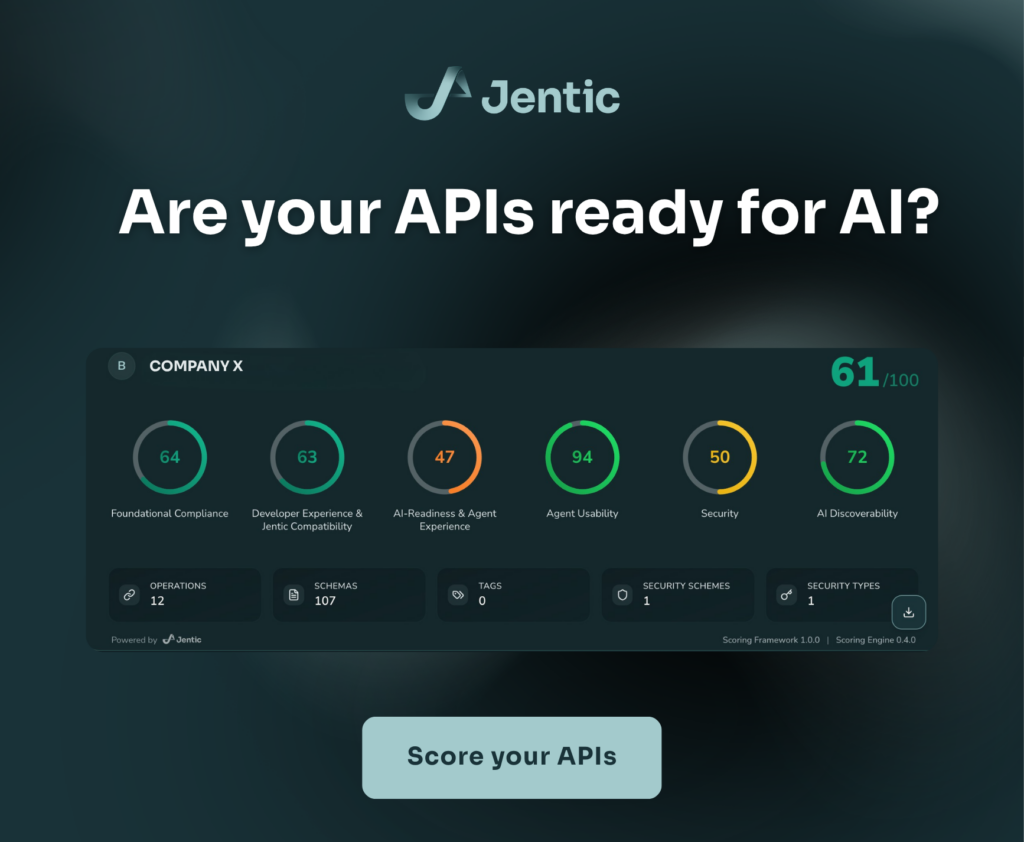
Jentic API scoring tool
AI Infrastructure Company Jentic Wants to Score the APIs AI Agents Will Depend On
Jentic has launched a free API Scoring tool that evaluates the readiness of enterprise APIs for AI integration across six dimensions, emphasizing the distinction between API validity and usability for AI agents, thereby addressing potential operational risks in enterprise systems.
When AI Spend Outpaces Value: A Reality Check for SMBs
As small and midsize businesses increasingly integrate AI into operations, they are facing a shift towards viewing AI as a recurring operational expense rather than a simple software enhancement, prompting the need for clear governance and targeted use cases to ensure measurable value while controlling costs.
General Business Edition
Modern ERP systems aren’t too powerful or too complex for the needs of small and midsize organizations. In fact, with the right cloud ERP, you can simplify and automate many of your processes for greater profitability. Acumatica General Business Edition...
Customer Success: Chery Republic
By implementing Acumatica, Cherry Republic achieved significant, measurable results that powered its expansion. The company sustained fifteen percent year-over-year growth, reduced reporting time by forty percent, and cut manual errors by fifty percent. This efficiency and data accuracy also enhanced...
AI Readiness Evaluation Checklist
AI is more than just a tool, and when combined with the power of a comprehensive modern, cloud-based ERP system, it can serve as your strategic advantage to transform your operations and succeed in this competitive environment.
Build Your Business on a Foundation of Trust Acumatica’s Multi-Layered Security Strategy
Security is not just an IT function. Its impact stretches across leadership, finance, and everyday operations. When cracks appear in your defenses, the consequences echo through the business.
Signs That You Need to Modernize Your Business Software Solution
ERP connects every aspect of your business: finance, sales, field operations, warehouse, projects, service, and leadership. Everyone pulls from the same real-time information, transforming your business into a truly connected community.
AI-Ready Enterprise Data: The Missing Layer Between ERP Transformation and AI
JiVS IMP creates a governed enterprise data layer that unifies operational data, historical records, archived information, and business documents across SAP and non-SAP systems. Organisations can retire legacy applications, maintain compliance, preserve enterprise knowledge, and make trusted enterprise data available...
Beacon.li office workspace with desks, monitors, chairs, and indoor plants, representing enterprise software implementation and support operations.
The Support Insight That Moved Beacon.li’s CEO Toward Enterprise Implementation
Beacon.li CEO Rakesh Vaddadi built a support tool. His customers pushed him upstream. Now he is making the case that implementation failure is a knowledge transfer problem — and that the fix is capturing expert judgment before it walks out the door.
Anthropic Project Glasswing expansion
Anthropic Expands Project Glasswing into Critical Infrastructure
Anthropic has expanded Project Glasswing to 150 additional organizations across more than 15 countries, bringing its AI-powered cyberdefense program into power, water, healthcare, communications, and other critical infrastructure sectors.
software vendor AI acquisitions
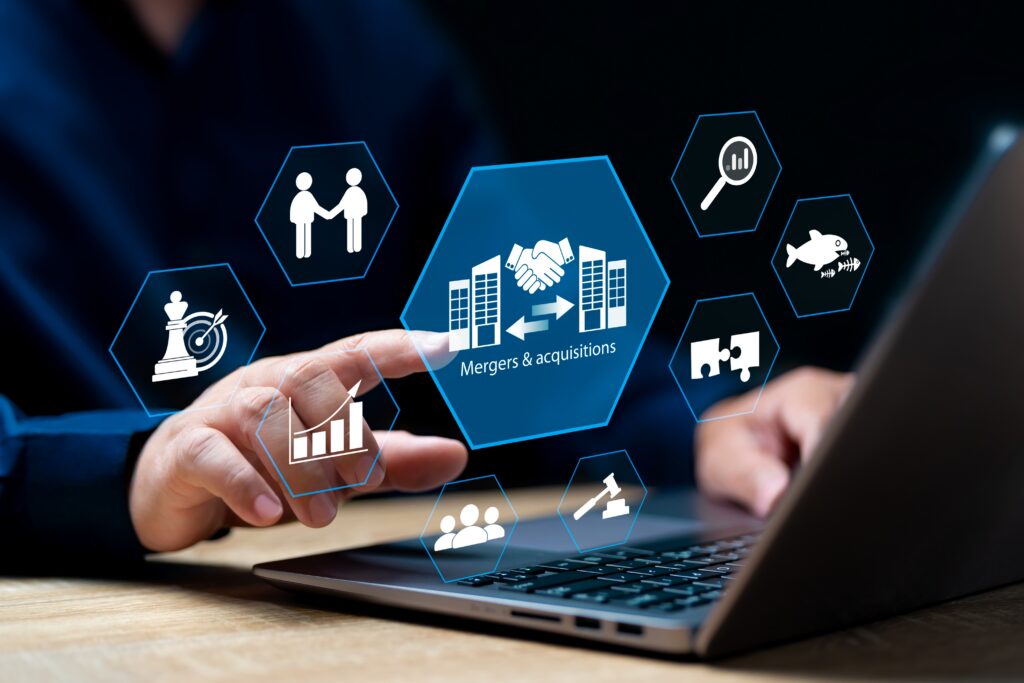
Recent Acquisitions Announcements Show Enterprise Software Vendors Are Buying the AI Execution Layer
Asana, Coupa, Salesforce, and Vertice are acquiring new AI capabilities to enhance their platforms by enabling more comprehensive enterprise workflows and intelligent automation that extends beyond current functionalities, presenting opportunities and risks for ERP leaders as they adapt to a fragmented AI landscape.
public sector ERP modernization AI readiness
ERP Technical Debt Is Blocking Public Sector AI. Here Is How to Address It
With nearly half of UK government technology spend consumed by maintaining legacy systems, DXC Technology's Derek Allison examines why ERP modernization, cloud adoption, and interoperability are now the critical foundations for closing the gap between AI ambition and operational reality in public services.
How SugarAI Helped Country Fare Increase Existing Account Revenue by 40%
SugarAI’s award-winning work with Country Fare shows how connected ERP and CRM insight can help distributors grow existing account revenue, reduce manual analysis, and improve proactive customer engagement.
Future ERP systems will likely undergo a significant transformation, from static and reactive to dynamic, event-driven platforms powered by agentic AI, enabling them to execute workflows and interact autonomously across business processes. Image from Adobe.
Priority Software Bets Midmarket ERP Users Are Ready for AI That Executes
Priority Software enhances its cloud ERP with the release of V26.0, integrating embedded AI features, including an aiERP Companion and specialized agents for finance, sales, and supply chain workflows, aimed at minimizing manual tasks and improving decision-making efficiency.
Databricks and SnowflakDatabricks vs Snowflake enterprise AI data war lakehouse architecturee battle over AI and data
Databricks’ $134B Valuation Puts the Enterprise AI Data War in Focus
Databricks is signaling a pivotal shift in enterprise AI spending towards essential data platforms for effective model utilization, highlighted by its recent $7 billion funding round and competition with Snowflake to manage data for analytics and agentic AI.
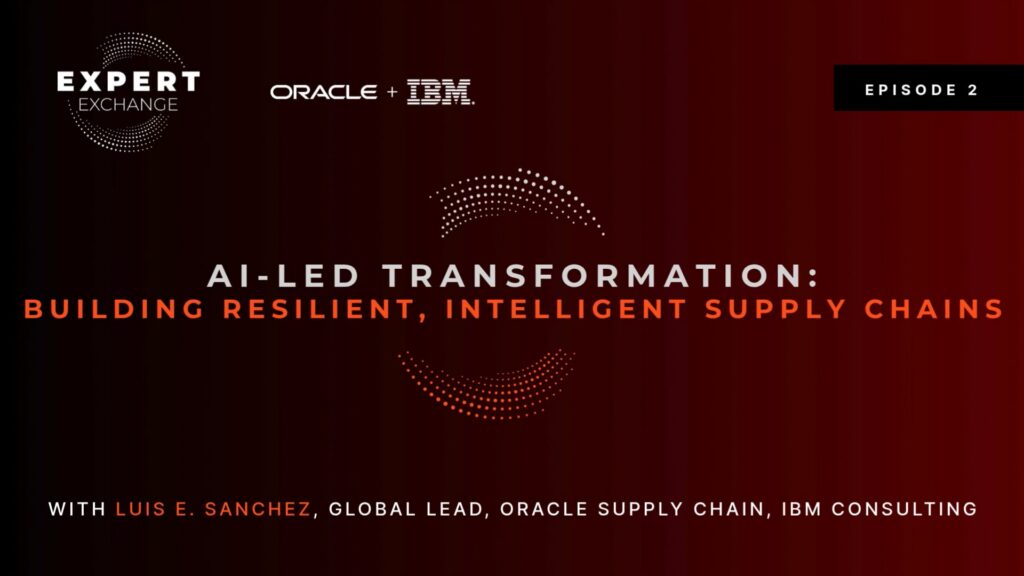
IBM Positioned as Leader in Oracle Supply Chain Services as Enterprises Prioritize Resilience and AI
IBM is recognized as a Leader in the IDC MarketScape for Worldwide Supply Chain Oracle Ecosystem Services (2025–2026) for its comprehensive capabilities and strategic approach, emphasizing the necessity of integrated, end-to-end supply chain transformation amid increasing investment and complexity in the industry.
SAP’s Autonomous Finance Push Turns CFO Attention to Governance
SAP’s autonomous finance push is moving CFO priorities toward governance, controls, and AI-ready financial processes. For SAP customers, the opportunity depends on how well automation, GRC, and finance transformation connect inside ERP operations.
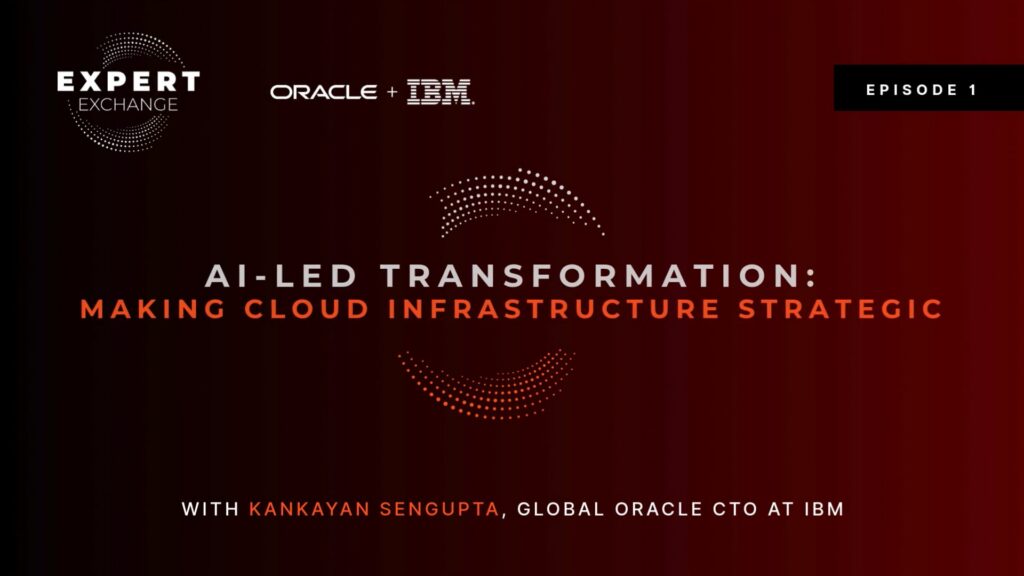
AI-Led Transformation Episode 2
Luis Sanchez, IBM Consulting's global Oracle Supply Chain lead, examines how the COVID-19 pandemic reshaped supply chain thinking — and how AI is now accelerating that strategic shift. He frames supply chain challenges as fundamentally math problems (balancing supply, demand, cost, and speed), and explains how AI's ability to run simulations, surface trade-off recommendations, and compress reaction time is transformative for planners. Drawing on IBM's own complex hardware supply chain as a Client Zero example, Luis advises organizations to resist the urge to boil the ocean: start with one or two high-impact use cases, operationalize them quickly, and use those wins to build internal momentum for a broader three-to-five year AI roadmap.
AI-Led Transformation Episode 1
Kankayan Sengupta from IBM Consulting explains how cloud infrastructure has evolved from a back-end technical concern into a defining element of enterprise AI strategy. He walks through how AI has changed every layer of the infrastructure stack — compute, networking, storage, governance, and cost modeling — and shares IBM's Client Zero results, including an "Ask HR" solution that resolved 94% of employee queries autonomously and reduced HR operational costs by 40%. The conversation covers key decision frameworks around cloud topology, data readiness, and the organizational and operating model changes that cloud adoption demands. Kankayan closes with a forward-looking view spanning intelligence orchestration, AI memory, small language models, multimodal AI, and edge AI — trends that will reshape enterprise infrastructure over the next three to five years.
SAP Executive Interviews
SAP Sapphire Interviews: SAP Executives Say AI Is Pushing ERP Back to the Center of Business Strategy
At SAP Sapphire 2026, Maura Hameroff and David Vallejo emphasized that AI is transforming ERP systems into strategic business frameworks that enhance enterprise decision-making by integrating industry knowledge and addressing fragmented data, thereby enabling companies to efficiently navigate modern challenges in supply chain management and overall business operations.
Private Equity in ERP
Private Equity’s ERP Upgrade Push Has a Controls Problem
Private equity firms are increasingly willing to fund cloud ERP modernization for portfolio companies, recognizing that outdated systems can significantly reduce valuation, thus emphasizing the importance of incorporating internal controls early in the transformation process to mitigate risks and enhance operational efficiency.
Deutsche Telekom German Sovereign AI Contract
SAP and Deutsche Telekom Put Sovereign AI at the Center of German Public Administration
Germany is implementing a public-sector AI strategy through a new SAP and Deutsche Telekom platform designed to deliver secure AI services and infrastructure for federal, state, and municipal administration, marking a significant shift towards shared digital infrastructure and sovereignty in AI governance.
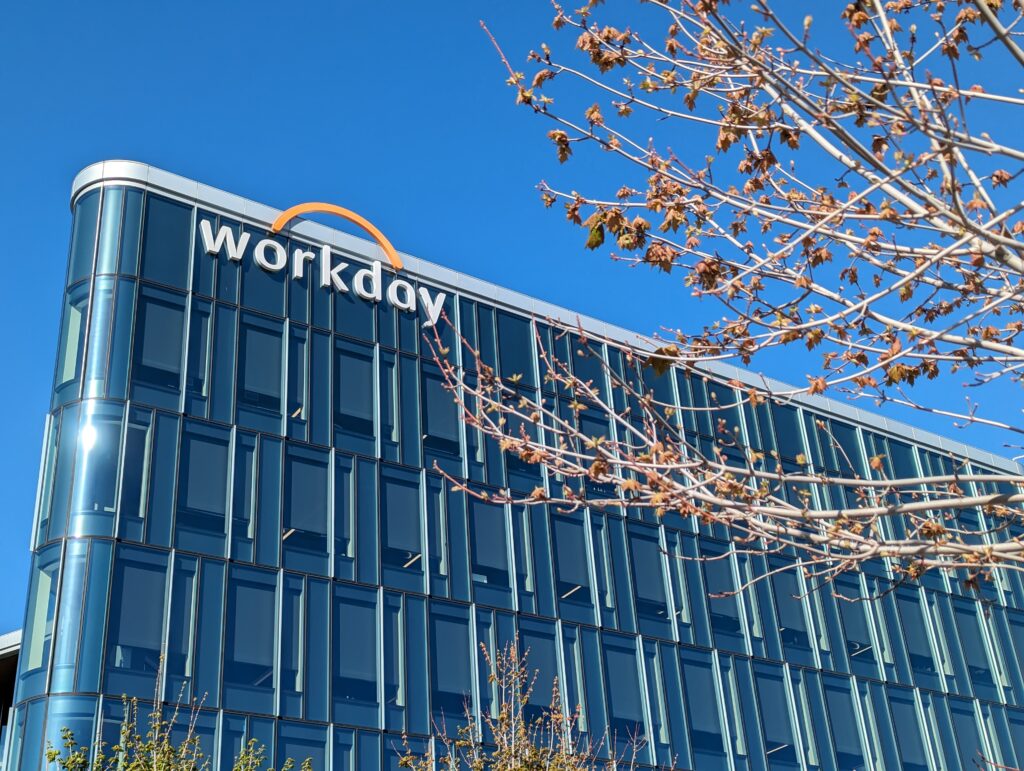
image of Workday office surrounded by blue skies | Compa
Workday’s AI Agent Push Started Showing Up in its Q1 Earnings Numbers
Workday's Q1 fiscal 2027 results demonstrated strong revenue growth and increasing adoption of AI agents, reassuring investors that AI can enhance rather than undermine subscription software economics.
Maximize Payables Efficiency
ERP users increasingly expect payments to be integrated into the workflows and systems they rely on every day. Learn how Priority Payables helps simplify payables within the ERP. Learn more here!
5 Ways Payables Automation Improves Your Organization’s Financial Health
As organizations seek greater efficiency and financial flexibility, expectations around payables are evolving. Explore five ways automation can help modernize the payment experience.
How Manufacturers Solve Accounts Payable Challenges with CPX
Without the proper tools, manufacturers risk delayed production schedules, reduced profitability and strained supplier relationships from late payments. The Priority CPX suite provides a tailored payables solution that streamlines B2B payments for manufacturers, improves cash flow and simplifies accounts payable management.