Cloud ERP

ERP Replace: A Structured Path to Modern ERP
This solution brief presents ERP Replace as a structured way to move from legacy ERP to a modern, cloud-based platform, focusing on speed, risk reduction, and predictable outcomes. It explains how preconfigured baselines, implementation accelerators, and stage-gated governance help organisations manage data, processes, and change more effectively during ERP replacement programmes

ERP Unlocked: De-Risking and Accelerating Transformation
This article explores how ERP leaders can rethink transformation to both de-risk delivery and accelerate time to value, rather than treating ERP as a slow, high-stakes rebuild. It outlines practical ways to use preconfigured industry baselines, data and integration accelerators, and stage-gated governance so decisions are transparent, auditable, and tied directly to business outcomes.
WEINIG Group Unifies Global ERP on Dynamics 365
WEINIG Group, a leading manufacturer in the wood processing industry, partnered with Hitachi Solutions to consolidate a highly decentralised ERP landscape into one global Microsoft Dynamics 365 solution hosted on Azure. By moving from more than 80 separate ERP systems to a unified platform, WEINIG gained shared financial services, better inventory visibility, and common processes and data to support informed decision-making across its international operations
Linde Engineering Sharpens Project Financials with Dynamics 365
Linde Engineering partnered with Hitachi Solutions to deploy Microsoft Dynamics 365 Finance and Project Operations, modernising how it manages project costs, billing, and revenue. By moving to a cloud-based, project-focused ERP, the engineering business gains clearer visibility into profitability across complex plant projects and a more controlled, consistent approach to financial management.
END Clothing Elevates Omnichannel Retail with Dynamics 365
END Clothing partnered with Hitachi Solutions to replace legacy retail systems with a modern Microsoft Dynamics 365 platform spanning commerce, finance, and supply chain. The unified cloud solution supports omnichannel experiences across ecommerce and stores, improves stock visibility, and gives END faster, more accurate data to guide growth in luxury fashion retail.
Plastic Energy’s Dynamics 365 Finance Transformation
Plastic Energy, a leader in advanced plastic recycling, partnered with Hitachi Solutions to implement Microsoft Dynamics 365 Finance as a cloud-based platform to support rapid global growth. Using Hitachi’s Essentials for Finance accelerator, the team delivered a multinational rollout across ten countries in nine months, enabling standardised processes, faster reporting, and better financial insight for its circular-economy operations.
Enabling The Royal Mint’s Sustainable Precious Metals Programme with Dynamics 365
The Royal Mint partnered with Hitachi Solutions to design and implement a new cloud-based Microsoft Dynamics 365 Finance and Supply Chain Management platform to power its world-first Sustainable Precious Metals programme. The ERP solution tracks e-waste from intake through processing to finished products, supporting circular economy goals while improving agility, data management, and security.
Rotork Transforms Global ERP and Customer Operations with Microsoft Dynamics 365
Hitachi Solutions has been recognised as the 2025 Microsoft Dynamics 365 Finance Partner of the Year, highlighting its leadership in delivering innovative ERP and finance transformations on the Microsoft cloud. This recognition showcases the company’s proven expertise in helping customers modernise financial operations, optimise business performance, and realise greater value from Dynamics 365 Finance.
Nokia’s ERP Overhaul Shows Why AI Ambitions Are Moving to the Hyperscaler Layer
Nokia has signed a multi-year RISE with SAP agreement to consolidate multiple ERP systems into a unified SAP S/4HANA landscape hosted on Microsoft Azure, using clean-core principles and SAP's transformation methodology to prepare its global business backbone for embedded AI, operational resilience, and continuous cloud innovation.
Microsoft Dynamics 365 Business Central
Ontario Health Centre Shows Why Nonprofits Are Outgrowing Legacy ERP
An Ontario Community Health Centre migrated from Sage 300 to Microsoft Dynamics 365 Business Central with Dynamics Square Canada, automating vendor invoice capture and employee expense management to free a lean two-person finance team from manual workarounds and improve financial visibility across locations.
Acumatica’s Ratings Sweep: What Midmarket ERP Buyers Are Actually Rewarding
Acumatica has been recognized in seven industry reports for its exceptional usability, customer satisfaction, and product fit for small- and medium-sized businesses, notably achieving top rankings in Nucleus Research, G2, and TrustRadius, emphasizing the growing demand for ERP systems that combine modernity with user-friendliness.
SAP NS2 defense
SAP NS2’s FedRAMP+ IL5 Authorization Opens a New Cloud ERP Path for Defense Programs
The recent FedRAMP+ IL5 authorization by SAP NS2 enables US Department of War organizations to deploy SAP S/4HANA Cloud and SAP BTP in a secure cloud environment, simplifying compliance for defense ERP modernization and addressing the complexities of operating within stringent regulatory frameworks.
Accelerating Oracle modernization with Tricentis solutions
Victrola Cuts P&L Reporting Time by 94% After SAP Cloud ERP Migration
Victrola has successfully transitioned from SAP ECC to SAP Cloud ERP, reducing its profit-and-loss reporting time from four hours to 10-15 minutes and eliminating over 250 hours of finance-related work, while aligning its operations with new market demands and modernizing its data management.
Private Equity in ERP
Private Equity’s ERP Upgrade Push Has a Controls Problem
Private equity firms are increasingly willing to fund cloud ERP modernization for portfolio companies, recognizing that outdated systems can significantly reduce valuation, thus emphasizing the importance of incorporating internal controls early in the transformation process to mitigate risks and enhance operational efficiency.
Marine Construction IFS
Rauma Marine Constructions Selects IFS Cloud to Modernize Shipbuilding Operations, Reduce Build Times
Finnish naval shipbuilder Rauma Marine Constructions (RMC) has selected IFS Cloud to modernize its shipbuilding ERP infrastructure, replacing fragmented systems with a unified platform spanning project management, procurement, production, logistics, and financial control. The IFS Cloud implementation targets real-time operational visibility and reduced vessel build times across RMC's complex, multiyear shipbuilding programs.
SaaS ERP Market Accelerates as AI and Cloud Reshape Enterprise Operations
The global SaaS-based ERP market is set for rapid growth, projected to reach $281.58 billion by 2034, driven by cloud adoption and AI integration, reshaping procurement and competitive strategies in response to increasing expectations for real-time intelligence and industry-specific solutions.
AETC Implements Rootstock Cloud ERP to Strengthen Planning, Growth
Applied Energy Technology Corp. has successfully implemented Rootstock Cloud ERP to modernize its manufacturing processes for small explosive devices, enhancing operational efficiency, compliance and scalability.
ERP Today 2025 Awards: Operational Innovation Expands Beyond Traditional Boundaries
Inetum won the Operational Innovation of the Year Award for its successful SAP S/4HANA Public Cloud implementation with Erri Berri, enhancing efficiency and agility, while Solvoz secured the runner-up position for its Mawared MENA platform, which digitizes procurement processes in humanitarian operations.
SAP earnings results showing cloud revenue growth, current cloud backlog, and Business AI strategy
SAP Q1 Earnings Shows Cloud Strength, but Can the AI and Backlog Momentum Hold?
SAP delivered a Q1 earnings beat, but the more important story was beneath the headline numbers. The company showed strong cloud growth and expanding backlog, while also signaling likely deceleration ahead and a gradual shift toward Business AI as a consumption-based revenue model.
Construction ERP cloud adoption
Construction ERP Survey Shows Demand for Cloud, but the Gains Remain Uneven
Construction firms emphasize the need for modern ERP systems with real-time data, mobile access, and integration, yet adoption rates vary, as many still experience operational challenges and unclear cloud migration progress despite a majority already using cloud-based solutions.
SAP agentic AI manufacturing Hannover Messe 2026
Infor Expands Manufacturing Strategy with Deloitte MES Alliance and AWS AI Push
Infor expands its manufacturing strategy through a Deloitte MES alliance and AWS AI agents, connecting shop floor execution with ERP and automation at scale.
Automation, Cloud Redrawing ERP Market Boundaries
Enterprise resource planning is evolving into an intelligent, automated framework driven by cloud technology and AI, with projected software revenue reaching $157 billion by 2033, emphasizing the critical role of ERP in automating workflows and enhancing organizational responsiveness to disruptions.
ERP cloud lifecycle management dashboard showing integration complexity and AI-driven automation
Opkey Report Signals ‘Cloud Velocity Crisis’ as ERP Complexity, Costs, AI Expectations Collide
A new report from Opkey finds enterprise ERP teams struggling to keep pace with cloud release cycles, rising integration costs, and manual lifecycle processes, with agentic AI emerging as a key response.
Dynamics 365 Gains Momentum: Franklin Sports, Zwilling Highlight ERP Standardization and Finance Automation
Microsoft Dynamics 365 is experiencing significant growth as organizations move towards ERP standardization and process optimization, exemplified by Franklin Sports' shift to unify global operations and Zwilling Beauty Group's transition from system consolidation to process automation.
Oracle Database@AWS Reaches 12 Regions, Broadening Multicloud Database Footprint
Oracle Database@AWS has expanded to 12 regions across North America, Europe, and Asia Pacific, increasing deployment flexibility and high-availability support for enterprises seeking to migrate on-premises applications while addressing locality and regulatory requirements.
Inside the Global Data Center Investment Surge and Why It Matters for ERP Leaders
Recent massive investments in data centers by major tech companies signify a transformative buildout of global computing capacity, driven by the demands of enterprise AI, geographic strategic importance, and energy constraints, reshaping how cloud and AI services will be delivered in the future.
Lift-and-Shift ERP Strategies NTT DATA and Microsoft
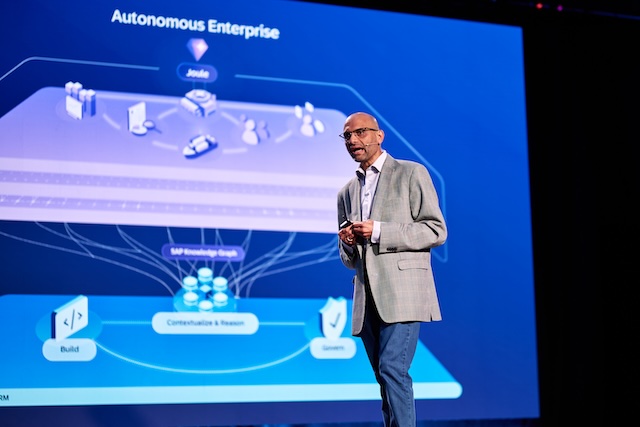
Demystifying SAP Business Suite and Cloud ERP with SAP Transformation Leader Anurag Barua
As SAP customers navigate the challenges of transformation deadlines, increasing cloud options, and rapid AI advancements, Anurag Barua emphasizes a structured approach to modernize with clarity amidst complexity, presenting vital insights at SAPinsider 2026 on utilizing RISE and GROW strategies for successful migration to SAP Cloud ERP.
Lift-and-Shift ERP Strategies NTT DATA and Microsoft
How to Modernize Cloud ERP Without Breaking What Already Works
Syspro advocates for a dual ERP deployment model that allows manufacturers to modernize with cloud scalability while retaining existing workflows and systems, thereby mitigating operational risks and facilitating smoother transitions to intelligent manufacturing.
Cloud Data Strategy Moves From Project to Everyday Practice for ERP Leaders
The shift to cloud data management for ERP leaders is a fundamental transformation in operations and governance, requiring a continuous approach to security, cost management and data integration to harness innovation while mitigating risks.
Oracle Database
Oracle March Update Embeds Smarter AI Agents Into Analytics Cloud
Oracle's March 2026 update for Oracle Analytics Cloud introduces AI Data Agents to enhance decision-making by integrating enterprise data with user-friendly analytics, reducing the time from data inquiry to actionable insights and improving the consistency of KPIs across organizations.