Cloud Platform and Technology

Enterprise Resource Planning (ERP) integrates smoothly with cloud platforms, representing a pragmatic evolution in technology. The collaboration between ERP and cloud technology offers practical advantages, including scalability, accessibility, and agility for businesses. This combination enables real-time collaboration, data analytics, and improved security. Embracing the cloud allows ERP systems to adapt dynamically to changing business needs. Cloud-based ERP solutions offer efficient resource utilization, cost-effectiveness, and swift deployment, contributing to operational efficiency. In the current landscape of digital transformation, the integration of ERP with cloud technology serves as a practical strategy, ensuring businesses remain adaptable, competitive, and technologically proficient.

Cloud ERP Market to Reach $128B by 2033 as Digital Transformation Accelerates
The global cloud ERP market is projected to grow from $50.3 billion in 2024 to $128.3 billion by 2033, driven by demand for scalability and real-time data access.
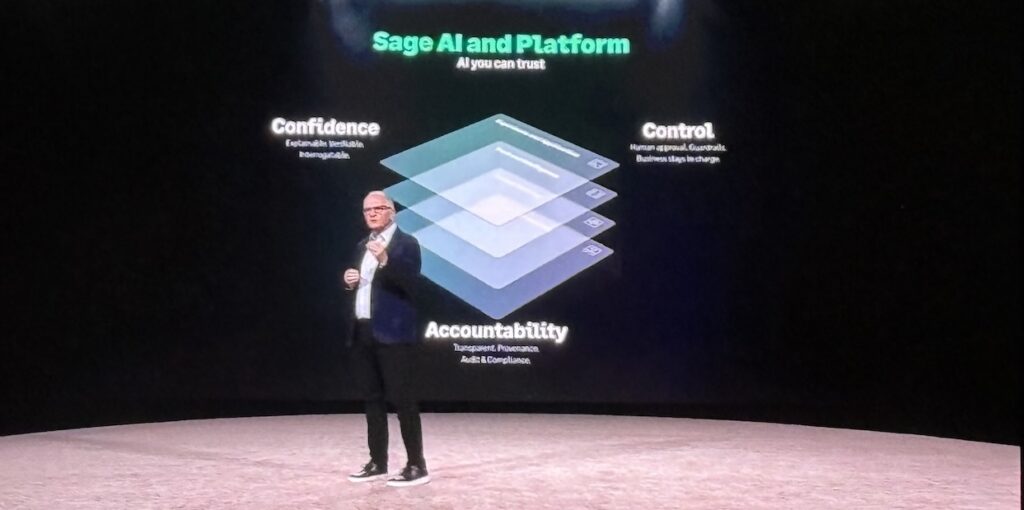
Acumatica Summit Highlighting AI, Low-Code Solutions for ERP Automation
Acumatica's Summit 2026 highlights their AI and low-code platform capabilities that enables business users to create customized AI workflows without developer support, enhancing workflow automation and practical AI applications.
Understanding AI’s Growing Role in ERP, Enterprise Software
Rootstock's acquisition of Praxis Solutions highlights the need for manufacturers to prioritize business processes and outcomes in AI integration for ERP systems, as many companies struggle with digital transformation challenges.
SAP Positions SAP Cloud ERP, Embedded AI to Shape Africa’s Next Enterprise Phase 
SAP is enhancing cloud and AI adoption in Africa to help organizations modernize operations and improve resilience, positioning cloud platforms and business networks as essential foundations for competitive edge, emphasizing the integration of AI for smarter enterprise processes.
Snowflake Acquires Observe to Integrate AI-Powered Observability into Data Cloud
Snowflake's acquisition of Observe enhances its AI capabilities in observability, allowing enterprises to manage telemetry data more efficiently and cost-effectively, enabling automated troubleshooting and operational resilience.
SAP, Fresenius Team Up to Drive AI-Enabled Digital Healthcare Transformation in Europe
SAP SE and Fresenius have launched a strategic partnership aimed at creating an AI-powered, interoperable healthcare ecosystem in Europe to enhance digital healthcare delivery by integrating SAP’s technologies with Fresenius’s healthcare expertise for improved data management and compliance.
Microsoft Sharpens Dynamics 365 ERP for Asset-as-a-Service Rental Models
Microsoft is evolving ERP through Dynamics 365 to actively manage rental operations and address fragmentation in asset utilization by introducing rental-specific capabilities that enhance workflows, financial clarity, and customer experiences in a cloud-based, AI-extended ecosystem.
How ERP, AI Can Improve Logistics and Operations Efficiency
Artificial intelligence is transforming logistics by enabling continuous optimization through integrated ERP systems, facilitating improved decision-making, reducing operational costs, and enhancing delivery performance.
Syngenta Deploys SAP Cloud ERP Private, SAP Business AI to Support Data-Driven Agriculture 
Syngenta has partnered with SAP to integrate AI-driven capabilities into its operations, aiming to enhance decision-making, automate workflows, and support sustainable agriculture through advanced data analytics and ERP modernization.
Why Small Plants Need Enterprise-Level Capabilities Without Enterprise Overhead
Small plants are increasingly adopting cloud ERP solutions to gain visibility and control without the need for extensive IT resources, shifting from fragmented systems to integrated operations that enhance efficiency.
Japan Cloud ERP Market Growth Expected as Digital Transformation Accelerates
Japan's cloud ERP market is set for substantial growth at a CAGR of 20.1% through 2032, fueled by government digital transformation initiatives and AI solutions, with major vendors driving deployment across manufacturing and retail sectors.
Acumatica Names Pollock as Chief Product Officer to Lead Cloud ERP Innovation
Acumatica has appointed Jon Pollock as Chief Product Officer to lead product management and user experience, focusing on advancing the company's strategy amidst growing demand for scalable cloud ERP solutions in mid-market businesses.
Brazil Probes Microsoft Cloud Licensing as UK Antitrust Findings Ripple into Latin America
Brazil's competition authority, CADE, has launched an antitrust investigation into Microsoft's cloud and software licensing practices, drawing from UK findings that suggest these practices may harm competition for local customers.
Front of Brookfield office in Toronto, Canada.
Brookfield Launches Radiant to Provide AI Infrastructure for Enterprises
Brookfield launches Radiant, a new subsidiary offering high-performance AI compute infrastructure to enterprises and developers. Leveraging renewable energy, regional data centers, and integrated land, power, and compute, Radiant aims to provide predictable, low-carbon AI workloads.
Microsoft logo on a black front door | Cognizant and Microsoft expand partnership
i-Genie.ai Joins Microsoft’s Pegasus Program to Accelerate Innovation
i-Genie.ai, an AI consumer insights platform, has joined the exclusive Microsoft for Startups Pegasus Program to enhance its growth with advanced technology and mentorship.
The Great Cloud Recalculation Oracle+IBM
Epicor Sets Final On-Premises Release Dates as Cloud Strategy Accelerates
Epicor has announced the timeline for the final on-premises feature releases of its ERP platforms, urging customers to evaluate cloud migration as it transitions towards AI-powered capabilities, with support phases outlined and potential savings highlighted.
The Great Cloud Recalculation Oracle+IBM
Oracle NetSuite Expands SuiteCloud Platform with New AI Tools for Developers, Partners
Oracle NetSuite has enhanced its SuiteCloud platform with new AI capabilities that enable developers to create intelligent applications through standardized connectors and automated tools, aiming for a more integrated and efficient ERP experience.
Five ERP Strategic Implications for Operations Leaders in 2026
As organizations face a pivotal shift in ERP to autonomous action-driven frameworks, leaders must prioritize rapid modernization, governance transparency, and adaptability to remain competitive.
M&A
Enterprise Software Faces AI-Driven Disruption as Development Productivity Gains Fail to Materialize
In 2026, the enterprise software industry will undergo significant disruption due to AI, leading to increased merger and acquisition activity among mid-market companies, while organizations struggle to convert productivity gains from AI into strategic business value.
The coast of Da Nang with the city against the beach and ocean
Vietnam Draws More Than $7 Billion in AI Data Center Investments, Reshaping Enterprise Infrastructure
Create Capital Vietnam and Haimaker.ai have unveiled a $1 billion joint venture to build a nationwide AI-focused data center network in Vietnam, part of a broader surge of more than $7 billion in AI infrastructure investment driven by policy incentives and rising enterprise demand.
ERP AI
Overcoming AI Adoption Challenges in Manufacturing and Supply Chain
AI is rapidly becoming essential in manufacturing and supply chain management, but uneven deployment due to barriers like data quality and user adoption persists, while vendors are focusing on domain-specific AI to integrate predictive insights directly into core processes.
Engineering the Future of Tax with OCI and Vertex
Black & Veatch modernized its tax infrastructure by migrating to Oracle Cloud ERP and Vertex solutions to enhance global compliance, reduce operational risks, and streamline processes, demonstrating the importance of integrated cloud-native tax services for supporting complex multi-jurisdictional operations.
Shedding Data Baggage for a Leaner SAP Cloud
Migrating to SAP Cloud ERP Private promises streamlined processes and agility, but organizations must first conduct a thorough assessment of their data to avoid complicating the transition with unnecessary legacy information, which can drive up costs and hinder performance.
The Cloud Velocity Trap for Testing
CIOs face significant challenges during ERP migrations due to inadequate testing strategies and a rush towards AI solutions, highlighting the necessity for continuous testing and thorough documentation to ensure successful system integration.
Oracle AI World’s IBM Sessions: What Enterprises Must Build Before AI Can Deliver
At Oracle AI World, IBM emphasized that successful AI adoption in enterprises relies not on flashy models but on robust foundational preparations, governance, and aligned business processes, showcasing that scalable AI implementations require clean data and integrated workflows.
GCC emblem with digital code background
How Gulf States Are Approaching Digital Sovereignty
Gulf states are building digital sovereignty frameworks to strengthen infrastructure and move from importing to operating cloud and AI services locally. National regulations, major investments, and regional collaboration support this transformation.
How the digital sovereignty agenda in the EU reshapes cybersecurity
The EU's push for digital sovereignty is transforming cybersecurity into a critical, integrated discipline, prompting businesses to adopt stringent regulations, lifecycle-embedded practices, and proactive risk management.