News

service-centric ERP
Why Unit4 Keeps Showing Up on the ERP Shortlist
Unit4’s latest ERPx moves show why the vendor keeps appearing in shortlists for service-centric organizations. Success4U, DataHub, and FIX sharpen its pitch around deployment predictability, governed analytics, and ERP built for people- and project-driven operations.
AI Made Code Faster—Tricentis Says Quality Teams Are Falling Behind
Tricentis’ 2026 Quality Transformation Report shows that AI has accelerated software creation faster than many organizations can validate it, turning quality engineering into a boardroom issue for ERP and enterprise application leaders.
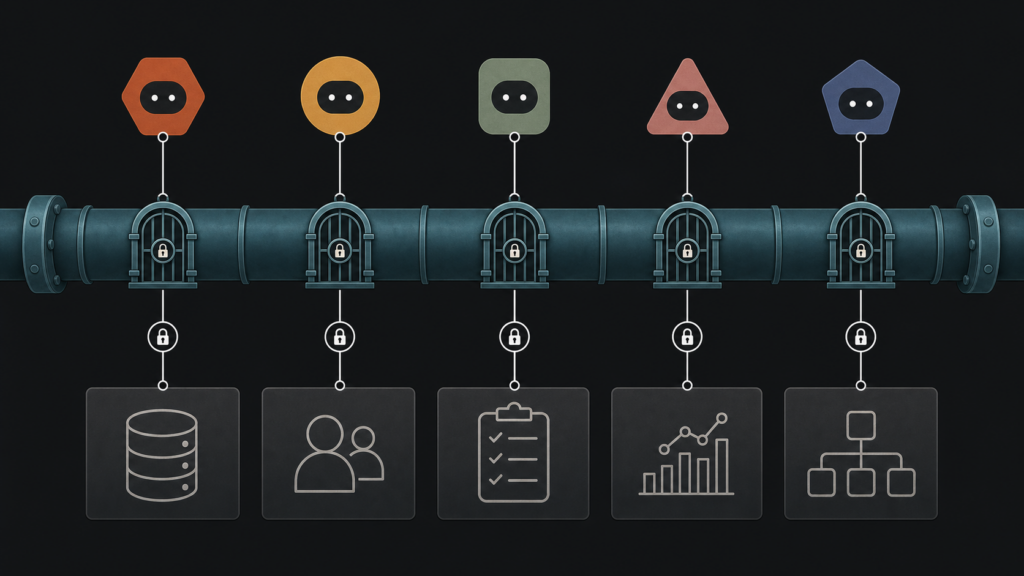
Gatekeeping Enterprise AI? Workday Redraws the Build-vs-Buy Line for AI Agents
Workday’s DevCon 2026 announcements show how enterprise AI agent strategy is moving beyond build-versus-buy and toward governed access to HR, finance, business process, and audit controls.
SAP AI skills
ERP’s AI Skills Gap Is Becoming the Real Transformation Bottleneck
ERP vendors like SAP are shipping AI features faster than teams can absorb them. The SAP AI skills gap—with 91% of organizations using AI but only 17% embedding it in core workflows—is now the defining bottleneck to real ERP transformation.
AWS agentic AI SAP ERP exceptions - MCP agentic ERP infrastructure with AgentCore
MCP Is Becoming the Plumbing of Agentic ERP—ERP Leaders Need to Understand It
MCP is emerging as the protocol layer that lets AI agents discover and call enterprise tools, data sources, and workflows. For ERP leaders, the opportunity is lower integration friction. The risk is that access control, auditability, and cost discipline move closer to the agent boundary.
Anthropic Claude ban lift AI access
Anthropic’s Ban Lift and Claude Science Launch Test the New Rules of AI Access
The Trump administration has lifted restrictions on Anthropic's Claude Fable 5 and Mythos 5 models, ending a weekslong export ban tied to cybersecurity concerns—though Mythos 5 remains restricted to approved US organizations. At the same time, Anthropic launched Claude Science, a domain-specific AI research workbench targeting life sciences and pharmaceutical users, signaling a broader shift toward specialized, governed enterprise AI access.
Nokia’s ERP Overhaul Shows Why AI Ambitions Are Moving to the Hyperscaler Layer
Nokia has signed a multi-year RISE with SAP agreement to consolidate multiple ERP systems into a unified SAP S/4HANA landscape hosted on Microsoft Azure, using clean-core principles and SAP's transformation methodology to prepare its global business backbone for embedded AI, operational resilience, and continuous cloud innovation.
AI process mining Enterprise AI context layer
Celonis Acquires Ikigai, Launches Context Model to Give AI Agents Operational Intelligence
Celonis’ Context Model and Ikigai Labs acquisition position process intelligence as a context layer for enterprise AI agents that need to understand real workflows before they recommend or act.
SAP Announced Product Leadership Reorganizations Around AI and the Autonomous Suite
SAP is reorganizing product and engineering leadership around the SAP Business AI Platform and Autonomous Suite—a structural shift that puts AI delivery accountability at the center of its cloud ERP roadmap and signals the end of siloed product development.
IFS Is Building the Operations Layer Around Industrial AI
IFS’s Softeon acquisition is only one part of a broader push to connect warehouse execution, logistics optimization, MRO, asset management, and ERP around Industrial AI.
Why Food ERP Still Needs More Than Generic Dynamics 365
Aptean’s food and beverage ERP footprint on Microsoft Dynamics 365 shows why food, beverage, fresh, and agribusiness companies still need vertical ERP logic for traceability, quality, production, pricing, and compliance.
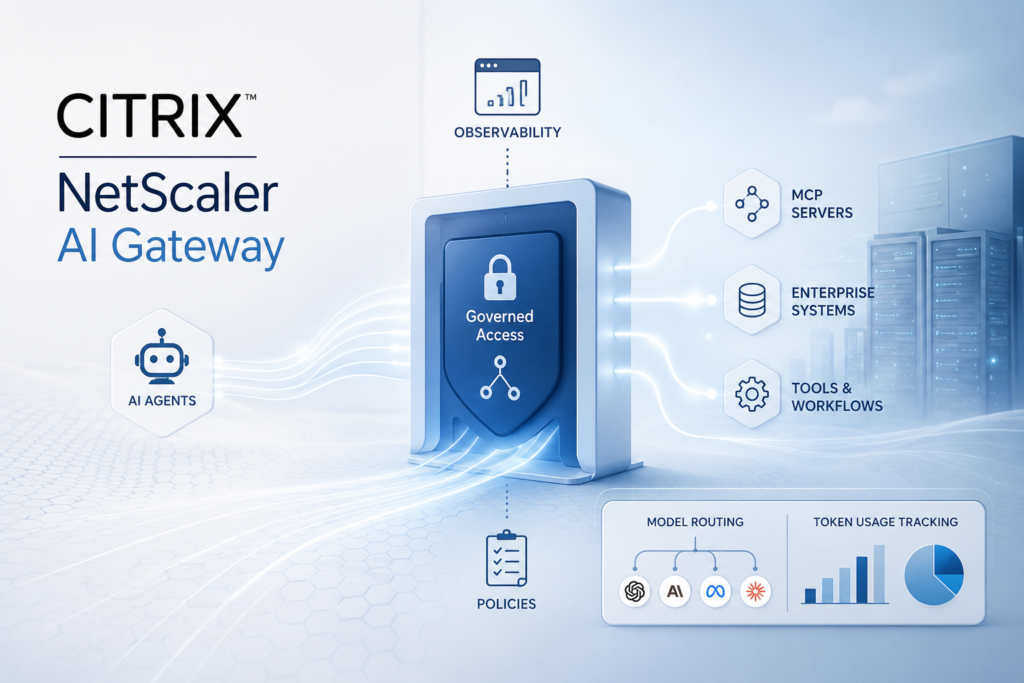
Why Finance AI Needs Guardrails: Sage Intacct’s Next Test Is Data Control
Sage Intacct 2026 R2 moves the connected finance story into data-control territory, with AI Gateway, intelligent 3-way matching, and construction workflows showing why finance AI needs guardrails before automation can scale.
GenAI in ERP Needs a Smaller Starting Point and a Harder Business Proposition
Enterprise leaders, while ambitious in their generative AI strategies, face a significant gap between their AI aspirations and actual production adoption, as illustrated by Mukesh Kumar's insights on targeted automation in ERP systems addressing specific, high-impact problems.
ServiceNow and Accenture
ServiceNow and Accenture Are Going After Cyber Risk’s Legacy Platform Problem
ServiceNow and Accenture have launched a joint AI-powered offering to help enterprises migrate from legacy cybersecurity and risk platforms to integrated managed services on the ServiceNow AI Platform, combining agentic AI with risk management, GRC, third-party risk, and OT security monitoring.
SAP procurement automation
SAP Procurement Agents Are Reaching the Front Door of Spend Management
SAP's Joule AI capabilities, set for general availability across Ariba and Fieldglass in June 2026, aim to enhance procurement processes by automating intake, contract creation, and workforce operations while urging spend teams to ensure proper governance and integration before widespread adoption.
Secure enterprise corridor representing Microsoft Power Platform governance and AI agent access
Microsoft Power Platform Narrows the Access Gap for ERP Agents
Microsoft's June 2026 Power Platform updates introduce Advanced Connector Policies that govern AI agent access to SAP systems at the action and MCP server level. ERP leaders must understand what the new controls mean for low-code automation, connector visibility, and enterprise AI compliance.
Can AI Break the ERP Change-Order Cycle? Tessera Labs Just Raised $60M to Try
Tessera Labs’ $60 million funding round puts a spotlight on AI-native ERP modernization, raising a new question for CIOs: how much of the migration, data, code, and documentation work that once required large consulting teams can now be automated without weakening governance?
Why AI Ambitions Still Depend on IT Modernization: METRO’s Migration Program
International food wholesaler METRO AG has completed a multi-year data center migration program with Wipro, moving legacy IT operations into a modern multi-cloud ecosystem to enable enterprise-scale AI adoption, automation, and cloud-first digital transformation.
IHH Healthcare System Standardization Shows the Hard Part of a Multi-Country ERP Transformation
IHH Healthcare has selected Infosys for a multi-year, enterprise-wide ERP transformation using the Infosys Topaz AI-first platform to standardize business processes across Hong Kong, Malaysia, and Singapore, covering finance, procurement, supply chain, HCM, and enterprise performance management.
Microsoft Dynamics 365 Business Central
Ontario Health Centre Shows Why Nonprofits Are Outgrowing Legacy ERP
An Ontario Community Health Centre migrated from Sage 300 to Microsoft Dynamics 365 Business Central with Dynamics Square Canada, automating vendor invoice capture and employee expense management to free a lean two-person finance team from manual workarounds and improve financial visibility across locations.
Oracle and AWS Cloud Database
Oracle Takes On the Federal Government’s HR Patchwork
The US Office of Personnel Management (OPM) has awarded Oracle a $395.8 million Federal HRIT Modernization contract to deliver the federal government's first government-wide HR platform using Oracle Fusion Cloud HCM, designed to replace more than 100 separate agency systems and consolidate workforce management for 2 million civilian employees.
Who Governs AI Agents When Workflows Cross Platforms?
As AI agents expand across ERP, cloud, and workflow platforms, enterprise leaders face a critical governance challenge: who owns accountability when data, models, and audit trails are fragmented across multiple systems. This analysis explores the control plane problem and what ERP teams must do to prevent agent sprawl.
ERP Migration
Can Headless ERP Change the Migration Math?
Headless ERP is emerging as a third option for organizations facing SAP ECC end-of-life deadlines: rather than migrating the core or abandoning it, enterprises can layer an AI-driven agentic interface over APIs while keeping the legacy system running. This analysis examines the architecture, risks, and real-world implications for CIOs weighing the headless ERP migration equation.
New Relic Prepares Observability for AI Agents That Skip the Dashboard
New Relic has introduced Autopilot and Ground Truth to shift observability toward an AI-agent-first operating model. Autopilot automates SRE triage and remediation using runbooks and context, while Ground Truth exposes governed telemetry to external AI agents via open standards. Both products reflect a broader industry move toward headless, agentic operations where AI systems, not human engineers, handle first-response tasks.
Intapp Says Professional Firms Solved the Wrong AI Problem
Intapp’s Firm AI blueprint reframes the professional-services AI debate around the business of the firm, arguing that individual productivity tools will not change firm economics unless AI reaches intake, conflicts, staffing, pricing, relationships, compliance, and institutional judgment.
SAP AI partnerships
SAP’s AI Partnership Sprint Shows What Its Autonomous Enterprise Still Has to Prove
SAP’s recent partnerships with Google Cloud, n8n, Anthropic, AWS, Cohere, Mistral, and Parloa show how the company is turning its Autonomous Enterprise strategy into a modular AI architecture built around data access, orchestration, model choice, and governed business context.
Trintech AI Agents Are Targeting the Manual Work Behind the Financial Close
Trintech has launched two new AI agents designed to eliminate manual investigative work from the financial close process. The Flux Agent identifies material account fluctuations during the close, while the Variance Analysis Agent automates post-close budget-to-actual analysis. Both tools operate within governed financial workflows, keeping outputs connected to audit trails and human review controls.
Sage X3 Hopes to Help Manufacturers See Trouble Before It Hits
Sage announced enhancements to Sage X3, aimed at helping manufacturers and distributors improve operational visibility, reduce manual tasks, and expedite decision-making through embedded AI and operational intelligence.
Manufacturing
Why Manufacturing AI Succeeds or Fails at the ERP Layer
Manufacturers' ambitions for AI are hampered by the lack of a coherent operational context within their ERP systems, as successful AI implementation requires reliable data governance and structured decision-making that connects insights to actionable outcomes.
Real-time ERP data pipeline for enterprise AI agents - data lakehouse architecture
Why ERP Leaders Need to Understand Data Lakehouses Before Scaling AI Agents
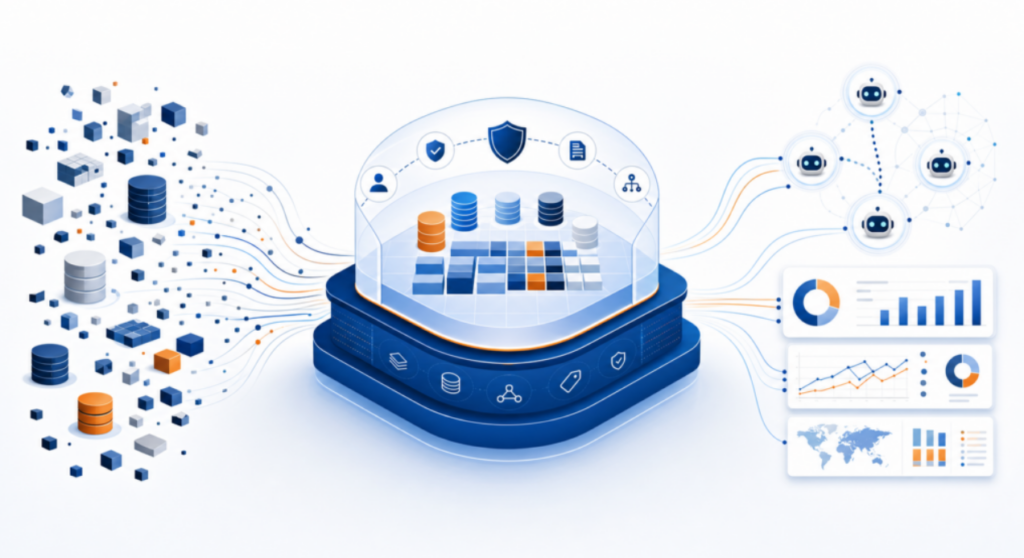
Data lakehouses are emerging as the essential infrastructure layer for enterprise AI — providing ERP leaders with a governed, cross-system data foundation where AI agents can operate safely, semantically, and at scale. This analysis explains what a data lakehouse is, why it matters for agentic AI, and what ERP leaders must address before scaling autonomous AI across critical business workflows.