ERP Today has established itself as THE independent voice of the enterprise technology sector through its use of dynamic journalism, creativity and purpose.
SubscribeData and Data Management

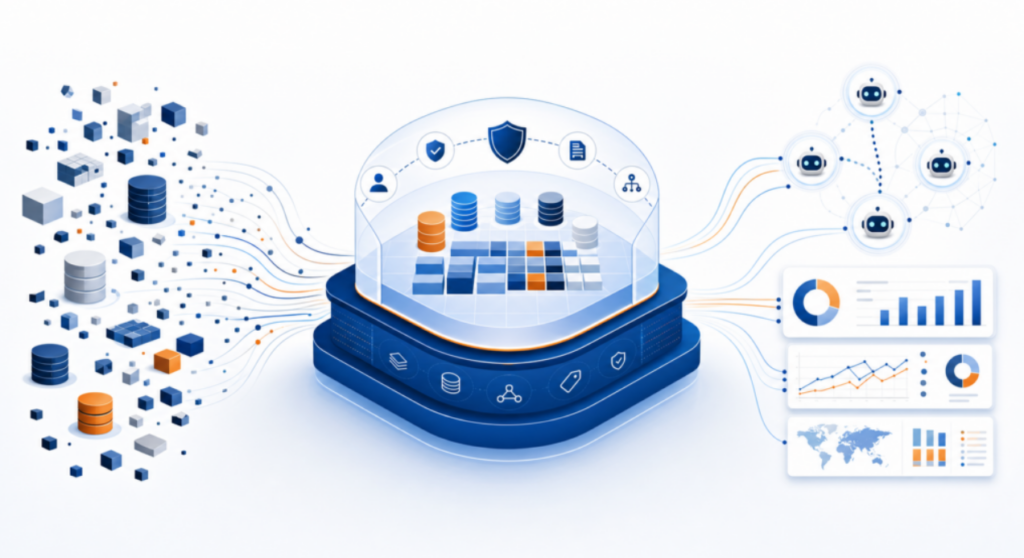
Efficient data management, encompassing the systematic collection, organization, and retrieval of data, is fundamental for enhancing productivity, efficiency, and informed decision-making. Regardless of their scale or industry, organizations benefit significantly from implementing a robust data management strategy and adopting a modern data management system. This ensures streamlined operations and optimized use of information, facilitating better decision-making processes. The integration of Enterprise Resource Planning (ERP) solutions further enhances the effectiveness of data management, providing organizations with comprehensive tools to manage and utilize data seamlessly across various facets of their operations.
SNP and Palantir Are Addressing the Manual Work Behind SAP Modernization
SNP and Palantir are partnering to bring AI into one of the most labor-intensive areas of SAP transformation: test-data selection. The collaboration highlights a broader shift toward software-led delivery models that promise faster, more predictable, and more auditable ERP modernization projects.
SNP Advances AI for Unstructured Data in M&A with Kyano Oros
SNP is expanding its AI capabilities through Kyano Oros, helping organizations bring unstructured enterprise data into mergers, acquisitions, divestitures, and SAP transformation projects. The move highlights a growing challenge for M&A teams: understanding the risks, obligations, and opportunities hidden beyond structured ERP data.
Australia’s Home Affairs Starts the Clock on a 2030 SAP ECC6 Replacement
Australia's Department of Home Affairs is initiating a project to replace its SAP ECC6 enterprise resource planning system by December 2030, engaging consultancy Next Apex to assist in assessing its current systems and future needs amidst a broader movement towards modular ERP selection across public agencies.
Property ERP Shows Where Enterprise AI Gets Practical
Aareon's latest SAP S/4HANA-based strategy offers a practical example of where enterprise AI is becoming most credible: inside industry-specific workflows. By embedding AI into invoice processing, mail management, and operating-cost settlement, the company highlights both the promise of real estate AI and the continued importance of SAP migration, cloud strategy, and data quality.
SAP’s Cloud Backlog Bounced Back, but AI Pricing Stole the Earnings Call
SAP's latest quarter demonstrated strong cloud momentum, but the bigger story may be emerging around AI economics. As SAP expands Business AI, Joule, and autonomous agents, executives are signaling a future where ERP pricing could shift from licenses and subscriptions toward measurable business outcomes.
SAP Project Rescue Is Becoming a Warning Sign for ERP Modernization
The emergence of SAP project rescue services is becoming a market signal in its own right. As organizations accelerate SAP S/4HANA migrations, more consulting firms are formalizing turnaround practices designed to recover troubled ERP programs before delays, costs, and governance failures become permanent.
SAP’s Korea AI Tour Showed Why Manufacturing AI Starts with ERP Standardization
At the SAP NOW AI Tour Korea 2026, SAP showcased Joule's capabilities in root-cause analysis for profitability and procurement, emphasizing the significance of ERP standardization and data integration for effective AI-driven operations in manufacturing.
Why Microsoft Migrated a Billing Backbone to SAP S/4HANA Private Cloud
Microsoft successfully migrated its 70 TB SAP ECC billing system to SAP S/4HANA private cloud in just six months, minimizing downtime to 24 hours while enhancing integration, operational efficiency, and financial performance.
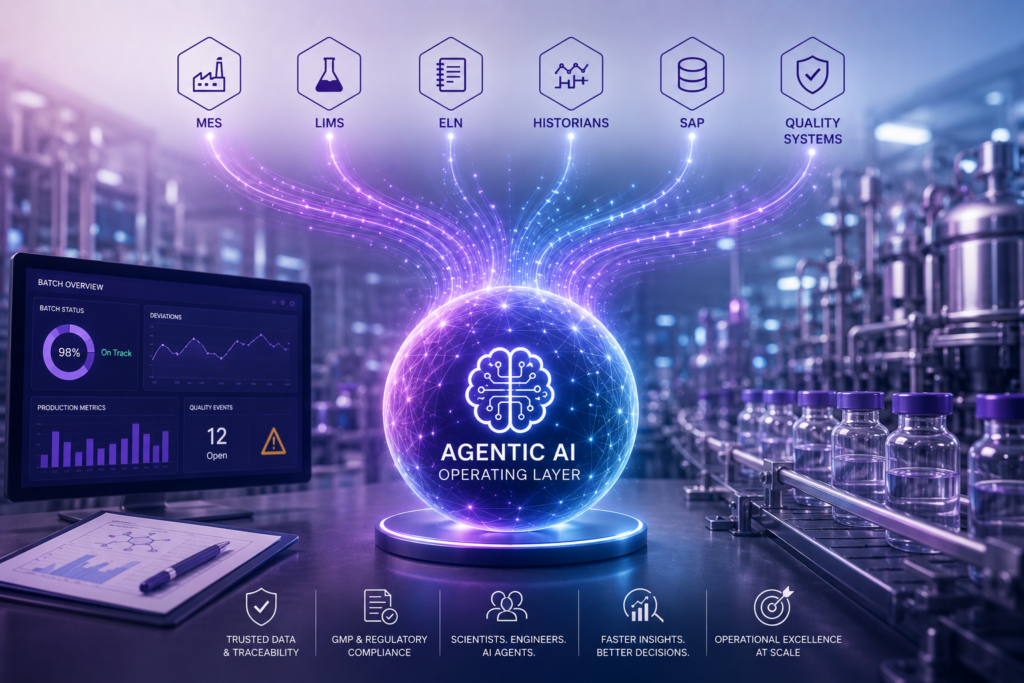
Can Agentic AI Work on the Pharma Plant Floor? Pharma AI Startup Katalyze Raises $10.5M to Find Out
Katalyze AI has secured $10.5 million in seed funding to enhance its agentic AI operating system designed for pharmaceutical manufacturing and life sciences, aiming to connect disparate data systems within the sector, thereby improving operational efficiency and compliance.
ERP Finance Teams Need More Than Blended COGS to Explain Margin Pressure
ERPfixers is targeting a common finance blind spot in SAP ECC and SAP S/4HANA environments: the loss of cost-driver visibility once inventory becomes COGS. CostMatrix aims to restore that detail, helping controllers understand exactly what's behind changing margins.
Saudi Utility Consolidates SAP EAM Records, Putting Clean Asset Data Before Operational AI
A major Saudi utility transformed more than 150 million SAP records as part of a large-scale EAM modernization initiative, highlighting the growing importance of data harmonization in asset-intensive industries.
From SNP Transformation World 2026 – TotalEnergies on Decommissioning Legacy SAP Systems with Aurelien Nourry
TotalEnergies retired 17 legacy SAP systems and halved its data footprint. Aurelien Nourry explains the business case, risk, and AI payoff.
SAP Business Data Cloud Turns ERP Data Readiness Into the Real Test
SAP Business Data Cloud promises a governed foundation for analytics and AI—but ERP data readiness, fragmented legacy architectures, and budget pressure mean most organizations aren't ready to capture that value. With 45% still evaluating BDC and only 3% achieving a unified data layer, partner execution and data context are now the deciding factors.
The Friday-to-Monday Test for SAP Transformation: A Conversation with SNP’s CTO
Successful SAP transformation hinges not just on technical milestones like migration and cutover, but on ensuring business continuity by enabling enterprises to maintain essential operations across both SAP and non-SAP systems post-migration.
SAP Business Data Cloud Raises the Stakes for ERP Data Readiness
SAP Business Data Cloud positions itself as the governed foundation for AI-driven analytics. But adoption is still early, data fragmentation remains the norm, and only 3% of organizations have achieved a unified data layer. This article examines what ERP teams need to address before BDC can scale: semantic preservation, BW migration maturity, partner capability, and governance frameworks for agentic AI.
SAPinsider’s New Global Tax Report Shows Why ERP Data Is at the Center of Compliance
SAPinsider’s 2026 Global Tax Management benchmark shows that tax compliance is becoming an ERP data problem, with AI, e-invoicing, regulatory change, and fragmented systems forcing tax, finance, and IT leaders to rebuild the foundation.
ERP AI Readiness FAQ: Why SAP S/4HANA Migration Alone Will Not Get You There
Most ERP teams treat S/4HANA go-live as the finish line for transformation—but it is only the starting line for AI readiness. This FAQ explores why migration alone is not enough, what data and cloud foundations are missing, and how ERP leaders can build the architecture required to move AI from pilot to production.
INPEX Rebuilds Its SAP Core for a More Volatile Energy Market
Japanese energy company INPEX has gone live on SAP Cloud ERP Private, replacing its 2008-era IBOS system as part of INPEX Vision 2035—a strategy to build a more agile, data-driven management foundation capable of supporting energy transition into hydrogen, ammonia, carbon capture, and renewables. Partnering with ABeam Consulting and using a fit-to-standard SAP approach, INPEX is laying the groundwork for AI-driven operational efficiency across its global operations.
Perplexity Tests the Real Finance AI Question: Can the Agent Show Its Work?
Perplexity has introduced a finance-specific AI agent designed to provide trusted data integration, robust audit trails, and prebuilt workflows for corporate finance teams, emphasizing the importance of traceability for meeting audit and reporting requirements.
SAP Is Pushing Autonomous CX Expansion with Parloa, Google Cloud, AWS Partnerships
SAP's June 15 partner brief urges its ecosystem to expedite the rollout of Autonomous CX, integrating various SAP platforms and enhanced through new partnerships with tech giants, aiming to streamline customer experience workflows and drive industry-specific solutions.
SAP Opens Mumbai Data Center to Expand Business Network Federation
SAP has opened a new data center in Mumbai to enhance its Business Network data federation capabilities in India, ensuring local data residency compliance while facilitating global trade connections for Indian buyers and suppliers.
The Next Enterprise AI Wave Will Reach Beyond Agents, Says SAP Labs US Managing Director
At SAP Sapphire, Global Head of Research & Innovation Yaad Oren discussed SAP's forward-looking exploration of emerging technologies like AI, data, user experience, robotics, quantum computing, and cloud architecture, urging customers to embrace current AI capabilities while also preparing for future innovations.
SAP Sapphire Interviews: SAP Executives Say AI Is Pushing ERP Back to the Center of Business Strategy
At SAP Sapphire 2026, Maura Hameroff and David Vallejo emphasized that AI is transforming ERP systems into strategic business frameworks that enhance enterprise decision-making by integrating industry knowledge and addressing fragmented data, thereby enabling companies to efficiently navigate modern challenges in supply chain management and overall business operations.
SAP and Deutsche Telekom Put Sovereign AI at the Center of German Public Administration
Germany is implementing a public-sector AI strategy through a new SAP and Deutsche Telekom platform designed to deliver secure AI services and infrastructure for federal, state, and municipal administration, marking a significant shift towards shared digital infrastructure and sovereignty in AI governance.
SAP Sapphire Customer Keynote Shows AI Value Depends on Readiness, Data, and Standardization
At SAP Sapphire 2026, the customer keynote made a definitive case: AI value in the enterprise depends on readiness, data standardization, and clean core ERP foundations—not experimentation. Through transformation stories from Lockheed Martin, ExxonMobil, Levi Strauss, and Aeropuertos Argentina, SAP reinforced that organizations succeeding with AI have built the operational and data infrastructure to support it on SAP S/4HANA and BTP.
‘Will SAP Be a Software Company in the Future?’ Sapphire 2026 Keynote Maps SAP’s New ERP Stack
At SAP Sapphire 2026, CEO Christian Klein declared that SAP is becoming a business AI company, introducing the Autonomous Suite, Joule Studio 2.0, a company memory layer, and centralized agent governance as the pillars of SAP's reimagined ERP stack.
SAP Q1 Earnings Shows Cloud Strength, but Can the AI and Backlog Momentum Hold?
SAP delivered a Q1 earnings beat, but the more important story was beneath the headline numbers. The company showed strong cloud growth and expanding backlog, while also signaling likely deceleration ahead and a gradual shift toward Business AI as a consumption-based revenue model.
Q&A: SAP’s Balaji Balasubramanian on Turning Customer Experience into an Enterprise Growth Engine
SAP Customer Experience (SAP CX) is evolving from a front-office focus to an enterprise growth strategy that emphasizes connected data, efficient execution, and the integration of AI to create seamless customer experiences.
The Power BI Crash That Sparked a Data Revolution at Dodge Industrial
Dodge Industrial underwent a radical data transformation, shifting from a fragmented legacy system to a unified architecture using SAP Datasphere and S/4HANA, enabling agile governance and reliable data access for users.
SAP’s Reltio Deal Puts Data Quality at the Heart of ERP AI
Discover what SAP's acquisition of Reltio means for the ERP landscape. Learn why unified master data is now the critical foundation for enterprise AI success.
SAP Engagement Index UK Report Reveals CX Failures Rooted in Data and ERP Integration Gaps
SAP’s latest Engagement Index reveals a growing gap between how businesses perceive customer experience and what consumers actually encounter. Fragmented data, weak AI execution, and siloed systems are driving dissatisfaction and brand abandonment. The findings highlight a shift in CX ownership toward enterprise data and architecture.