ERP Strategy and Planning

ERP Strategy and Planning provides the foundation for aligning Enterprise Resource Planning (ERP) systems with an organization’s business goals and operational needs. It encompasses assessing existing processes, defining requirements, selecting suitable solutions, and developing a roadmap for implementation and ongoing improvement. Effective planning addresses data migration, system integration, governance, and change management, helping organizations manage costs, reduce risk, and prepare employees for new ways of working. By establishing clear priorities and measurable outcomes, businesses can coordinate ERP investments across finance, supply chain, human resources, and other core functions. A well-defined ERP strategy extends beyond technology selection; it guides decisions about process design, deployment models, and future scalability. This approach helps organizations build a flexible foundation for growth, improve operational performance, and maximize the long-term value of their ERP systems.

Beyond SAP ECC: Building an AI-Ready Business Platform
Webinar On Demand Many organizations approaching the end of SAP ECC support are asking a much broader question than simply what ERP system comes next. The real challenge is how to create a business platform that can support future growth, improve operational efficiency, unlock trusted data, and enable the adoption of AI and intelligent automation across the organization. As expectations around AI continue to rise, leadership teams are under pressure to modernize not only technology, but also the processes, data foundations and operating models that will determine their ability to compete in the years ahead. In this on-demand webinar, Hitachi Solutions and Microsoft explore how organizations can use the transition away from SAP ECC as an opportunity to build a modern, AI-ready business platform. The session also considers how AI-enabled delivery approaches, automation, data-led transformation, and proven templates and accelerators can help organizations move with greater efficiency and reduced risk, creating a stronger foundation for long-term change. Watch now to learn: - What an AI-ready organization actually looks like beyond SAP ECC - Whether your data estate is ready to support enterprise-scale AI, or will stall after go-live - How to modernize in a way that reduces risk and protects business continuity - Where agentic AI and emerging standards change the platform decision - How AI, proven templates and accelerators support a more efficient, lower-risk transformation - How to build a roadmap and business case that go beyond ERP replacement
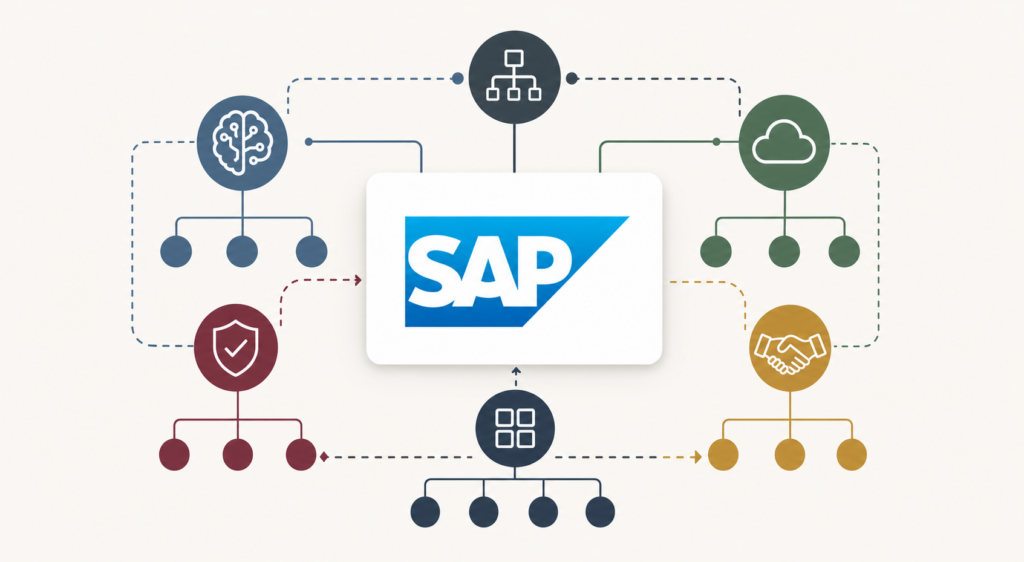
SAP logo subtly integrated into a digital network, signifying robust enterprise core stability.
Stable Core, Movable Edges: What SAP’s Vercel Partnership and Tirlán’s Nine-Month Carve-Out Have in Common
SAP's new Vercel partnership and Tirlán's nine-month SAP carve-out from Glanbia look unrelated, but both follow the same architectural pattern: keep the SAP core stable, isolate the layer that must move, and rehearse the change before it reaches production.
Beyond SAP ECC: Building an AI-Ready Business Platform
Webinar On Demand Many organizations approaching the end of SAP ECC support are asking a much broader question than simply what ERP system comes next. The real challenge is how to create a business platform that can support future growth, improve operational efficiency, unlock trusted data, and enable the adoption of AI and intelligent automation across the organization. As expectations around AI continue to rise, leadership teams are under pressure to modernize not only technology, but also the processes, data foundations and operating models that will determine their ability to compete in the years ahead. In this on-demand webinar, Hitachi Solutions and Microsoft explore how organizations can use the transition away from SAP ECC as an opportunity to build a modern, AI-ready business platform. The session also considers how AI-enabled delivery approaches, automation, data-led transformation, and proven templates and accelerators can help organizations move with greater efficiency and reduced risk, creating a stronger foundation for long-term change. Watch now to learn: - What an AI-ready organization actually looks like beyond SAP ECC - Whether your data estate is ready to support enterprise-scale AI, or will stall after go-live - How to modernize in a way that reduces risk and protects business continuity - Where agentic AI and emerging standards change the platform decision - How AI, proven templates and accelerators support a more efficient, lower-risk transformation - How to build a roadmap and business case that go beyond ERP replacement

SAP Is Pushing Industry AI Toward Autonomous Execution
SAP is pushing Industry AI beyond recommendations toward systems that can increasingly coordinate and execute work across complex business processes. Its approach combines industry-specific knowledge, enterprise data, AI agents and forward-deployed engineering.
How SNP Is Addressing the Manual Work Behind SAP Modernization
SNP is collaborating with a leading AI company to bring AI into one of the most labor-intensive areas of SAP transformation: test-data selection. The collaboration highlights a broader shift toward software-led delivery models that promise faster, more predictable, and more auditable ERP modernization projects.
AI property management ERP
Property ERP Shows Where Enterprise AI Gets Practical
Aareon's latest SAP S/4HANA-based strategy offers a practical example of where enterprise AI is becoming most credible: inside industry-specific workflows. By embedding AI into invoice processing, mail management, and operating-cost settlement, the company highlights both the promise of real estate AI and the continued importance of SAP migration, cloud strategy, and data quality.
ERP transformation risks, implementation delays, governance issues, and recovery strategies during a program assessment
SAP Project Rescue Is Becoming a Warning Sign for ERP Modernization
The emergence of SAP project rescue services is becoming a market signal in its own right. As organizations accelerate SAP S/4HANA migrations, more consulting firms are formalizing turnaround practices designed to recover troubled ERP programs before delays, costs, and governance failures become permanent.
Accelerating cloud modernization with solutions
Why Microsoft Migrated a Billing Backbone to SAP S/4HANA Private Cloud
Microsoft successfully migrated its 70 TB SAP ECC billing system to SAP S/4HANA private cloud in just six months, minimizing downtime to 24 hours while enhancing integration, operational efficiency, and financial performance.
ERPfixers CostMatrix SAP Cost Transparency Solution
ERP Finance Teams Need More Than Blended COGS to Explain Margin Pressure
ERPfixers is targeting a common finance blind spot in SAP ECC and SAP S/4HANA environments: the loss of cost-driver visibility once inventory becomes COGS. CostMatrix aims to restore that detail, helping controllers understand exactly what's behind changing margins.
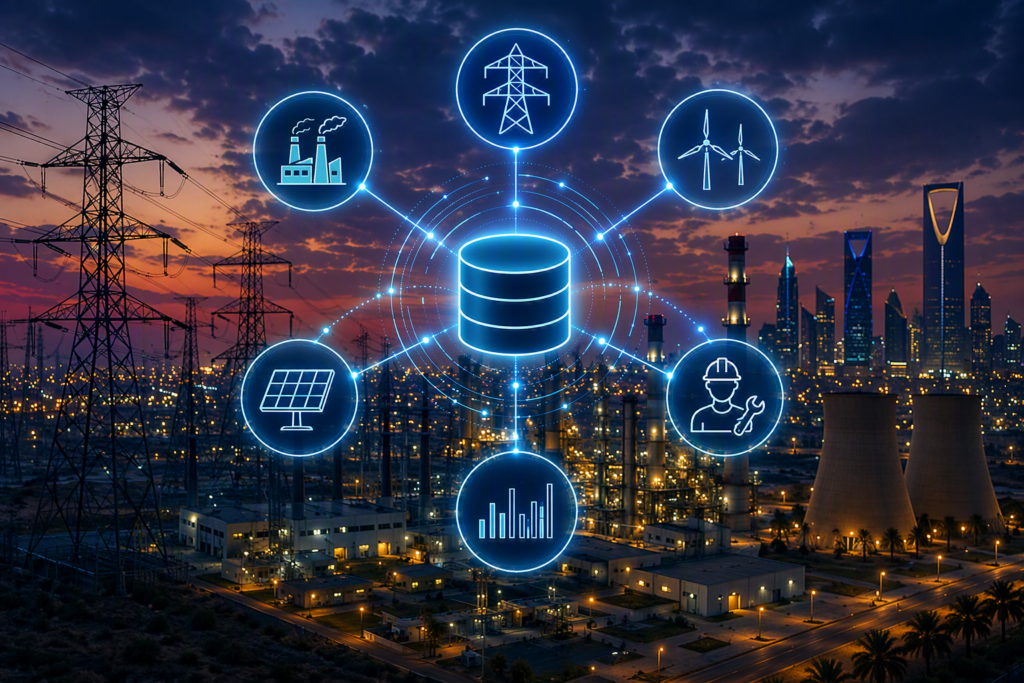
SAP Enterprise Asset Management data transformation project at a Saudi utility consolidating asset and maintenance records
Saudi Utility Consolidates SAP EAM Records, Putting Clean Asset Data Before Operational AI
A major Saudi utility transformed more than 150 million SAP records as part of a large-scale EAM modernization initiative, highlighting the growing importance of data harmonization in asset-intensive industries.
DLA ERP Modernization
DLA’s ERP Modernization Race Shows How Audit Pressure Is Rewriting Federal Cloud Deals
DLA is years ahead of schedule on a major ERP modernization initiative aimed at reducing technical debt, improving auditability, and moving away from heavily customized systems. The effort highlights how cloud services, managed support, and process standardization are becoming foundational to federal ERP transformation.
SNP Transformation World 2026
ERP Today brings members essential insights from SNP Transformation World 2026, covering SAP S/4HANA migration, AI-ready data, clean core strategies, M&A and business-led transformation.
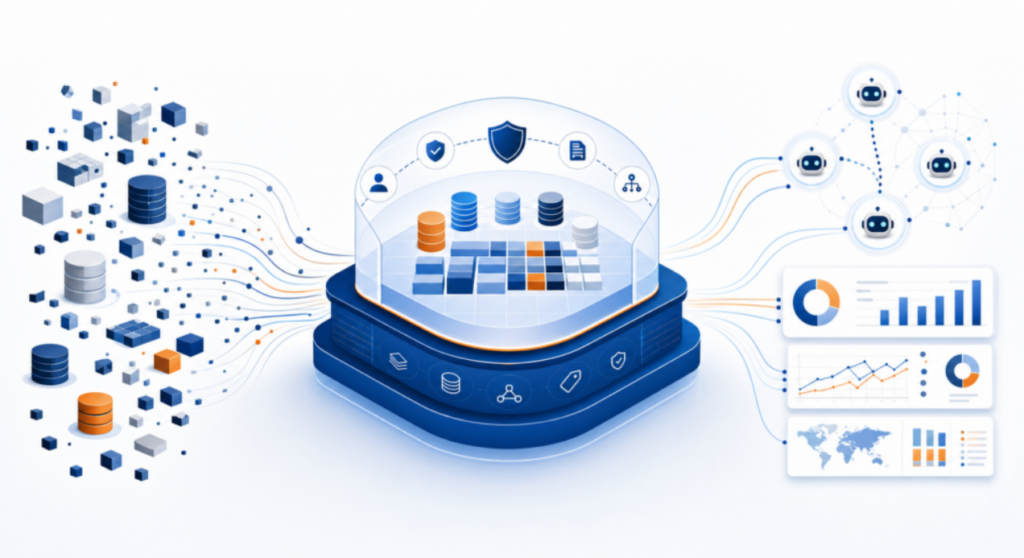
SAP Business Data Cloud ERP data readiness - governed foundation for analytics and AI
SAP Business Data Cloud Turns ERP Data Readiness Into the Real Test
SAP Business Data Cloud promises a governed foundation for analytics and AI—but ERP data readiness, fragmented legacy architectures, and budget pressure mean most organizations aren't ready to capture that value. With 45% still evaluating BDC and only 3% achieving a unified data layer, partner execution and data context are now the deciding factors.
Bicycles parked in front of SAP office in Europe.
SAP’s EU Settlement Gives On-Premise Customers More Room to Maneuver
SAP has resolved a European Commission investigation by committing to more flexible maintenance and support policies for on-premise ERP software, enhancing customer choice and alleviating competition concerns without impacting its cloud offerings.
SAP transformation
The Friday-to-Monday Test for SAP Transformation: A Conversation with SNP’s CTO
Successful SAP transformation hinges not just on technical milestones like migration and cutover, but on ensuring business continuity by enabling enterprises to maintain essential operations across both SAP and non-SAP systems post-migration.
SAP Business Data Cloud
SAP Business Data Cloud Raises the Stakes for ERP Data Readiness
SAP Business Data Cloud positions itself as the governed foundation for AI-driven analytics. But adoption is still early, data fragmentation remains the norm, and only 3% of organizations have achieved a unified data layer. This article examines what ERP teams need to address before BDC can scale: semantic preservation, BW migration maturity, partner capability, and governance frameworks for agentic AI.
SAP and IBM Say AI-Ready ERP Still Starts with Trusted Infrastructure
SAP and IBM are positioning ERP infrastructure as the foundation of AI readiness. New customer wins—including JYSK, GBM, DIFARE Group, and Plastilene Group—show how SAP Cloud ERP Private on IBM Power Virtual Server gives enterprises a secure, scalable path to modernization without abandoning the resilience of IBM Power.
Why Agribusiness ERP Has to Treat Contracts as Risk Signals
Agribusiness contracts carry commodity, FX, and interest-rate exposure long before settlement. This article explains how SAP Agricultural Contract Management turns contracts into a live risk engine inside ERP, with msg global's implementation approach.
What Does It Take to Win the Next Energy ERP Cycle? SAP, Oracle, IFS, Infor Offer Different Answers
Excerpt: SAP, Oracle, IFS, and Infor are offering different answers to the next energy ERP cycle as oil, gas, utilities, renewables, and energy services companies modernize around assets, field execution, AI, and changing operating models.
federal ERP modernization
Federal ERP Modernization Gets Another Procurement Path as 2027 Deadline Nears
Federal agencies require effective procurement strategies for ERP modernization, as highlighted by M&S Consulting's participation in NASA's SEWP VI contract, which provides a framework for essential IT services and emphasizes the importance of leveraging small-business certifications in the contracting process.
SAP AI budget discipline for hiring and travel
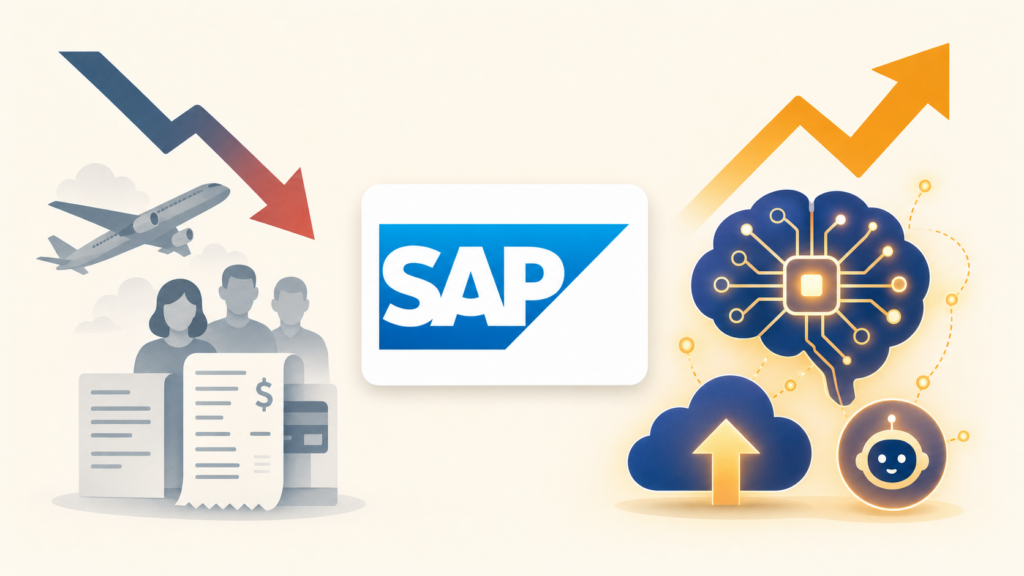
After SAP’s Leadership Reorg, AI Overhaul Places New Scrutiny on Hiring and Travel
SAP is reallocating its operating budget by tightening hiring, limiting travel, and reviewing supplier spending to prioritize investments in AI capabilities and technologies, signaling a strategic shift towards enhancing its AI-driven products and services while managing operational costs.
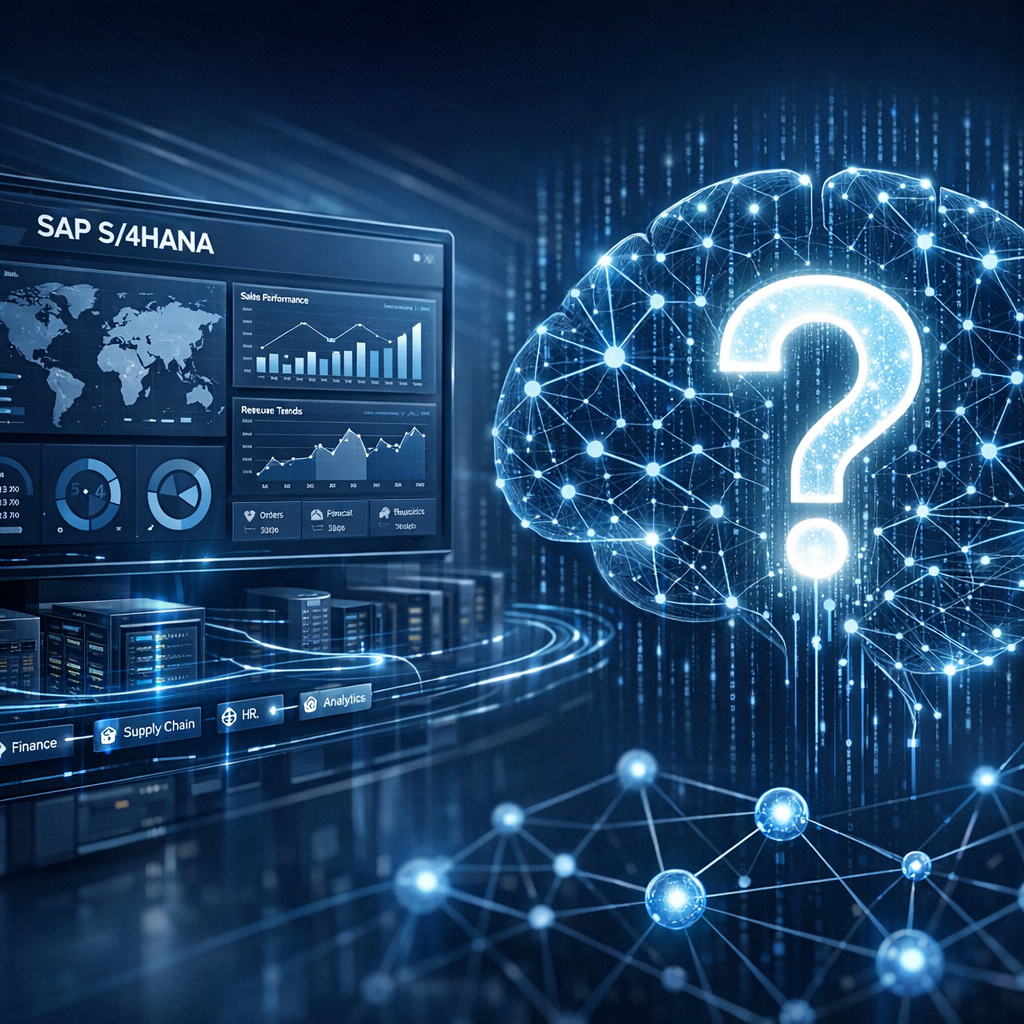
ERP AI readiness gap after S/4HANA migration - digital brain with question mark on enterprise data dashboard
ERP AI Readiness FAQ: Why SAP S/4HANA Migration Alone Will Not Get You There
Most ERP teams treat S/4HANA go-live as the finish line for transformation—but it is only the starting line for AI readiness. This FAQ explores why migration alone is not enough, what data and cloud foundations are missing, and how ERP leaders can build the architecture required to move AI from pilot to production.
INPEX energy transformation SAP Cloud ERP Private modernization for energy transition
INPEX Rebuilds Its SAP Core for a More Volatile Energy Market
Japanese energy company INPEX has gone live on SAP Cloud ERP Private, replacing its 2008-era IBOS system as part of INPEX Vision 2035—a strategy to build a more agile, data-driven management foundation capable of supporting energy transition into hydrogen, ammonia, carbon capture, and renewables. Partnering with ABeam Consulting and using a fit-to-standard SAP approach, INPEX is laying the groundwork for AI-driven operational efficiency across its global operations.
SAP AI skills
ERP’s AI Skills Gap Is Becoming the Real Transformation Bottleneck
ERP vendors like SAP are shipping AI features faster than teams can absorb them. The SAP AI skills gap—with 91% of organizations using AI but only 17% embedding it in core workflows—is now the defining bottleneck to real ERP transformation.
Nokia’s ERP Overhaul Shows Why AI Ambitions Are Moving to the Hyperscaler Layer
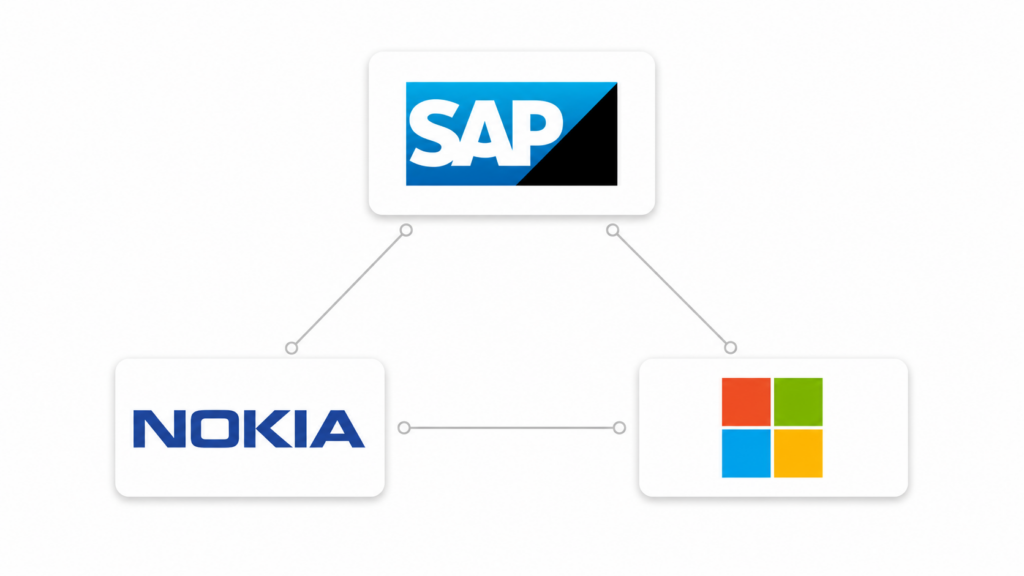
Nokia has signed a multi-year RISE with SAP agreement to consolidate multiple ERP systems into a unified SAP S/4HANA landscape hosted on Microsoft Azure, using clean-core principles and SAP's transformation methodology to prepare its global business backbone for embedded AI, operational resilience, and continuous cloud innovation.
SAP Announced Product Leadership Reorganizations Around AI and the Autonomous Suite
SAP is reorganizing product and engineering leadership around the SAP Business AI Platform and Autonomous Suite—a structural shift that puts AI delivery accountability at the center of its cloud ERP roadmap and signals the end of siloed product development.
GenAI in ERP Needs a Smaller Starting Point and a Harder Business Proposition
Enterprise leaders, while ambitious in their generative AI strategies, face a significant gap between their AI aspirations and actual production adoption, as illustrated by Mukesh Kumar's insights on targeted automation in ERP systems addressing specific, high-impact problems.
Top ERP Today stories and H1 2026 enterprise technology trends across AI, cloud, SAP, robotics, and infrastructure
10 Stories That Defined Enterprise Tech in H1 2026 and What They Say About the ERP Market
ERP Today’s most-read stories in the first half of 2026 reveal a market moving from AI enthusiasm into harder questions about pricing, governance, infrastructure, cloud costs, and operational execution.
Secure enterprise corridor representing Microsoft Power Platform governance and AI agent access
Microsoft Power Platform Narrows the Access Gap for ERP Agents
Microsoft's June 2026 Power Platform updates introduce Advanced Connector Policies that govern AI agent access to SAP systems at the action and MCP server level. ERP leaders must understand what the new controls mean for low-code automation, connector visibility, and enterprise AI compliance.
Can AI Break the ERP Change-Order Cycle? Tessera Labs Just Raised $60M to Try
Tessera Labs’ $60 million funding round puts a spotlight on AI-native ERP modernization, raising a new question for CIOs: how much of the migration, data, code, and documentation work that once required large consulting teams can now be automated without weakening governance?