
Americas

AI and Automation in Invoice Processing
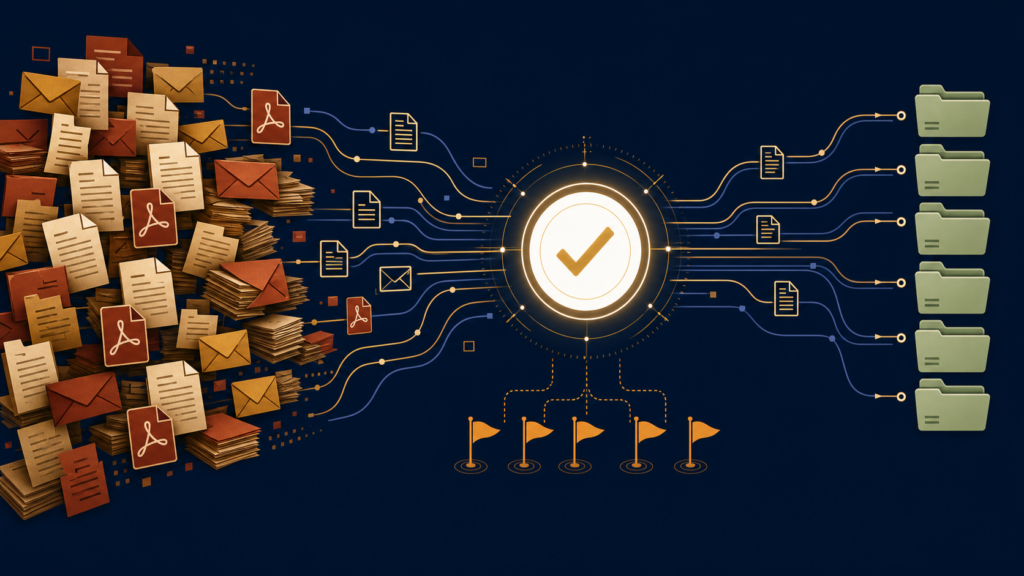
Hitachi Construction Machinery America used Microsoft Power Platform AI Builder and Power Automate to automate supplier invoice processing into Dynamics 365 Finance and Operations, significantly reducing manual AP effort. By streamlining how invoices are received, read, validated, and posted, the organisation now automatically processes around two-thirds of invoices with near-perfect accuracy.
Rotork Transforms Global ERP and Customer Operations with Microsoft Dynamics 365
Hitachi Solutions has been recognised as the 2025 Microsoft Dynamics 365 Finance Partner of the Year, highlighting its leadership in delivering innovative ERP and finance transformations on the Microsoft cloud. This recognition showcases the company’s proven expertise in helping customers modernise financial operations, optimise business performance, and realise greater value from Dynamics 365 Finance.
Hitachi Solutions Named 2025 Microsoft Dynamics 365 Finance Partner of the Year
Hitachi Solutions has been recognised as the 2025 Microsoft Dynamics 365 Finance Partner of the Year, highlighting its leadership in delivering innovative ERP and finance transformations on the Microsoft cloud. This recognition showcases the company’s proven expertise in helping customers modernise financial operations, optimise business performance, and realise greater value from Dynamics 365 Finance.
ERP Today Expert Exchange – AI-Led Transformation – Season 1
This three-part Expert Exchanges series, hosted by Constance Sayers from ERP Today, explores how organizations are navigating AI-led transformation in partnership with Oracle Cloud and IBM Consulting. Across the episodes, a consistent set of themes emerges: AI is elevating traditionally...
AI-Led Transformation Episode 3
Jen Basco, IBM Consulting's global lead for Oracle HR, discusses how AI is repositioning HR from a back-office function to a core strategic driver. She walks through IBM's "eliminate, simplify, automate" methodology and explains why process clarity must come before AI deployment. Recruitment and talent management are the areas seeing the most adoption today, with practical AI agents — handling policy questions, payslip explanations, and leave balances — serving as strong starting points for building organizational momentum. Jen closes with a forward-looking view: within 18 months, single-task agents will evolve into fully orchestrated, cross-platform agentic workflows where employees ask a question and AI handles everything behind the scenes.
AI-Led Transformation Episode 2
Luis Sanchez, IBM Consulting's global Oracle Supply Chain lead, examines how the COVID-19 pandemic reshaped supply chain thinking — and how AI is now accelerating that strategic shift. He frames supply chain challenges as fundamentally math problems (balancing supply, demand, cost, and speed), and explains how AI's ability to run simulations, surface trade-off recommendations, and compress reaction time is transformative for planners. Drawing on IBM's own complex hardware supply chain as a Client Zero example, Luis advises organizations to resist the urge to boil the ocean: start with one or two high-impact use cases, operationalize them quickly, and use those wins to build internal momentum for a broader three-to-five year AI roadmap.
AI-Led Transformation Episode 1
Kankayan Sengupta from IBM Consulting explains how cloud infrastructure has evolved from a back-end technical concern into a defining element of enterprise AI strategy. He walks through how AI has changed every layer of the infrastructure stack — compute, networking, storage, governance, and cost modeling — and shares IBM's Client Zero results, including an "Ask HR" solution that resolved 94% of employee queries autonomously and reduced HR operational costs by 40%. The conversation covers key decision frameworks around cloud topology, data readiness, and the organizational and operating model changes that cloud adoption demands. Kankayan closes with a forward-looking view spanning intelligence orchestration, AI memory, small language models, multimodal AI, and edge AI — trends that will reshape enterprise infrastructure over the next three to five years.
Anthropic Claude ban lift AI access
Anthropic’s Ban Lift and Claude Science Launch Test the New Rules of AI Access
The Trump administration has lifted restrictions on Anthropic's Claude Fable 5 and Mythos 5 models, ending a weekslong export ban tied to cybersecurity concerns—though Mythos 5 remains restricted to approved US organizations. At the same time, Anthropic launched Claude Science, a domain-specific AI research workbench targeting life sciences and pharmaceutical users, signaling a broader shift toward specialized, governed enterprise AI access.
Nokia’s ERP Overhaul Shows Why AI Ambitions Are Moving to the Hyperscaler Layer
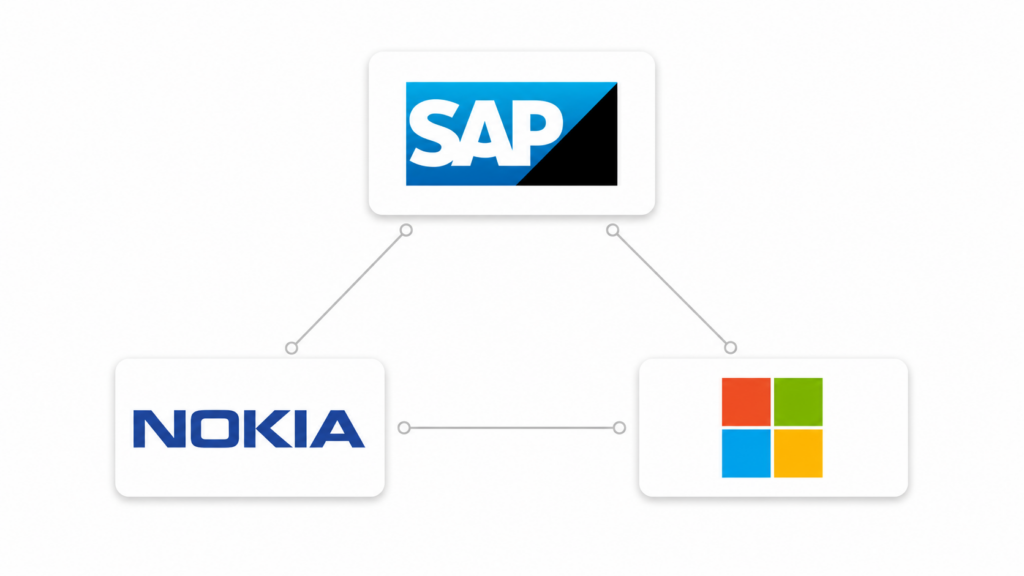
Nokia has signed a multi-year RISE with SAP agreement to consolidate multiple ERP systems into a unified SAP S/4HANA landscape hosted on Microsoft Azure, using clean-core principles and SAP's transformation methodology to prepare its global business backbone for embedded AI, operational resilience, and continuous cloud innovation.
AI process mining Enterprise AI context layer
Celonis Acquires Ikigai, Launches Context Model to Give AI Agents Operational Intelligence
Celonis’ Context Model and Ikigai Labs acquisition position process intelligence as a context layer for enterprise AI agents that need to understand real workflows before they recommend or act.
SAP Announced Product Leadership Reorganizations Around AI and the Autonomous Suite
SAP is reorganizing product and engineering leadership around the SAP Business AI Platform and Autonomous Suite—a structural shift that puts AI delivery accountability at the center of its cloud ERP roadmap and signals the end of siloed product development.
IFS Is Building the Operations Layer Around Industrial AI
IFS’s Softeon acquisition is only one part of a broader push to connect warehouse execution, logistics optimization, MRO, asset management, and ERP around Industrial AI.
Why Food ERP Still Needs More Than Generic Dynamics 365
Aptean’s food and beverage ERP footprint on Microsoft Dynamics 365 shows why food, beverage, fresh, and agribusiness companies still need vertical ERP logic for traceability, quality, production, pricing, and compliance.
Why Finance AI Needs Guardrails: Sage Intacct’s Next Test Is Data Control
Sage Intacct 2026 R2 moves the connected finance story into data-control territory, with AI Gateway, intelligent 3-way matching, and construction workflows showing why finance AI needs guardrails before automation can scale.
GenAI in ERP Needs a Smaller Starting Point and a Harder Business Proposition
Enterprise leaders, while ambitious in their generative AI strategies, face a significant gap between their AI aspirations and actual production adoption, as illustrated by Mukesh Kumar's insights on targeted automation in ERP systems addressing specific, high-impact problems.
Top ERP Today stories and H1 2026 enterprise technology trends across AI, cloud, SAP, robotics, and infrastructure
10 Stories That Defined Enterprise Tech in H1 2026 and What They Say About the ERP Market
ERP Today’s most-read stories in the first half of 2026 reveal a market moving from AI enthusiasm into harder questions about pricing, governance, infrastructure, cloud costs, and operational execution.
ServiceNow and Accenture
ServiceNow and Accenture Are Going After Cyber Risk’s Legacy Platform Problem
ServiceNow and Accenture have launched a joint AI-powered offering to help enterprises migrate from legacy cybersecurity and risk platforms to integrated managed services on the ServiceNow AI Platform, combining agentic AI with risk management, GRC, third-party risk, and OT security monitoring.
SAP procurement automation
SAP Procurement Agents Are Reaching the Front Door of Spend Management
SAP's Joule AI capabilities, set for general availability across Ariba and Fieldglass in June 2026, aim to enhance procurement processes by automating intake, contract creation, and workforce operations while urging spend teams to ensure proper governance and integration before widespread adoption.
Secure enterprise corridor representing Microsoft Power Platform governance and AI agent access
Microsoft Power Platform Narrows the Access Gap for ERP Agents
Microsoft's June 2026 Power Platform updates introduce Advanced Connector Policies that govern AI agent access to SAP systems at the action and MCP server level. ERP leaders must understand what the new controls mean for low-code automation, connector visibility, and enterprise AI compliance.
Can AI Break the ERP Change-Order Cycle? Tessera Labs Just Raised $60M to Try
Tessera Labs’ $60 million funding round puts a spotlight on AI-native ERP modernization, raising a new question for CIOs: how much of the migration, data, code, and documentation work that once required large consulting teams can now be automated without weakening governance?
ERP Today Live Interview
Are Your AP Workflows Holding Your ERP Back? A Conversation with Priority Commerce
Priority Commerce EVP Steve Tackett joins ERP Today Live to explain why AP workflows keep escaping the ERP, what breaks down when they do, and how supplier enablement and AI-driven transparency are reshaping how mid-market organizations think about payment modernization.
Microsoft Dynamics 365 Business Central
Ontario Health Centre Shows Why Nonprofits Are Outgrowing Legacy ERP
An Ontario Community Health Centre migrated from Sage 300 to Microsoft Dynamics 365 Business Central with Dynamics Square Canada, automating vendor invoice capture and employee expense management to free a lean two-person finance team from manual workarounds and improve financial visibility across locations.
Oracle and AWS Cloud Database
Oracle Takes On the Federal Government’s HR Patchwork
The US Office of Personnel Management (OPM) has awarded Oracle a $395.8 million Federal HRIT Modernization contract to deliver the federal government's first government-wide HR platform using Oracle Fusion Cloud HCM, designed to replace more than 100 separate agency systems and consolidate workforce management for 2 million civilian employees.
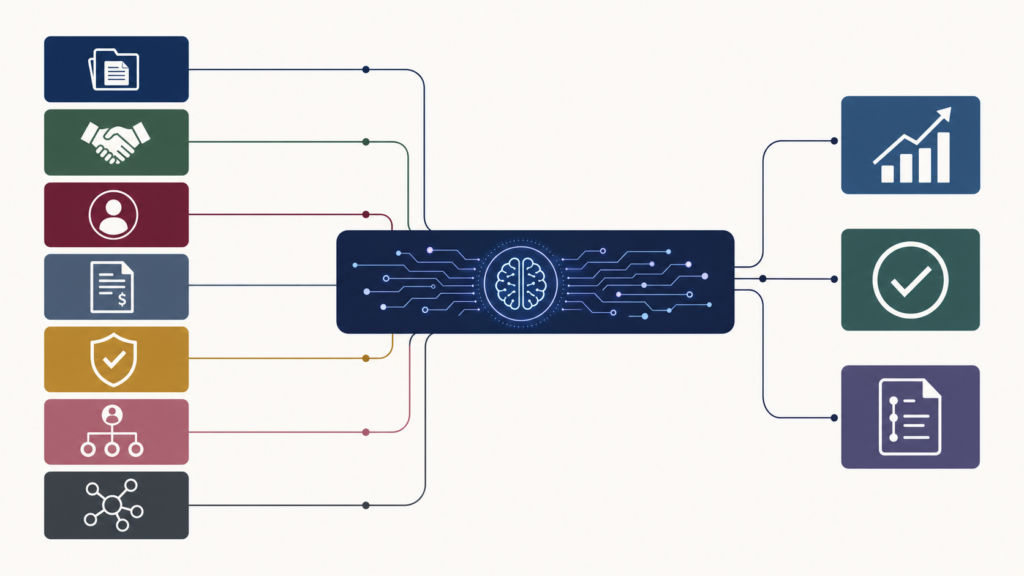
Who Governs AI Agents When Workflows Cross Platforms?
As AI agents expand across ERP, cloud, and workflow platforms, enterprise leaders face a critical governance challenge: who owns accountability when data, models, and audit trails are fragmented across multiple systems. This analysis explores the control plane problem and what ERP teams must do to prevent agent sprawl.
ERP Migration
Can Headless ERP Change the Migration Math?
Headless ERP is emerging as a third option for organizations facing SAP ECC end-of-life deadlines: rather than migrating the core or abandoning it, enterprises can layer an AI-driven agentic interface over APIs while keeping the legacy system running. This analysis examines the architecture, risks, and real-world implications for CIOs weighing the headless ERP migration equation.
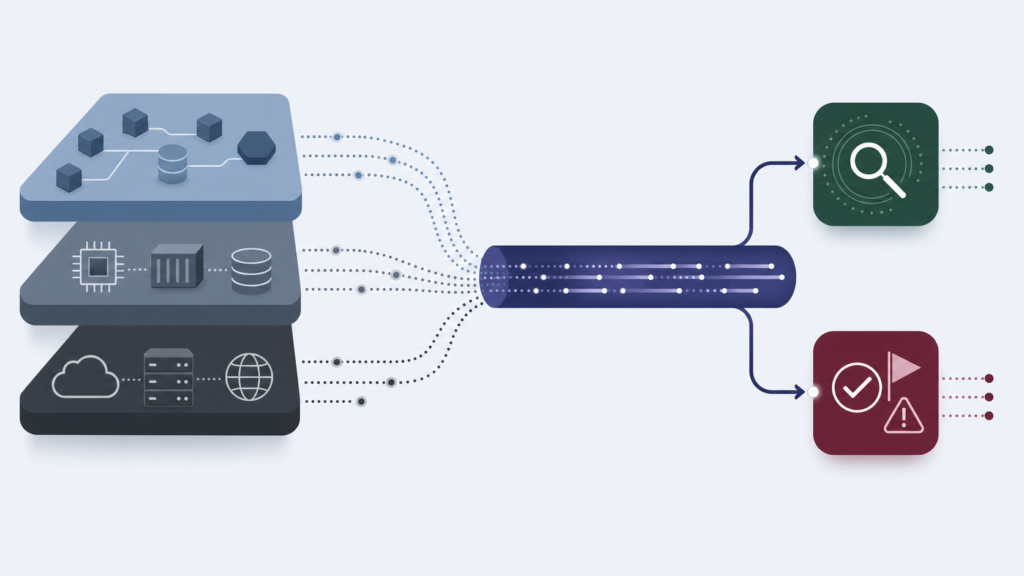
New Relic Prepares Observability for AI Agents That Skip the Dashboard
New Relic has introduced Autopilot and Ground Truth to shift observability toward an AI-agent-first operating model. Autopilot automates SRE triage and remediation using runbooks and context, while Ground Truth exposes governed telemetry to external AI agents via open standards. Both products reflect a broader industry move toward headless, agentic operations where AI systems, not human engineers, handle first-response tasks.
Intapp Says Professional Firms Solved the Wrong AI Problem
Intapp’s Firm AI blueprint reframes the professional-services AI debate around the business of the firm, arguing that individual productivity tools will not change firm economics unless AI reaches intake, conflicts, staffing, pricing, relationships, compliance, and institutional judgment.
SAP AI partnerships
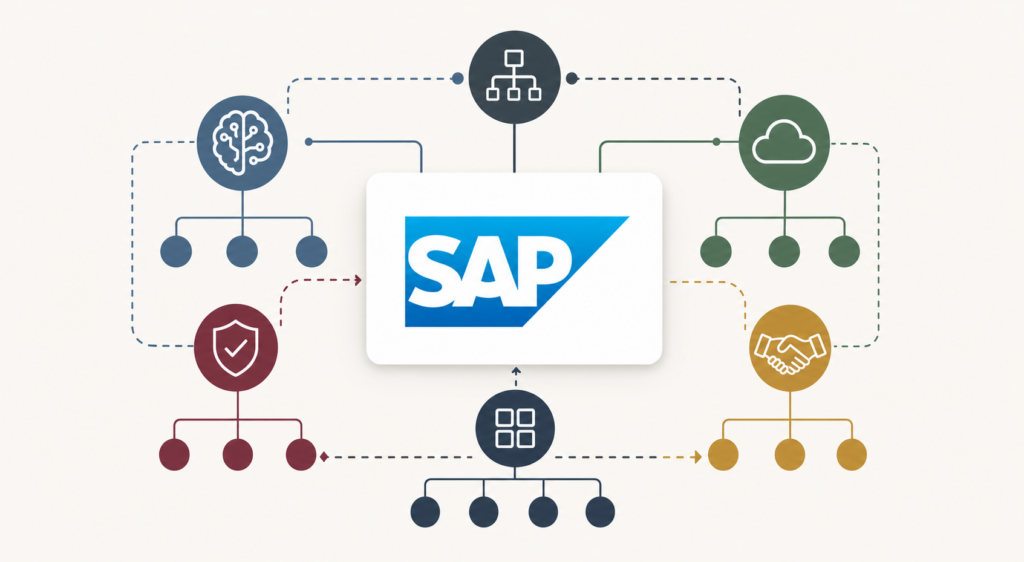
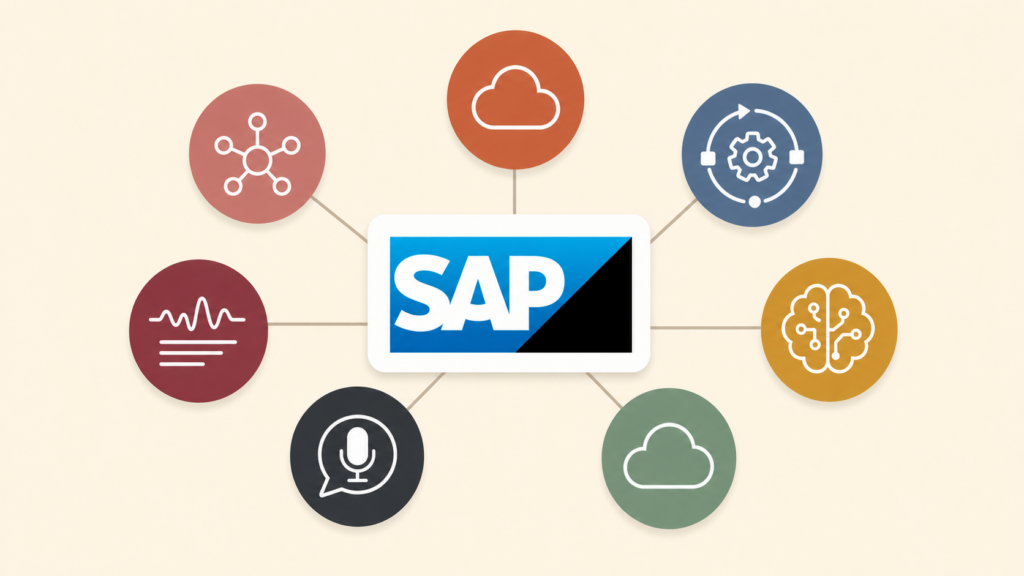
SAP’s AI Partnership Sprint Shows What Its Autonomous Enterprise Still Has to Prove
SAP’s recent partnerships with Google Cloud, n8n, Anthropic, AWS, Cohere, Mistral, and Parloa show how the company is turning its Autonomous Enterprise strategy into a modular AI architecture built around data access, orchestration, model choice, and governed business context.
AI-Led Transformation Episode 3
Jen Basco, IBM Consulting's global lead for Oracle HR, discusses how AI is repositioning HR from a back-office function to a core strategic driver. She walks through IBM's "eliminate, simplify, automate" methodology and explains why process clarity must come before AI deployment. Recruitment and talent management are the areas seeing the most adoption today, with practical AI agents — handling policy questions, payslip explanations, and leave balances — serving as strong starting points for building organizational momentum. Jen closes with a forward-looking view: within 18 months, single-task agents will evolve into fully orchestrated, cross-platform agentic workflows where employees ask a question and AI handles everything behind the scenes.
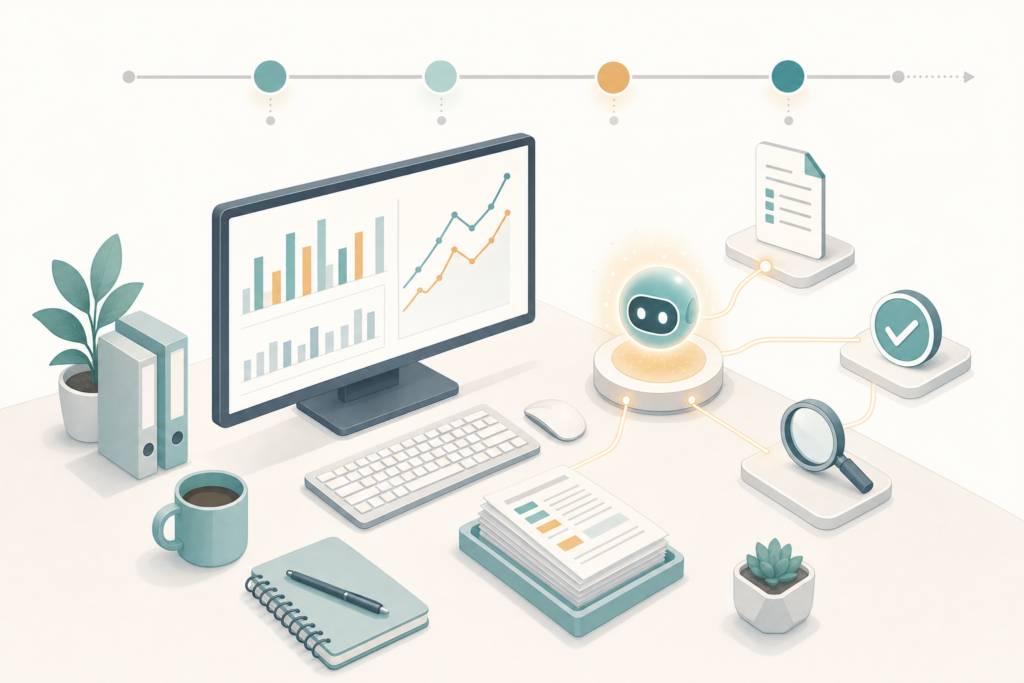
Trintech AI Agents Are Targeting the Manual Work Behind the Financial Close
Trintech has launched two new AI agents designed to eliminate manual investigative work from the financial close process. The Flux Agent identifies material account fluctuations during the close, while the Variance Analysis Agent automates post-close budget-to-actual analysis. Both tools operate within governed financial workflows, keeping outputs connected to audit trails and human review controls.