AI governance

AI is doing more than making enterprise systems smarter. It is exposing weak data, disconnected processes and unclear ownership that were already there.
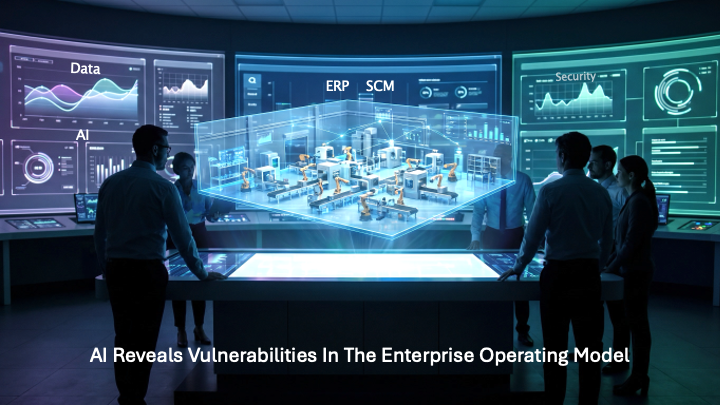
AI Reveals Vulnerabilities in the Enterprise Operating Model
Enterprise AI is not held back only by technology. ERP, supply chain, data, security, and people need to work together in a connected operating model that turns trusted context into controlled action.
Partnerships
KPMG and Pathlock Are Targeting the Control Gaps Behind AI-Driven ERP Modernization
Pathlock and KPMG are targeting the access-risk layer behind ERP modernization, where AI agents, automation, elevated privileges, and transaction controls are turning identity governance into an audit-readiness priority.
erp work transformation
Report: AI Is Moving Faster Than the Enterprise Systems Built to Support It
Microsoft's 2026 Work Trend Index reveals a growing disconnect between employee AI capabilities and the enterprise systems designed to support them. As workers move faster with AI, ERP leaders face growing pressure to connect intelligence, governance, and operational execution.
CFOs Are Being Pushed to Prove Agentic AI ROI Before Governance Is Ready
Avalara's new research reveals that finance leaders are under significant pressure to rapidly deploy agentic AI for financial processes in order to demonstrate ROI, despite lacking adequate governance and accountability frameworks.
AWS Security Hub’s Azure Move Shows ERP Security Is Now Multi-Cloud and AI-Native
AWS has expanded Security Hub to provide targeted protection for AI workloads and security monitoring for Microsoft Azure, enabling the discovery and evaluation of Azure resources alongside AWS findings, thereby enhancing visibility and governance across multi-cloud and hybrid ERP environments.
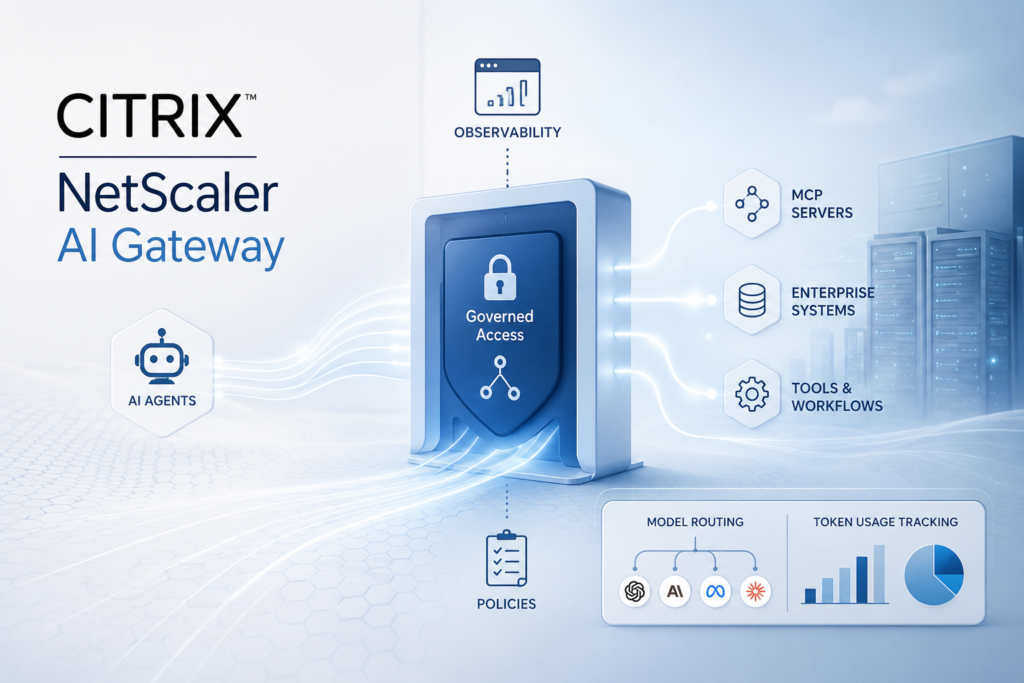
AI Agents Need a Gateway, and Citrix Is Putting NetScaler in the Middle
Citrix has enhanced its NetScaler AI Gateway with Model Context Protocol (MCP) Gateway functionalities to streamline governance for large language model and agentic AI traffic, introducing centralized authentication and model-routing features to address emerging enterprise needs for secure and monitored access to backend systems.
Enterprise AI sprawl and invisible AI governance concept
The AI Bill Is Bad, But Not Knowing What Is Running May Be Worse
Enterprises are learning the biggest AI bill is not tokens but invisible AI they cannot see, govern, or measure. This article explains how ERP and IT leaders can bring AI agents, tools, and workflows under real governance before sprawl, risk, and cost spiral out of control.
Finance AI
Sage Finds Finance AI Can Be 99% Accurate and Still Fail the Trust Test
A recent Sage study revealed that 71% of finance leaders would dismiss a highly accurate AI tool if it lacked explainability, emphasizing that transparency and the ability to validate AI-generated outputs are crucial for trust and compliance in financial decision-making.
Enterprise AI sprawl and invisible AI governance concept
Workday Says AI Agents Belong Closer to the Systems They Could Break
Workday is drawing a clear line in the enterprise AI agent debate: for high-stakes workflows in HR, payroll, and finance, the safest place for AI inference and orchestration is inside the system of record, not on neutral third-party platforms. Through its controlled openness model—open APIs and MCP for developers, proprietary governance within Workday—the company argues that context, business logic, and security controls are a competitive moat that cannot be safely externalized.
AI coding legacy modernization
NTT DATA Bets Cursor Can Speed the Messy Work of Legacy Modernization
NTT DATA’s partnership with Cursor brings AI coding agents directly into its global software engineering model, aiming to speed legacy modernization while strengthening governance and aligning modernization with enterprise‑wide AI strategy.
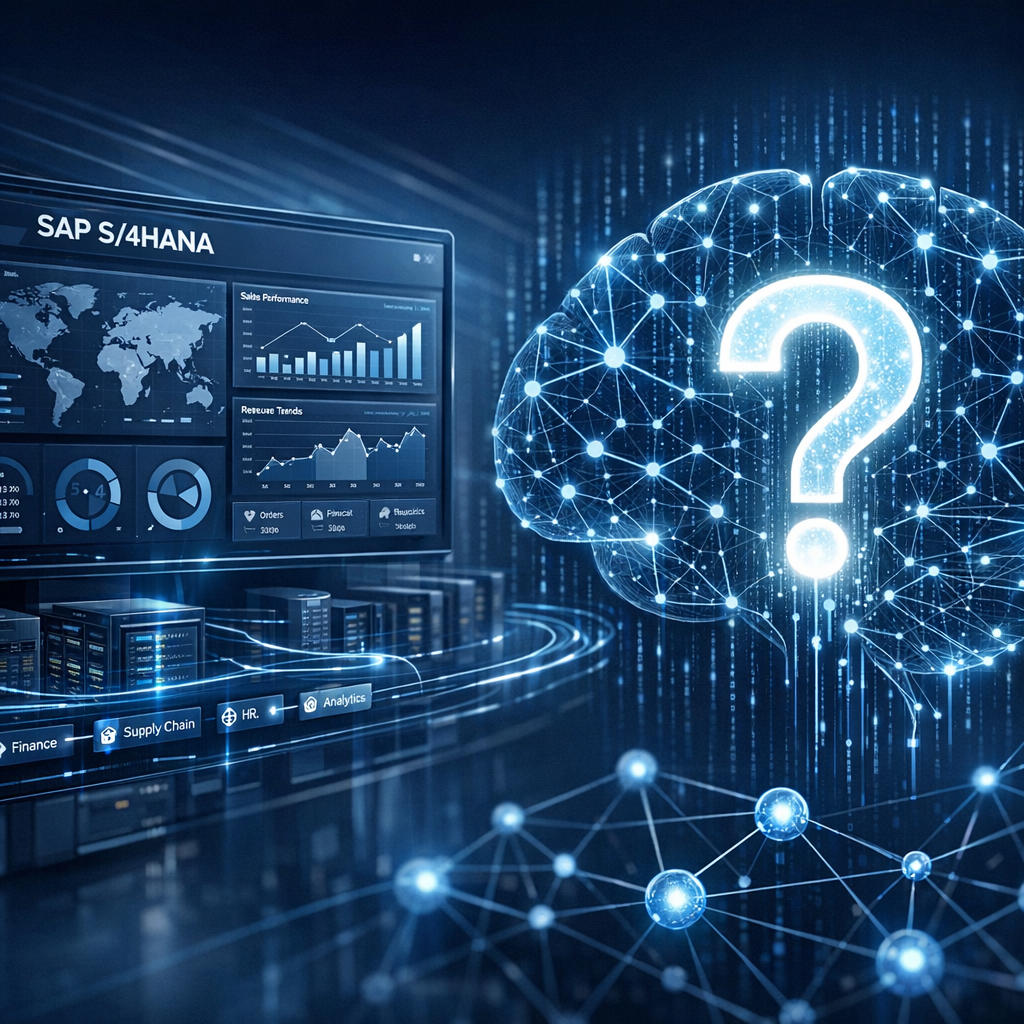
ERP AI readiness gap after S/4HANA migration - digital brain with question mark on enterprise data dashboard
ERP AI Readiness FAQ: Why SAP S/4HANA Migration Alone Will Not Get You There
Most ERP teams treat S/4HANA go-live as the finish line for transformation—but it is only the starting line for AI readiness. This FAQ explores why migration alone is not enough, what data and cloud foundations are missing, and how ERP leaders can build the architecture required to move AI from pilot to production.
Sovereign AI for regulated enterprises
Cognizant and Domyn Take Sovereign AI From Policy Debate to Enterprise Build
Cognizant and Domyn have formed a strategic partnership to offer sovereign AI solutions tailored for regulated enterprises in EMEA, enabling secure AI deployment while ensuring data control and compliance with European regulations.
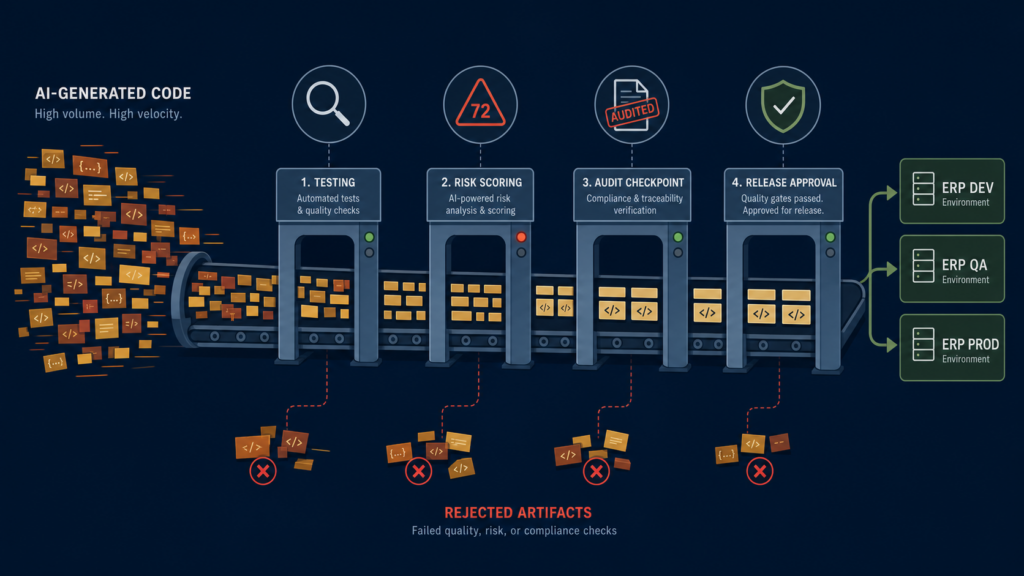
AI Made Code Faster—Tricentis Says Quality Teams Are Falling Behind
Tricentis’ 2026 Quality Transformation Report shows that AI has accelerated software creation faster than many organizations can validate it, turning quality engineering into a boardroom issue for ERP and enterprise application leaders.
Anthropic Claude ban lift AI access
Anthropic’s Ban Lift and Claude Science Launch Test the New Rules of AI Access
The Trump administration has lifted restrictions on Anthropic's Claude Fable 5 and Mythos 5 models, ending a weekslong export ban tied to cybersecurity concerns—though Mythos 5 remains restricted to approved US organizations. At the same time, Anthropic launched Claude Science, a domain-specific AI research workbench targeting life sciences and pharmaceutical users, signaling a broader shift toward specialized, governed enterprise AI access.
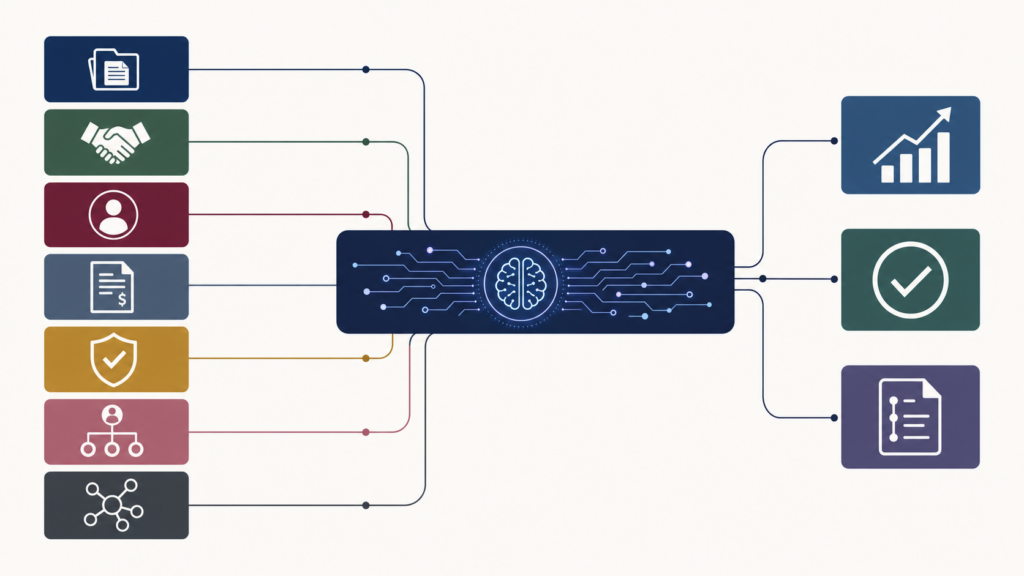
AI process mining Enterprise AI context layer
Celonis Acquires Ikigai, Launches Context Model to Give AI Agents Operational Intelligence
Celonis’ Context Model and Ikigai Labs acquisition position process intelligence as a context layer for enterprise AI agents that need to understand real workflows before they recommend or act.
Who Governs AI Agents When Workflows Cross Platforms?
As AI agents expand across ERP, cloud, and workflow platforms, enterprise leaders face a critical governance challenge: who owns accountability when data, models, and audit trails are fragmented across multiple systems. This analysis explores the control plane problem and what ERP teams must do to prevent agent sprawl.
Intapp Says Professional Firms Solved the Wrong AI Problem
Intapp’s Firm AI blueprint reframes the professional-services AI debate around the business of the firm, arguing that individual productivity tools will not change firm economics unless AI reaches intake, conflicts, staffing, pricing, relationships, compliance, and institutional judgment.
Trusted AI
Tricentis California Deal Puts AI Testing Governance in the Spotlight
Tricentis has expanded its software licensing contract with California to offer its AI-driven quality engineering platform to state agencies, while emphasizing that AI-generated testing must be governed by evidence and compliance, essential for SAP teams in regulated environments.
Enterprise software stocks
Anthropic’s Fable 5 Release Renewed Pressure on Enterprise Software Stocks, Valuations
On June 9, enterprise software stocks like Workday, Oracle, and Palantir Technologies saw declines of around 3% due to renewed investor concerns following Anthropic's launch of Claude Fable 5 and Claude Mythos 5, which hinted at AI's potential to disrupt traditional software subscription models and raised questions about the sustainability of pricing in an increasingly AI-driven landscape.
Court Ruling AI Overviews
German Court Raises Legal Stakes for Google’s AI-Generated Search Answers
A German court has held Google directly liable for false claims made by its AI Overviews, differentiating them from traditional search results due to their generation of new statements, thereby establishing heightened accountability for AI outputs.
Before AI Agents Can Touch the ERP: An Infrastructure FAQ Checklist for Enterprise Leaders
The gap between organizations' aspirations for enterprise AI agents and the necessary infrastructure to implement them safely is widening, emphasized by key developments in data platform competition, API readiness challenges, increasing data center demands, and heightened security risks, urging ERP and IT leaders to investigate and address these critical infrastructure needs promptly.
The Next Enterprise AI Wave Will Reach Beyond Agents, Says SAP Labs US Managing Director
At SAP Sapphire, Global Head of Research & Innovation Yaad Oren discussed SAP's forward-looking exploration of emerging technologies like AI, data, user experience, robotics, quantum computing, and cloud architecture, urging customers to embrace current AI capabilities while also preparing for future innovations.
European Union flag in front of modern glass office buildings symbolizing cloud sovereignty and digital regulation in Europe.
Europe’s Tech Sovereignty Package Puts Cloud, AI, Chips and Open Source Under One Policy Roof
The EU's new European Technological Sovereignty Package aims to reduce reliance on non-EU digital infrastructure by promoting domestic capabilities in semiconductors, cloud, and AI through the Chips Act 2.0, Cloud and AI Development Act, and an emphasis on open source strategies, while also addressing energy constraints and competitiveness in the technology sector.
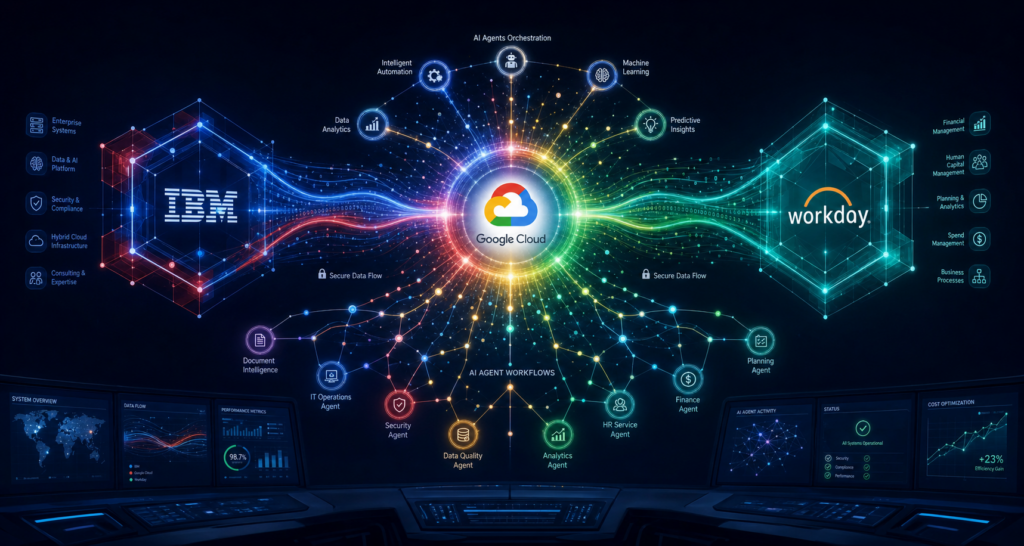
Google Cloud Partnerships: Gemini Enterprise Pushed Deeper into Workday and IBM Delivery
Google Cloud is advancing Gemini Enterprise into enterprise AI through expanded partnerships with Workday and IBM, focusing on integrating HR and finance agents into workflows and enhancing delivery capacities with industry-specific solutions.
When AI Spend Outpaces Value: A Reality Check for SMBs
As small and midsize businesses increasingly integrate AI into operations, they are facing a shift towards viewing AI as a recurring operational expense rather than a simple software enhancement, prompting the need for clear governance and targeted use cases to ensure measurable value while controlling costs.
ERP Today Live Interview
Interview: Nominal CMO on Why Finance AI Agents Need to Execute, Not Just Explain
At Sage Future, Nominal CMO Stephanie Montelius discussed why finance teams are moving beyond chatbots toward agentic AI that can execute ERP-adjacent accounting work with human oversight. The interview explores trust, deterministic agents, multi-entity complexity, intercompany transactions, manufacturing use cases, and the role of ERP-agnostic AI platforms in finance operations.
SAP Executive Interviews
SAP Sapphire Interviews: SAP Executives Say AI Is Pushing ERP Back to the Center of Business Strategy
At SAP Sapphire 2026, Maura Hameroff and David Vallejo emphasized that AI is transforming ERP systems into strategic business frameworks that enhance enterprise decision-making by integrating industry knowledge and addressing fragmented data, thereby enabling companies to efficiently navigate modern challenges in supply chain management and overall business operations.
Private Equity in ERP
Private Equity’s ERP Upgrade Push Has a Controls Problem
Private equity firms are increasingly willing to fund cloud ERP modernization for portfolio companies, recognizing that outdated systems can significantly reduce valuation, thus emphasizing the importance of incorporating internal controls early in the transformation process to mitigate risks and enhance operational efficiency.
Deutsche Telekom German Sovereign AI Contract
SAP and Deutsche Telekom Put Sovereign AI at the Center of German Public Administration
Germany is implementing a public-sector AI strategy through a new SAP and Deutsche Telekom platform designed to deliver secure AI services and infrastructure for federal, state, and municipal administration, marking a significant shift towards shared digital infrastructure and sovereignty in AI governance.
ServiceNow
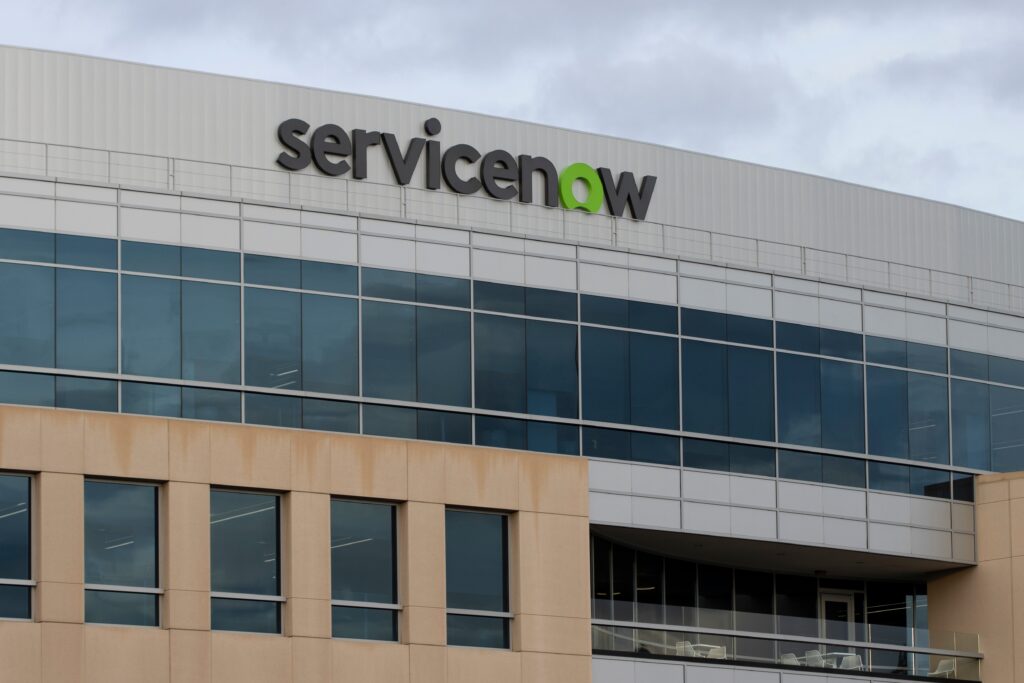
ServiceNow’s Next Knowledge 2026 Message: Governed AI Has to Reach the Frontline
ServiceNow's Knowledge 2026 initiative emphasizes a governance layer for AI and security, with tools like Otto, an AI-driven interface designed to streamline enterprise workflows for employees and operators, enhancing user experience across systems while integrating deeper operational capabilities.