Governance, Risk, and Compliance

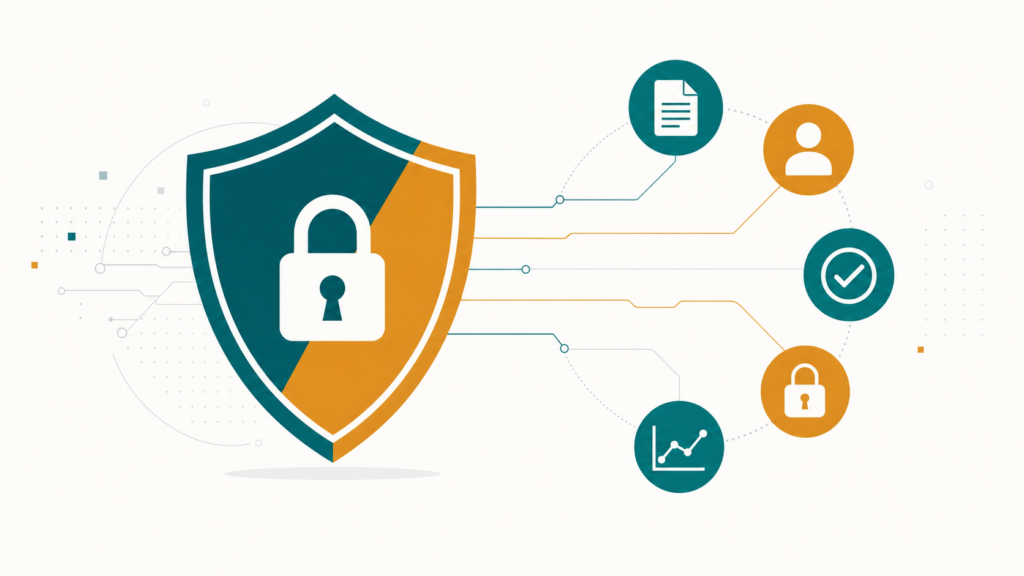
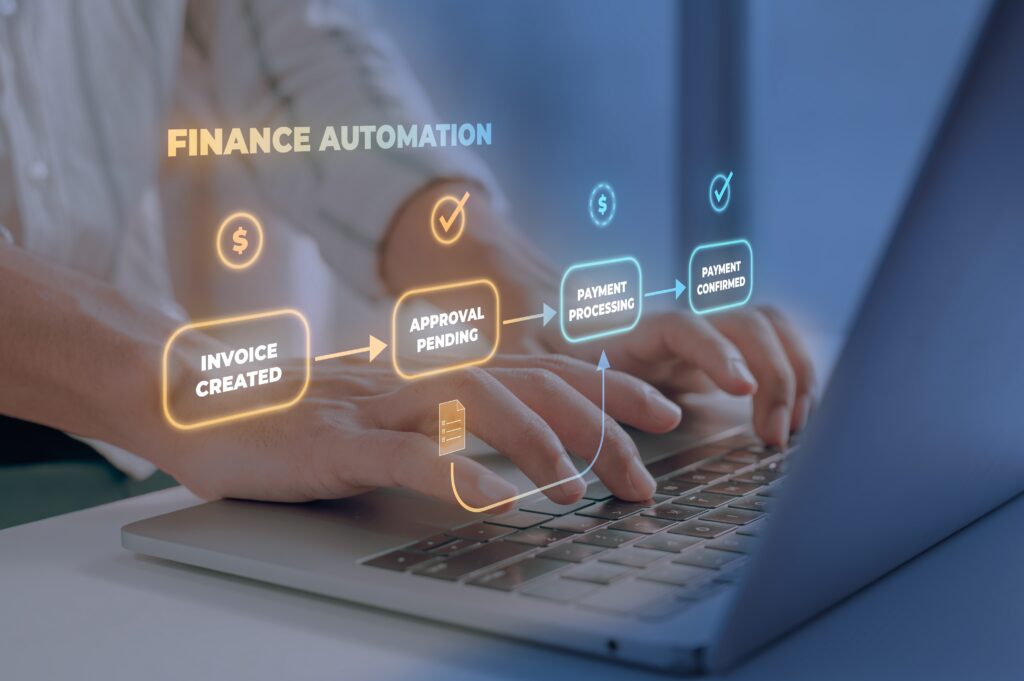
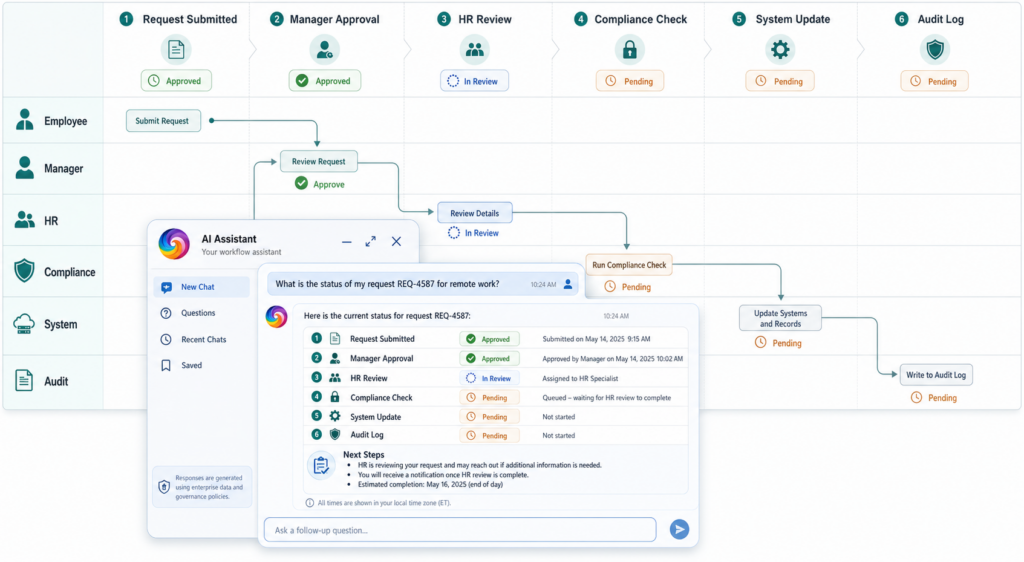
Enterprise Resource Planning (ERP) serves as a cornerstone in ensuring effective Governance, Risk, and Compliance (GRC) within organizations. By integrating GRC modules, ERP systems provide a centralized platform to manage and monitor governance practices, identify and mitigate risks, and ensure compliance with regulatory requirements. This  approach enhances transparency and accountability across various business processes. ERP’s real-time reporting and analytics capabilities enable organizations to proactively identify potential risks and address compliance issues promptly. The integration of GRC within ERP streamlines workflows, promoting a culture of risk-aware decision-making. This synergy empowers organizations to navigate complex regulatory landscapes, mitigate risks efficiently, and uphold the highest standards of governance, ensuring a resilient and compliant operational environment.

Manufacturing Survey Reveals AI Adoption, Digital Transformation Progress
Rootstock Software's 2026 State of Manufacturing Technology Survey reveals many manufacturers are adopting AI and investing in digital transformation despite economic uncertainties.
Portrait of Dr Albert Meige wearing green t-shirt and blue blazer.
AI’s Infrastructure Risks Raise New Stakes for ERP Systems
AI’s growing dependence on energy, compute, and concentrated supply chains is introducing new cost and governance risks for ERP systems, according to research from Arthur D. Little’s Blue Shift Institute.
Cloud ERP Market to Reach $128B by 2033 as Digital Transformation Accelerates
The global cloud ERP market is projected to grow from $50.3 billion in 2024 to $128.3 billion by 2033, driven by demand for scalability and real-time data access.
Ship docked at port in Gothenburg, Sweden.
Swedish Export Credit Corporation Selects Unit4’s Scanmarket for Procurement and Compliance
The Swedish Export Credit Corporation (SEK) has selected Scanmarket by Unit4 to support procurement and compliance across its supplier and contract management processes. SEK is a state-owned export credit agency that provides medium- and long-term financing to Swedish exporters and...
An exhibit on the history of AI at MIT.
How Agentic AI and Composable Architecture Are Reshaping ERP Strategy
A new MIT Technology Review Insights briefing examines how agentic AI and composable architectures are reshaping ERP strategy. The report argues that enterprises are moving beyond vendor-driven upgrades toward modular, AI-orchestrated systems of action.
Digital image of data over field with wind turbines.
AI’s Hidden Dependencies: How Energy, Compute, Scale Change the Cost of AI
A new Blue Shift report shows how AI’s growing energy and compute demands are driving infrastructure costs that many enterprises have not priced in. Those pressures surface most clearly inside ERP systems.
Australian Government Weighs ERP Vendor Consolidation Ahead of TechnologyOne Renewal
The Australian Department of Industry, Science and Resources is initiating a strategic review of its multi-vendor ERP systems, led by TechnologyOne, to promote vendor consolidation and tighter integration in preparation for a mid-2026 contract renewal.
Bicycles parked in front of SAP office in Europe.
SAP’s EU AI Cloud Addresses Data Sovereignty as Regulations Tighten in Europe
SAP’s EU AI Cloud reflects how data sovereignty and regulation are reshaping where and how enterprises deploy AI in Europe.
Oracle NetSuite Emphasizes Governance, Control as AI Becomes Embedded Across ERP Platforms
Oracle NetSuite is enhancing governance and platform controls as AI transitions from experimentation to core ERP workflows, ensuring safe scalability of AI-enabled extensions across finance and operations while establishing standards for integration and certification within partner ecosystems.
Aptean Acquires OpsVeda to Bridge Planning-Execution Gap with Agentic AI Orchestration
Aptean's acquisition of OpsVeda enhances its AI-driven supply chain capabilities, creating a unified platform that bridges the gap between planning and execution with real-time, agentic AI designed for continuous operational adaptation.
Digital Sovereignty Is a Board-Level ‘Mandate’ in the AI Era: IBM Whitepaper
Digital sovereignty is evolving from a technical issue to a strategic priority for enterprises, driven by the need to manage AI, comply with strict government regulations on data handling, and leverage untapped data.
Two professionals sit across a desk, examining a tablet in front of a scale.
NAVEX Top 10 Risk & Compliance Trends 2026: AI, Supply Chains, Governance Pressures Shaping the Year Ahead
NAVEX’s 2026 Risk & Compliance Trends report outlines the top 10 pressures shaping governance, AI, supply chains, and workplace culture. Discover what compliance leaders need to know to build resilient, accountable programs this year.
Oracle NetSuite Expands Partner Program to Accelerate AI Innovation
Oracle NetSuite has expanded its partner program with a new SuiteApp.AI Marketplace, enhanced developer resources, and certification pathways to accelerate AI adoption in its ecosystem, enabling partners to create AI-driven applications that integrate with core ERP workflows, while promoting faster innovation and reducing complexity for customers.
Anthropic Extends Claude into Healthcare, Matching OpenAI’s Health Push with Record-Aware, HIPAA-Ready Tools
Anthropic is launching Claude for Healthcare, a tool designed for both consumer and enterprise markets that integrates directly with health data sources while ensuring HIPAA compliance, marking a significant shift in healthcare AI to address the complexities of medical records and administrative tasks.
OpenAI Is Targeting Hospitals and Patients Alike with Healthcare Platform, ChatGPT Health Data Integrations
OpenAI is venturing into healthcare with 'OpenAI for Healthcare' aimed at institutions and a consumer-focused 'ChatGPT Health' that personalizes medical interactions, while addressing privacy concerns and the need for robust data governance.
The letters E, S, and G.
SAP Sustainability Control Tower: New Analytics Tab Enhances Reporting
SAP has enhanced the Sustainability Control Tower with an Analytics tab in the Analyze ESG Data app, allowing detailed, customizable views of ESG metrics, facilitating compliance with EU sustainability regulations, and enabling teams to manage reporting data efficiently.
Brazil Probes Microsoft Cloud Licensing as UK Antitrust Findings Ripple into Latin America
Brazil's competition authority, CADE, has launched an antitrust investigation into Microsoft's cloud and software licensing practices, drawing from UK findings that suggest these practices may harm competition for local customers.
Front of Brookfield office in Toronto, Canada.
Brookfield Launches Radiant to Provide AI Infrastructure for Enterprises
Brookfield launches Radiant, a new subsidiary offering high-performance AI compute infrastructure to enterprises and developers. Leveraging renewable energy, regional data centers, and integrated land, power, and compute, Radiant aims to provide predictable, low-carbon AI workloads.
Sri Lanka Plans Centralized ERP Marketplace and GovTech Authority to Unify State Systems
Sri Lanka is implementing a centralized ERP-style marketplace to standardize government IT and procurement, reduce duplication, and support local startups by reforming procurement processes under a new GovTech authority and Digital Economy Ministry.
Data with South Korea flag in the background
South Korea’s AI Basic Law Takes Effect in 2026: What Businesses Need to Know
South Korea’s AI law, effective January 22, 2026, requires organizations using high-impact AI systems to conduct risk assessments, maintain human oversight, and prepare for compliance during a one-year grace period.
Europe’s ERP Vendors Are Gaining Ground Alongside Oracle, Microsoft
European ERP vendors like SAP, Unit4, Odoo, AFAS, and Exact are emerging as viable alternatives to US giants by aligning with regional regulatory, data protection, and localization needs, particularly for organizations prioritizing compliance and sovereignty.
M&A
Enterprise Software Faces AI-Driven Disruption as Development Productivity Gains Fail to Materialize
In 2026, the enterprise software industry will undergo significant disruption due to AI, leading to increased merger and acquisition activity among mid-market companies, while organizations struggle to convert productivity gains from AI into strategic business value.
US Department of Defense webpage open on a smartphone
CMMC 2.0 Enters Enforcement: What Contractors and Vendors Must Know
CMMC 2.0 enforcement has begun, shifting defense contractors from voluntary cybersecurity guidance to mandatory compliance under a phased rollout with defined certification levels and assessments.
The coast of Da Nang with the city against the beach and ocean
Vietnam Draws More Than $7 Billion in AI Data Center Investments, Reshaping Enterprise Infrastructure
Create Capital Vietnam and Haimaker.ai have unveiled a $1 billion joint venture to build a nationwide AI-focused data center network in Vietnam, part of a broader surge of more than $7 billion in AI infrastructure investment driven by policy incentives and rising enterprise demand.
Oracle AI World’s IBM Sessions: What Enterprises Must Build Before AI Can Deliver
At Oracle AI World, IBM emphasized that successful AI adoption in enterprises relies not on flashy models but on robust foundational preparations, governance, and aligned business processes, showcasing that scalable AI implementations require clean data and integrated workflows.
GCC emblem with digital code background
How Gulf States Are Approaching Digital Sovereignty
Gulf states are building digital sovereignty frameworks to strengthen infrastructure and move from importing to operating cloud and AI services locally. National regulations, major investments, and regional collaboration support this transformation.
Data Integrity is the New ERP Mandate
Data integrity is crucial for ERP success, as reliable information underpins automation and insights; organizations must modernize data handling without full system overhauls, confront legacy issues, and embrace governance to enhance efficiency and decision-making.