Governance, Risk, and Compliance

Enterprise Resource Planning (ERP) serves as a cornerstone in ensuring effective Governance, Risk, and Compliance (GRC) within organizations. By integrating GRC modules, ERP systems provide a centralized platform to manage and monitor governance practices, identify and mitigate risks, and ensure compliance with regulatory requirements. This  approach enhances transparency and accountability across various business processes. ERP’s real-time reporting and analytics capabilities enable organizations to proactively identify potential risks and address compliance issues promptly. The integration of GRC within ERP streamlines workflows, promoting a culture of risk-aware decision-making. This synergy empowers organizations to navigate complex regulatory landscapes, mitigate risks efficiently, and uphold the highest standards of governance, ensuring a resilient and compliant operational environment.

Data Integrity is the New ERP Mandate
Data integrity is crucial for ERP success, as reliable information underpins automation and insights; organizations must modernize data handling without full system overhauls, confront legacy issues, and embrace governance to enhance efficiency and decision-making.
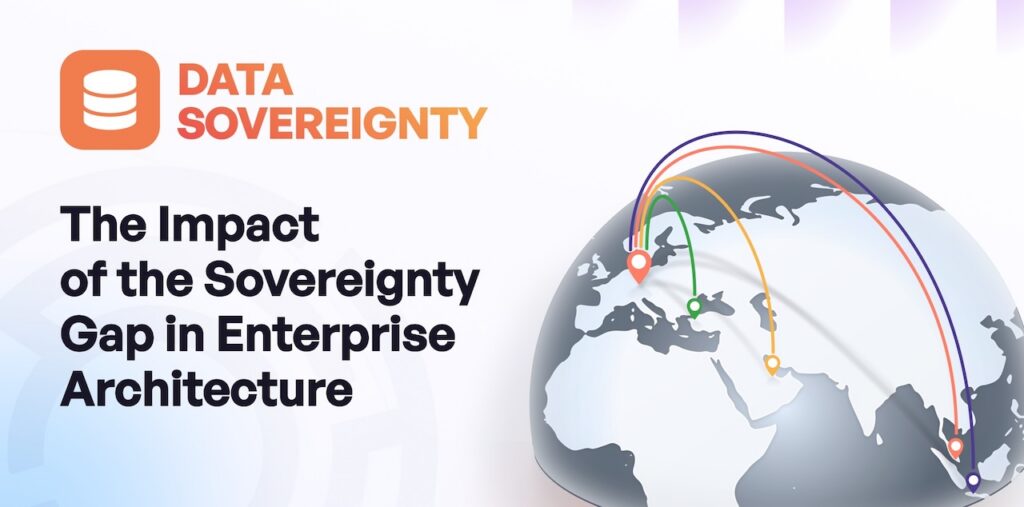
How the digital sovereignty agenda in the EU reshapes cybersecurity
The EU's push for digital sovereignty is transforming cybersecurity into a critical, integrated discipline, prompting businesses to adopt stringent regulations, lifecycle-embedded practices, and proactive risk management.
Year in Review: Testing, Transformation, and the Race to AI-Ready ERP in 2025
In 2025, the conversation around cloud migration shifted from why to how. According to SAPinsider’s 2025 research report on SAP S/4HANA deployment, for instance, 31% of the organizations who responded to the survey have transitioned to SAP S/4HANA, while another 27% are in implementation. Additionally, 54% of respondents said they plan to incorporate AI or...
Year in Review: ERP AI Integration Went from Promise to Performance in 2025
End users in 2025 stopped seeing AI as a futuristic buzzword for enterprise planning. What had long been pitched as a future differentiator finally began delivering measurable operational benefit this year. According to ERP Today’s reporting on the manufacturing sector, 82% of companies increased...
Palo Alto, Google Cloud Expand AI Security Alliance as 99% of Organizations Report AI Attacks
Palo Alto Networks and Google Cloud have expanded their partnership with a nearly $10 billion deal to enhance AI and cloud security, integrating Palo Alto’s Prisma AIRS platform with Google Cloud’s infrastructure to provide comprehensive security across hybrid multicloud environments.
Oracle Database
Oracle Database@Azure expands to the Netherlands, launches in Brazil
Oracle has expanded its Oracle Database@Azure service into the West Europe region and Brazil Southeast, allowing customers to run Oracle databases within Microsoft Azure environments while benefiting from local compliance and reduced latency, thus reinforcing its strategy to integrate database services with major cloud platforms without the need for architectural changes.
Cognizant AI
Cognizant and Microsoft Target the Last-Mile Problem in Enterprise AI
Cognizant and Microsoft have expanded their AI partnership to co-develop industry-specific solutions and integrate Microsoft's AI stack into Cognizant’s services, primarily benefiting sectors like financial services and healthcare, as they aim to enhance AI deployment and operational impacts through deeper collaboration and streamlined workflows.
Cloud Security Has Hit a Speed Wall as AI, Multicloud Outpace Defenses
The December 2025 Palo Alto Networks State of Cloud Security Report reveals that cloud security is lagging behind the rapid growth and complexity of modern IT, with a critical emphasis on identity risks and the urgent need for integration of security operations to protect increasingly vulnerable cloud systems.
insightsoftware
Vertex Expands Role in Oracle Cloud ERP Environments with Full-Scale, End-to-End Tax Automation, Compliance Platform
Vertex has enhanced its tax determination and compliance capabilities within Oracle Cloud ERP through a unified platform that supports global requirements, automates processes, and improves operational efficiency for over 1,700 mutual customers.
Oracle Database@Google Cloud
Oracle Database@Google Cloud Expands to Canada and India in Digital Sovereignty Push
Oracle has launched its Database@Google Cloud service in Canada and India, using a standardized multicloud model that integrates directly with Google Cloud data centers, highlighting a strategic approach focused on data sovereignty and operational flexibility for enterprises across diverse regulatory environments.
IFS appoints Matt Breslin as President, North America to drive Industrial AI growth
Dixstone Deploys IFS Cloud to Unify Offshore Operations Across 10 Countries
Dixstone, an offshore energy services provider, has chosen IFS Cloud to enhance its operations in 10 countries amidst the growing trend toward cloud-based ERP solutions in the construction and engineering market.
SAP Sovereign Cloud
Five Risks SAP Leaders Can No Longer Ignore in 2026
As SAP vulnerabilities surge and attackers exploit weaknesses swiftly, organizations must prioritize automated security measures and cloud responsibility models while addressing legacy systems and integrating SAP into broader security operations to mitigate risks and safeguard critical business processes.
Microsoft’s Canada Investment Puts Digital Sovereignty to Work
On December 9, 2025, Microsoft announced a C$7.5 billion investment to enhance AI and cloud infrastructure in Canada, building on a broader C$19 billion program, aiming to support digital sovereignty and local AI development while contributing to sustainability.
A lock is shown on top of a laptop keyboard | Onapsis
SAP Issues Three Critical Security Fixes in December Patch Day
On December 9, SAP released 14 security notes, including three critical patches for vulnerabilities in SAP Solution Manager, Apache Tomcat in SAP Commerce Cloud, and SAP jConnect, urging customers to prioritize updates based on severity to protect against potential exploits.
Agentic AI Defined and How It Is Reshaping the Enterprise Architect’s Role
The rise of agentic AI in enterprise applications is transforming the role of architects from static designers to dynamic overseers, requiring new workflows and governance models as AI increasingly undertakes decision-making tasks historically handled by humans.
UK Enterprises Gain New Control over AI with BT’s Sovereign Deployment Platform
BT has launched a new sovereign platform designed to enhance UK control over AI and cloud workloads, providing a secure domestic environment for data residency and compliance, in alignment with national strategies while preparing for future sovereign services.
AWS Enters the AI Factory Race, Raising Stakes for Cloud-Data Sovereignty, Enterprise Architecture
Amazon Web Services (AWS) is launching on-premises AI factories that integrate advanced hardware and managed service offerings into customer data centers, enabling organizations to develop and deploy AI applications while addressing data sovereignty concerns and enhancing their existing ERP systems.
AI ESG Reporting
Digital Tools Help SMEs Secure Green Financing: New Sage–ICC Report
A new Sage–ICC study reveals that while 70% of SMEs prioritize sustainability, only 3% access green financing, largely due to a lack of quality reporting tools, which impedes their ability to secure funding necessary for sustainable growth.
SAP SuccessFactors
Global HR Agent Delivers Real-Time Advisory for SAP SuccessFactors
Globalization Partners' G-P Gia is now available on SAP Store, providing real-time, compliant global HR guidance through an integration with SAP SuccessFactors and Joule, enhancing efficiency for multinational companies.
SAP Sovereign Cloud
SAP Is Building a Sovereign AI Stack for Europe
Regulatory trends in the EU are fostering a shift towards sovereign cloud and AI infrastructure, highlighted by companies like SAP, which has invested in local partnerships with firms like Mistral AI to enhance digital autonomy and develop industry-specific applications.
Lift-and-Shift ERP Strategies NTT DATA and Microsoft
IBM OpenPages as a Service Expands European Availability
IBM's OpenPages as a Service launch in the Cloud Germany data center enhances EU-centric governance, risk and compliance capabilities by ensuring data residency, improved performance and modernized software-as-a-service (SaaS) options.
Unit4 and Pragmatic AI
AI Agents Shifting from Hype to Enterprise Workflow Redesign: IBM Webinar
The misconceptions about AI agents primarily stem from enterprise expectations rather than the technology itself, emphasizing the need for organizations to redesign workflows for effective adoption and integration of AI systems.
Workday Data Cloud
Workday’s EU Sovereign Cloud to Support Compliance, AI Adoption
Workday announced its EU Sovereign Cloud, set for 2026 release, which enables European customers to utilize AI-driven HR and finance solutions while ensuring compliance with emerging data regulations.
AI risk management
SAP Signavio AI Agent Mining Tackles Invisible Autonomy Risk
SAP users are increasingly incorporating AI agents into workflows, which introduce 'invisible autonomy' risks that necessitate oversight, prompting the launch of SAP Signavio's AI agent mining capability to enhance monitoring, efficiency, and performance assessment of these agents.
Stock image of AI | SAP
Infor, AWS research points to uneven ERP modernization and widening governance gaps
Organizations are modernizing ERP superficially, with cloud adoption outpacing essential governance and strategy, leading to inconsistent deployment, limited returns, and an urgent need for structured integration and support for achieving measurable value.
Strong AI Governance is Critical to Responsible Enterprise Deployment
As companies rapidly adopt generative and autonomous AI technologies, effective governance has become essential to mitigate risks such as accuracy, bias, and compliance, necessitating executive oversight and coordinated efforts across various departments to ensure trust and accountability in AI deployments.
FSMA 204
Navigating the FSMA 204 Traceability Extension for Food Manufacturers
The FDA's extension of FSMA 204 compliance to July 2028 offers food manufacturers a strategic chance to enhance traceability systems, fostering competitive advantages and operational excellence, as highlighted by the collaboration of key industry organizations to standardize practices and address challenges in the food supply chain.