
Technology

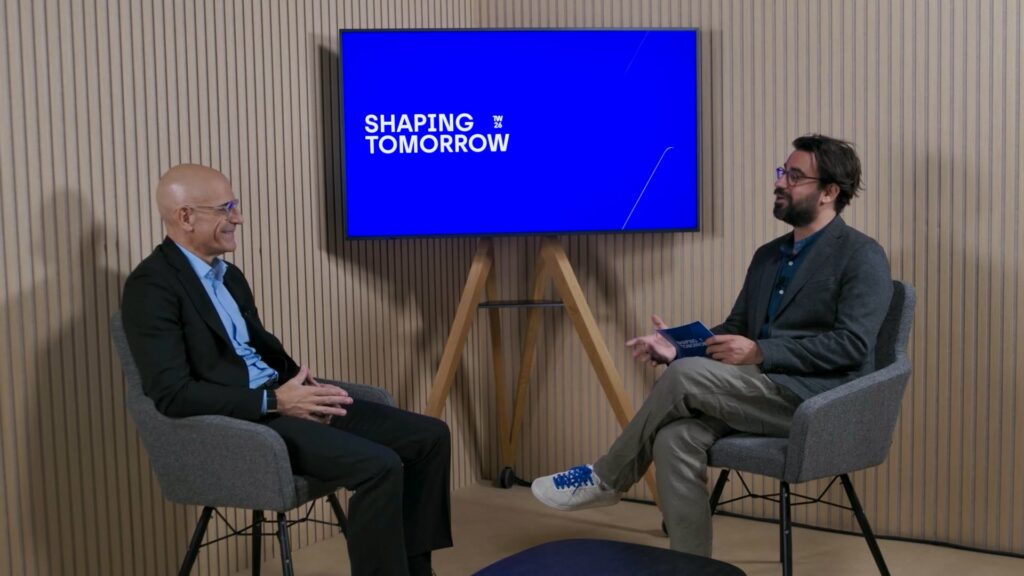
From SNP Transformation World 2026 – Structify’s Alex Reichenbach on AI for Unstructured Data in M&A
Structify CEO Alex Reichenbach on the SNP joint venture using AI to unlock unstructured data in M&A and preserve divestiture value.
From SNP Transformation World 2026 – SAP’s Stefan Steinle on Clean Core and Agentic Support
SAP's Stefan Steinle on why running well in the cloud after go-live matters, the role of Clean Core, and how agentic AI powers preventive support.
From SNP Transformation World 2026 – SAP’s Thomas Pfiester on AI as a Growth Accelerator
SAP's Thomas Pfiester explains why AI is a growth accelerator, how clean data powers agentic AI, and why adoption decides transformation success.
US Air Force
Air Force Looks to Standardize ERP Services on Cloud One OCI
The US Air Force is seeking partners through a request for information to develop and sustain Enterprise Resource Planning Common Services on Oracle Cloud Infrastructure, aiming to enhance shared cloud services and integration for defense ERP environments.
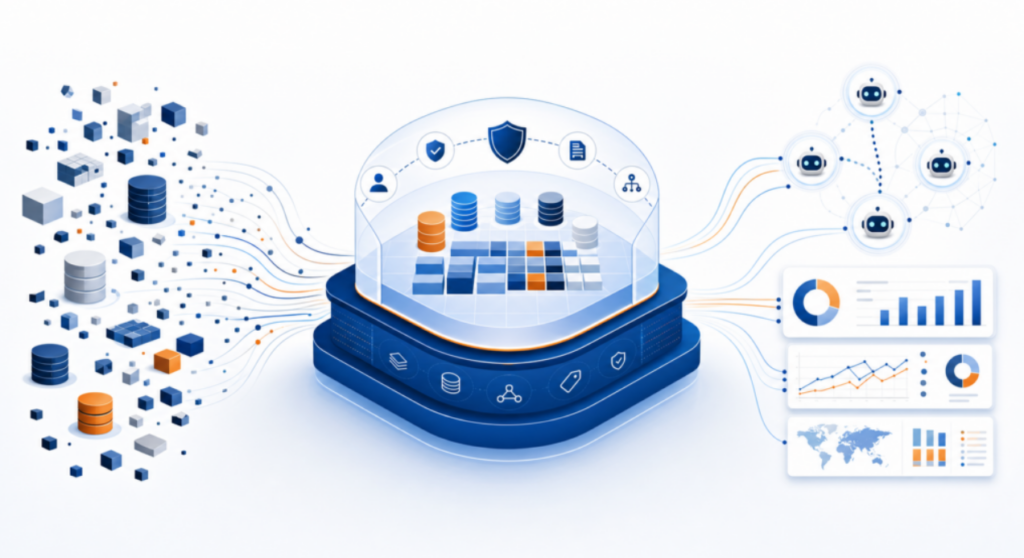
SAP Business Data Cloud ERP data readiness - governed foundation for analytics and AI
SAP Business Data Cloud Turns ERP Data Readiness Into the Real Test
SAP Business Data Cloud promises a governed foundation for analytics and AI—but ERP data readiness, fragmented legacy architectures, and budget pressure mean most organizations aren't ready to capture that value. With 45% still evaluating BDC and only 3% achieving a unified data layer, partner execution and data context are now the deciding factors.
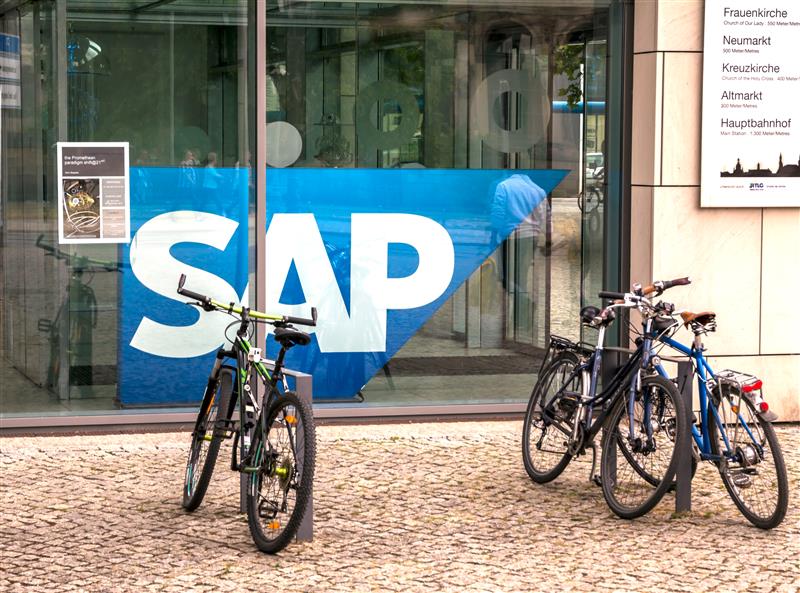
Bicycles parked in front of SAP office in Europe.
SAP’s EU Settlement Gives On-Premise Customers More Room to Maneuver
SAP has resolved a European Commission investigation by committing to more flexible maintenance and support policies for on-premise ERP software, enhancing customer choice and alleviating competition concerns without impacting its cloud offerings.
SAP Business Data Cloud
SAP Business Data Cloud Raises the Stakes for ERP Data Readiness
SAP Business Data Cloud positions itself as the governed foundation for AI-driven analytics. But adoption is still early, data fragmentation remains the norm, and only 3% of organizations have achieved a unified data layer. This article examines what ERP teams need to address before BDC can scale: semantic preservation, BW migration maturity, partner capability, and governance frameworks for agentic AI.
M&A
Priority Acquires Obol to Bring Cash Visibility Inside Cloud ERP
Priority Software acquired Obol, an AI-powered cash-flow management company, to enhance its cloud ERP platform with real-time cash forecasting and liquidity optimization, enabling customers to make better financial decisions using integrated tools.
AI-First Monetization and Zuora
BlackLine: Agentic Finance Needs a Close Readiness Test
AI will not fix a financial close process still built on manual journals, spreadsheet reconciliations, and after-the-fact audit documentation. BlackLine's new benchmark guide defines the seven close readiness metrics finance teams need to measure before agentic automation can scale safely and makes the case that governance and observability must come before AI deployment.
Workday Data Cloud
Workday Turns to HR Path to Reach More SMBs in Ireland and Scotland
Workday has appointed HR Path as an authorized value-added reseller for the UK and Ireland, enhancing its partner-driven market approach for small and medium-sized businesses while providing customers with a streamlined relationship for their HR and finance system needs.
SAP and IBM Say AI-Ready ERP Still Starts with Trusted Infrastructure
SAP and IBM are positioning ERP infrastructure as the foundation of AI readiness. New customer wins—including JYSK, GBM, DIFARE Group, and Plastilene Group—show how SAP Cloud ERP Private on IBM Power Virtual Server gives enterprises a secure, scalable path to modernization without abandoning the resilience of IBM Power.
ERP Today Awards
ERP Today Awards: AI, Operational Execution, Real-World Impact Defined ERP Leadership in 2025
The ERP Today Awards 2025 make one thing clear: ERP leadership is no longer defined by deployment success, but by real-world impact. Across five award categories—spanning AI innovation, operational execution, customer experience, SMB transformation, and large enterprise projects—the 2025 winners set a new standard for what it means to lead with enterprise technology.
middleware partnership management
meshIQ and Dataeko Target the Middleware Blind Spot Blocking Modernization
meshIQ and Dataeko have partnered to give enterprises unified visibility and control over middleware environments that connect ERP, supply chain, and banking systems across hybrid and multi-cloud estates. Powered by meshIQ's Version 12.1 agentic AI, the partnership targets the middleware blind spots blocking cloud modernization.
M&A
TSG’s Creative Computing Acquisition Puts Media ERP Expertise in Play
TSG has acquired Creative Computing Solutions, bringing specialist Microsoft Dynamics 365 Business Central expertise for the media, film, and TV production sectors into its UK mid-market managed IT services business — and signaling a broader trend of ERP partner consolidation around vertical depth.
Enterprise AI sprawl and invisible AI governance concept
The AI Bill Is Bad, But Not Knowing What Is Running May Be Worse
Enterprises are learning the biggest AI bill is not tokens but invisible AI they cannot see, govern, or measure. This article explains how ERP and IT leaders can bring AI agents, tools, and workflows under real governance before sprawl, risk, and cost spiral out of control.
federal ERP modernization
Federal ERP Modernization Gets Another Procurement Path as 2027 Deadline Nears
Federal agencies require effective procurement strategies for ERP modernization, as highlighted by M&S Consulting's participation in NASA's SEWP VI contract, which provides a framework for essential IT services and emphasizes the importance of leveraging small-business certifications in the contracting process.
Microsoft’s Layoffs Has Put Its AI Sales Machine Under Scrutiny
Microsoft's recent layoff of 4,800 employees, mainly from its sales and Xbox divisions, reflects a broader shift in the enterprise software model due to AI investments, highlighting challenges in selling complex AI solutions while adapting workforce structures to meet changing customer needs.
enterprise AI ROI
AI’s Token Binge Is Over—Now Enterprise Budgets Want Proof
Enterprises that once rewarded employees for maximizing AI usage are now discovering how quickly token costs can spiral. As finance leaders tighten budgets, AI pilots are being judged on workflow‑level outcomes, model routing discipline, and whether they actually improve delivery, code quality, and ERP operations—not just how many tokens they consume.
SAP AI budget discipline for hiring and travel
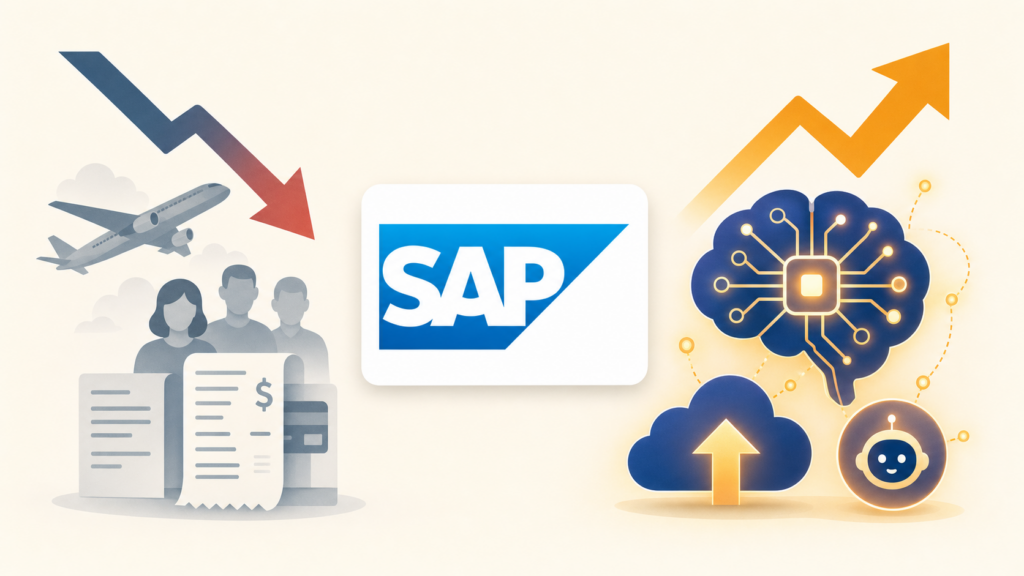
After SAP’s Leadership Reorg, AI Overhaul Places New Scrutiny on Hiring and Travel
SAP is reallocating its operating budget by tightening hiring, limiting travel, and reviewing supplier spending to prioritize investments in AI capabilities and technologies, signaling a strategic shift towards enhancing its AI-driven products and services while managing operational costs.
Winding Down Support: The Other 2027 Deadline ERP Teams Can’t Afford to Miss
SAP ECC is not the only 2027 deadline ERP teams need to manage. SAP Solution Manager—the tool most SAP organizations rely on for change control, ITSM, monitoring, and audit trails—is also winding down its support in 2027. With SAP Cloud ALM not offering a direct like-for-like replacement for SolMan's ChaRM functionality in on-premise scenarios, ERP teams face a hidden compliance and governance gap that requires urgent planning.
Enterprise AI sprawl and invisible AI governance concept
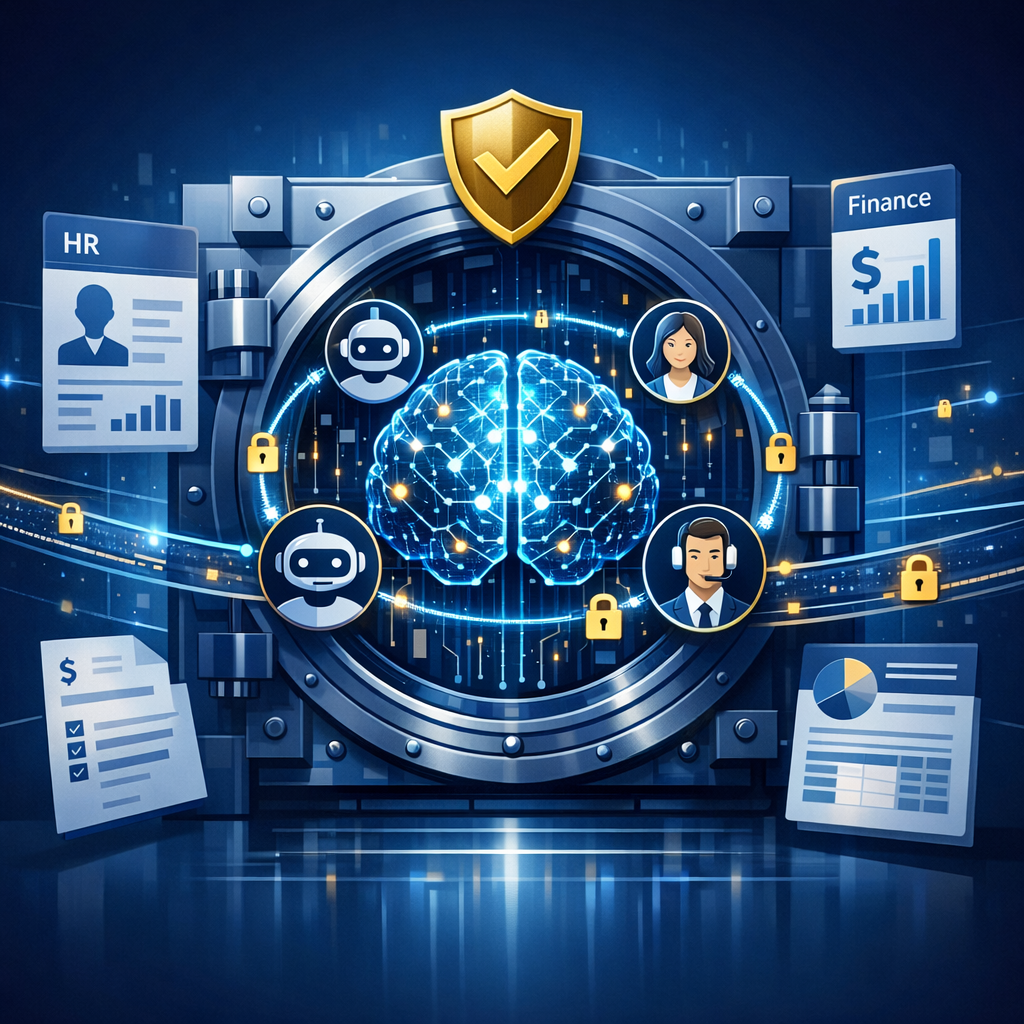
Workday Says AI Agents Belong Closer to the Systems They Could Break
Workday is drawing a clear line in the enterprise AI agent debate: for high-stakes workflows in HR, payroll, and finance, the safest place for AI inference and orchestration is inside the system of record, not on neutral third-party platforms. Through its controlled openness model—open APIs and MCP for developers, proprietary governance within Workday—the company argues that context, business logic, and security controls are a competitive moat that cannot be safely externalized.
AI coding legacy modernization
NTT DATA Bets Cursor Can Speed the Messy Work of Legacy Modernization
NTT DATA’s partnership with Cursor brings AI coding agents directly into its global software engineering model, aiming to speed legacy modernization while strengthening governance and aligning modernization with enterprise‑wide AI strategy.
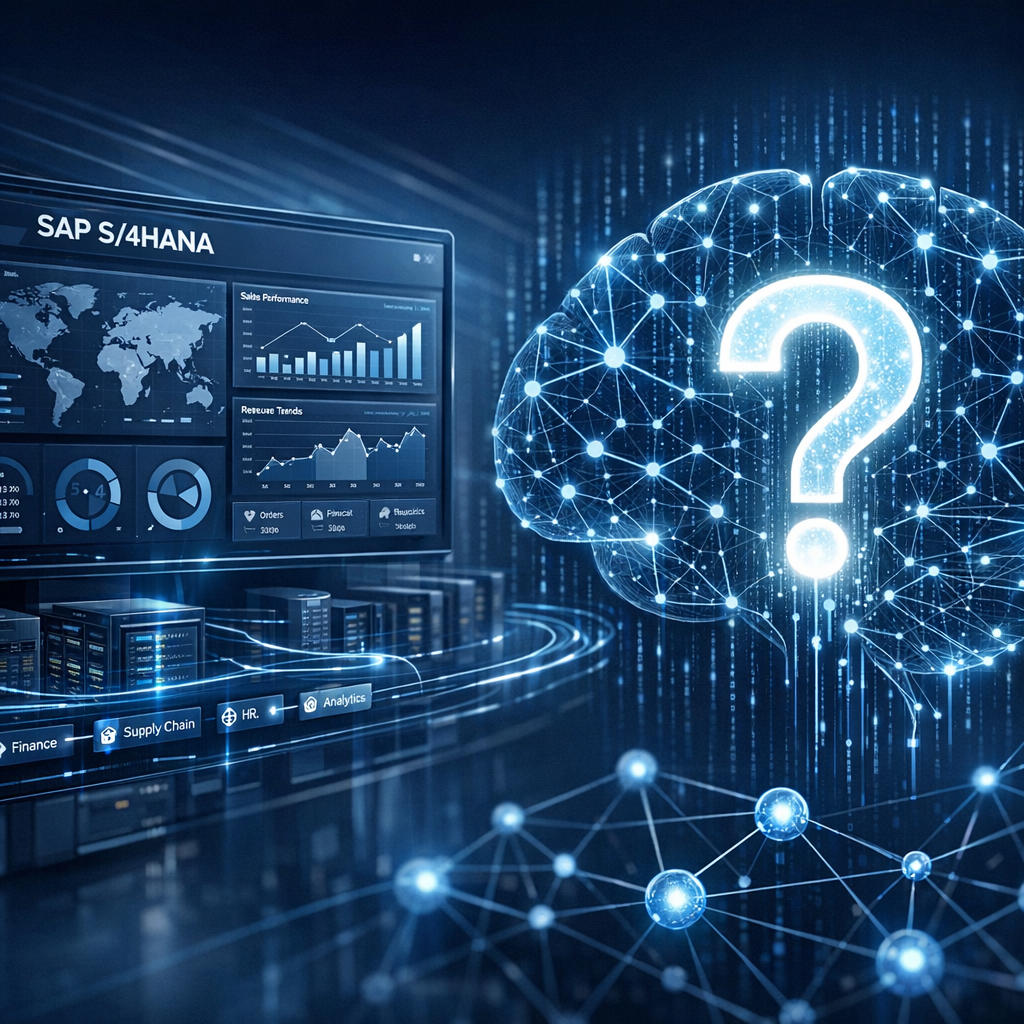
ERP AI readiness gap after S/4HANA migration - digital brain with question mark on enterprise data dashboard
ERP AI Readiness FAQ: Why SAP S/4HANA Migration Alone Will Not Get You There
Most ERP teams treat S/4HANA go-live as the finish line for transformation—but it is only the starting line for AI readiness. This FAQ explores why migration alone is not enough, what data and cloud foundations are missing, and how ERP leaders can build the architecture required to move AI from pilot to production.
Applied Materials finance transformation using SAP Taulia Dynamic Discounting for supplier payments
Applied Materials Is Finding Finance Transformation in Faster Supplier Payments
Applied Materials is using SAP Taulia Dynamic Discounting as part of its Agile Finance program to accelerate supplier payments, improve supplier liquidity, and build a scalable, AI-first finance operating model. The initiative shows how enterprise working capital programs can evolve from transactional efficiency tools into strategic platforms that deliver both supplier value and measurable financial returns for large manufacturers.
SAP AI skills
ERP’s AI Skills Gap Is Becoming the Real Transformation Bottleneck
ERP vendors like SAP are shipping AI features faster than teams can absorb them. The SAP AI skills gap—with 91% of organizations using AI but only 17% embedding it in core workflows—is now the defining bottleneck to real ERP transformation.
AWS agentic AI SAP ERP exceptions - MCP agentic ERP infrastructure with AgentCore
MCP Is Becoming the Plumbing of Agentic ERP—ERP Leaders Need to Understand It
MCP is emerging as the protocol layer that lets AI agents discover and call enterprise tools, data sources, and workflows. For ERP leaders, the opportunity is lower integration friction. The risk is that access control, auditability, and cost discipline move closer to the agent boundary.
Anthropic Claude ban lift AI access
Anthropic’s Ban Lift and Claude Science Launch Test the New Rules of AI Access
The Trump administration has lifted restrictions on Anthropic's Claude Fable 5 and Mythos 5 models, ending a weekslong export ban tied to cybersecurity concerns—though Mythos 5 remains restricted to approved US organizations. At the same time, Anthropic launched Claude Science, a domain-specific AI research workbench targeting life sciences and pharmaceutical users, signaling a broader shift toward specialized, governed enterprise AI access.
Nokia’s ERP Overhaul Shows Why AI Ambitions Are Moving to the Hyperscaler Layer
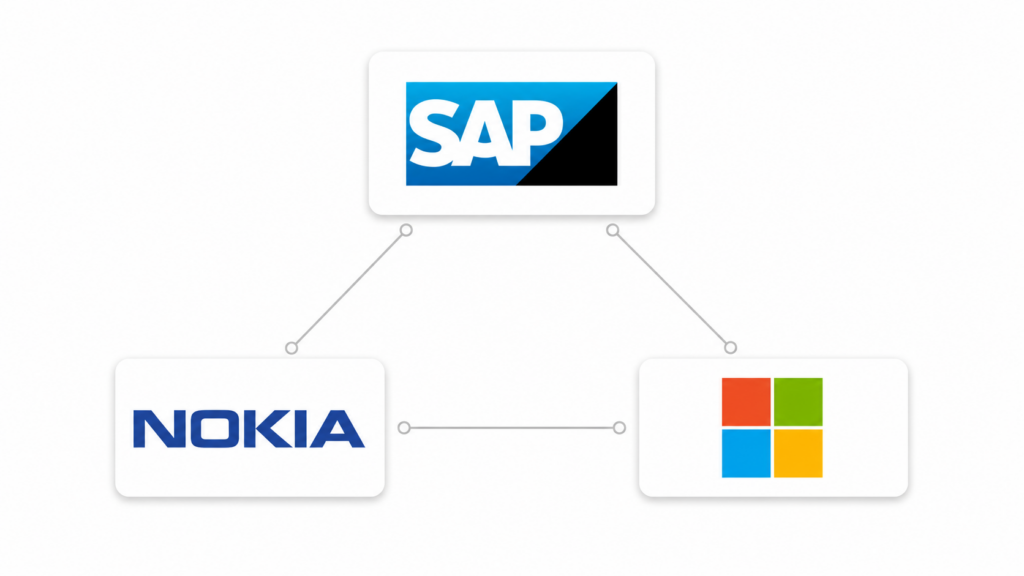
Nokia has signed a multi-year RISE with SAP agreement to consolidate multiple ERP systems into a unified SAP S/4HANA landscape hosted on Microsoft Azure, using clean-core principles and SAP's transformation methodology to prepare its global business backbone for embedded AI, operational resilience, and continuous cloud innovation.
SAP Announced Product Leadership Reorganizations Around AI and the Autonomous Suite
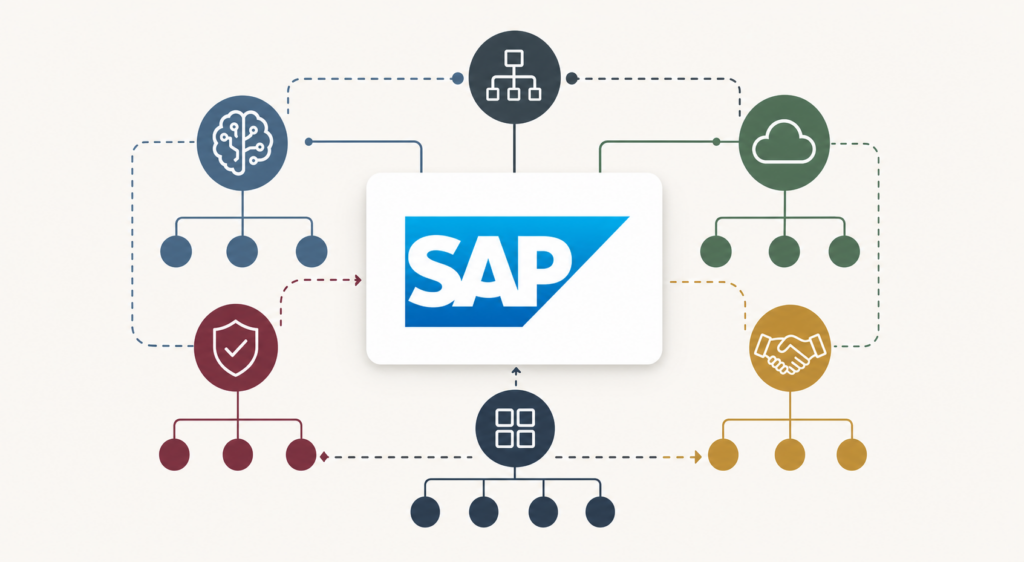
SAP is reorganizing product and engineering leadership around the SAP Business AI Platform and Autonomous Suite—a structural shift that puts AI delivery accountability at the center of its cloud ERP roadmap and signals the end of siloed product development.
ServiceNow and Accenture
ServiceNow and Accenture Are Going After Cyber Risk’s Legacy Platform Problem
ServiceNow and Accenture have launched a joint AI-powered offering to help enterprises migrate from legacy cybersecurity and risk platforms to integrated managed services on the ServiceNow AI Platform, combining agentic AI with risk management, GRC, third-party risk, and OT security monitoring.