Analytics and AI

Artificial Intelligence (AI) and analytics are indispensable in propelling digital transformation efforts, particularly influencing Enterprise Resource Planning (ERP). With the rapid progression of technology and computing power, organizations across various sectors are generating immense amounts of data daily, impacting ERP processes. The significance of this data lies in its potential to extract actionable insights, facilitate strategic planning, and drive innovation within the ERP framework. In this context, AI and analytics emerge as pivotal tools, facilitating the extraction of value from the vast amounts of data generated and collected across the enterprise, optimizing ERP functionalities. Analytics is commonly categorized into descriptive, prescriptive, diagnostic, and predictive types, enhancing the ERP landscape. AI algorithms contribute not only to predictive and prescriptive analytics but also empower companies to develop innovative ERP capabilities, exemplified by advancements such as Industry 4.0.

erp work transformation
Report: AI Is Moving Faster Than the Enterprise Systems Built to Support It
Microsoft's 2026 Work Trend Index reveals a growing disconnect between employee AI capabilities and the enterprise systems designed to support them. As workers move faster with AI, ERP leaders face growing pressure to connect intelligence, governance, and operational execution.
Microsoft logo displayed on a dark sign mounted on a concrete wall
Microsoft’s $100B Azure Year Shows Enterprise AI Is Moving Beyond One Model
Microsoft’s FY26 results show Azure crossing $100 billion in annual revenue while Microsoft pushes multi-model AI, Copilot adoption, GitHub scale, and Dynamics 365 agentic workflows into one enterprise platform story.
MCP Platform
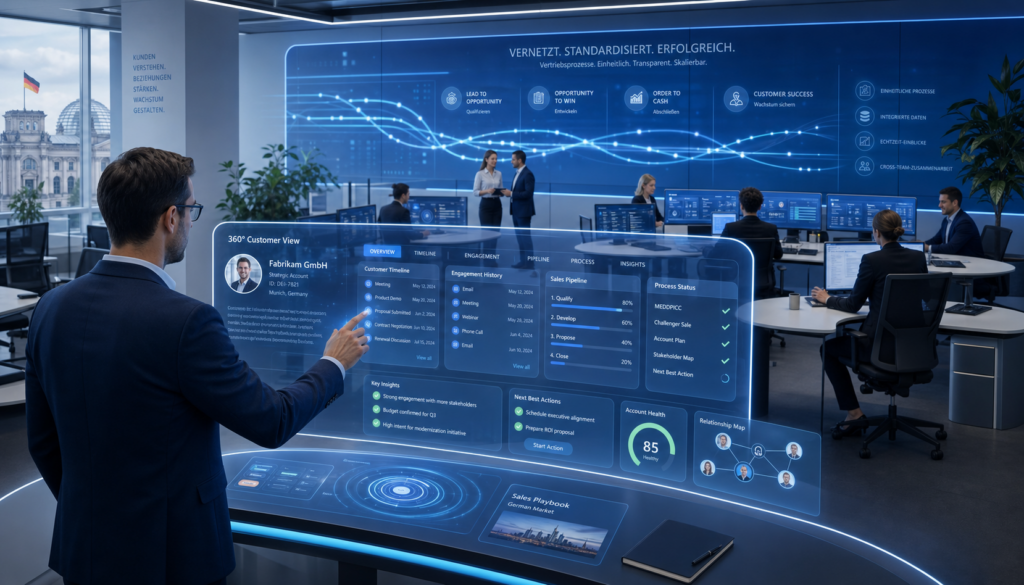
Microsoft Brings Seven New Data Feeds into Dynamics 365 Sales for Agentic Selling
Microsoft is enhancing Dynamics 365 Sales by integrating seven data partners through the Model Context Protocol (MCP) to provide sales agents with enriched customer intelligence and insights directly within their workflows.
Unit4 Data Hub Shows Why ERP Insight Depends on the Plumbing
Unit4 launched Data Hub, a managed extraction layer within ERPx that simplifies data integration with analytics tools like Power BI and Snowflake, reducing manual processes and enhancing real-time insights while ensuring data connections remain stable through platform updates.
ServiceNow’s Q2 Results Show AI Governance Is Becoming a Buying Trigger
ServiceNow reported stronger-than-expected Q2 2026 results with subscription revenues reaching $3.88 billion, driven by a significant increase in its AI business crossing over $1 billion in annual contract value, and raised its full-year revenue outlook while emphasizing the importance of AI governance for enterprise software.
AWS Security Hub’s Azure Move Shows ERP Security Is Now Multi-Cloud and AI-Native
AWS has expanded Security Hub to provide targeted protection for AI workloads and security monitoring for Microsoft Azure, enabling the discovery and evaluation of Azure resources alongside AWS findings, thereby enhancing visibility and governance across multi-cloud and hybrid ERP environments.
Is AI’s Next Target the Supply Chain Control Layer? Auger Raises $50M to Test the Stack
Auger, a supply chain software startup founded by ex-Amazon executive Dave Clark, has raised $50 million in Series B funding to enhance its AI platform that unifies existing enterprise systems and aims to automate decision-making within supply chains.
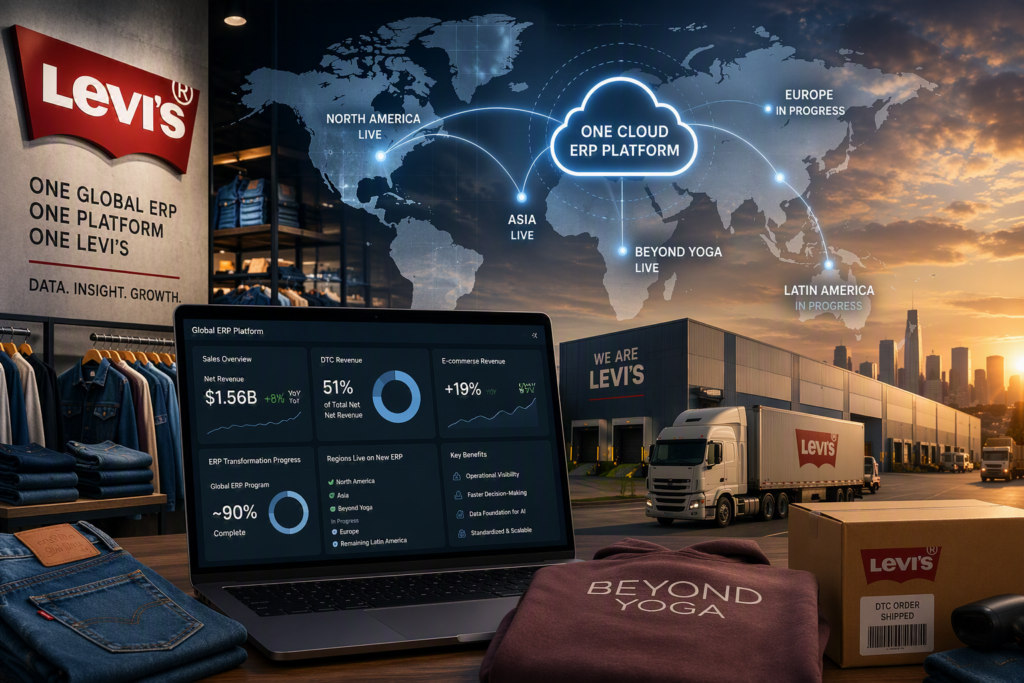
Earnings Update: The ERP Work Behind Levi’s Q2 19% E-Commerce Surge
Levi Strauss & Co. reported an 8% year-over-year revenue increase in its fiscal Q2, driven by strong e-commerce and direct-to-consumer sales, while highlighting progress in its ERP transformation by migrating Asia and Beyond Yoga to its new platform, aiming for a unified cloud ERP system to enhance operational efficiency and support future automation.
Microsoft’s Layoffs Has Put Its AI Sales Machine Under Scrutiny
Microsoft's recent layoff of 4,800 employees, mainly from its sales and Xbox divisions, reflects a broader shift in the enterprise software model due to AI investments, highlighting challenges in selling complex AI solutions while adapting workforce structures to meet changing customer needs.
AWS agentic AI SAP ERP exceptions - MCP agentic ERP infrastructure with AgentCore
MCP Is Becoming the Plumbing of Agentic ERP—ERP Leaders Need to Understand It
MCP is emerging as the protocol layer that lets AI agents discover and call enterprise tools, data sources, and workflows. For ERP leaders, the opportunity is lower integration friction. The risk is that access control, auditability, and cost discipline move closer to the agent boundary.
AI and Automation in Invoice Processing
Hitachi Construction Machinery America used Microsoft Power Platform AI Builder and Power Automate to automate supplier invoice processing into Dynamics 365 Finance and Operations, significantly reducing manual AP effort. By streamlining how invoices are received, read, validated, and posted, the organisation now automatically processes around two-thirds of invoices with near-perfect accuracy.
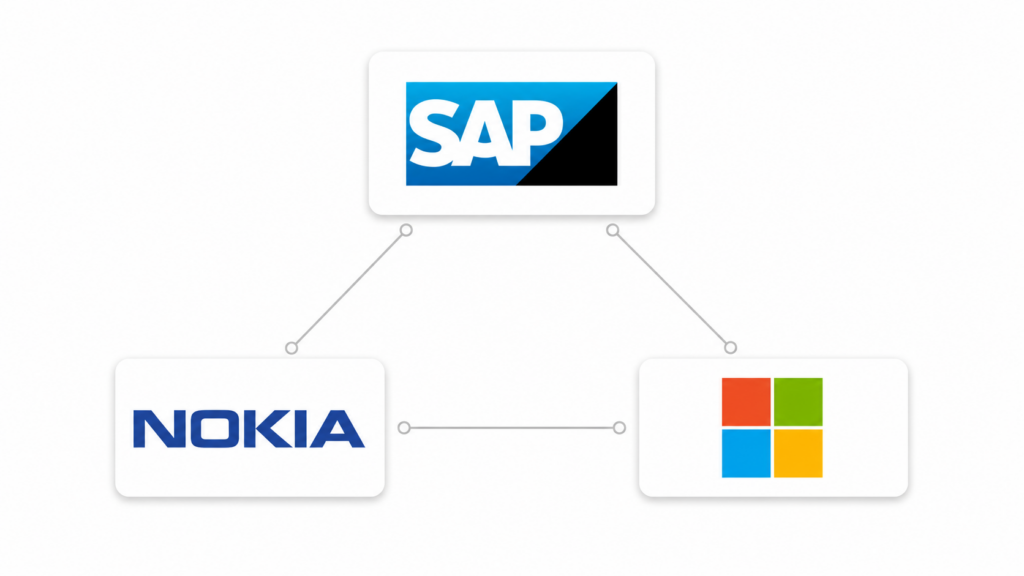
Nokia’s ERP Overhaul Shows Why AI Ambitions Are Moving to the Hyperscaler Layer
Nokia has signed a multi-year RISE with SAP agreement to consolidate multiple ERP systems into a unified SAP S/4HANA landscape hosted on Microsoft Azure, using clean-core principles and SAP's transformation methodology to prepare its global business backbone for embedded AI, operational resilience, and continuous cloud innovation.
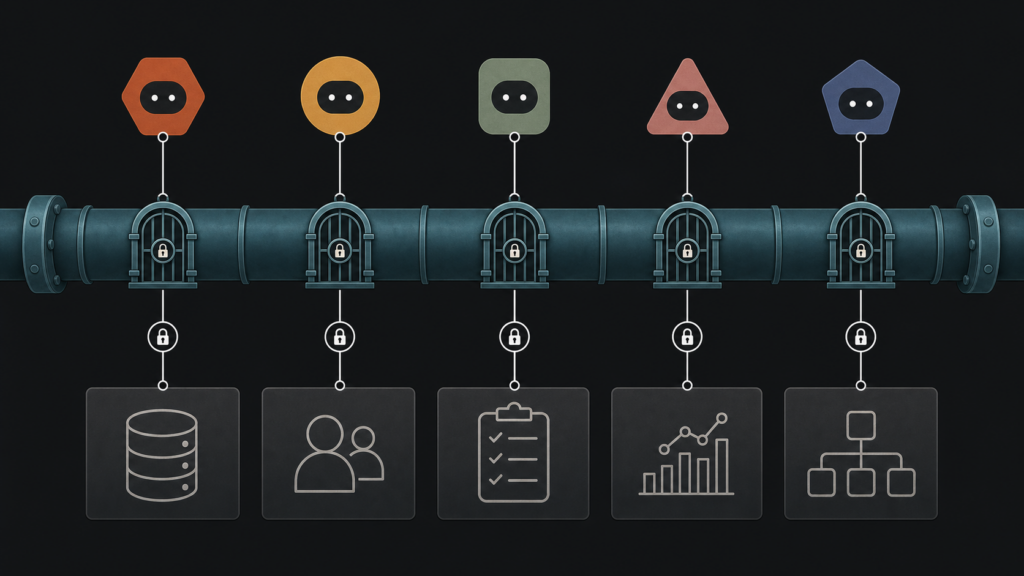
Secure enterprise corridor representing Microsoft Power Platform governance and AI agent access
Microsoft Power Platform Narrows the Access Gap for ERP Agents
Microsoft's June 2026 Power Platform updates introduce Advanced Connector Policies that govern AI agent access to SAP systems at the action and MCP server level. ERP leaders must understand what the new controls mean for low-code automation, connector visibility, and enterprise AI compliance.
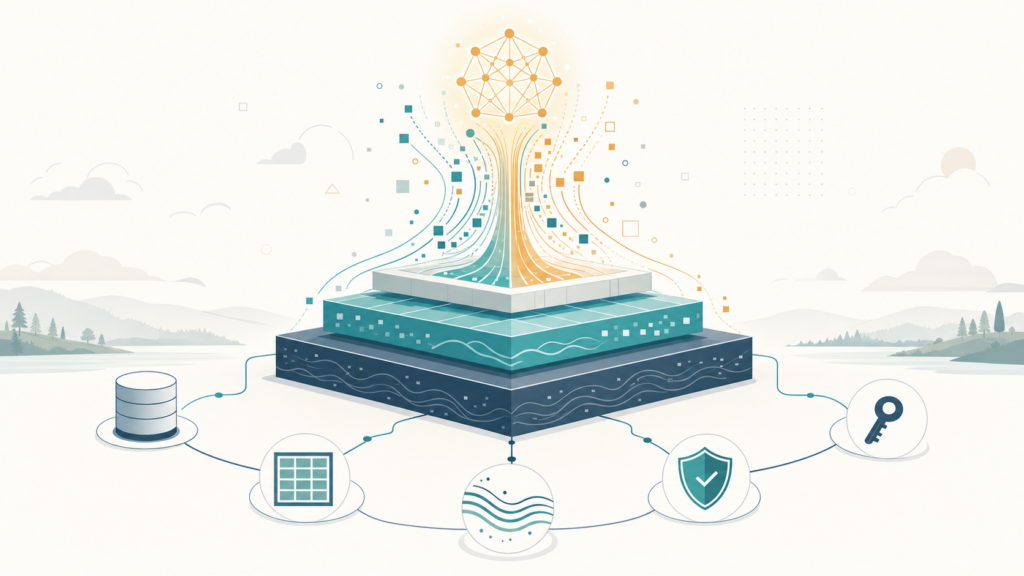
Real-time ERP data pipeline for enterprise AI agents - data lakehouse architecture
Why ERP Leaders Need to Understand Data Lakehouses Before Scaling AI Agents
Data lakehouses are emerging as the essential infrastructure layer for enterprise AI — providing ERP leaders with a governed, cross-system data foundation where AI agents can operate safely, semantically, and at scale. This analysis explains what a data lakehouse is, why it matters for agentic AI, and what ERP leaders must address before scaling autonomous AI across critical business workflows.
Partnerships
EY’s Own ERP Migration Raises the Bar for Transformation Partners
EY's transition to SAP S/4HANA Cloud Private Edition on Microsoft Azure positions the firm as a credible transformation partner — one that has lived the operational, data, and change-management challenges it now advises on. This analysis explores what EY's internal migration means for ERP buyers evaluating systems integrators for their own RISE with SAP journeys.
Workday Is Testing How Much Enterprise AI Should Be Allowed to Do
Workday’s Q1 results showed agent adoption momentum. The follow-up question is whether Sana, Microsoft 365 Copilot, the Agent System of Record, and federal HR automation can prove that enterprise agents can act inside governed workflows without eroding control.
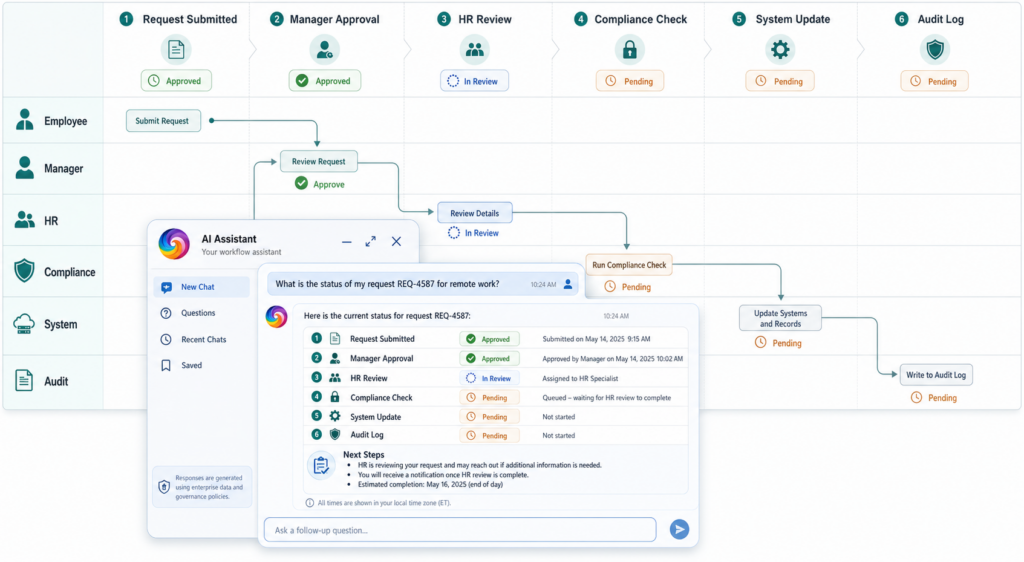
Microsoft Dynamics 365 Brings Agentic ERP Workflows into Copilot Cowork
Microsoft introduces Copilot Cowork as an innovative interface for Dynamics 365 ERP, aiming to streamline workflow by integrating ERP data and processes into a collaborative environment, allowing employees to coordinate actions without the need for cumbersome manual processes.
AI That Executes: What the 2026 ERP Market Is Actually Building So Far
This month's enterprise software announcements reveal a significant focus on execution, as evidenced by notable acquisitions aimed at enhancing AI capabilities across various domains, emphasizing the need for domain-specific inputs for effective operational execution.
IBM and Microsoft Move Identity Security from Alerts to Action
IBM Consulting has expanded its collaboration with Microsoft Security to enhance identity threat detection and remediation services, enabling enterprises to effectively manage and respond to identity-based attacks through unified security signals and governed workflows.
Levi’s Azure Migration Puts Hard Numbers Behind Its AI-Ready ERP Push
Levi Strauss & Co. is advancing its global ERP transformation by consolidating nine ERP systems onto Microsoft's Azure cloud platform, achieving significant improvements in latency and data handling while supporting its transition to a direct-to-consumer model and enhancing AI capabilities.
Microsoft Gives AI Agents a Governed Path into Dynamics 365 ERP
Microsoft is enhancing its Dynamics 365 ERP strategy by introducing governed access for AI agents within Finance and Operations, allowing controlled interaction with ERP data and business logic while ensuring security, thereby facilitating a transition from integration to automation.
DATEV Moves Sales Teams to Microsoft Dynamics 365 with Capgemini
DATEV is implementing Microsoft Dynamics 365 as part of a CRM transformation with Capgemini to enhance customer engagement and internal collaboration, starting with a pilot in July 2025 and a full rollout planned for February 2026, aiming for improved sales processes and data visibility for over 1,300 employees.
AI is reshaping enterprise partnerships across ERP, supply chain, governance, and ecosystem collaboration
AI Is Changing the Rules of Enterprise Partnerships: Q&A with Blue Yonder’s VP Kelley Lear
In this ERP Today Q&A, Blue Yonder’s Kelley Lear explains how AI is changing the rules of enterprise partnerships. The discussion covers agentic AI, hyperscaler and ERP alliances, supply chain disruption, data readiness, governance, and what separates outcome-focused partnerships from those that stall.
Citizen developer AP Automation with Native Apps
Architecting the Intelligent Enterprise Across Mixed Ecosystems
How Visionsoft helps enterprises unify Microsoft, Oracle, and other ERP platforms through integration, migration, and intelligent architecture.
Levi’s ERP Overhaul Hits 60% as Retailer Positions for AI-Driven Orchestration
Levi Strauss & Co. is advancing its digital transformation with a 60% complete global ERP modernization aimed at enhancing AI-driven orchestration and data visibility, as the company shifts towards direct-to-consumer sales expected to represent 55% of its growing revenue, while simultaneously upgrading its supply chain and e-commerce infrastructure.
Microsoft NVIDIA AI infrastructure ERP
Microsoft Begins Validating NVIDIA AI Supercomputer, Signaling Hyperscaler Shift for ERP Workloads
Microsoft has begun validating NVIDIA’s next-generation AI system, signaling how hyperscalers are preparing infrastructure that will underpin ERP and enterprise workloads.
Zurich Switzerland street scene representing Microsoft Azure cloud infrastructure region supporting sovereign data and AI deployments.
SAP Business Data Cloud Expands to Azure Switzerland with EU Access Controls
SAP is preparing to launch its Business Data Cloud platform on Microsoft Azure infrastructure in Switzerland in the coming weeks, introducing a deployment designed to meet European data residency and governance requirements. The rollout includes “EU Access” availability, meaning data...
Rootstock Launches Summer ’25 Release with AI Agent, New Data Grid, and Expanded Financials
i-Genie.ai Joins Microsoft’s Pegasus Program
i-Genie.ai's acceptance into the Microsoft for Startups Pegasus Program highlights its rapid growth and provides access to advanced AI tools and a global customer network.
Microsoft Q2 2026 Results Show AI, Cloud Growth Accelerating as Spending Surges
Microsoft reported strong Q2 FY2026 results with $81.3 billion in revenue, driven by significant growth in cloud and AI services, despite a sharp increase in capital expenditures to support infrastructure demands, reflecting the company's aggressive AI ambitions.
Microsoft Dynamics 365 Business Central
Microsoft’s Agentic e-Commerce Strategy and What It Signals for Retail ERP
At NRF 2026, Microsoft unveiled its vision for agentic AI as a foundational layer for retail e-commerce, emphasizing a shift towards protocol-driven, cooperative AI architectures that integrate seamlessly with ERP and commerce systems to orchestrate holistic retail experiences.